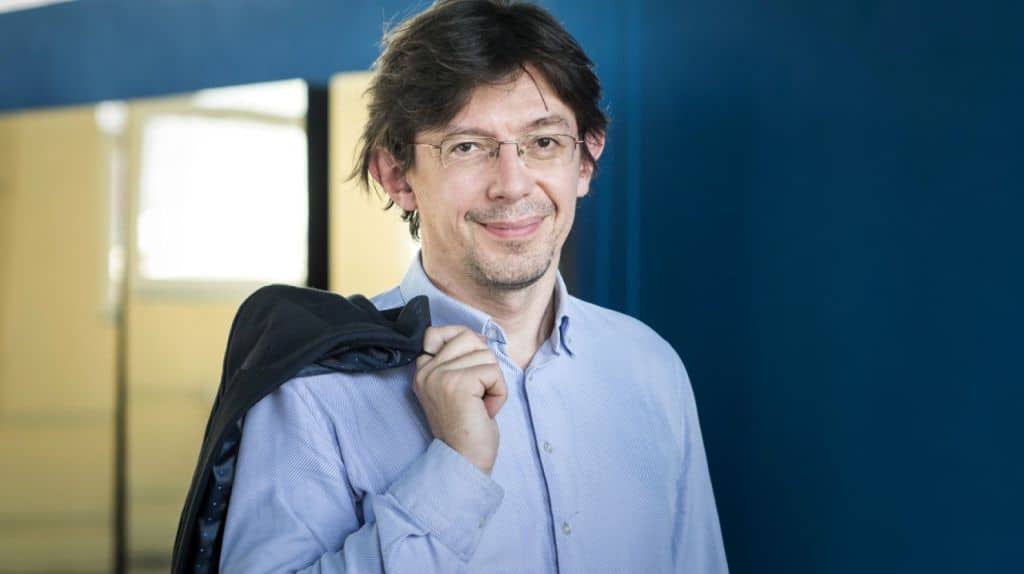
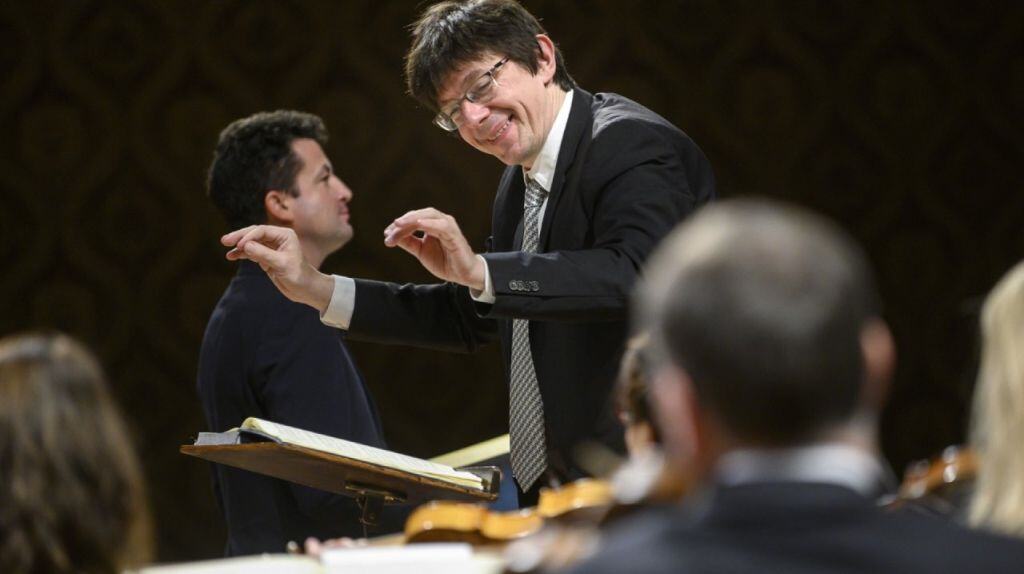
With the complete performance of Má Vlast by Bedřich Smetana (1824-1884), Anima Eterna Brugge set up a musical monument on Saturday, September 13 at Concertgebouw Brugge, under the direction of Czech maestro Václav Luks. The sound was so authentic and empathetic that you felt transported to a Prague concert hall for a moment.A Personal Prelude
When I first saw the ensemble Collegium 1704 conducted by Václav Luks in Händel's Messiah in 2019, I was immediately captivated by the authenticity of these Czech thoroughbred musicians. In 2021, in the midst of the corona period, that same Collegium performed Má Vlast during the Prague Spring Festival. Once again, I was blown away: What a rebirth of a score that often gets lost in routine!
So, when I heard that Luks would perform this masterpiece again with Anima Eterna Brugge, I didn't hesitate for a moment: I had to experience this.
And that it would be not a repetition, but a rediscovery, became clear already during the rehearsal I was able to attend that afternoon. What I heard – and saw – there gave the later concert even more weight.
The Art of Storytelling
Václav Luks is not a conductor who seeks spectacle. What he does do is tell stories – in sound, in color, in breath. His approach to Má Vlast – six symphonic poems about the landscape, legends and spirit of Bohemia – breathed transparency and natural flow. He never forced anything; he always felt. Luks knew when to carry, when to let go.
Under his hands, Anima Eterna Brugge bloomed into an orchestra that not only performed, but sang, spoke and whispered. The use of historical instruments – gut-string violins, woodwinds with a warm, veiled tone, brass without modern shrillness – turned this evening into a sonic journey back to the Prague and Bohemia of the late 19th century.
During the rehearsal earlier that day, we received a special insight. Anima Eterna Brugge first searched for the right instruments, debated tuning, strings and playing style. Only then did the real work begin early last week. For many musicians, this was their first encounter with this enchanting score. It felt as if they were playing the premiere themselves – with curiosity, wonder and respect.
Six Movements – Six Faces of a HomelandVyšehrad – the Castle as a Sound Monument
The cycle opened with an evocation of the mythical Prague castle Vyšehrad. The placement of the two harps – left and right on the stage – created a fascinating stereo image. They traced the contours of the old walls, memories in stone and strings. The solemn brass sounds served as guardians at the gate, while the strings glided like mist over the Moldau. Luks let the orchestra play like a fresco: restrained, dignified, a silent tribute to the past.
Vltava – A River with Soul
Those who expected Vltava as merely a familiar melody were surprised. Luks stripped the work of all routine and bombast. The two flutes spoke like springs converging, and soon the stream grew into a musical landscape full of imagination: hunting fanfares, a peasant wedding, nymphs dancing on the water by moonlight. The river glittered, flowed – never mechanically, always alive. The flutes sparkled, literally and figuratively. At the end, the Vyšehrad theme returned, as a poetic gesture: the river carries the past with it. The cliché was unraveled; the music sounded reborn.
Šárka – Vengeance in the ForestŠárka led us into a dark forest, where the legend of the warlike maiden who murdered her seduced victims came to life. The opening passages sounded sultry, threatening beneath the surface. When Šárka set her trap, the orchestra burst forth: rhythmic, sharp, cutting. This could easily have sounded grotesque, but under Luks it remained dramatically layered. A tragedy without words, told with musical precision.
Remarkable detail: why an intermission was inserted after this third part remains a mystery. You are in the middle of the story – and are suddenly pulled out of the novel. Fortunately, the power of the performance quickly brought you back into Smetana's universe after the intermission.
Z českých luhů a hájů – Hymn to the Land
Literally: From Bohemian Meadows and Forests. This pastoral movement became, under Luks, a sun-drenched miniature opera. The woodwinds whistled like birds, the strings wove light through the trees, the brass sparkled like dew on open fields. The orchestra excelled in transparency: every voice had room. The climax – an almost dancing fugue – was an explosion of joy, clear and natural. Rarely did a pastoral sound so fresh.
Tábor – Bellicose and Stern
With Tábor, the final two-part cycle began, in which the Hussite song Kdož jsú boží bojovníci is central. This 15th-century battle hymn calls for courage and faith in the struggle for justice:
You who are warriors of God and of his law,
pray for help from the Lord and for his grace.
Followers of Jesus Christ, be brave in the fight!
The sound was angular, stubborn, resolute. No bombastic volume, but inner strength. The song theme was repeated, distorted, intractable, like a struggle that drags on. Luks built the arc of tension slowly, towards an unfinished ending – as if the struggle was not yet over. The orchestra played here with lean strength, without Romantic heaviness.
Blaník – hope in the heart of the mountain
Where Tábor ended in threat, Blaník offered redemption. The Hussite song returned, transformed into a hopeful motif. The knights from the legend sleep in the Blaník mountain, waiting for the moment of need. In this closing movement, the Hussite song sounded again, but now transformed into a hopeful, almost triumphant theme. The music took wing. Luks made it both a prayer and a victory march. The return of the Vyšehrad theme brought everything together: the homeland as memory, as promise, as dream. Not a screaming finale, but a closing chord full of consolation – the homeland was sung, remembered and healed.
The power of preparation
What sounded so natural during the concert was the result of intensive and thoughtful rehearsal. During rehearsal, I saw how Luks works: not with authoritarian gesture, but with open dialogue. He gave precise instructions, about timbre, phrasing, rhythm. He consulted the concertmaster, spoke with musicians, felt out the orchestra.
Remarkable: Luks normally conducts without a baton, but for this Romantic repertoire he chose to use one. "It's simply clearer for the orchestra," he told me. He follows Smetana's notes meticulously – something that rarely happens. "There are so many indications in the score. He was deaf when he wrote Má Vlast, and yet it sounds as if he heard everything."
Luks' tempos are often fresher than usual. He based them on the first recording by the Czech Philharmonic conducted by Václav Talich from 1929. "You hear an enormous freedom in the music-making there. That is authentic for me: investigating how it must have sounded then, not how we are accustomed to it now."
Wealth of color and balance
What truly distinguished this performance was the color. Not massive blocks, but transparent layers. The strings played with natural articulation and light portamento, which subtly evokes folk music. The brass played not for strength, but for character. And the woodwinds – oh, the woodwinds – drew contours as never before.
Not a museum piece, but living music
Smetana's homeland is not a geographical place, but an idea, a longing, a memory. Anima Eterna Brugge and Václav Luks made Má Vlast not a dusty museum piece, but living music. The historical performance tradition was not treated as a limitation, but as a source of creativity.
For Luks, it was refreshing to play this music with an orchestra not rooted in the Czech tradition. Má Vlast is after all not flat patriotism, but has a universal character that can touch everyone.
And so it was. Má Vlast became a gripping musical portrait that seized you by the throat. Smetana's dream sounded again – not as memory, but as living force. A homeland in sound: with respect, with depth, with fire.
We use necessary cookies to make the site work. With your consent we also measure visits anonymously (Google Analytics) to improve the site.
More in our cookie policy.