

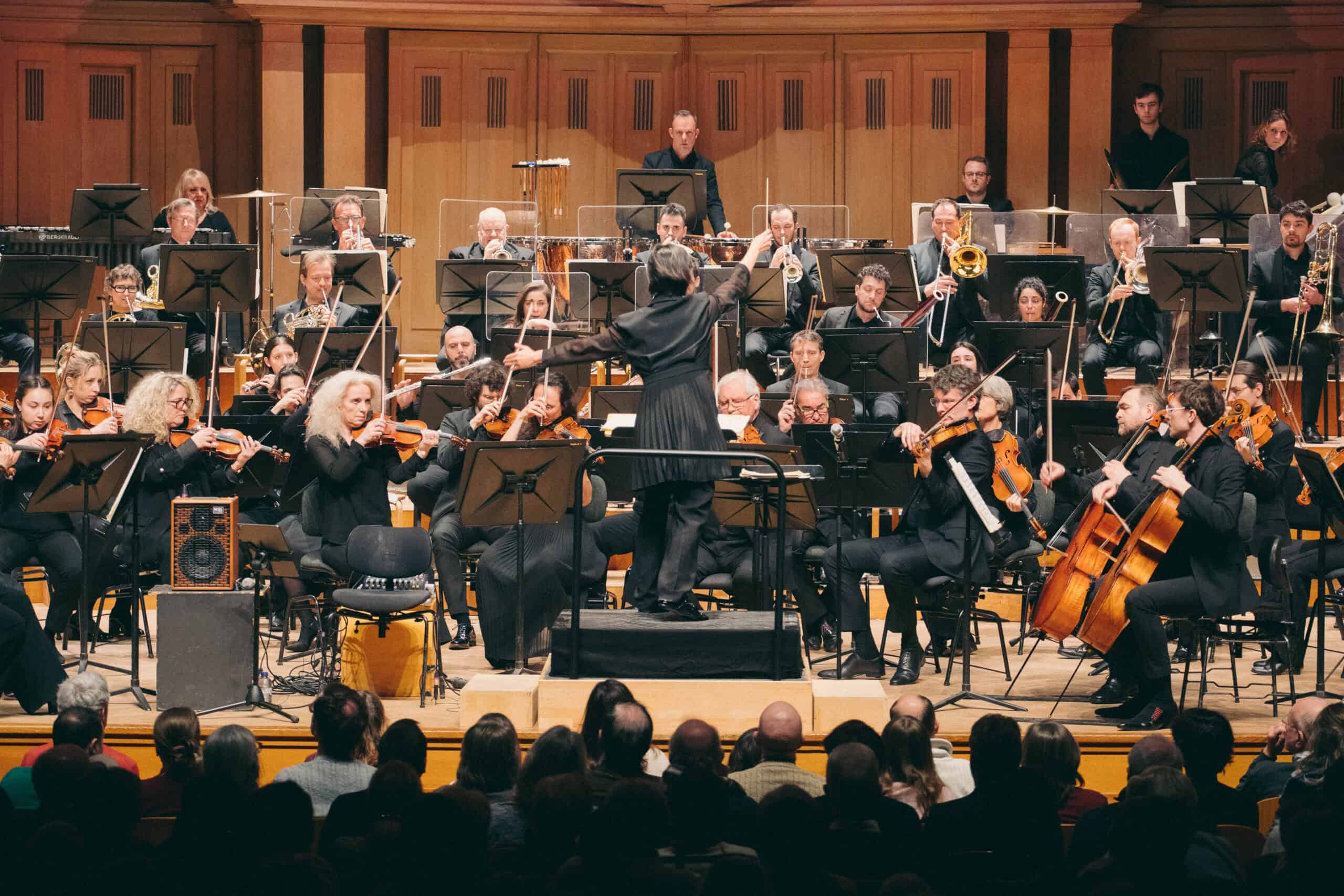
New Year's concerts traditionally move at the intersection of ritual and repertoire. The program that the Belgian National Orchestra (BNO) presented at Bozar on Sunday, January 11 as part of its annual New Year's tradition did not choose a thematic framework in the usual sense, but rather a musical principle: dance as a formative element. In doing so, this concert deliberately positioned itself outside the familiar confines of the lighthearted festive program and opted for a substantive line that also stood up in a New Year's context. That choice called for a conductor who prioritizes coherence over effect, and she found one in Tianyi Lu.
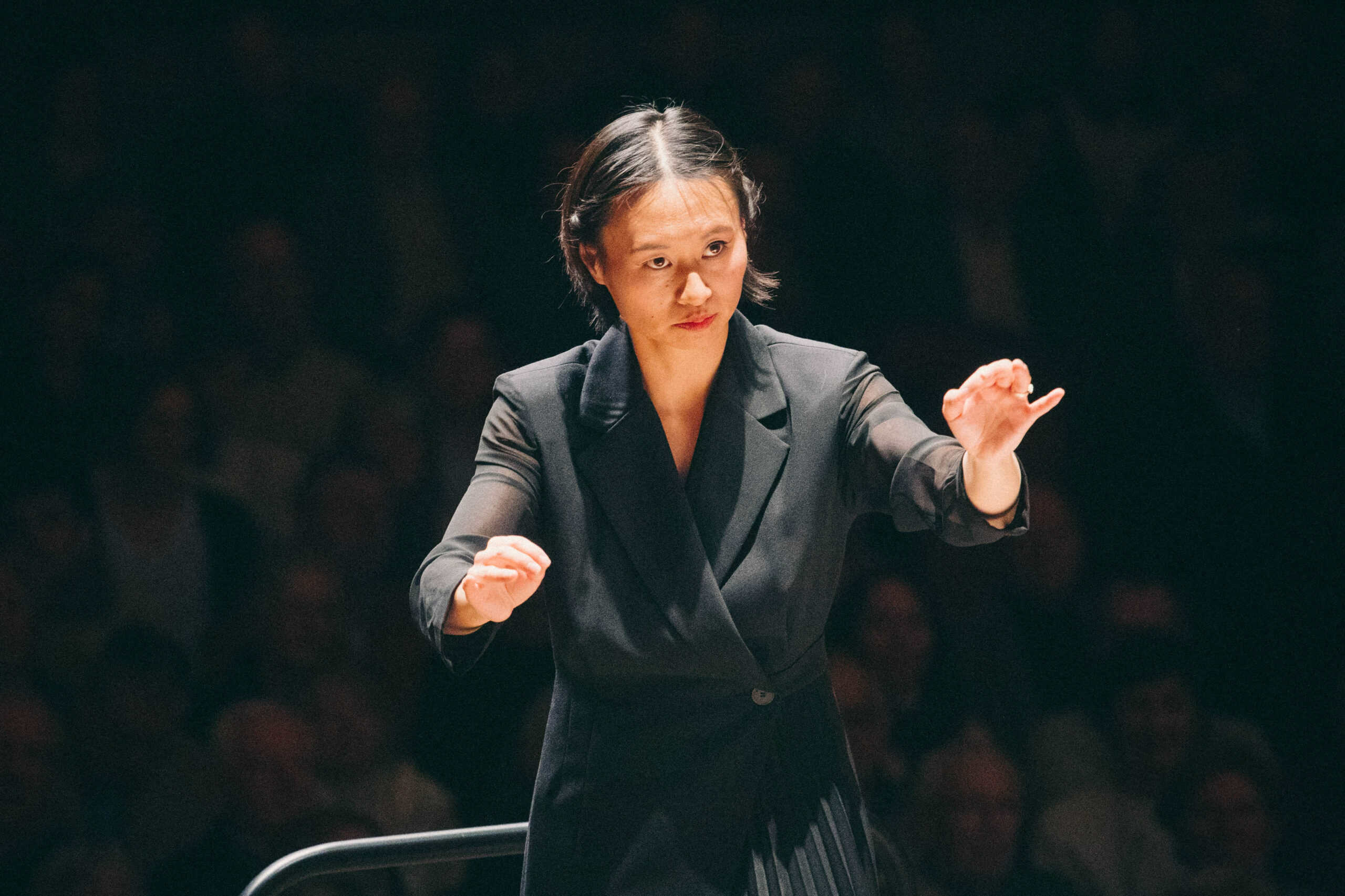 Lu's conducting style is remarkably unadorned. She does not seek her authority in grand gestures, but in control over pulse, transitions, and tension building. This proved essential in a program that varied greatly in compositional and historical terms. Lu confirmed her reputation here as a conductor who approaches repertoire not through rhetoric, but through internal coherence and architecture – an approach that increasingly marks her trademark. Her interpretation made clear that dance – in all its manifestations – is fundamentally about relationship: between meter and freedom, repetition and variation, collective movement and individual expression, and about the way pulse gives direction to expression.
From Dvořák to Price: dance as form and meaning
The two Slavonic Dances by Antonín Dvořák (1841-1904) were not elaborated as folkloristic character pieces, but held tightly in their form. Lu chose clarity and lightly profiled articulation, which allowed the folk-music origin to remain audible without dominating. The BNO played with resilience and discipline; especially in the inner voices, careful attention was paid to building a transparent sound structure that allowed the dance impulse to work beneath the surface. Where the first dance (Op. 46, no. 1) could have been somewhat spicier, this approach worked perfectly in the more melancholic second dance (Op. 72, no. 2).
In the Juba Dance from the First Symphony by Florence Price (1887-1953), the perspective shifted. Price, the first African-American woman whose symphonic work was performed by a major American orchestra, wrote this music from a tension between European symphonic tradition and African-American dance culture. Here, dance is thus not merely form, but a carrier of meaning. Within a New Year's program, this fragment therefore did not function as relaxation, but as a moment of concentration and awareness. Lu approached this section not programmatically, but structurally: by consistently mapping out the rhythmic layering, she allowed the music to tell its own history. Lu also shed light on the historical context of this dance form and its significance within African-American slave culture. In both composition and performance, it became palpable how life energy here clashes with oppression.
Piazzolla and Thuriot: dance individualized
With Astor Piazzolla (1921-1992), dance became individualized. Accordionist Philippe Thuriot (b. 1967) joined the orchestra as soloist. He approached his accordion not as a solistic contrast to the orchestra, but as a voice within the whole. In Invierno Porteño and Oblivion, the expression lay in the phrasing, in the controlled retardations and subtle accents. Thuriot, who has for years moved at the intersection of classical music, jazz, and world music, was visibly at home in Piazzolla's hybrid idiom and avoided the theatrical; his playing remained introspective, almost restrained, thereby creating emphasis through timing and tone color. The transition from symphonic dance to Piazzolla's urban tango proceeded remarkably organically. Lu accompanied with a slimly held orchestral texture, in which the melodic lines gained space without losing their direction, while a particularly refined string sound gave both works extra relief.
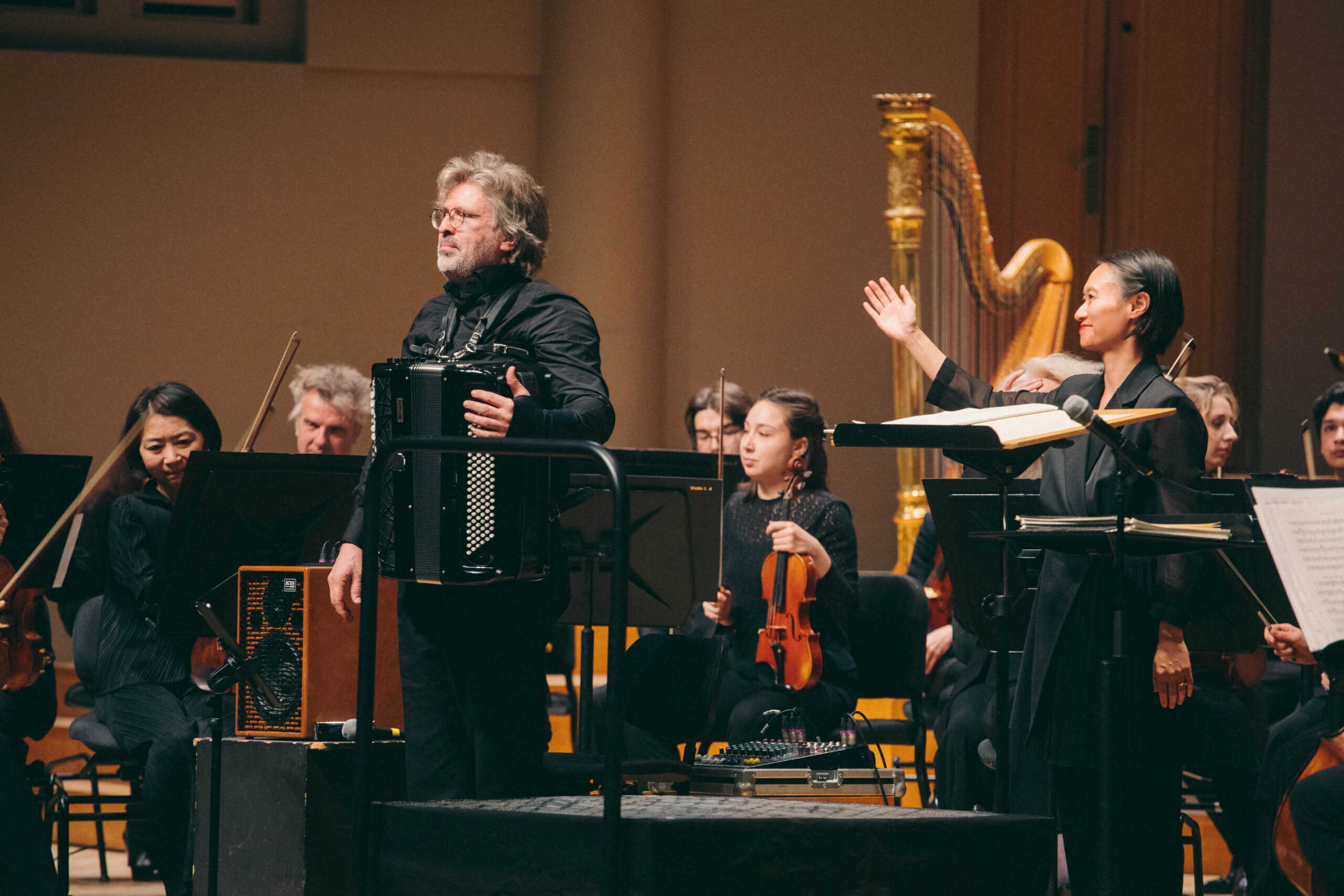 Also in À tous et à Toots / Valse à Christiaan – both compositions by Thuriot himself – which flowed seamlessly into each other, that integration was carried through. The accordion functioned here not as an exotic element, but as an extension of the dance logic that underpinned the program. The waltz took on a personal, but not sentimental tone and resonated more reflectively than nostalgically. Thuriot also played harmonica here, paying homage to Toots Thielemans, one of our greatest musicians ever. This intimate moment caused a clear shift in atmosphere in the hall. The arrangement by BNO musician Ward Opsteyn worked wonderfully; Thuriot explicitly thanked him for it, a rare moment of open collegiality within a formal concert context.
Russian dance between exuberance and stillness
With the Dance of the Jesters from Snegurochka by Nikolai Rimsky-Korsakov (1844-1908), a full-blooded Russian dance resounded, in which the orchestra members could let loose. Subsequently, Swan Lake by Peter Tchaikovsky (1840-1893) functioned as a moment of stillness within movement: dance that breaks free from the ground. Four fragments resounded in which lyrical and characteristic scenes alternated, and in which woodwind and brass players distinguished themselves with impeccably pure solos.
Strauss without frills
In the closing Strauss repertoire with a spirited overture to Die Fledermaus, a stylish An der schönen blauen Donau and a punchy Unter Donner und Blitz by Johann Strauss Jr. (1825-1899) – it became clear how consistently she applied the dance principle. No inflated rubati, no cosmetic accelerations, sometimes still somewhat unpolished, but with a carefully balanced flow, in which timing was more important than effect. Of course, the obligatory Radetzkymars by Johann Strauss sr. (1804-1849) could not be missing either, with the audience willingly joining in the traditional ritual of applause, without falling into arbitrary routine…
Conviction over effect
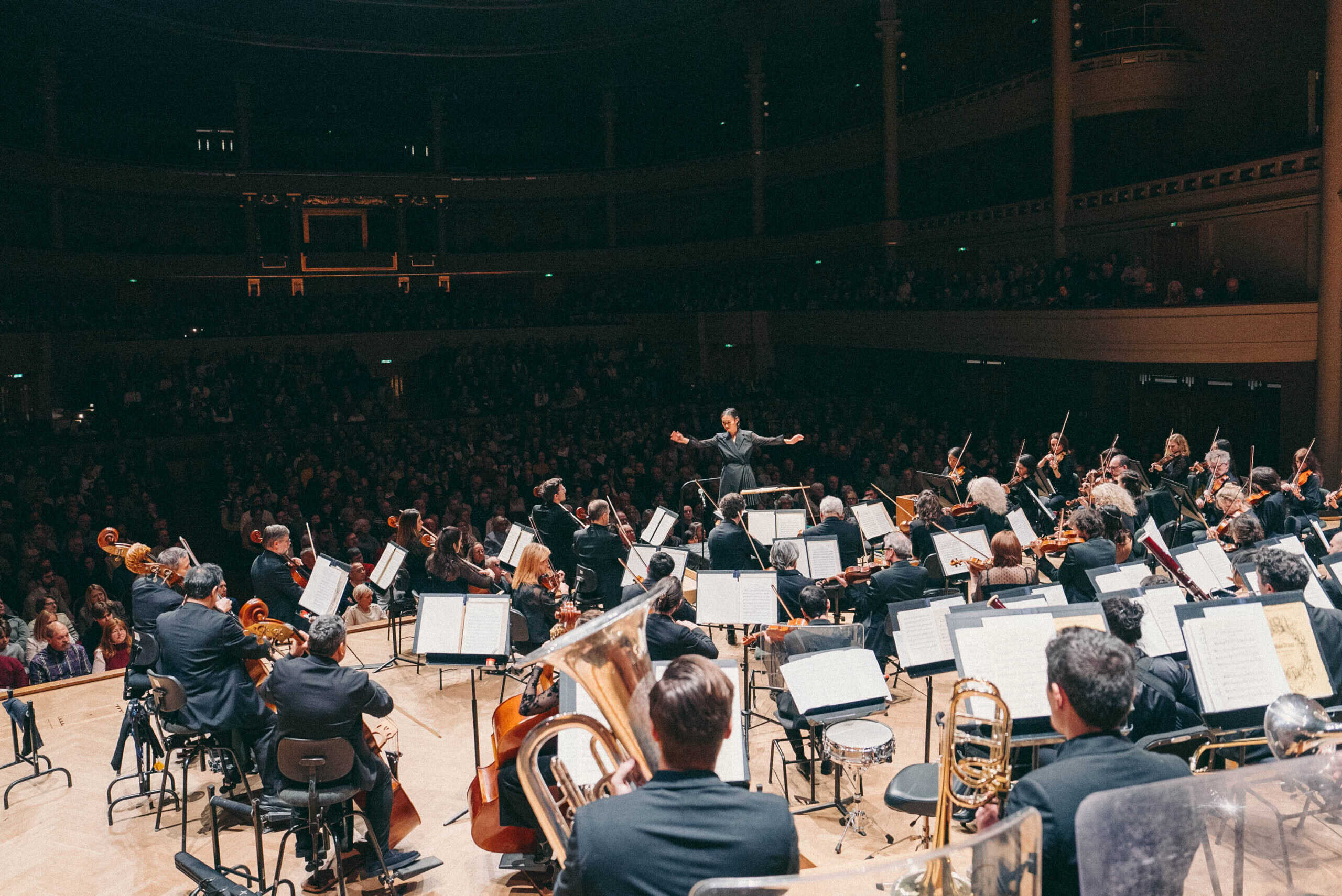
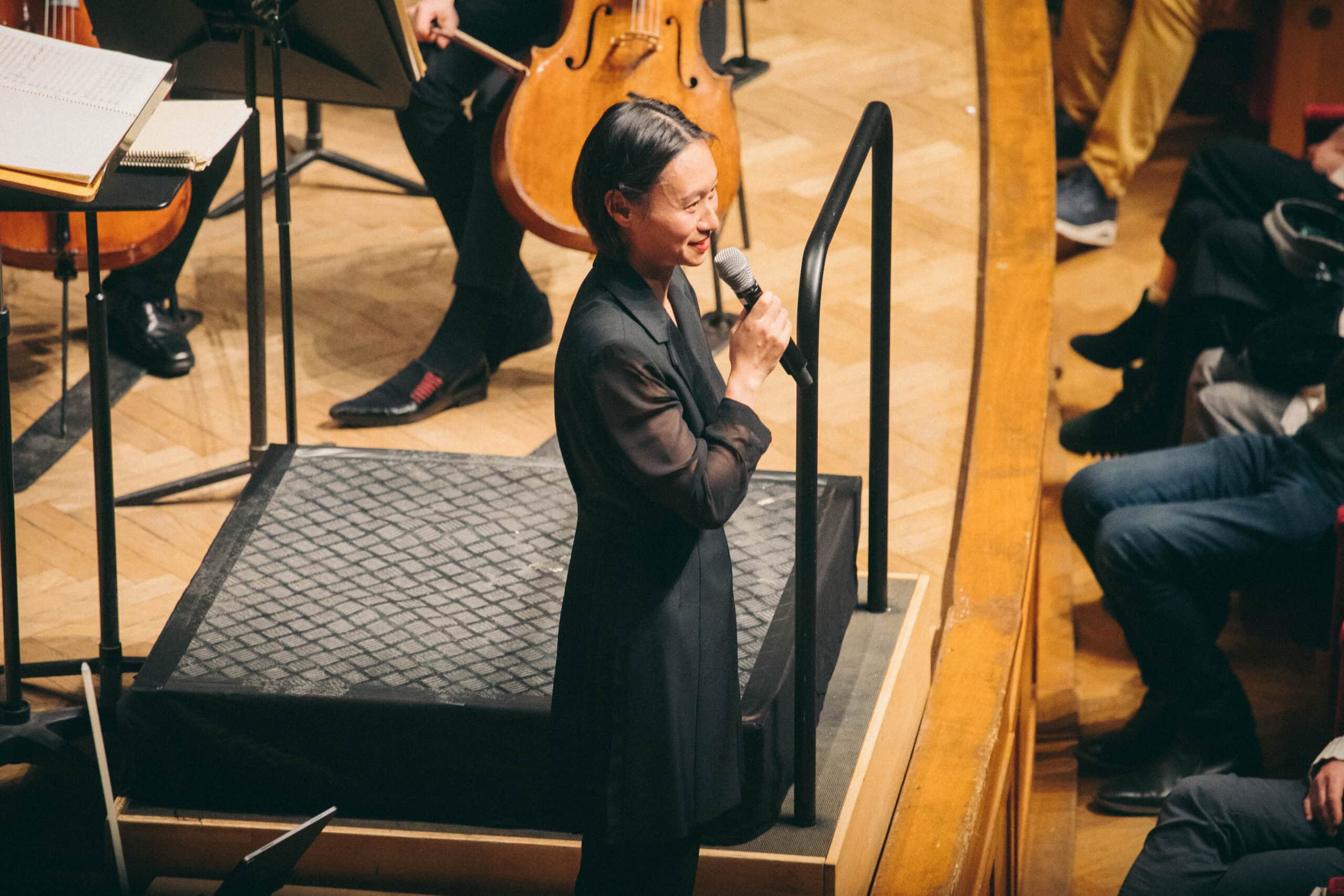 Traditionally, the Henry Le Boeuf hall was packed full, and this fully filled hall radiated a striking energy onto Lu, Thuriot and the BNO. Together they had already brought this surprising and varied programme on tour through Belgium the previous week, and you immediately noticed how perfectly the conductor, soloist and orchestra were attuned to each other. During the entertaining explanations in between, mutual compliments were not lacking – more than justified, visible in smiles, in the visually pleasing interplay and even in Lu, who occasionally subtly danced along. At the end, this feeling was emphasized once more, when Lu personally thanked all the different orchestra sections.
What ultimately distinguished this concert was the seriousness with which the so-called light repertoire was approached. Not by making it heavier, but by taking it structurally seriously. Within the New Year tradition of Bozar, this concert showed that a festive framework can also provide space for coherence and artistic depth. It did exactly what a New Year's concert should do: let people briefly forget the troubles in the world and make them realize that beauty still exists.
Tianyi Lu conceived the programme from movement and proportion, Philippe Thuriot added a personal but restrained voice, and the Belgian National Orchestra made music with attention to detail and coherence. This gave the New Year's concert a substantive backbone: a performance that did not want to impress, but to convince. Lu, Thuriot and the orchestra members of the BNO succeeded wonderfully and were thanked by the audience with a exuberant – and more than well-deserved – standing ovation.