


Pianist and composer Brecht Valckenaers, born in the 21st century and passionate about the music of the previous century, seems to be the embodiment of Festival 20-21 and Transit. For this edition, artistic director Pieter Bergé commissioned him to make Musica ricercata his own and present it to the audience in a very personal way.
1951
The career of composer Györgi Ligeti (1923 – 2006) has barely begun and he is already on a dead end. He survives the labor camp, where because of his Jewish heritage he had to wear the yellow band, but his father, brother, uncle and aunt do not return alive from Bergen-Belsen, Auschwitz and Mauthausen.
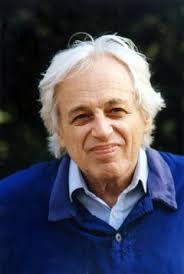
Shortly after the Nazi regime, Hungary comes under a new oppressor, Stalinism. The 27-year-old Ligeti teaches at the Franz Liszt Academy in Budapest, but the political climate is so repressive that he barely knows what his contemporaries Stockhausen or Boulez are working on elsewhere.
To avoid having to write music for party propaganda, he buries himself in scientific research into folk music, as Bartok and Kodály had done before. In 1956, like 200,000 others, he will choose the great exodus. Hidden in a train under a pile of mailbags, he undertakes a life-threatening escape to the West that takes him to Vienna, Cologne, Darmstadt and Paris, never to return to Budapest or his birthplace in Transylvania.
Ex NihiloIn 1951 I began to experiment with very simple structures of rhythms and sonorities as if to build up a 'new music' from nothing. What can I do with a single note? With its octave? With an interval? With two intervals? With certain rhythmic relationships?
Györgi Ligeti.
Musica ricercata is an eleven-part cycle in which Ligeti seeks a new language, almost from nothing, sometimes doing much with very little material. In part I he uses only two notes: the A in all possible places on the keyboard and at the very end twice D as a kind of solution. For part II he chooses three (different) notes, part III four notes and so on … to end with the 12 notes in part XI. As sparingly as he uses the notes, so lavishly does he play with combining the most diverse rhythms and experiments extensively with texture, dynamics and emotional expression.
In only two parts does Ligeti refer to other composers. Part IX is a memorial to Béla Bartók, whom he admired and from whom he tried to break away. The final part XI, which is structured as a kind of fugue, is a homage to the Italian composer and virtuoso keyboard player Girolami Frescobaldi (1583-1643) who brought the ricercar, the predecessor of the fugue, to flourish. Ligeti kept the score of his 'dangerous' experiment in a drawer; Musica ricercata was created in 1969 in Swedish Sundsvall.
2024
The ink on five pages of Ex Nihilo is still wet. A Leuven native, born in the 21st century and passionate about the music of the previous century, pianist and composer Brecht Valckenaers seems to be the embodiment of Festival 20-21 and Transit. For this edition, artistic director Pieter Bergé commissioned him to make Musica ricercata his own and present it to the audience in a very personal way.
The series of composition studies, as Ligeti called them himself, were not intended as a finished product or concert program where the parts logically flow from one another. In Brecht Valckenaers' performance, that fragmentary character disappears through the addition of both five of his own interludes and five connecting fragments by Lachenmann, Kurtag, Crumb, Cowell and Bartók. 26 minutes of études grow into an organic concert piece of 70 minutes. Few festivals would give such a young but promising musician so much freedom and responsibility and risk such an adventure.
CDW You are even younger than Ligeti was when he wrote his Musica ricercata, how does it feel to receive such a beautiful commission?
BV "Without comparing myself to Ligeti, but as a composer I am at a somewhat similar point, I am also very much searching. In my five studies I try to push my own boundaries to the extreme. Especially in the field of rhythm, which is a primary obsession of mine; in a previous life I was a drummer. I like to use different rhythms and time signatures simultaneously where the left hand really doesn't want to know what the right hand is doing. In my étude Distorting Time it seems as if the music twists and distorts time completely, like a fun house mirror in a hall of mirrors does. Oh, sometimes the explanations and notation are much more complicated than the sounding end result."
CDW How did you choose fitting music from five other composers?
BV "Oh, it took me several months of a lot of listening and careful consideration. Ultimately I arrived at five fragments in which a composer approaches or rediscovers the piano as an instrument very clearly ex nihilo. Henry Cowell works with clusters played with arms on the keyboard, Györgi Kurtag asks in his introduction (fragment from Játékok) literally to approach the piano naively as a child. And then George Crumb, that is a playground, where you can explore the possibilities of the piano in a very unconventional way, but always musically, in service of the music.
By listening to so much, I have learned an enormous amount about 20th century music. Actually, I am very satisfied with the natural transitions I have created. Where Ligeti's piece ends, I continue without interruption with something of my own or someone else's, the three narrative threads flow organically into each other, as if I have laid a musical puzzle that culminates in a collage concert."
CDW In 1993, a documentary filmmaker showed current film footage of Ligeti's birthplace in Romania, of which he remembered very little, but to his great surprise, the composer immediately remembered the sound of the bells. 'C'est fou! Les cloches sont encore toujours les mêmes.' In your Ex Nihilo version, there are also quite a few bells.
BV "Certainly, bells are in a sense a subtheme in the concert. They can be heard in Glockenturm from Ein Kinderspiel by Helmut Lachenmann and in the tribute by Györgi Kurtag (Ligeti's bosom friend) to their shared composition teacher Sándor Veress. But also in my latest etude and in Ligeti's tribute to Bartok, the bells ring.
[video width="1280" height="720" mp4="https://klassiek-centraal.be/wp-content/uploads/2024/09/Brech-Valckenaers-aan-de-Piano.mp4"][/video]
American film director Stanley Kubrick opened the door to the large, international audience for Ligeti and may rightly be called his ambassador and great fan. In the soundtrack of A Space Odyssey (1968), he used no fewer than four fragments of Ligeti's music Requiem, Lux Aeterna, Atmosphères and Aventures without permission. Mesto, rigido e cerimoniale, part II from Musica ricercata, which Ligeti described as a 'knife in Stalin's heart', absolutely contributes to the oppressive atmosphere in the erotic thriller Eyes wide shut (1999). Whether most cinema visitors read the credits and have interest in the composers is another question. If you ask us, the collage concert Ex Nihilo is in turn an absolute tribute to Györgi Ligeti.
Brecht Valckenaers (°2000) Gained access to the Young Conservatory in Antwerp at the age of 15, where he was taken under the wing by Nicolas Callot and Wietse Beels. He studies/studied piano with, among others, Nikolaas Kende, Eliso Virsaladze and Claudio Martínez Mehner. He received/receives composition lessons from Pieter Schuermans, Boudewijn Cox and Alain Craens. In 2024-25, he completes his studies at the Hochschule für Musik in Basel.
Brecht has won several first prizes at competitions such as the Steinway Piano Competition, the Cantabile Piano Competition and Le Concours de Piano Andrée Charlier. In 2023, he won second prizes at the Breughel Piano Competition and the EPTA Piano Competition, where he also received the prize for the best Belgian work with one of his compositions.
For tickets and info: https://www.festival2021.be/ or view the event in our Concert Agenda