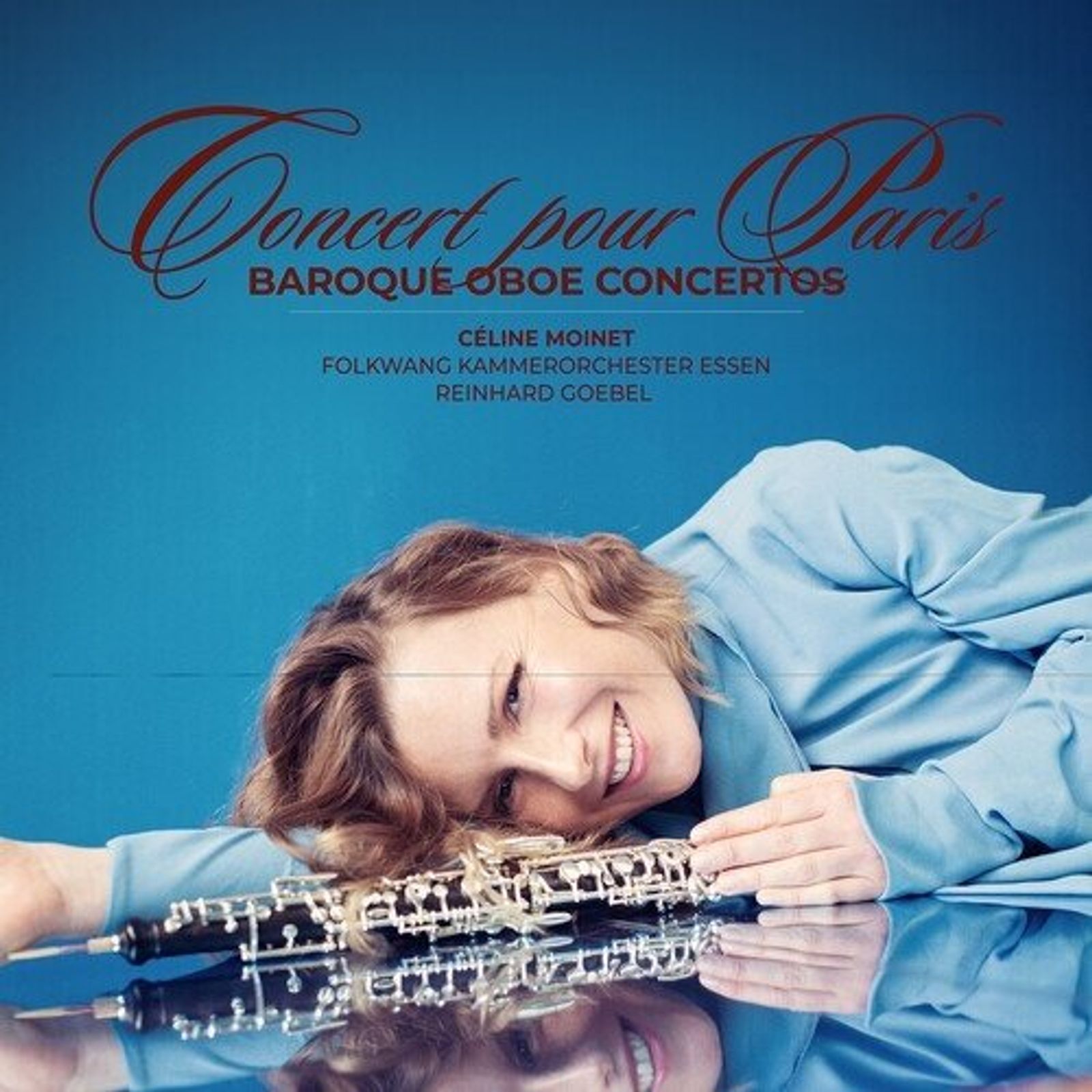
There are composers you only come to know when you put on a CD like Concert pour Paris. Alessandro Besozzi and his son Carlo were such discoveries for me. Oboist Céline Moinet, together with the Folkwang Kammerorchester Essen under the direction of Reinhard Goebel, presents five eighteenth-century concertos by the two Besozzis, Jean-Marie Leclair and Franz Xaver Richter. These are works you rarely encounter on a concert programme. The Besozzis in particular make you curious for more: their concertos are refined, playful and full of life, and they reveal how many possibilities the oboe already offered in that period.
A Parisian introduction
The title of the CD refers to Alessandro Besozzi's (1702–1793) stay in Paris. In 1735 he performed there together with his brother, the bassoonist Paolo Girolamo. The brothers were well paid there, although the oboe as a solo instrument did not really catch on with the French public. Nearly three centuries later, this music finally receives the attention it deserves.
The album opens with Alessandro Besozzi's oboe concerto in G major. Already in the first movement it is striking how lightly the music unfolds. The oboe can show its virtuosity in fast passages, but the solo part does not remain constantly in the foreground. In the second movement something special happens: when Moinet enters with her melody, it seems almost to rise effortlessly out of the orchestra. The accompaniment carries the melody without overpowering it, giving the music a hushed, almost heavenly character.
Moinet does not seek expression in grand gestures. She lets the melodies speak and keeps the ornamentation within the musical whole. This is also evident in the Presto of the same concerto, where the orchestra first shows its own agility and rhythmic sharpness. When the oboe takes over the virtuosic line, the accompaniment remains finely shaped. The soloist is given all the room she needs, while the interplay with the orchestra is preserved.
The Folkwang Kammerorchester Essen sounds alert and transparent throughout. Reinhard Goebel, who founded Musica Antiqua Köln in 1973 and played an important role in historically informed performance practice, keeps the voices closely together. Solo and orchestral passages contrast clearly, without the music losing its coherence.
French elegance, a different world
With Jean-Marie Leclair's (1697–1764) oboe concerto in C major, Op. 7 No. 3, the atmosphere changes. Where Alessandro Besozzi moves playfully and supply, here there is more French elegance. Leclair, who as violinist and composer combined Italian influences with the French tradition, wrote music in which both styles meet. After the first Besozzi concerto, this is a well-chosen transition: the oboe remains central, but the music calls for a different approach.
In the Adagio the orchestra takes on a darker colour, which gives the soloist's melody extra relief. This is set against the festive Allegro assai. Moinet convincingly adapts her playing to these different characters. Her approach here is less playful than in Besozzi, but fits beautifully with Leclair's restrained style.
The son dares more
The programme then returns to the Besozzi family, now with Carlo (1738–1791) and his oboe concerto no. 6 in B flat major. After the orchestral introduction, music unfolds that delights in exploring the possibilities of the instrument. Moinet lets her oboe almost sing here, without the playfulness being lost.
Of the four composers on this CD, Carlo is for me the most daring. The virtuosic passages give the music momentum and keep the oboe constantly in motion. Yet the solo part does not sound like a string of technical feats, but as part of a lively musical conversation. His character also differs from his father's. Alessandro wins me over mainly through his lightness, while Carlo surprises me with his bold turns. It is precisely this difference that makes me curious for more music by both of them.
Richter as contrast
The two concertos by Franz Xaver Richter (1709–1789) place what came before in a different perspective. Richter was born in Moravia and from 1769 was Kapellmeister at the cathedral of Strasbourg. His oboe concerto in F major is more expansively conceived, while the concerto in G minor feels smaller in scale. In the latter, the violins move largely together in the orchestral sections, giving the music a more compact and somewhat austere impression.
Both works are carefully composed and offer Moinet fine opportunities to shine, especially thanks to the interplay between oboe and orchestra. Still, for me they remain less surprising than the Besozzi concertos. Richter shapes his material skilfully, but the individuality that makes the music of father and son so appealing speaks less strongly here.
Intimate in Wuppertal
The recording adds to the listening pleasure. The CD was recorded in the Immanuelskirche in Wuppertal, but you do not hear resonant church acoustics. Everything sounds clear and close: the individual voices remain easy to follow, and you feel almost as if you are sitting among the musicians.
Concert pour Paris is a particularly pleasant introduction to repertoire that rarely reaches the concert hall. Céline Moinet and Reinhard Goebel, together with the Folkwang Kammerorchester Essen, allow the different characters of these concertos to come fully into their own. Alessandro and Carlo Besozzi in particular stay with me. Thanks to this CD I have come to know two composers whose music I would gladly hear more of.