

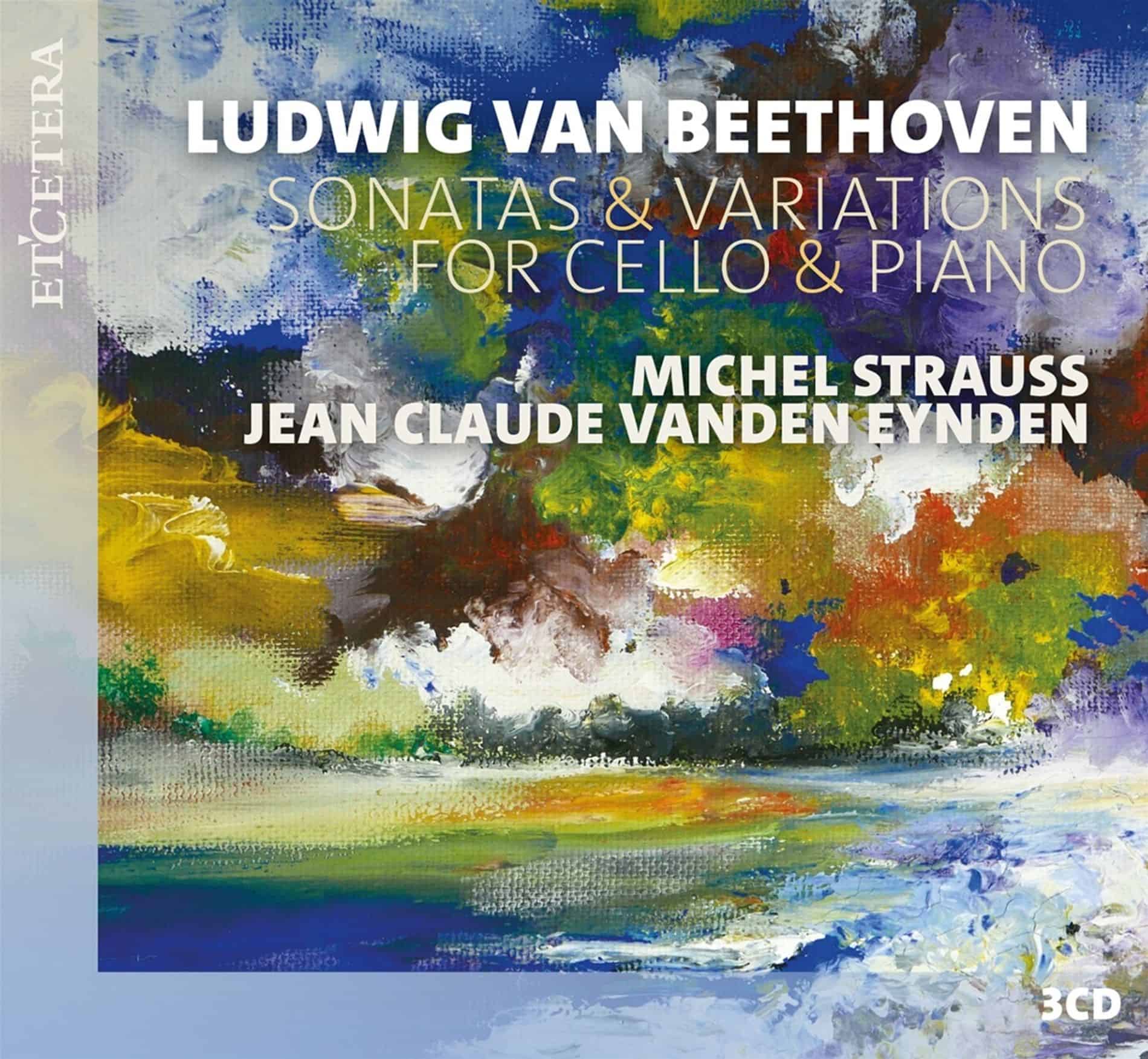
Beethoven: Cello Sonata no. 1 in F, op. 5 no. 1 - no. 2 in g, op. 5 no. 2 - no. 3 in A, op. 69 - no. 4 in C, op. 102 no. 1 - no. 5 in D, op. 102 no. 2 - Twelve Variations in G on 'See the conqu'ring hero comes' from Händel's Judas Maccabeus, WoO 45 - Twelve Variations in F on 'Ein Mädchen oder Weibchen' from Mozart's Die Zauberflöte, op. 66 -
Seven Variations on 'Bei Männern, welche Liebe fühlen' from Mozart's Die Zauberflöte, WoO 46 What stands out especially in these performances is their communicative character, the ease with which this duo phrases, articulates and nuances, on the one hand dynamic and powerful, on the other hand intimate and lyrical. The long melodic lines are sublimely developed, but also the powerful sforzati and syncopations are in the best hands with these two outstanding musicians. No wonder then that I was soon drawn into that so contrasting journey, from Beethoven's first serious explorations in this field (the two sonatas op. 5) to the last ones with their unfathomable stirrings (the two sonatas op. 102). It has been a long road, from the three sonatas for gamba and harpsichord BWV 1027-1029 composed by Bach, the first mature works in the genre, to Beethoven's grandly conceived cello sonatas, which – needless to say – can rejoice in a discographic reservoir of now exuberant proportions. Beethoven wrote only a limited number of pieces for cello and piano: no more than five sonatas (in contrast, ten violin sonatas) and three variation works plus an arrangement for cello and piano of the Horn Sonata op. 17. But they do span from Beethoven's creatively early to his late years: op. 5 was written in 1796 (he had settled permanently in Vienna four years earlier), op. 102 nearly three decades later, in 1815. The Cello Sonata in A, op. 69, completed in 1808 and dedicated to 'Freiherr' Ignaz von Gleichenstein, contains so much melodic richness, expressive intensity and surprising harmonic turns that it represents a true touchstone for every duo of what they are or are not capable of. Incidentally: how would this sonata have sounded in 1809, at the premiere by cellist Nikolaus Kraft and pianist Dorothea von Ertmann (a talented pupil of the composer, to whom he dedicated the Piano Sonata no. 28 op. 101)? The first work I listened to on this double album was thus op. 69, in which French cellist Michel Strauss and Belgian pianist Jean Claude Vanden Eynden display so much flair, charm, virtuosity and passion that I pressed the 'repeat' button on the cd player to follow the entire interpretation process several times in succession with the score in my lap, each time being struck by the temperamental character of this performance, the technical mastery and the structural insight that this duo demonstrates. Then followed a second 'proof of competence', really much more than that: the Adagio con molto sentimento d'affetto of op. 102/2, for me also a touchstone with regard to expressive power. Again I was struck by the expressive depth that both musicians achieve here, which promptly reminded me of that well-known statement by the composer that music is a higher revelation than all wisdom and philosophy. But also that music-making without passion is unforgivable, a 'sin' that this formidable duo can certainly not be accused of! The three variation works too (much more than merely a supplement to the five sonatas) are perfect in terms of sound formation, rhythmic incisiveness and precision, alternately flamboyant and intimate. Daan van Aalst documented this production, which was created in collaboration with the Royal Conservatoire in The Hague, impeccably in the Amare Studio 2. In short, absolutely everything is there to get enthusiastic about this double album. Although Et'cetera is also competing with itself in this case, as this oeuvre performed by cellist France Springuel and pianist Jan Vermeulen appeared on the same label more than a decade ago but is still available (albeit on fortepiano); and then also with as a not-to-be-missed 'bonus' the Horn Sonata in F, op. 17 arranged by Beethoven himself for cello and piano (I discussed the entire set here). Which in my view certainly deserved a place on this new album.