Jörg Widmann has a strong connection with BOZAR: as a world-class clarinetist, as a conductor and especially as a composer. Last season he was heard as a soloist, and as a chamber musician in works by Mozart and Schumann and with his own compositions.
This year, two symphonic works by him were on the programme at the Klarafestival at BOZAR. One of them was the Belgian premiere of his viola concerto, written for his friend and fellow musician Antoine Tamestit who, together with Tabea Zimmermann, ranks among the top viola players in the world. It was a commissioned work by the Orchestre de Paris (jointly with the Swedish Radio Symphony Orchestra and the Bavarian Radio Symphony Orchestra).
Jörg Widmann has seriously indulged in the use of an astonishingly extensive range of instruments that was strikingly idiosyncratic on the stage: the thinned-out string section in the centre, with the woodwinds and brass, harps, celesta, piano and a multitude of percussion instruments arranged in concentric circles around it, forming a kind of enclosure in which three empty places marked the playground and the course for the soloist.
Weaving and gesticulating through the orchestra, Tamestit engaged in his own dialogue with the orchestra: challenging, sharp and also humorous. But above all virtuosic, as in the lengthy introduction where he emerges from somewhere in the orchestra and initially plays his instrument only tapping and pizzicato. Sometimes also very vehemently, even once too vehemently when a string breaks and Tamestit has to disappear backstage for a moment! This time it was not part of the act. Towards the end it seems a bit "more classical": the melancholic soul of the viola comes to the fore and eventually fades away completely. The audience, who had come for Mahler, listened – and watched – a little uneasily to a magnificent performance of a work that started from irony and parody and moved into intensity and resignation.
Resignation is also the endpoint of Mahler's Ninth. The last movement is an Adagio in which Mahler quotes a fragment from his Kindertotenlieder at the end: "Der Tag ist schön auf jener Höhn". Taken out of its context it seems idyllic. Within the context (the sun breaks through at the moment of the funeral…) it marks the catharsis while the sorrow is still intensely lived. As is also the case with the motto of the Klarafestival: "Alles wieder gut" from the "Lieder eines fahrenden Gesellen".
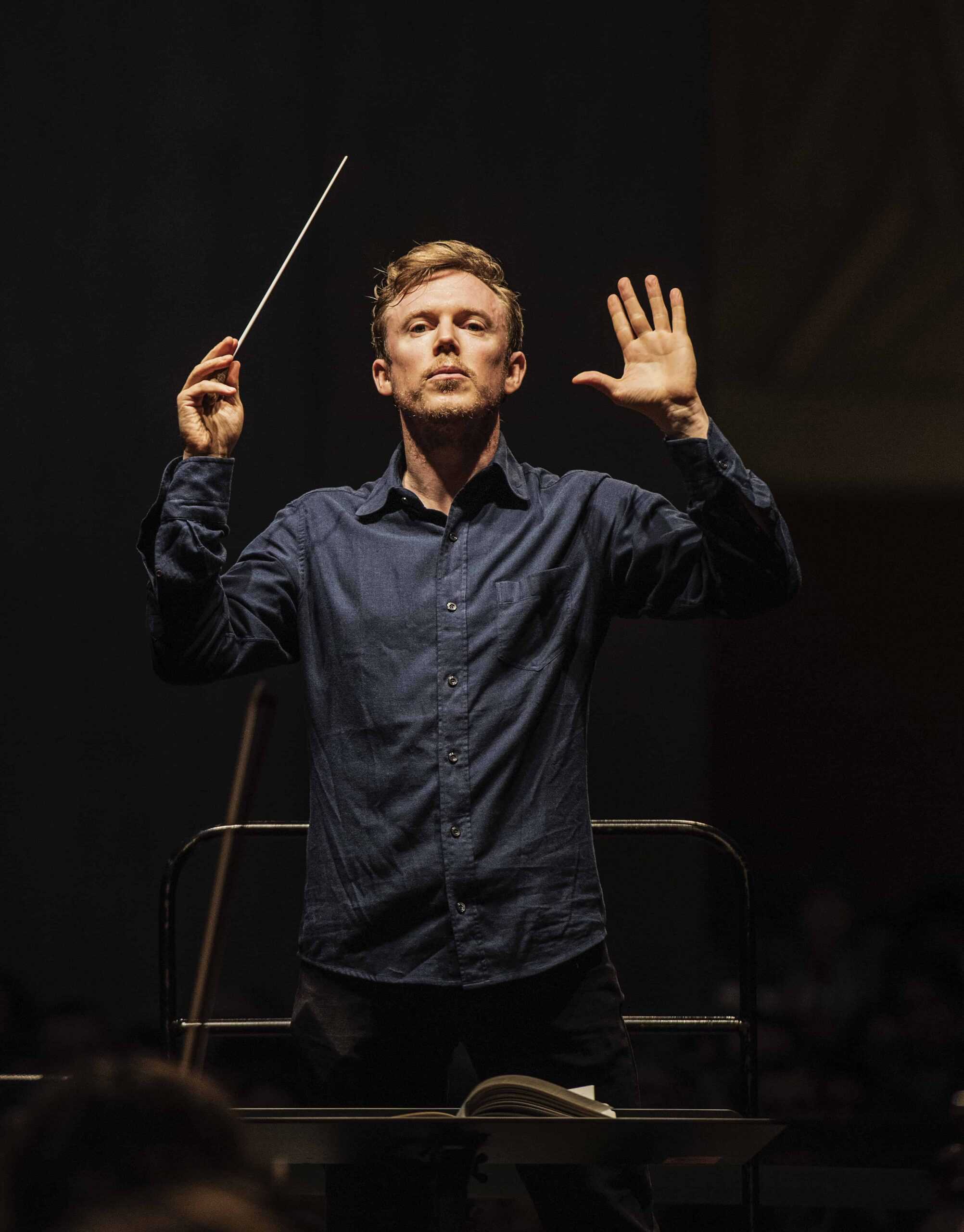
Daniel Harding and his Orchestre de Paris gave a very clear interpretation of Mahler's Ninth. While others mainly allowed themselves to be tempted to accentuate the tormented outbursts, Harding had more eye for a sharp delineation of the contrapuntal lines and the fugal treatment (the third movement Rondo-burleske) and above all for the tranquillity in which each part of this symphony ends: not as a sweet fading after orgiastic violence, but as a mastery of intense sorrow. Daniel Harding seems to me to be one of the most interesting conductors of his generation: not seeking pathos, no machismo, no extremes. But definitely the inner world. Alles wieder gut.
- WHAT: Klarafestival: Mahler 9 & Jörg Widmann
- WHO: Antoine Tamestit, viola; Orchestre de Paris; Conductor: Daniel Harding
- WHEN: 15 March 2018
- WHERE: BOZAR
- PHOTO: © William Beaucardet