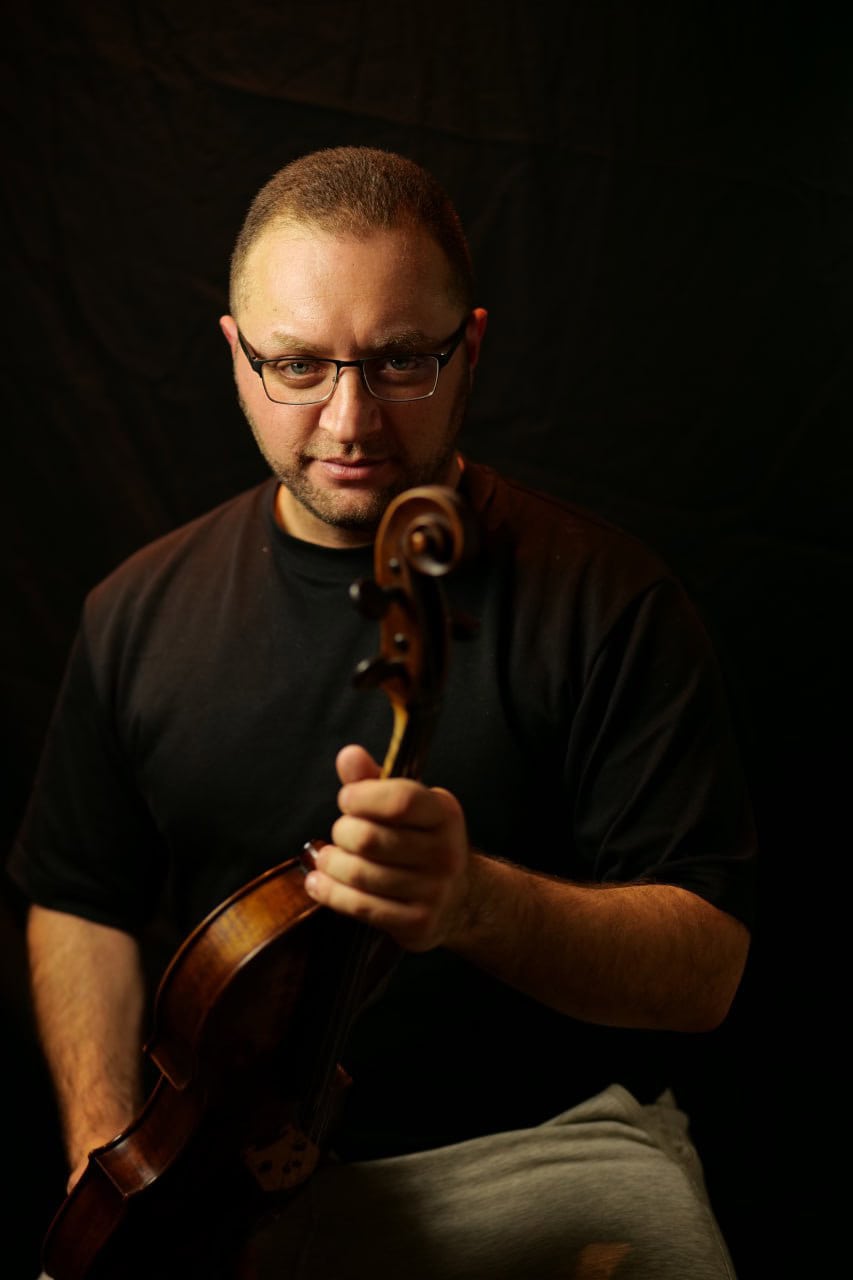
Klassiek Centraal posed a series of questions to the founder of the young chamber music festival ICCF in Waterloo (first edition was in May this year, the next in April 2026) about his concerns as a human and musician. It turned out to be a fascinating set of answers. With such a driven man, the young festival is bound to remain a lasting asset in the musical landscape.
David Abrahamyan Grigoryan began his musical education with Oleg Lev, soloist with the Moscow Virtuosi. He earned his bachelor's degree from the Maastricht Conservatory under Henk Guittart (member of the Schönberg Quartet) and Boris Belkin, where he graduated cum laude with distinction, and his master's degree in Music. In 2006 he received a scholarship to study at both the Juilliard School of Music and the Manhattan School of Music, where he studied under Tobby Apple and Pantika Kopec. Abrahamyan further perfected his musical education with leading musicians such as Tabea Zimmermann at the Hanns Eisler School in Berlin (2006), Antoine Tamestit in Paris (2007), Yuri Bashmet at the Accademia Chigiana in Siena (2008), and Diemut Poppen in Detmold (2009).
From a young age, he collaborated with prestigious ensembles and orchestras, including the Luxembourg Philharmonie, OSPA in Oviedo, Spain, and Lagen Laden in Brussels, where he served as principal viola. He also performed with the Salzburg Chamber Soloists under the artistic direction of Lavard Skou Larsen. Abrahamyan has performed under renowned conductors such as Claudio Abbado, Zubin Mehta, Bernard Haitink, Roberto Benzi, Jesús López Cobos, and Plácido Domingo, among many others. As a soloist, he has performed works such as Telemann's Concerto, Christian Bach's Concerto, Bach's Brandenburg Concerto No. 6, Hindemith's Trauermusik, Mozart's Sinfonia Concertante, and Bruch's Double Concerto.
From 2005 to 2009, he was founder and artistic director of the masterclasses "Musical Improvement" in Felechosa (Asturias, Spain), where he invited leading teachers. He has performed in prestigious halls on all continents. Since 2025, he has been the driving force and artistic director of the ICCF in Waterloo, where he collaborates with the Queen Elisabeth Music Chapel.
1. What is your earliest musical memory?
My very first musical memory is listening to my father play violin. I would listen until I fell asleep. Together with my cousin, we listened to Kachaturian's violin concerto performed by Leonid Kogan. I was deeply impressed by it.
2. What did you want to become when you were growing up?
A pilot, but I had vision problems since childhood, so it remained just a dream.
3. Who passed on your passion for classical music to you?
My parents, probably my father. He told me that classical music is the best way to explore the world and meet people. He was right.
4. What is the best advice you've ever received, and do you still follow this wise counsel?
Never give up, consistency is the key to everything, and yes, I follow it and will continue to do so always.
5. What would your ode to your instrument sound like?
The human voice—people always say the cello comes closest to it, but I think it's the viola.
6. Have you ever considered pursuing your musical career abroad?
I've already been incredibly fortunate to perform all over the world and play with fantastic musicians. When I started, I had no expectations because my career began late. I thought it would already be a huge stroke of luck just to play in an orchestra. With a lot of work, practice, and consistency, I'd say I've accomplished far more than I ever could have dreamed. I still enjoy making music without setting expectations—that's always better.
7. What does the concept of time mean to you, and how do you prefer to spend it?
Time is the most powerful aspect of human life for me. It's an eternal question, deeply connected to each individual's perception. Time is the only thing we cannot buy, control, repeat, or manipulate in any way. Time is unique. Sometimes success in life is simply being in the right place at the right moment. Just like timing in music makes all the difference.
8. If you could change the past—your own past or that of someone or something else—where would you intervene?
I wouldn't do it. Everything that has happened, good and bad, has a reason. Rather than wanting to change the past, which is absolutely impossible—we just talked about time—I'd rather learn the reason behind things and try to become better. That's incredibly difficult, but in my opinion, it's the only way. There's no way to avoid making mistakes, but there is a way to learn from them.
9. Does such a thing as music without communication exist, and if so, what would that sound like in your case?
If there's no communication, there's no music: music is one of the strongest forms of communication in human existence. How else could you write or make music? Even if you produce it with a machine, it still has to be created.
10. How important are social media to you as a musician?
For me? Not particularly, and I try to avoid them unless for personal communication, but I don't have an active life on social media. I don't support social media as a primary factor for engagement. It's a very long and difficult conversation, but what I really mean is that I wish social media were just a tool and a function instead of the main way artists sell themselves nowadays.
11. Do you prefer to take the stage alone and with confidence, or do you rely on a good outcome together with one or more fellow musicians?
Chamber music is by far my favorite musical choice.
12. Do you have a favorite quote or saying, preferably one related to music?
"Music is a thousandth of a millisecond between one note and the next; how you get from one to the other—that's where the music is," as Isaac Stern put it.
13. Do you currently have a favorite composer; and if so, who is it?
Whoever I'm playing—I don't think there's any other way to dedicate myself to the music.
14. Is there a specific motto that defines you?
Never give up!
15. Do you have a set ritual before or after a concert?
Not really.
16. What work of art has touched or shaped you most (book, film, painting, music)?
Mozart's Introitus and Bach's Erbarme Dich. I can't really explain it, but I feel that something different happens when I hear those two masterpieces.
17. Fill in the blank: From the audience that comes to my concert, I expect them to…?
Enjoy.
18. What compliment would you love to hear after a concert?
I don't really enjoy it, I'm honestly not keen on it. From a musical partner I've played with, it's always nice to hear kind words of course, but from the audience I just hope they had a good time.
19. When did you last play out of tune?
Every day.
20. What don't you like?
Playing out of tune.
21. What would you like to know more about?
Music and time.
22. Which colleagues or ensembles do you admire and would therefore love to perform with?
Hard to say, playing with friends on stage is always a pleasure and a good time.
23. Which deceased musician do you admire most and would like to bring back to life?
Too many, I can't pick just one: Schubert? Heifetz? Callas? Pavarotti? Bach? Rachmaninov? The list is endless. But I could listen endlessly to Heifetz, Michael Rabin, Yossef Hassid, and Horowitz.
24. If the classical music canon were to be reassembled, how would you approach this task?
I don't think that's ideal right now. Too many non-musicians and people who don't really know what they're talking about dominate the music scene these days, which is really sad.
25. Do you have a guilty pleasure you'd like to share?
Coca-Cola is one of them, and sushi—I'm mad about it.
26. What good intention can you never stick to?
Quitting smoking, quitting Coca-Cola…
 27. What music are you listening to these days?
Mainly R&B, hip-hop, and the great classics like Pink Floyd or Freddy Mercury.
28. What's the first thing you do before studying a new musical piece?
Score or scores, then I listen right away.
29. What music are you studying at the moment, and why?
At the time of this interview, I'm working on Schubert's "Der Tod und das Mädchen".
30. How do you see the relationship between technology, science, and mathematics in relation to classical music?
I think science and mathematics are clearly part of music and there's been a lot of research into it. As for technology, I think it's getting better, but there's probably still a long way to go and I'm not against it at all, only the way we use it can be a problem.
31. What does the sound unique to you and the audience falls silent sound like?
Sometimes silence in music and in life is louder and more powerful than anything else, as Claudio Abbado said: "Music is born from silence", there's little I can add to that.
32. Do you have a favorite time signature, and why exactly?
These days I think the key to life is learning to live in the moment, the day you're in, the second you're sitting in, the exact note you're playing, not before and not after. Time exists only NOW for me.
33. If you could choose just one emoji, which emotion(s) would you most like to express?
A smile
34. What do you consider your greatest achievement so far?
Making music
35. What project would you start immediately if you had unlimited time, resources, and possibilities?
I would work harder on the project I'm currently working on, Younison, and I would improve the festivals I'm currently organizing. ICCF in Waterloo and Sant Pau International Chamber Music Festival in Barcelona.
36. What is your greatest musical strength?
My experiences.
37. What quality do you admire most in fellow musicians?
Respect for music and the work they do.
38. How do you find peace?
Through music and sometimes through practice.
39. What keeps you awake at night?
Daily worries...
40. What is the most important lesson life has taught you so far?
If you can, don't judge and enjoy every second of what you do, love what you do and it will get better.
41. Which recording would you absolutely like to share with the readers of Klassiek Centraal?
Jascha Heifetz playing the Hebrew melody by Achron when he was just 16. The Elgar Concerto performed by Menuhin, also when he was 16 I believe. Those two performers, in my opinion, come from somewhere else entirely.
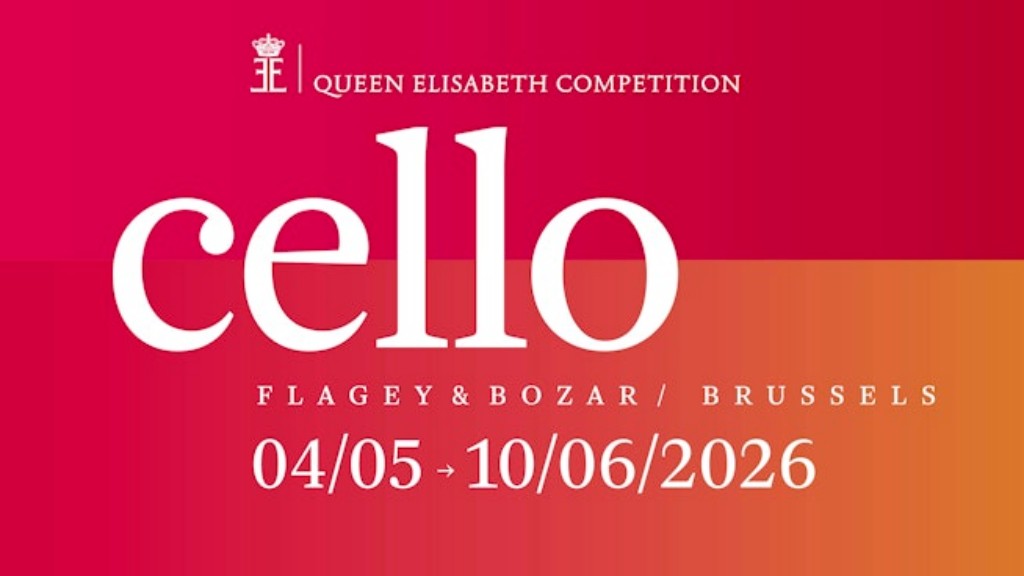
42. Where can we see and hear you at work soon, and in what context will that be?
In April 2026 in Waterloo at the {{NOTRANSLATE_ICCF}}, in collaboration with the Queen Elisabeth Music Chapel, featuring outstanding artists such as Enrico Pace and Claudio Bohorquez, among the regular artists of the QEMC. It will be the second edition of this new festival and expectations are high. Keep your fingers crossed with us that it will be a success for everyone. Classical Central posed a series of questions to the founder of the young chamber music festival {{NOTRANSLATE_ICCF}} in Waterloo (the first edition was held in May this year, the next one in April 2026) about his concerns as both a person and a musician. The answers were fascinating. With such a passionate man at the helm, success is inevitable…, in collaboration with the Queen Elisabeth Music Chapel, featuring outstanding artists such as Enrico Pace and Claudio Bohorquez, among the resident artists of the QEMC. This will be the second edition of this promising new festival and expectations are running high. Here's hoping it will be a success for everyone.