

Opéra Royal de Wallonie presents one of the crown jewels of the opera repertoire as the final opera of the season: Othello by Giuseppe Verdi. Director Alex Aguilera makes it clear from the opening image: Othello is a oppressive, somber piece. We get authentically gripping Verdi, compelling theater right to the final note.
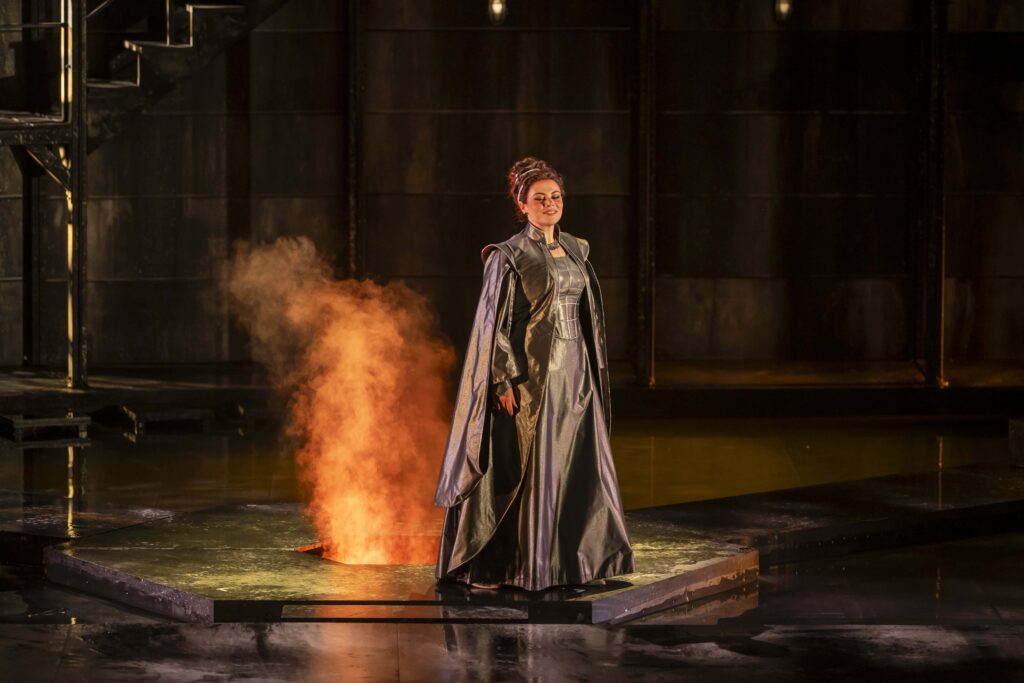
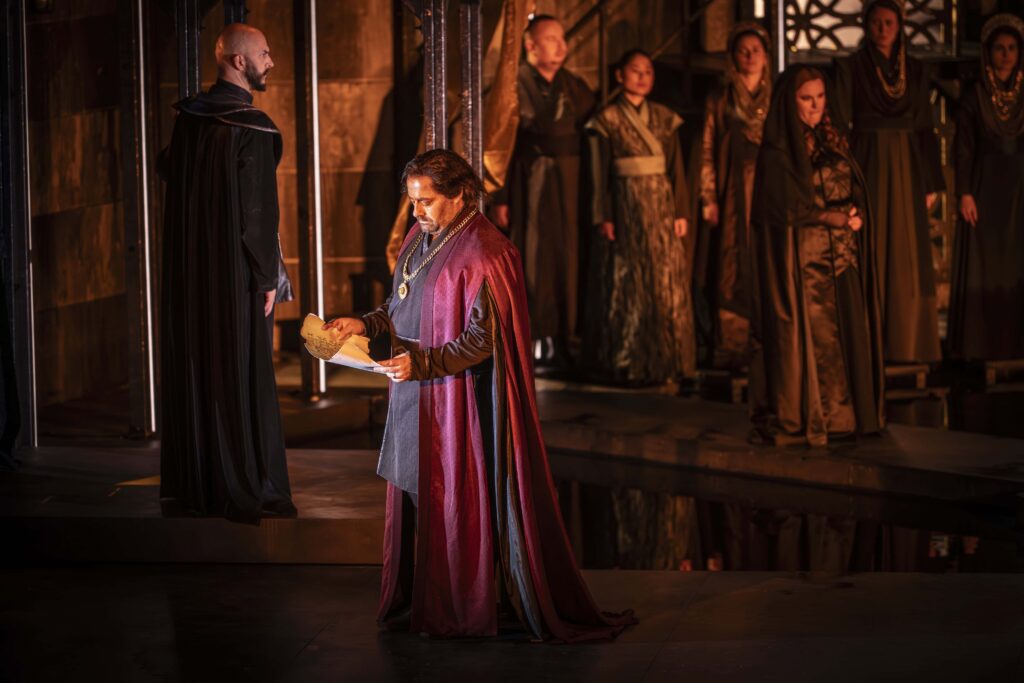
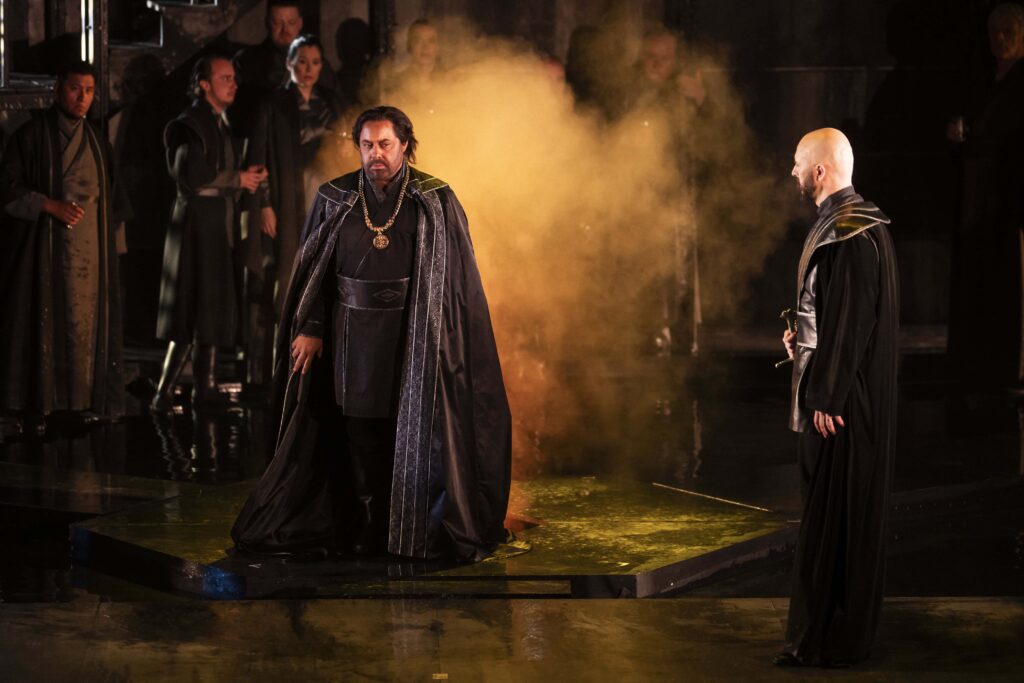
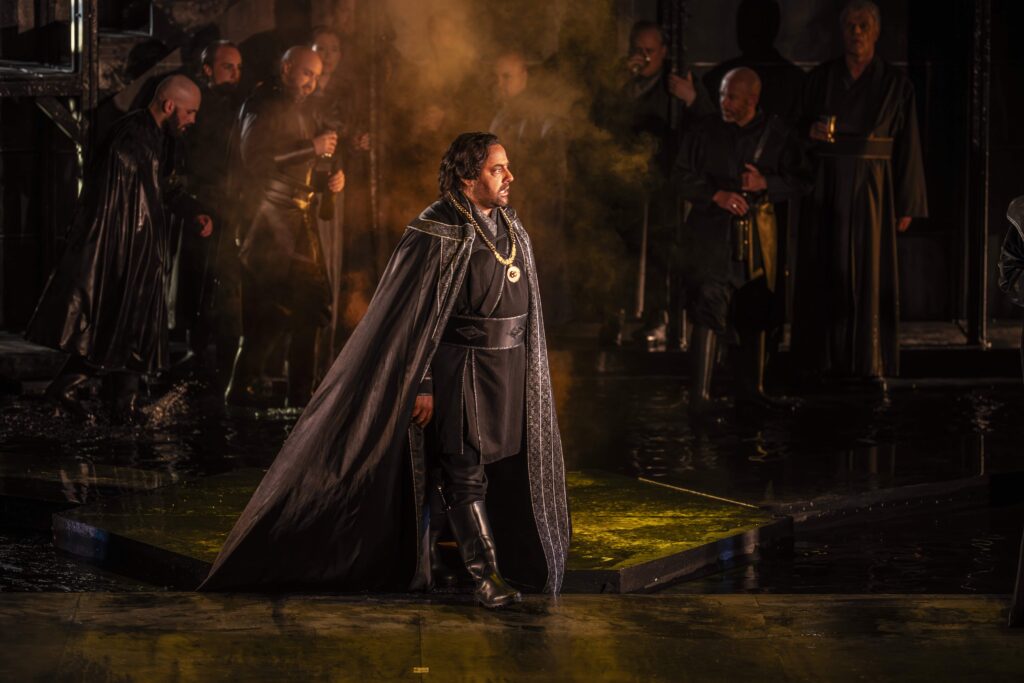
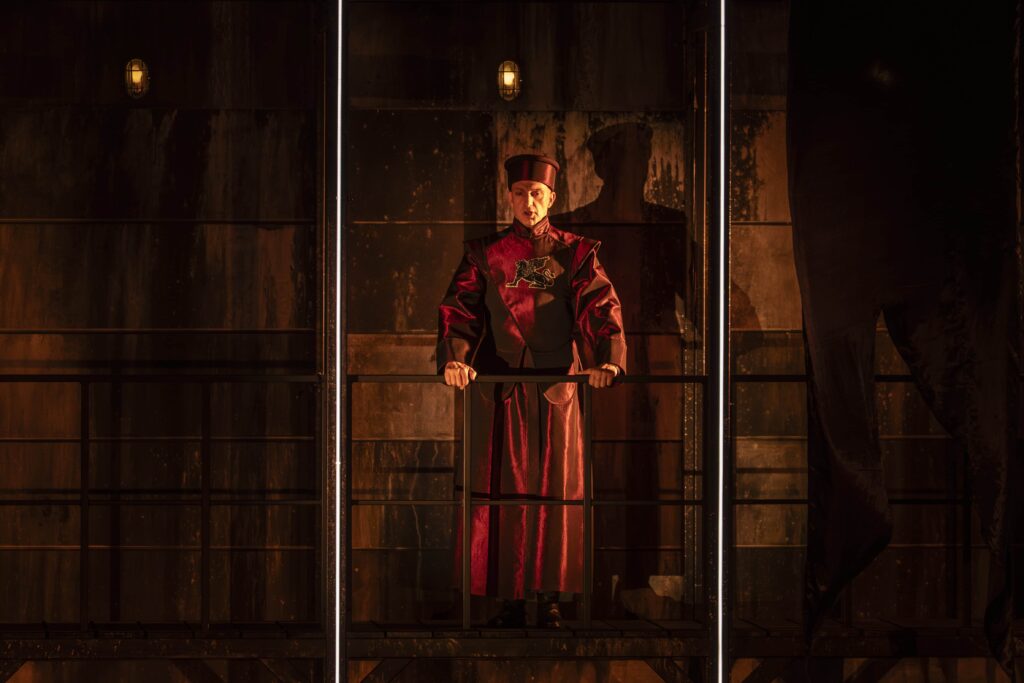
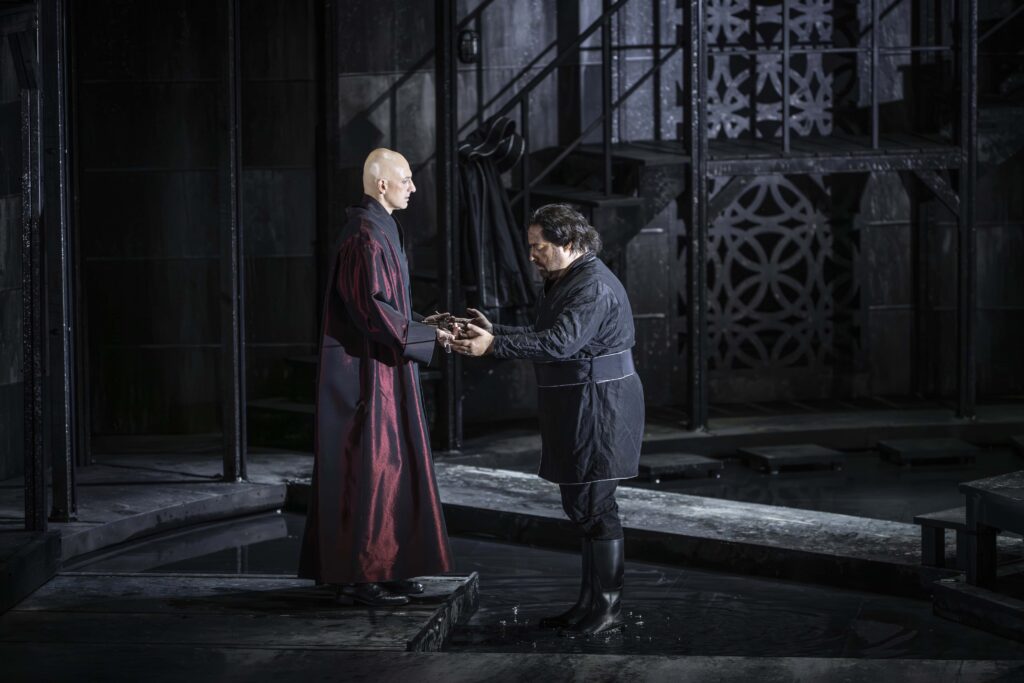
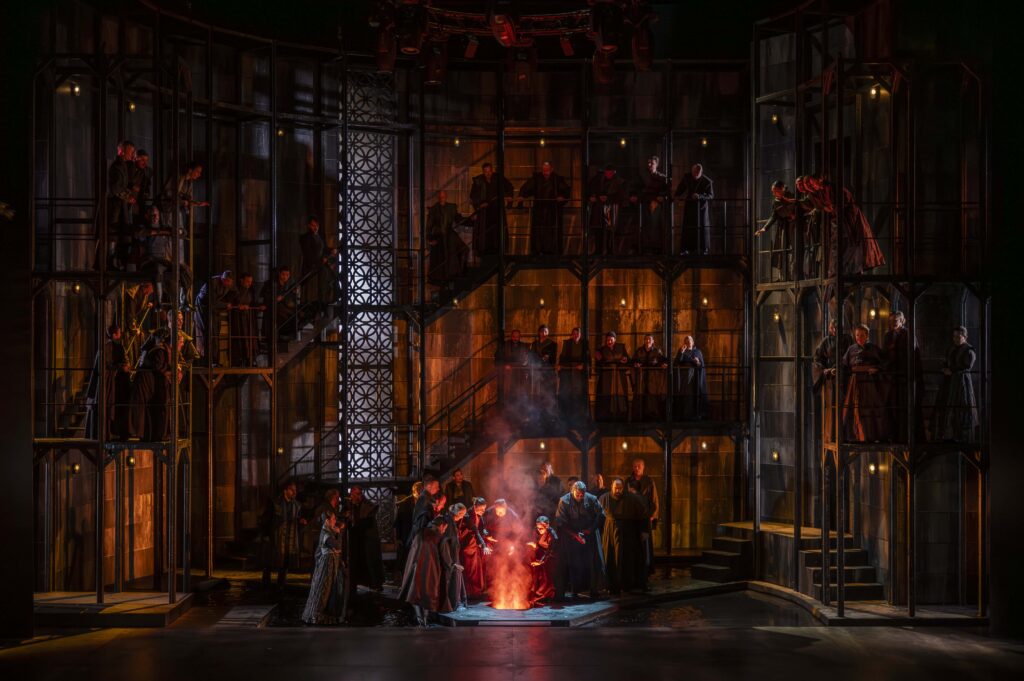
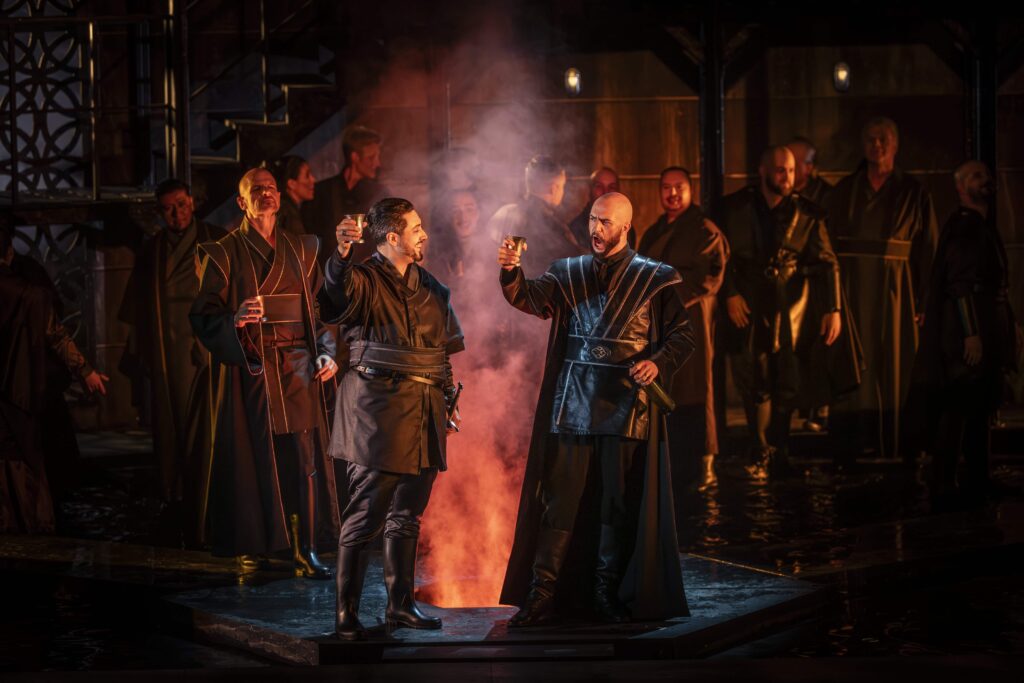
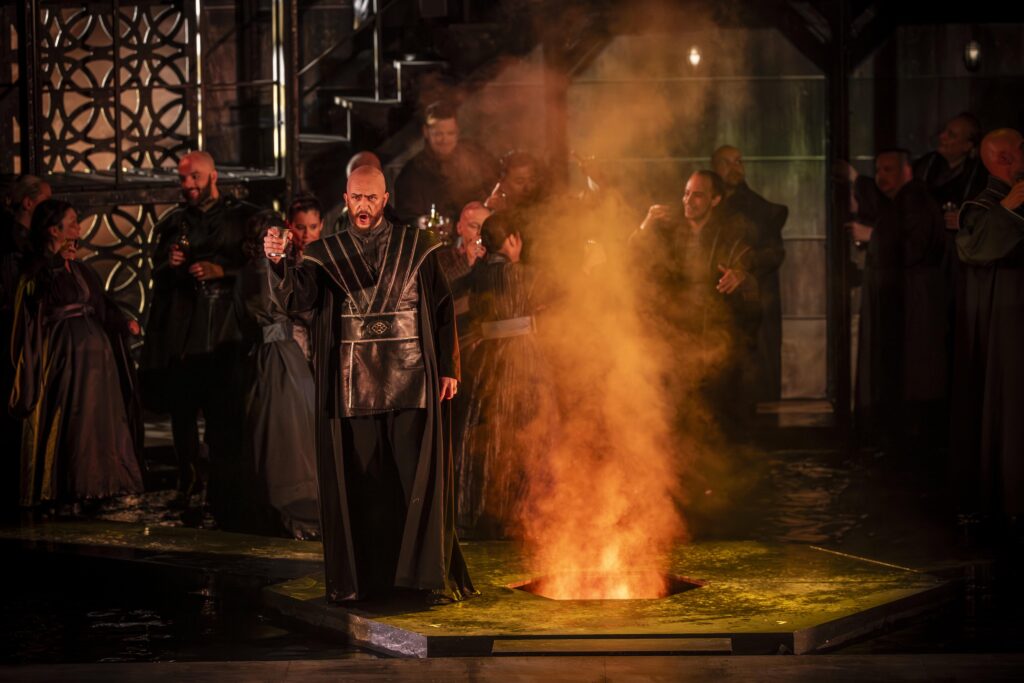
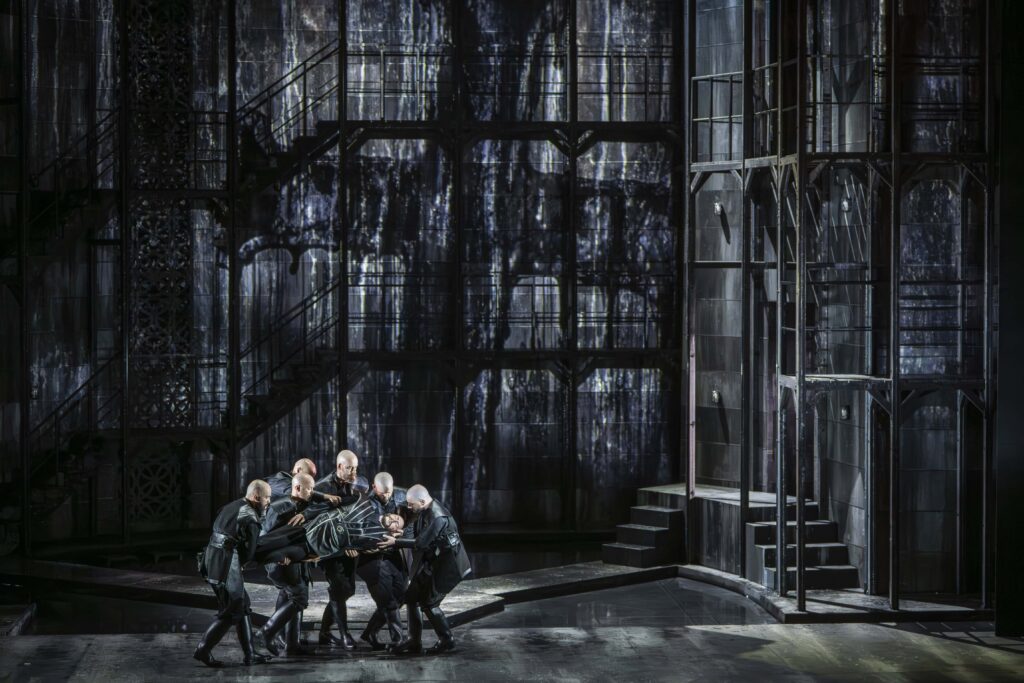
Behind a dark gray mesh curtain – which also returns as a divider between acts – a dark palace with many stairs and small intermediate balconies forms the set. One narrow window has Moorish decoration. The lighting is extremely sparse, the costumes almost exclusively black. An ideal context to emphasize the tragic plot.
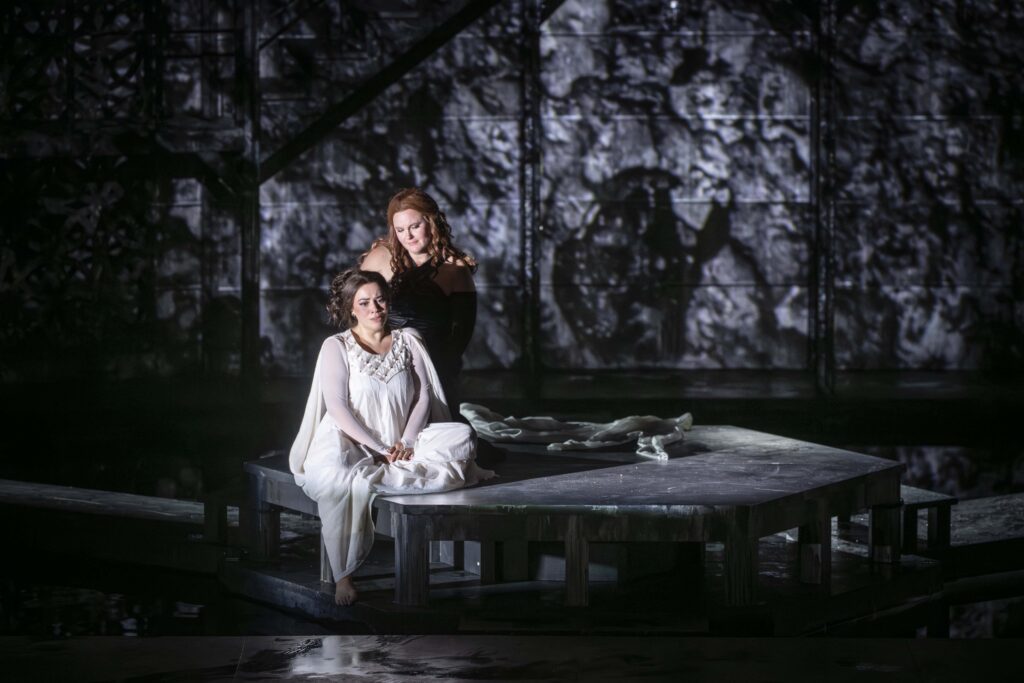
Visually, the staging offers only two bright spots: the festive greeting of Desdemona in the first act by the choir and children's choir, beautifully dressed in crisp white, and Desdemona's white bridal gown in the fourth act, which simultaneously—as an extreme contrast—becomes her funeral dress.
Efficient direction heading straight for catastrophe
After the exuberant celebratory chorus with which Othello is festively received as victor over the Saracens, the director immediately focuses on the disgruntled Iago, who feels passed over for a higher position and gradually works out his revenge plan to strike at Othello's love for Desdemona. In the tense scene between Cassio and Montano, Iago already reveals his malicious nature. The subsequent love duet between Othello and Desdemona closes the first act and also provides just about the only lyrical moment of rest in the opera. From then on, the opera rushes toward catastrophe, as we experience it in this production. Every step in the plot is given an efficient and clear portrayal; there is no escape. Thus, the dropping and picking up of the "handkerchief" – as a very important aspect of Iago's manipulation – provides an inescapable image. It's unfortunate that Iago's striking character definition, his I believe in a cruel god, is somewhat marred by actors tossing him back and forth rather clumsily. We might like to call it a detail, but director Alex Aguilera gives it meaning: the figures embody the poison present in Iago. In the confrontation between Othello and Desdemona over Cassio, in which he even insults her as a courtesan, the director positions the characters so that tension builds. Iago's mechanism drives Othello to rage in the passages 'Ora e per sempre addio', in which he distrusts his beloved, and 'Si per ciel', in which he swears revenge. Dark forebodings pervade the sorrowfulSalce, salce of Desdemona in the fourth act and the following Ave Maria. Yet it's a moment of rest before the final tragic resolution.
Musically convincing
This well-conceived and efficient direction, combined with a gripping musical performance, makes the result all the more convincing. It was Francesco Lanzilotta's first time conducting at the Opéra de Wallonie and hopefully he will return. He clearly has Italian repertoire in his blood. The orchestra follows him closely, both in the rousing passages and in the menace and melancholy. The most striking witness to this is perhaps the third act where Othello insults Desdemona and then completely distraught pours out his grief in the beautiful aria God, you could have struck me down, a lyrical cantabile melody, until rage takes over again. Throughout the entire score, Lanzilotta draws that kind of rich color perfectly from the orchestra. The chorus also deserves all praise. Luciano Ganci convinces as Othello with very expressive singing and acting style. His voice ideally commands the dramatic content without exaggeration. The production moreover emphasizes especially the personal tragedy in his love for Desdemona, rather than his "outcast" status due to his skin color. The same quality applies to his malevolent counterpart Iago, baritone Roman Burdenko. From his first appearance he captivates as the villain and his vocal interpretation makes the whole thing supremely gripping. Maria Teresa Leva sings a moving Desdemona, who evolves from confidently loving and self-assured to fearful and naively devout. A clear and nuanced soprano. For the other voices too, ORW has done an excellent casting job, from which we should mention Luca dall'Amico as Ludovico and Julie Bailly as Emilia. Finally, let's praise once again the very meticulous and beautiful costumes, a feather in the cap for designer Françoise Raybaud and ORW's costume workshop.


