When it's announced with great fanfare that Carl Orff's (1895-1982) 130th birthday will be celebrated with a large-scale project featuring more than 200 people on stage, I react with skepticism caveat. Since it had been quite a while since I'd heard Carmina Burana live, I decided to take a chance and headed to Brussels on Sunday afternoon, May 17th. Unfortunately, my reservations were confirmed from the very first note. Once again it was conclusively proven that quantity is absolutely no guarantee of quality. A critical stance is moreover warranted here, as such prestigious concerts in top-tier venues are far from free; the concert-goer pays a considerable ticket price and rightly expects commensurate, flawless quality in return.
The concert opened with Maurice Ravel's (1875-1937) Bolero . Since the Music Hall organization wants to please the audience with absolute crowd-pleasers as an opening act, I can still follow that programming choice commercially. The drummer faithfully followed the tempo of conductor Paul Dinneweth, except this tempo was far too slow. Instead of a hypnotic, compelling incantation, it had a soporific effect. For comparison: Ravel takes only a quarter hour in his own historical 1930 recording.
It gets worse when the entrances of different solo instruments from orchestra La Passione are not pitch-perfect and not always in sync. When a second drummer joins in—as Ravel did provide for, though it rarely happens—the conductor unexpectedly accelerates the tempo to a pace roughly three times faster. The logical result was that this iconic piece didn't culminate in the promised thrilling, shimmering sonic ecstasy, but rather in sonic chaos. Especially when the gong entered too late at the very last moment and painfully resonated alone afterward. Due to this acceleration, toward the end it was aimed purely at a cheap-looking and spectacular effect—a missed opportunity. That a Bolero slow tempo can work compellingly, Sergiu Celibidache once convincingly demonstrated, but as a conductor you must have the discipline to maintain your tempo consistently.
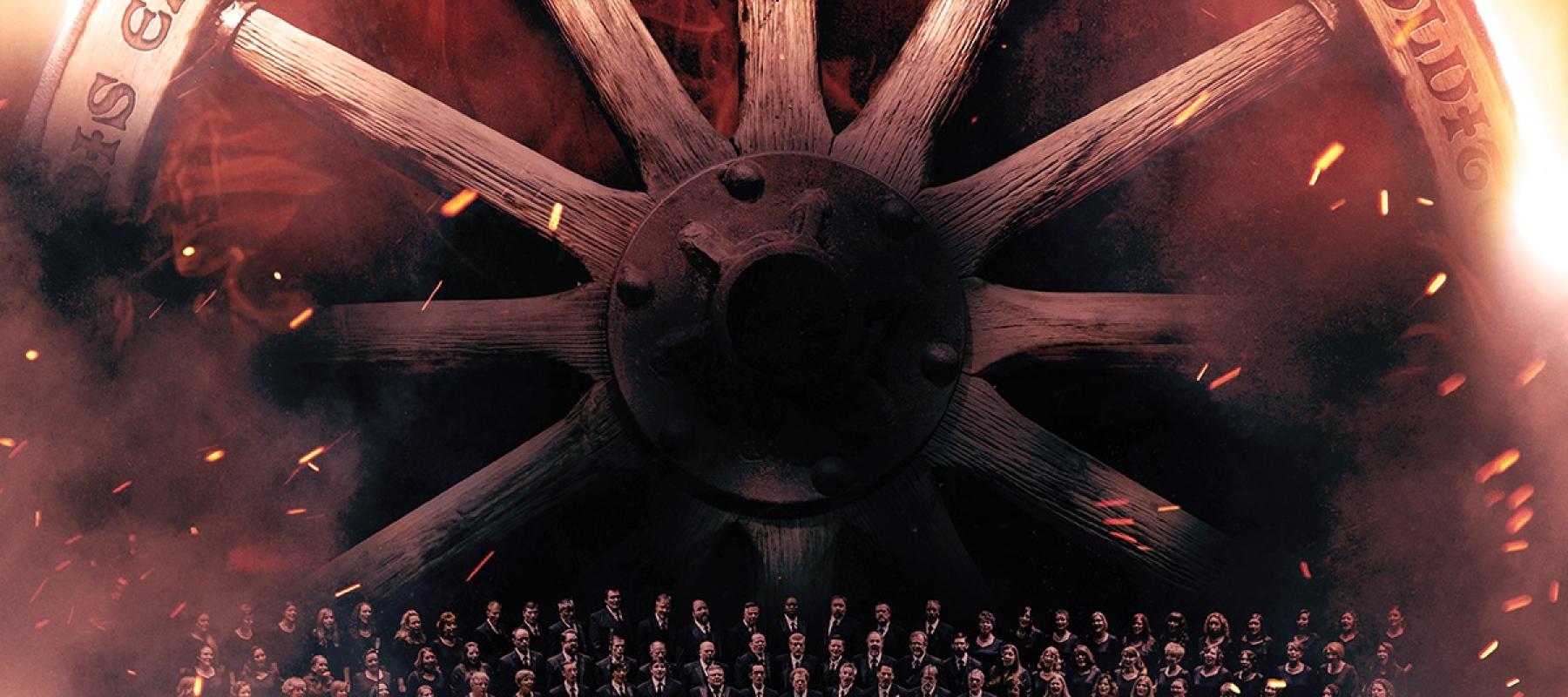
When the choir of more than 100 members—described in the announcements as a "monumental ensemble"—took the stage, then began the piece the entire hall had come for. I'll admit that at the very beginning I thought: this could work. But from the moment more refined, layered, or humorously sung passages were required, you could immediately tell they lacked sufficient mastery of this artistic register. The Music Hall blog does describe Orff's masterpiece as "raw, rhythmic and corporeal," as "pure primal music" that "didn't believe in virtuosity, but in direct impact," but that shouldn't be a free pass for lack of vocal nuance.
We were also struck here by the typical flaw that so often rears its head in amateur choirs: the high notes were an insurmountable problem. They sounded shrill, forced, and at times even disturbingly out of tune. Moreover, the orchestra and choir didn't function as a homogeneous whole; there was regular pushing and pulling where either the choir or the orchestra was leading. In addition, the percussion, just as earlier during the Bolero, resonated too long and undefined through the hall.
The soloists were equally unconvincing. Soprano Klara Vermeer possessed a fine, lyrical voice, but was simply too weak to rise above the instrumental onslaught. When she had to reach for the high notes, comprehension of the medieval texts was completely lost and you heard only inarticulate sounds. The humorous, theatrical staging by tenor Laurens-Alexander Wyns and baritone Joris Derder couldn't mask their limited vocal capacity either. Without the orchestra or with a very minimal ensemble it worked somewhat, but as soon as the full orchestra La Passione kicked in—which performed here as a chamber orchestra and thus had a more modest ensemble compared to a full, authentic symphony orchestra that normally performs—their voices were unintelligible. You could tell that they were too light and too weak to properly carry to the second balcony of the Henry Le Boeuf Hall.
Toward the end, fatigue in the singers' vocal cords became painfully audible. Singing this piece is indeed a serious physical challenge, comparable to hours of intense exercise. In the last two sections, for lack of technique, they shouted rather than sang. True, that apparently works as a kind of auditory shock effect on the general public, and although the Carmina Burana is marketed by Music Hall as a "musical storm from whisper-soft tension to thunderous ecstasy," there's definitely considerable subtlety and irony woven underneath the surface of the score. I completely missed that refinement this afternoon. That said, the choir members didn't lose heart; their unwavering commitment did them credit. A bright spot was the fresh, crystal-clear voices of the young singers from the Flanders Boys Choir, who showed how it should be done.
After the final notes of the repeated O Fortuna the audience responded in traditional fashion with enthusiastic bravos and thunderous applause. Am I being too harsh as a critic? deChorale has spent more than a century pursuing a highly commendable and respectable career as an amateur choir in our cultural landscape, but why must they necessarily take on such a demanding, technically taxing work? The iron-clad discipline of the singers was absolutely evident; they undeniably gave their all. But wouldn't it have been wiser for the conductor to choose repertoire where the singers could feel more vocally at ease? Repertoire with which they could truly charm the music lover, rather than fishing for the approval of the casual concertgoer who only thinks: "Oh, I know this piece from the radio or a commercial, I'll go hear it because I've never experienced it live," as I heard several people next to me say.
The orchestra La Passione should also think more critically about the projects it lends its name to. As an accompanying ensemble, you don't have to blindly accept everything commercial producers throw at you. And of course, it doesn't help that from the second balcony of Bozar you get a fine, but at the same time relentless and merciless view and ear for the actual technical abilities of the various musicians.
O Fortuna. She weighs and decides, but this afternoon fate was unfortunately not kindly disposed toward the music.