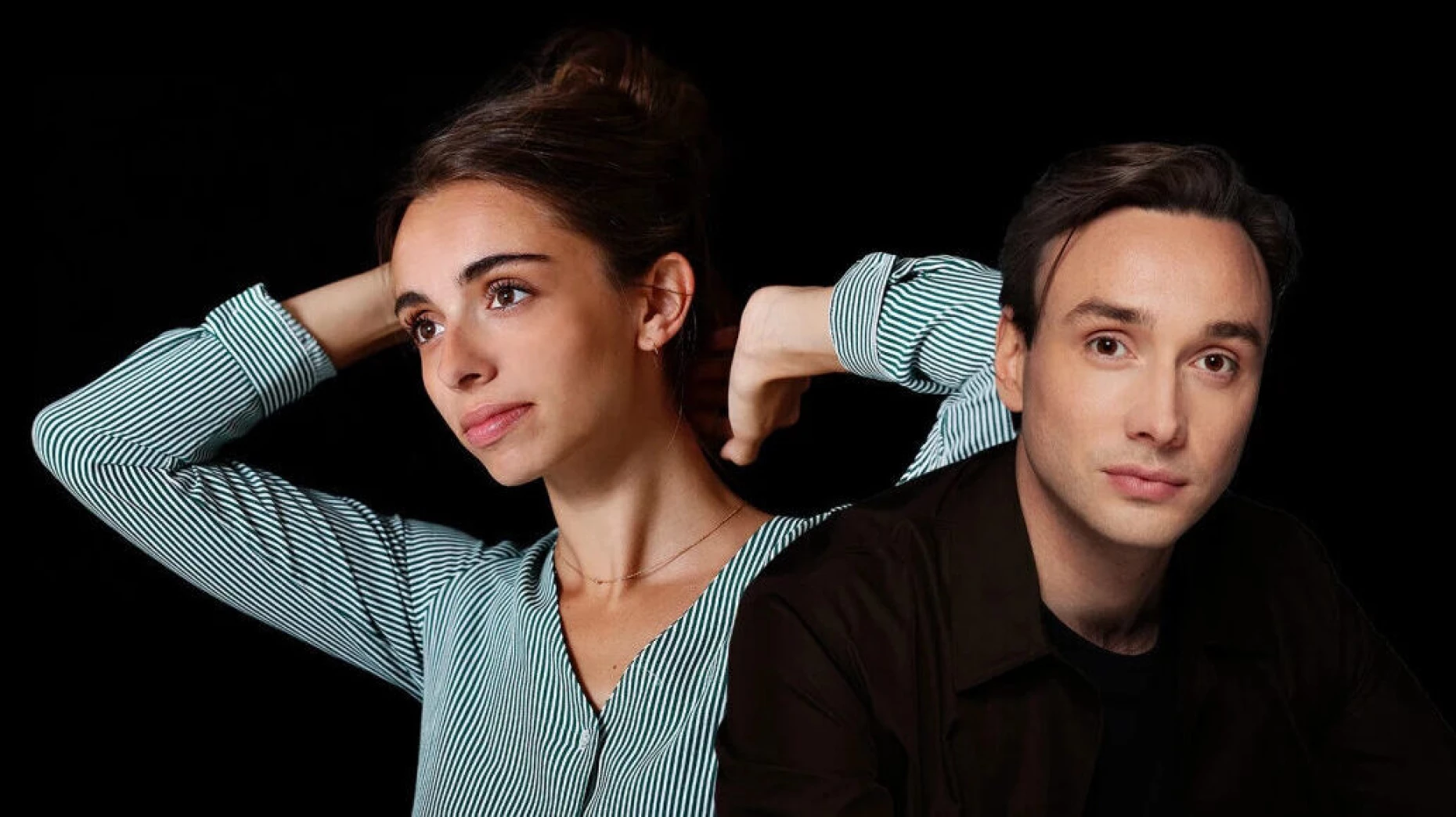
With a program that revolved entirely around Wolfgang Amadeus Mozart (1756-1791) and Gioachino Rossini (1792-1868), the Belgian National Orchestra (BNO) proved on Wednesday, May 13 at Bozar how irresistible an opera gala can be when musicality, stylistic sensibility, and theatrical instinct converge. Center stage were Franco-Italian mezzo-soprano Lea Desandre and British baritone Huw Montague Rendall, two young singers who complemented each other artistically in a remarkable way.
For Desandre, this evening also marked a new chapter in her residency as Bozar's portrait artist, where she's showcasing her remarkable versatility this season. Under the direction of young yet strikingly mature conductor Sasha Scolnik-Brower, the evening immediately gained momentum, elegance, and tension. From the very first measures, you could feel it: here stood an orchestra in top form.
Scolnik-Brower led the BNO with effortless authority and a keen sense of style. He constantly energized the orchestra, but did so without heavyhandedness or showiness. In both Mozart overtures – Le nozze di Figaro and Così fan tutte – he kept the music nimble, taut, and transparent, precisely as it should sound. No plodding symphonic weight, but rather tension, elegance, and theatrical pulse. The strings played with sharp articulation, the woodwinds colored with finesse, while the conductor continuously maintained breath and fluidity in the music. In Rossini, his stylistic sensibility came through even more forcefully. Immediately in the sparkling overture to The Barber of Seville Scolnik-Brower demonstrated his mastery of this repertoire: rhythmically alert, brimming with energy, yet always controlled and refined. In the colorful Thunderstorm as well, he built the tension meticulously.
Lea Desandre confirmed once again why she ranks among the most compelling voices of her generation today. Her mezzo-soprano sounded completely free of mannerism or cheap effect. Everything was refined in its execution: the line, the diction, and the dynamics. In Cherubino's "Non so più cosa son, cosa faccio" from Opéra national Montpellier / Marc Ginot what stood out especially was the natural fluidity with which she captured the character's restless infatuation. Even more beautiful, perhaps, was "Voi che sapete," sung soberly, without any coquettishness or overacting, and all the more moving for it.
The great revelation of the evening, however, was baritone Huw Montague Rendall. What presence. What natural theatrical talent. From his first entrance, he commanded the stage entirely. He didn't just play his roles – he lived them and carried the audience along with him. In "Deh vieni alla finestra" from Don Giovanni he combined vocal elegance with a subtle irony that perfectly suited the character. His voice possesses a beautiful lyrical suppleness, yet at the same time sufficient substance and projection to give dramatic weight to the text.
In Rossini, there was added an irresistible sense of timing. Especially in Figaro's celebrated "Largo al factotum" from The Barber of Seville Rendall proved nothing short of masterly. With seemingly effortless diction, impeccable rhythmic sense, and an effervescent stage presence, he swept the audience along in Rossini's theatrical whirlwind. Everything clicked: the flair, the irony, the playfulness. Both his final Mozart aria and this Rossini tour de force he delivered with visible pleasure, including little quips to the audience that were never cheap or contrived. Rendall possesses that rare instinct that makes theater seem inevitable. This is undoubtedly a singer one would love to see in a full opera production.
Between Desandre and Rendall, moreover, a striking natural musical understanding developed as the evening progressed. She approached the repertoire from the perspective of refinement, line, and inner concentration; he from theatrical impulse, playfulness, and direct communication. It was precisely this contrast that worked particularly well: where she internalized the phrasing and sang, as it were, inward, he opened up the scene and gave it air and tension.
In their duets, this yielded a spontaneous liveliness that you rarely hear emerge so organically in opera galas. Nothing felt rehearsed or mechanically "put together"; rather, it created the sense of real interaction on stage, with listening, reacting, and subtle steering in the moment itself. This gave even the most familiar passages a freshness as if they were being reinvented on the spot.
The encore numbers were far more than just obligatory additions. They represented a delightful detour into other musical horizons and only fueled the desire for further collaborations between these two singers, conductor, and orchestra.
What stands out most is the effortless way this evening combined musical excellence with sheer enjoyment. Not a routine gala, but a concert where everything seemed to click: an orchestra in top form, an inspiring conductor, and two soloists who each delivered a completely convincing performance in their own way. A delightful musical evening.