Some concerts present not merely a sequence of works, but unfold as a single continuous train of thought in sound. The Antwerp Symphony Orchestra (ASO) presented precisely such intense dramaturgy on Friday, May 8 in the Elisabeth Hall: an evening in which Jean Sibelius (1865-1957), Edward Elgar (1857-1934), Einojuhani Rautavaara (1928-2016) and Richard Strauss (1864-1949) functioned not as contrasts, but as different stages of one and the same inner movement—from restrained introspection toward existential release.
Inward-turning memory
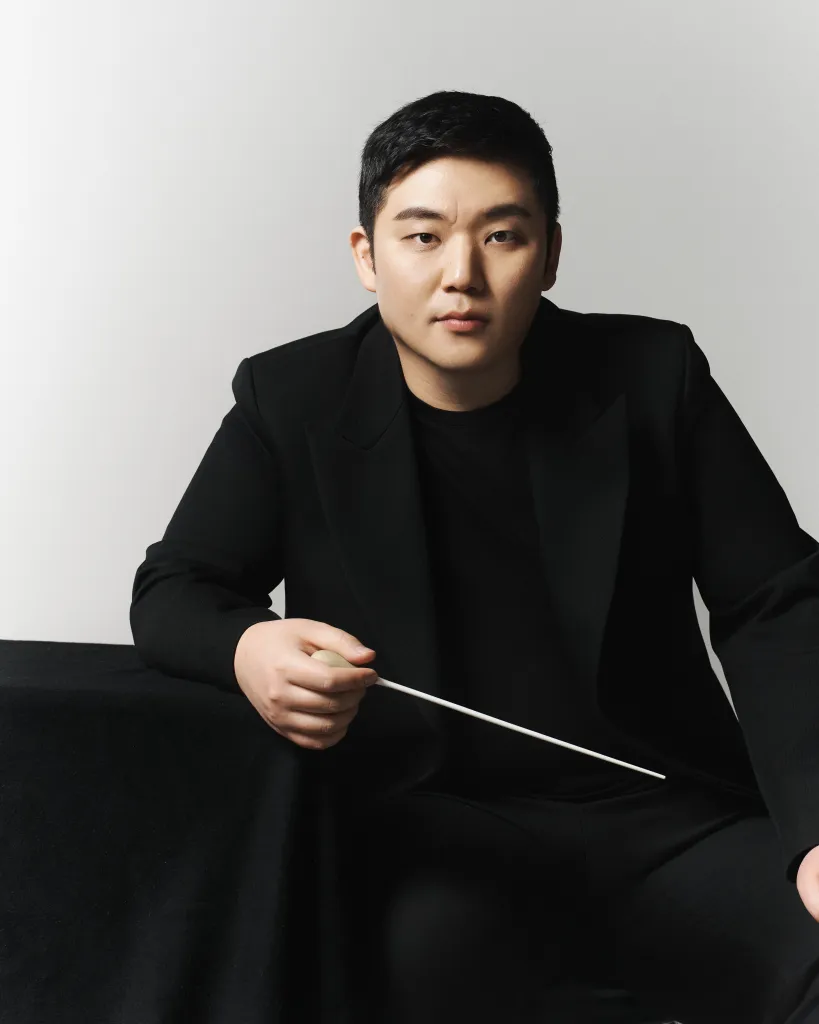
Sibelius' Impromptu immediately established an intimate atmosphere. No pronounced rhetoric, but a play of shifts on a micro level. Motifs appear, are explored and released again. Conductor Hankyeol Yoon clearly chose transparency here: not a thick sound, but an almost chamber music approach in which every voice remained audible. This approach created a tension that did not await outburst, but invited attention.
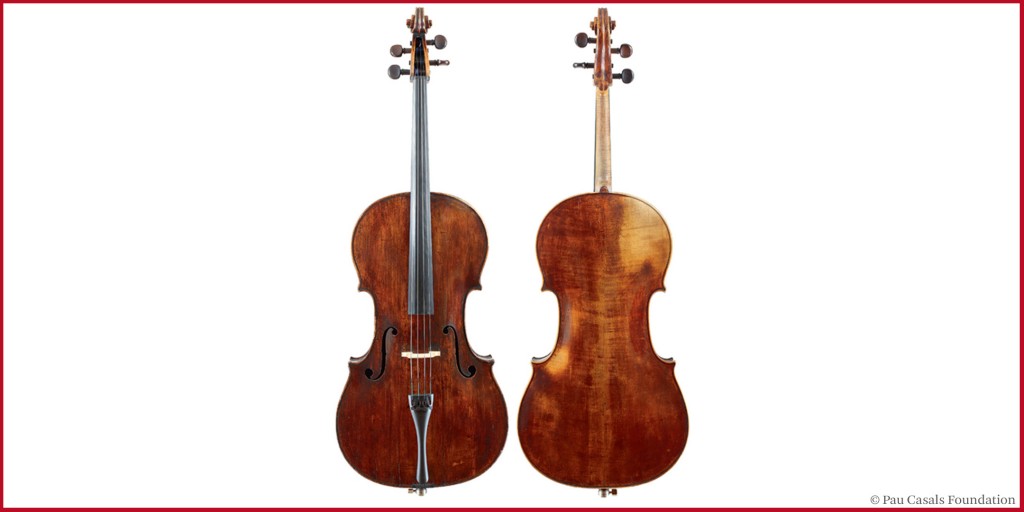
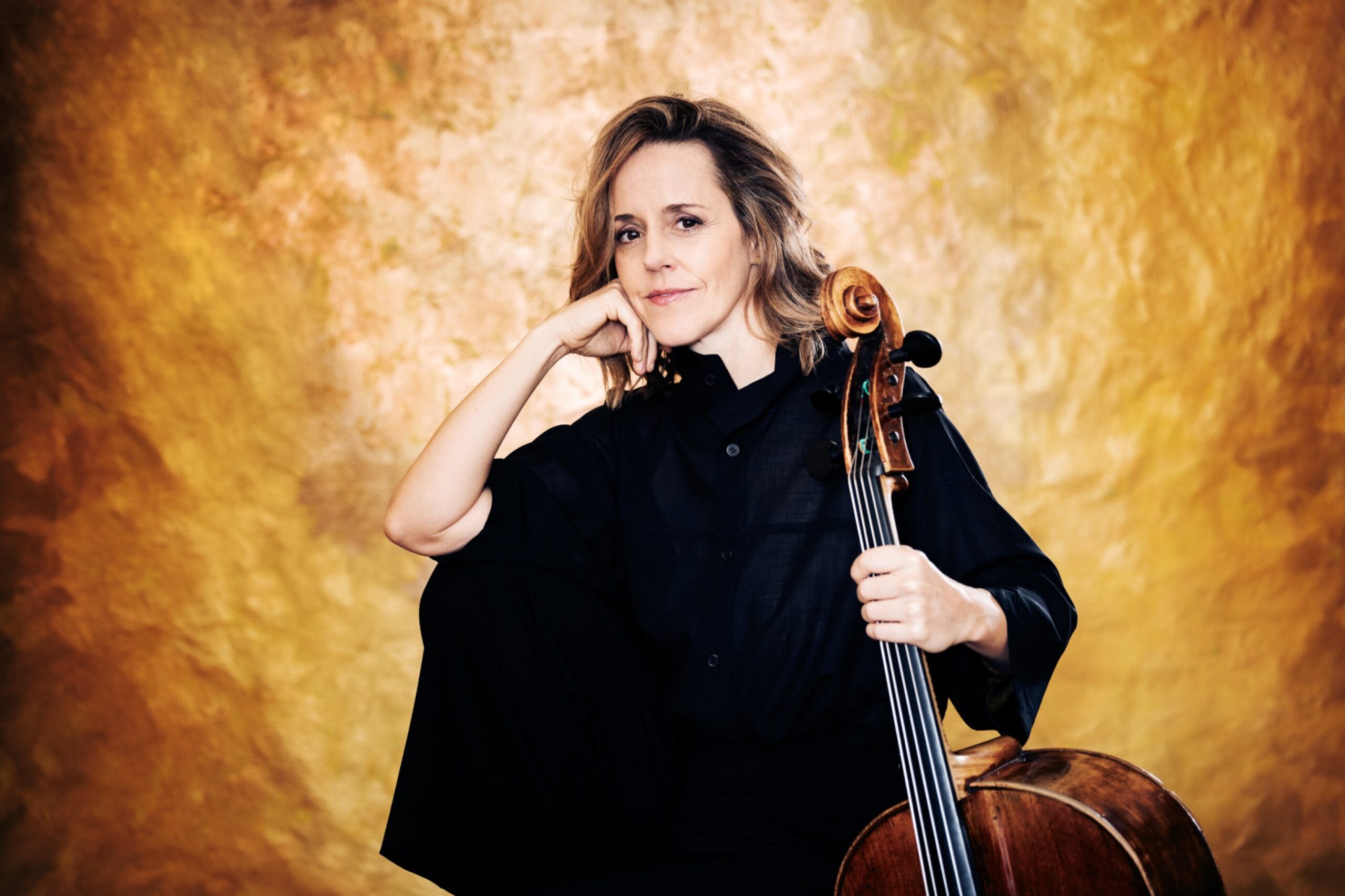
In this climate, Elgar's Cello Concerto took on a particular intensity. The work, written in the shadow of the First World War, clearly bears the marks of a world that has lost its faith, yet Elgar does not translate that into grand drama. This concerto sounds rather like an introspective retrospective: brief motifs, hesitant lyricism and moments of hushed resignation alternate in a score that suggests more than it explains.
Sol Gabetta approached the concerto with a remarkable ease, as though from the very first note she was entirely at one with the fragile emotional world of the work. The intensity of her playing was immediately striking: no heavy-handed drama or excess pathos, but a tone that touched the very heart of the music. What made her interpretation so convincing was the way she found the right balance between elegy, melancholy and unexpected vitality. In the lyrical passages her cello sounded warm, while in the more animated moments she kept the tension taut without ever forcing it. Moreover, Gabetta did not lose herself in broad romantic gestures, but articulated the music with great clarity in phrasing and structure.
Yoon supported this with an orchestral approach strongly focused on clarity and layering. There was no classical opposition between soloist and accompaniment, but rather a tight collaboration in which motifs, colors and tensions were organically passed between cello and orchestra. He too deliberately avoided the traditional romantic swell that can sometimes weigh down Elgar's music, choosing instead a build where details remained continuously audible. The strings sounded light and differentiated, while above all the melancholic woodwind dialogues took on a pronounced rhetorical function. The brass remained carefully measured. In this way Yoon maintained the line of tension: not by deliberately building toward climaxes, but by keeping the whole continuously in motion.
A dreamland between silence and shadow
 After the intermission, the focus shifted to Rautavaara's Isle of Bliss (Lintukoto), a work that departs from a mythical image and alludes to an imaginary "island of happiness," a distant refuge where migratory birds winter and where harsh reality holds no sway. However, Rautavaara does not use this as concrete program music, but rather as a starting point for music that balances between dream and memory. At the same time, a clear echo of Rachmaninoff's Island of the Dead resonates in the dark undercurrents and undulating movements of the score: the same slow wave motion, the same fascination with liminal states between rest and unrest, between presence and disappearance.
Yoon and the ASO found for this a particularly refined orchestral breath. The strings laid down a soft, almost luminous sonic foundation above which woodwinds and brass did not so much formulate themes as rather add color flecks and shadows. He allowed the music to emerge rather than steer it, while avoiding any overwrought drama. This gave the performance an almost timeless character: not the direction of the music was central, but its continuous presence in space.
In the quieting final section the music seemed to slowly dissolve into silence, while harp and gong gently let the last resonances fade. Precisely this way, Rautavaara's conclusion formed the ideal transition to Strauss' Tod und Verklärung.
Dying as inner metamorphosis
This fascinating symphonic poem, in which Strauss transforms the final moments of a dying artist into sound, unfolds as an intense inner process. From the restlessness of physical decline, the music grows through moments of memory and reflection toward the ultimate "Verklärung": a transcendence in which dying appears not as an end, but as a form of fulfillment. In this, Strauss does not paint a realistic death scene, but rather a state of consciousness in which memory, struggle and resignation gradually converge.
Here too, Yoon opted not for effect or rhetorical dominance, but for an extremely controlled build from detail and structure. He did not approach the work as a series of spectacular climaxes, but as a continuously shifting force field in which tensions gradually intensified. Even in the opening measures it was striking how transparently he held the orchestral sound: motifs were sharply delineated without romantic oversaturation, making the underlying nervousness all the more palpable.
Particularly impressive was the way Yoon managed to develop the great arc of tension in the work organically. The ultimate "Verklärung" thus did not come across as an abrupt pinnacle, but as the inevitable endpoint of that gradual development. Particularly moving was how initially the dark resonance of the gong remained almost isolated in space, after which the other instruments slowly began to gather around that sound and initiated the transition to another dimension.
Under Yoon's direction, the ASO brought forth a remarkably rich color palette. It was striking how much detail remained audible, even when Strauss weaves the orchestral texture completely densely. The harp continuously maintained its place in the sonic picture, while woodwinds added subtle shadows and memory flashes without ever breaking free from the texture. The strings built broad arcs of tension with great homogeneity, while the brass placed powerful structural accents without disturbing the balance.
Yoon and the ASO made of Strauss' symphonic poem not merely a monumental closing piece, but a deeply felt meditation on mortality, memory and transfiguration that touched the heart profoundly.
Yoon as the driving force behind a continuous dramaturgy
What gave this concert evening extra weight was the context in which it came about. Despite Mikko Franck's cancellation, the complete program was retained, which is far from self-evident given repertoire that rarely appears on the conductor's podium, let alone with such a carefully crafted dramaturgy. That the young Hankyeol Yoon took on this responsibility felt nowhere like a makeshift solution, but rather like a natural artistic choice. He didn't simply conduct the program; he had made the entire work his own in a short time, as if it had been his own thoughtfully conceived concert trajectory from the start.
Hopefully we'll see him working with ASO again soon: he is a talented conductor with remarkable maturity, and the orchestra also seemed to greatly enjoy the collaboration.
What ultimately made this evening so memorable was the exceptional coherence with which the entire program unfolded. From Sibelius to Strauss, there was no mere succession of works, but one consistent musical thought process that grew increasingly dense and culminated in a broad symphonic breath. Sol Gabetta, the ASO, and Hankyeol Yoon found common ground in a shared logic of precision and concentration, in which expression consistently flowed from the musical structure. It was precisely this clarity that gave the evening its conviction: not a series of isolated highlights, but one compelling musical journey.