Anyone who knows Wim Winters is aware that he has a thing for slowness—or is it the speed—of musical performance. He lets himself be guided by Beethoven's metronome...
Since the 1980s, there's been a subtle trend toward faster tempos in countless compositions. This isn't just a passing fad—however much some claim to play historically informed—it also stems from a practical need: fitting entire pieces onto CDs without splitting them up, unlike LP recordings 'back in the day' (which are now making a comeback). Sometimes it gets so rushed that plenty of musical details and even entire melodic lines threaten to disappear when listening. You might even feel a sense of hurry and pressure. This got Wim Winters thinking, and most importantly, studying scores, metronome markings, and much more.
At full speed...
Winters discovered that his 'subjectively unpleasant feeling' about these hurried performances held water after diving into Beethoven. It's not widely known, but Beethoven and the metronome were inseparable. Just as he counted out his coffee beans each morning to grind for his cup of coffee, he was practically obsessed with the metronome. And what did this teach Wim Winters—and what can it teach us? That this subjective discomfort is entirely justified, because yes, in this period of history in which we all live, time and speed determine so much. The saying "Haste makes waste" has been forgotten by humanity, and so the masses suffer from time stress. Return with Wim Winters to Beethoven's metronome and discover that performing his rich compositions at a healthier pace doesn't just make the listening experience calmer, but reveals incredibly more colors in the scores. By breathing at a more natural tempo, you gain much greater insight.
Could it be a bit slower, please?
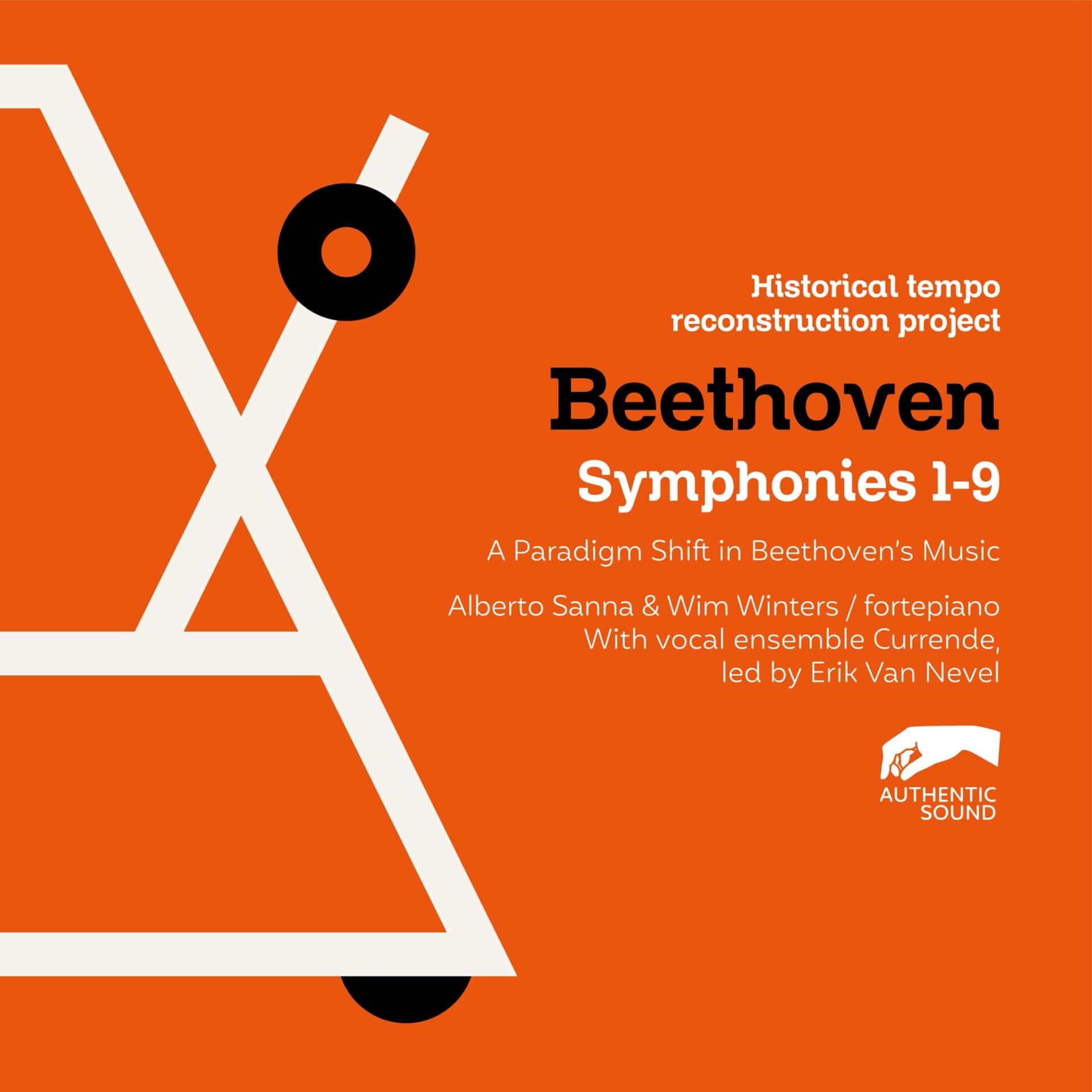
Wim Winters, whom most will know as an organist, also plays fortepiano like the very best. After studying countless scores—painstaking work that took years—and seeking out and finding musicians he could convince, he set about creating transcriptions of Beethoven's nine symphonies for pianoforte. These transcriptions, never before performed in their entirety, are by Carl Czerny (remember his finger-exercise studies for piano), phenomenally orchestrated. Who else would have taught him? Together with Italian pianist Alberto Sanna and conductor Erik Van Nevel and his ensemble Currende, Wim Winters recorded the nine symphonies and wrote an accompanying extensive treatise.
It takes a moment to adjust to listening to a 'slower' Beethoven, but after a few minutes you're convinced. This is it! You discover so much more depth, color, the breathing in and out, light and darkness, and everything that makes Beethoven so magnificent—the Rubens of Music, if you will. What Winters does here is much like restoring one of those paintings by our Rubens that's been blackened by candlesmoke and layers of varnish. Once you remove all that grime from what you already found so beautiful, you behold with wider eyes than ever the enormous beauty the artist created. Now open your ears and hear what you never heard before, even though those Beethoven symphonies already took your breath away. It leaves you speechless.
Winters and Sanna play on a pianoforte built by Joris Potvlieghe after a Johan Fritz instrument from 1816.
We won't tell you more about this special and (still) unique recording. You really must listen to it and discover 'novelties' in Beethoven that were always there but were rushed over. Things can be a bit slower, beautiful according to the one true metronome markings from the genius composer himself, which no one can improve upon. Go for it, read the fascinating treatise (in English), and listen... and listen again? Does Wim Winters prove his point? We certainly think so!