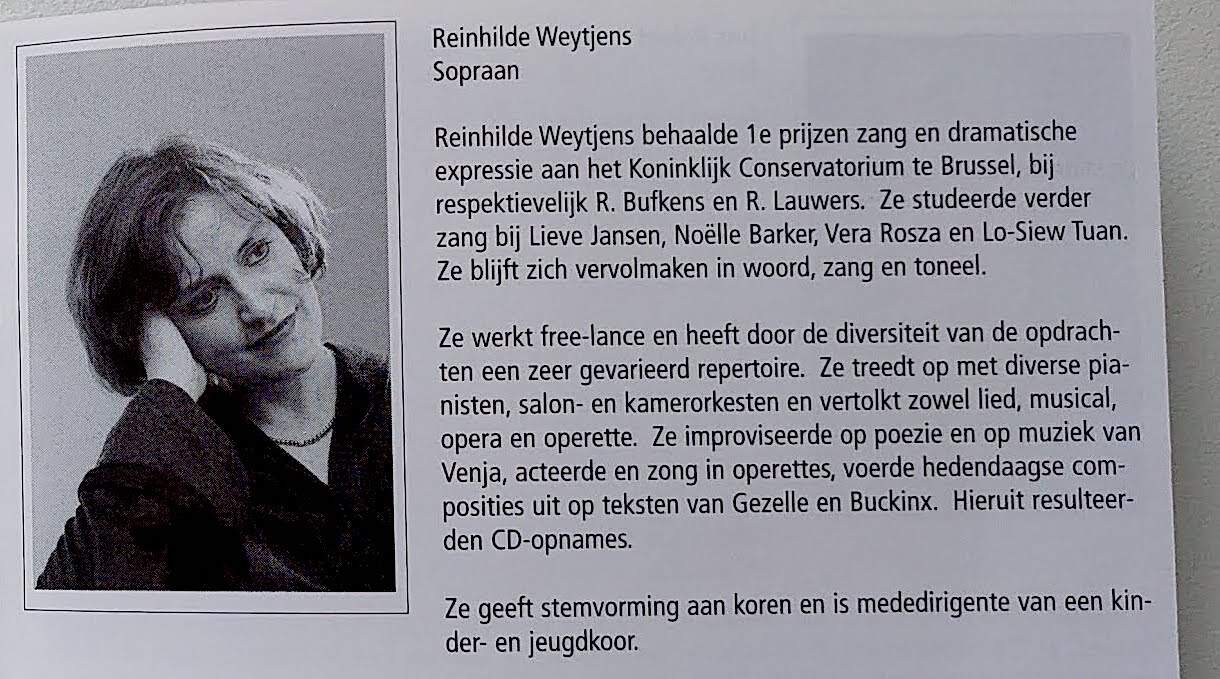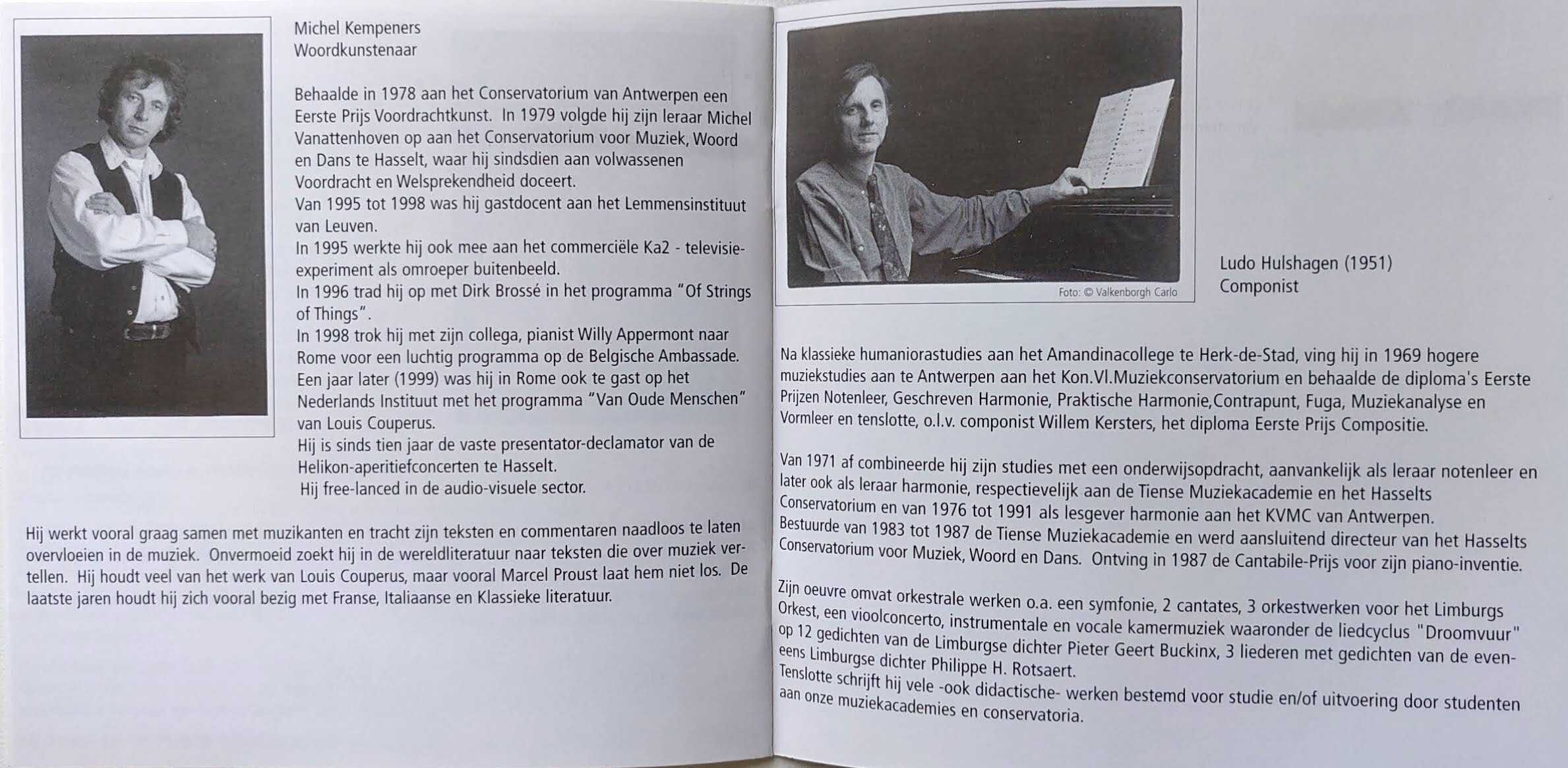
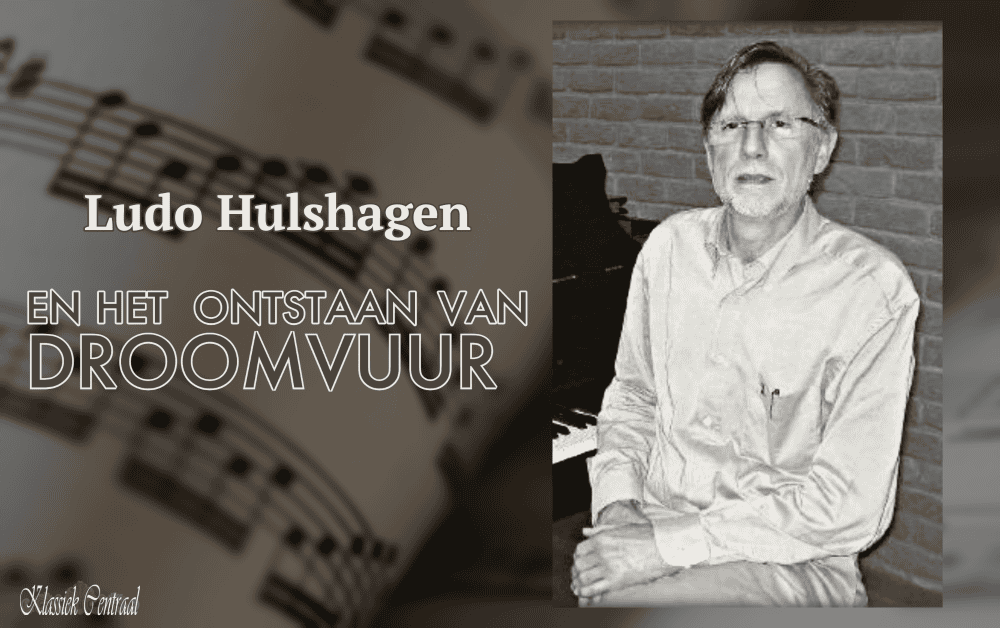
A glimpse into the mind of a composer… that is what Ludo Hulshagen (b.1951) shares with us. This Hasselt-based composer received his composition training from Willem Kersters (1929-1998). Hulshagen won composition prizes including the Cantabile Prize for his Invention for Piano (1987), a nod to Bach. Since 1971 heHulshagenhas passed on his musical knowledge and has taught, among other places, at the Antwerp Conservatory. For 4 years he fulfills an artistic-pedagogical role as director of the Tienen Music Academy and subsequently for 29 years the Hasselt Conservatory for Music, Speech and Dance. Today he lays bare his musical soul for us. By means of the song cycle Dream Fire (1997) Hulshagen introduces us to his compositional process. Time to give the composer himself the floor.
Speaking about a composition is difficult, it's like letting someone look into your soul…
1. Droomvuur: how it all began… Thursday, April 25, 1996 – 8 p.m.
After my work at school (the Hasselt Conservatory) I decide to attend a poetry evening, organized by the Pieter Geert Buckinx Foundation, at the 'Culture and Herb Farm de Valik' in Kortessem. On my way there, I slip almost imperceptibly into the right mood during a short walk through the beautiful Haspengouw landscape. When I arrive at the final hundred meters on foot, I still hear the restless calls of nesting blackbirds. The pleasant atmosphere and artistic decoration of the beautiful hall in the farmhouse make an impression on me.
The board and members of the Pieter Geert Buckinx Foundation are present among an attentive audience. Then the Vlierghesellen perform many of Buckinx's poems there in a sublime way: they inspire the listeners… and me too.
The power of Buckinx's poetry captivates me. When I leave, I am the proud owner of a new acquisition, namely "Late Poems", signed by the poet's nephew who was present.
I am and remain in a state of euphoria for quite some time…
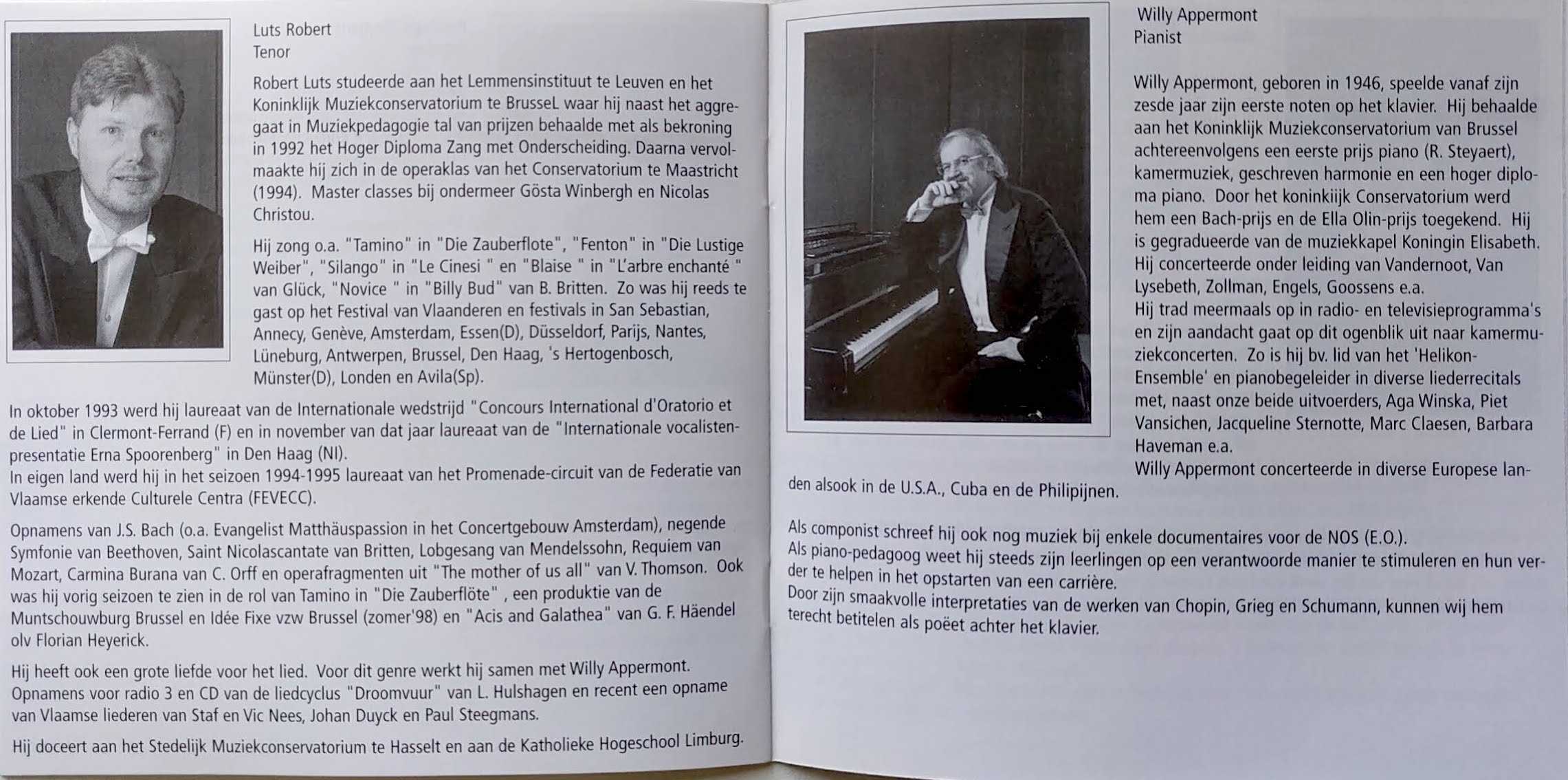
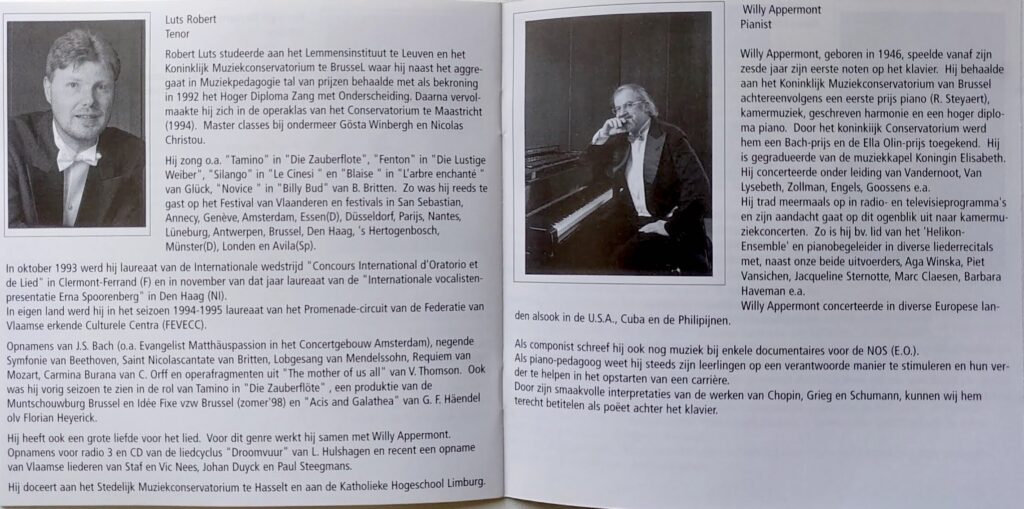
Exactly one month later (Sunday, May 26), I attend, this time together with my wife Lieve, a song recital performed by tenor Robert Luts and pianist Willy Appermont. They perform works by Schumann and Brossé, among others. Once again I am swept up in euphoria: the beautiful tenor voice combined with the flawless accompanying piano playing of Willy make an enormous impression on me. My decision is made: I will set Buckinx poems to music.
From the collection Dream Fire(1940), collected Poems 'The Golden Quill' published by Orion, I chose twelve poems, of which 8 from Small Ode to Life and 4 from Small Ode to Death.
Poems with resounding and promising titles such as "Night of Fire", "The Steep Flame", "Paradise", "Twilight Bloom" …
Extreme emotions, existential dread, eroticism, spirituality, combativeness, mystery … are among the ingredients.
Previous
Next
Initially I choose 3 poems
- "The Blue Night": a search for, recitative (somewhat narrative even), the poem describes as it were a physical-erotic rapture …"Prayer": con agilita, immediately now a spiritual rapture …
- ": resigned, also a recapitulation …These first 3 songs were set to music after May 26 (an extremely busy period with public rehearsals at the Conservatory) and completed in July.
- Dream FireIn a letter to Paul Steegmans (responsible for the musical contribution during the septennial Virga Jesse Festival) I commit to performing it during a concert for the Virga Jesse Festival on August 21 with tenor Robert Luts and pianist Willy Appermont.
Then comes a break.
In one surge I write a piano work that I would later call Fantasia II.
Subsequently there follows a sketch for a violin concerto: my creative drive is strong and my pencil flows … I complete this extensive score in early January 1997 …
Meanwhile I study the composition of the poetry collection
and decide to compile a complete song cycle. After
I will still set 5 poems to music that likewise belong in the first part "Small Ode to Life". Dream Fire"The Steep Flame": here a revisiting of the 'intoxicated feeling' takes place. "The Blue Night": a search for, recitative (somewhat narrative even), the poem describes as it were a physical-erotic rapture …, ": resigned, also a recapitulation … and Dream Fire "Paradise": a true cantabile, somewhat resigned atmosphere …
- "The Swift Shadow": rushed, restless, existential dread. The symbolism of "Night of Fire" is already announced."Night of Fire": still restless, but the fear disappears …
- Now my 'Dream Fire' is actually over: a kind of climax has been reached. From the first three songs I lived off passion, mystery, wonder. Yet I must still set one more 'Ode to Life poem' to music.: a true cantabile, somewhat resigned atmosphere…
- The Swift Shadow: rushed, restless, mortal dread. The symbolism of "Fire Night" is already being announced.
- Fire Night: still restless, yet the fear fades…
Now my 'Dream Fire' is actually over: a kind of climax has been reached. From the first three songs, I lived on passion, mystery, wonder. Yet I must still set one more 'Ode to Life' poem to music.
- Twilight Bloom: a completely different atmosphere, then. The earthly becomes heavenly, the physical becomes spiritual…
Then come the four 'Odes to Death' poems.
- Beyond the Nightingale: from cool to a tense sense of movement. For the first time, piano tremolos appear…
- Ophelia: evoking a combative, heroic atmosphere…
What had been postponed until now finally came to pass: on March 9 of that same year, 1996, my dear mother passed away: then I chose a poem from Buckinx's 'Dream Fire' for the memorial card, now I am going to set it to music…
- I Am No Longer Alone: ethereal, religioso, mystery, questions (note the 2 different color chords under 'I Am No Longer Alone'…
- Homesickness: a kind of closing section, another recapitulation. Quite peculiar, those 2 final closing chords: 2 open, ethereal dyads…
I dated it August 10, 1997 at 5:40 p.m.!
2. The creation of this song cycle takes place on Thursday, November 28, 1997 in the Church of Guigoven-Kortessem with Robert Luts and Willy Appermont together with the 'Vlierghesellen'.
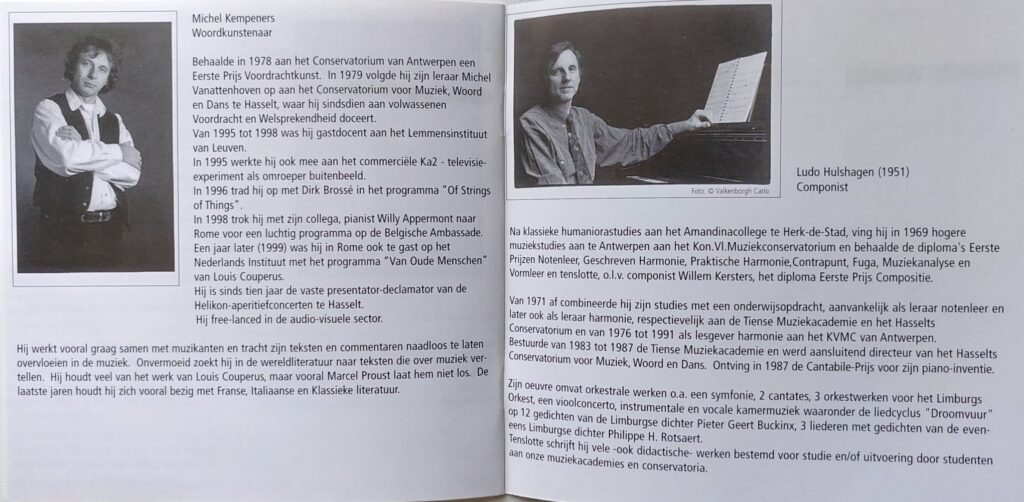
3. The premiere in Hasselt takes place on Sunday, January 18, 1998, an event organized under the auspices of Helikon with recording by Radio 3 (Klara) with the same performers, woven through now with poems performed by word artist Michel Kempeners.
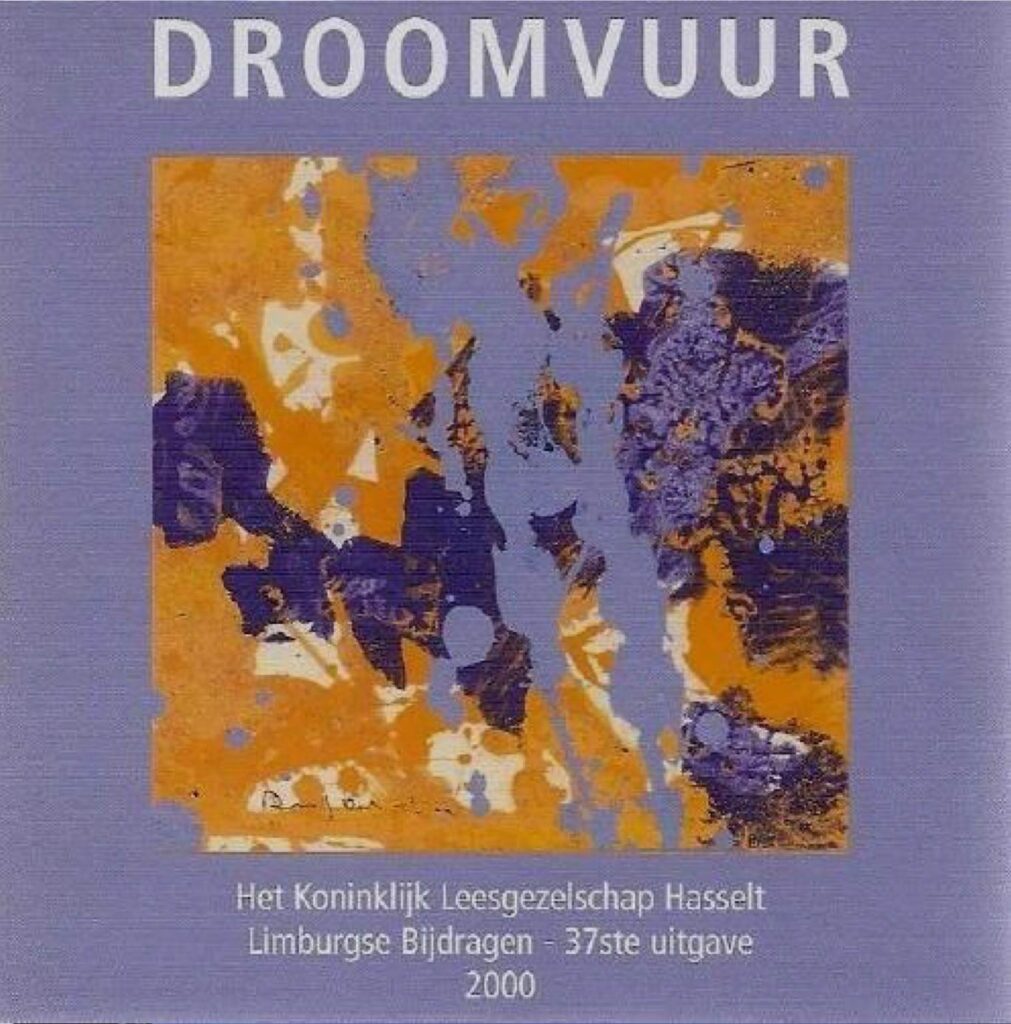
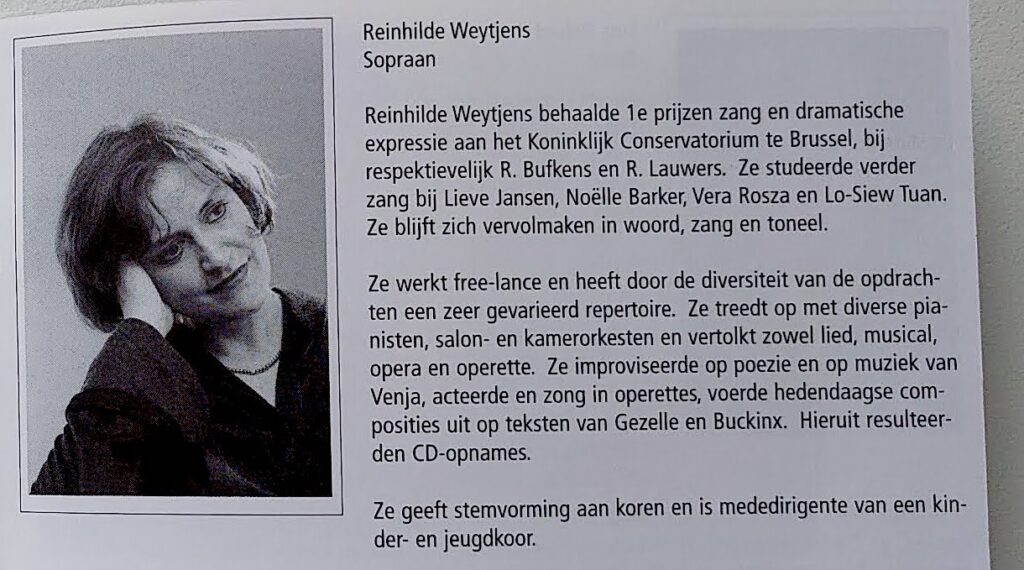
4. On Tuesday, February 29, 2000, I receive a wonderful offer: fellow Prince member, music lover, and dear friend, the late Johan Koninxk, advocating as chairman of the Limburgse Bijdragen from the Royal Reading Society of Hasselt, proposes a 37th edition of 'the Limb. Bijdragen' now in the form of a CD recording. Soprano Reinhilde Weytjens, tenor Robert Luts, and at the piano Willy Appermont are responsible for a beautiful recording.
Some time before, I had discovered poems by my friend Philippe Rotsaert (b. circa 1944). My decision is made once again: I would set several of his poems to music.
Autumn 1999: this is how an extremely beautiful artistic project came into being: my own 'Dream Fire' with poetry, namely the work of Buckinx and Rotsaert.
- Geese (from 'My Country is Called Antarctica' 1995 published by the Reading Society): my choice was determined by elements such as 'the unreachable', 'melancholic', and 'a certain unrest'. In this first song/poem we hear a dark 'Left Hand' in the piano score. Cold, ethereal clarity. Some unrest (settling geese) in contrast with the soothing winter wren (poetic descriptive language captivates me here).
- In Love (for his daughter Karolien) from 'Love is much, Love is even more' (1999): Unrest, the unreachable. Musical intensity, dissonant tremolos. Dedicated to my dear wife. A father's love for his daughters.
- Moment of Silence (from 'The North Sea Calls Within Me' – 't Kandelaartje 1995): Philippe is someone deeply moved by the enchantment of the sea. Imagery, pure poetry, once again the unreachable.
Previous
Next
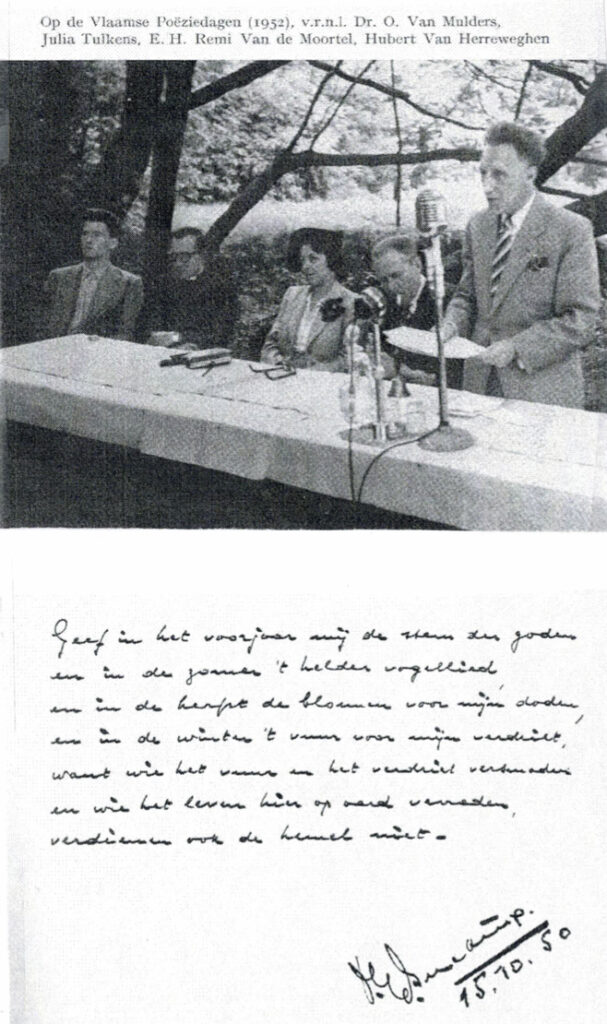
Pieter Geert Buckinx (Kortessem, 1903-1987).
In 1983, Pieter Geert Buckinx unexpectedly received the Triennial State Prize for Poetry at a moment when he had nearly been forgotten. Earlier, publisher Lannoo and Buckinx supporter Rudolf van de Perre had attempted to bring the poet back into the spotlight with a late anthology. What did this final push mean for how Buckinx was perceived?
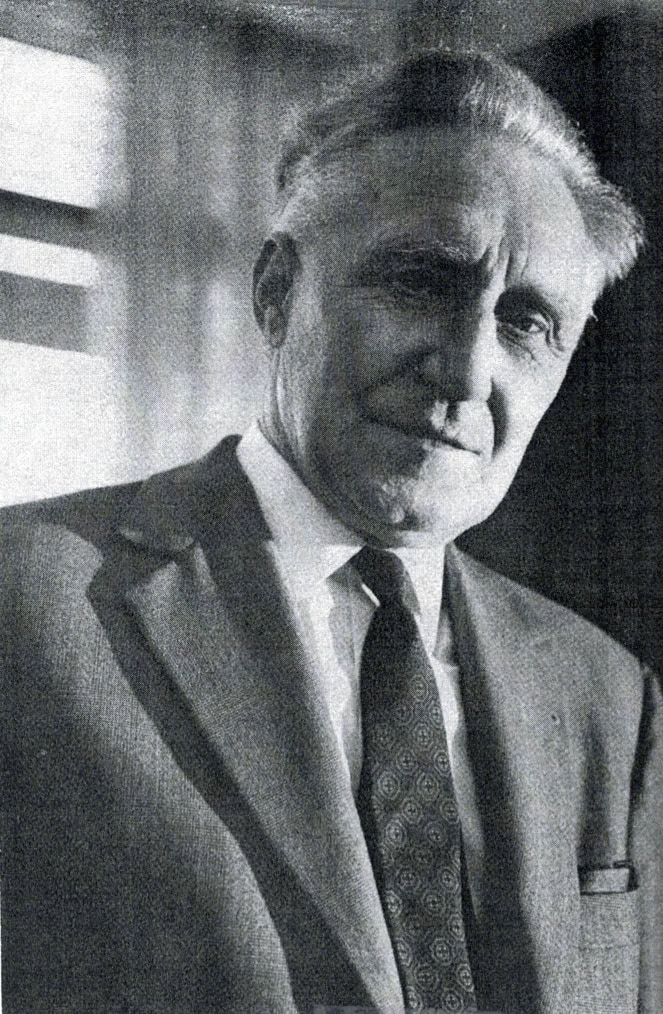
Willem Kersters (Antwerp, 09/02/1929 – 29/12/1998)
Another striking anecdote about composer and my Composition professor: in 1968 he went through an artistic crisis again and... he set about writing a series of poems "For I Am Not John" which, thanks to Pieter Geert Buckinx, were published in 1971. Thus he overcame his "musical fatigue".
For more information about Ludo Hulshagen (b.1951) and his compositional output you can contact [MATRIX] Centre for New Music.