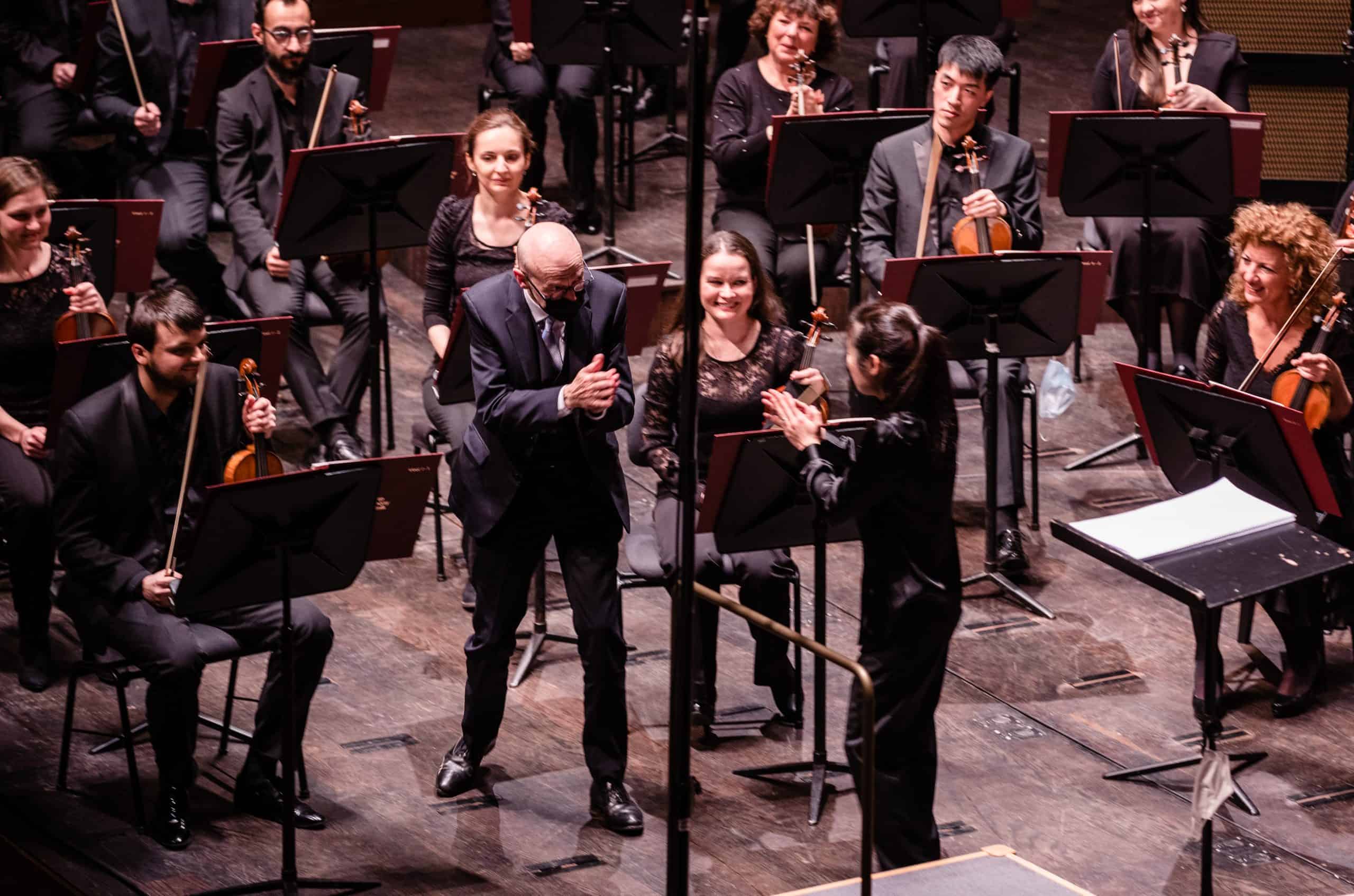
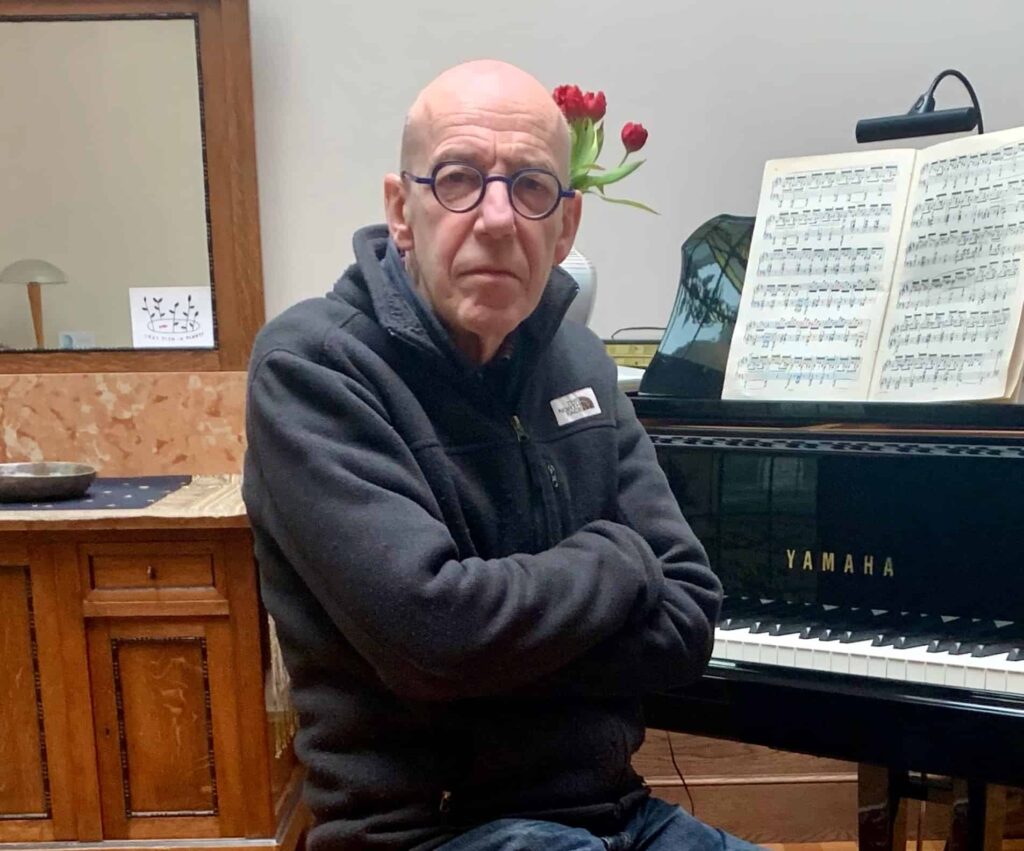
Sometimes you can tell from the opening measure whether the collaboration between conductor, orchestra, and composer clicks. This rarity occurred last Friday at the premiere of Luc Van Hove's Symphony IV, where the Antwerp Symphony Orchestra under the baton of Elim Chan demonstrated how energy, pride, and pleasure culminate in a compelling musical narrative.
On paper, the new symphony has a classical four-movement structure, but Van Hove gives it a twist. The first three movements are brief and appear to be sketchy preliminary studies for the grand symphonic gesture in the finale. The finale, which lasts as long as the three preceding movements combined, is both an expansion and a synthesis of the preceding movements. The foundation of the symphony is a division of the twelve tones of the octave into two complementary groups of eight and four tones. Van Hove aims to create a symbiosis between the traditional style in which tones are hierarchically grouped and a contemporary approach in which each tone is equal. This allows the piece to float between tonal and atonal organization, or in Van Hove's words: post-tonal.
The first movement is an andante in which the strings announce with trills that the sun is rising over a mountainous landscape. Woodwinds and reeds wind around with short dance motifs accompanying the strings. The brass remains in the background. In this movement, tenderness and modesty go hand in hand. The second movement is a Scherzo in which the world comes to life. Winds and percussion bring vigor and joy to the narrative and whip up the motion into a spectacular sonic feast. Here and there, jazzy elements can be heard, giving the listener the impression that the story is set in 1950s America. The quiet third movement serves as a moment of reflection, twilight falls, and the vibraphone points the way toward a tropical continuation.
Dance Party
The finale begins with a brief callback to the atmospheric ending of the third movement, via a short passage by the clarinet (Benjamin Dieltjens), then slowly and gently builds toward a dance party of percussion, trumpet serenades, timpani strikes, and trombone flourishes. Ultimately, the symphony is carefully laid to rest in a reassuring cadential motion, a cool-down that comes straight from the classical playbook.
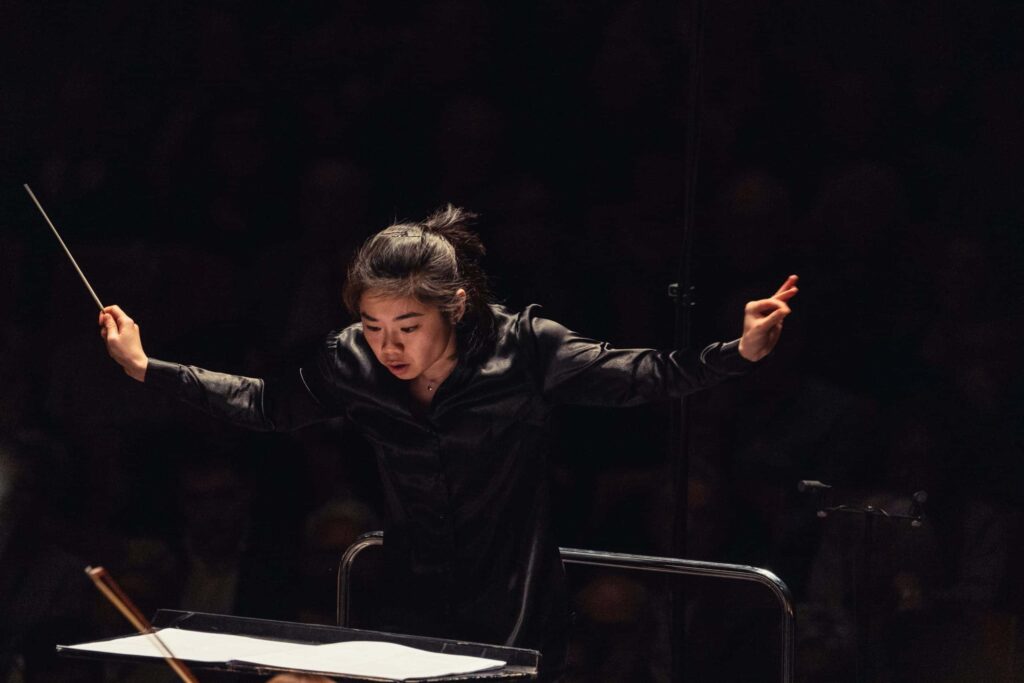
Conductor Elim Chan led the orchestra with boundless energy and inspiring expression to great heights. At times she rose above the orchestra like an eagle, only to dive down like a seagull, focused and in complete control. Her timing, nuance, and sense of color left a decisive mark on the audience's listening experience.
- HEARD: Friday, February 11, 2022, Queen Elisabeth Hall, Antwerp
- PHOTOS: Antwerp Symphony Orchestra & Vincent Callot, Wynold Verweij
- LINK: Symphony IV can be listened to again on Klara: https://radioplus.be/#/klara/herbeluister/2efd028f-37cb-11e5-8f7e-00163edf48dd/ae2149ed-8b7e-11ec-aee4-02b7b76bf47f/