Kashgul: kash‧gul (adjective).
A carpet made by the nomadic Kash Guli tribe, which is why they are considered nomadic carpets. The Kash Gulis are a neighboring tribe of the Ghashgais, who settled in the Zagros Mountains in the Persian province of Fars. These carpets have special characteristics, such as a relatively thick knot and often shiny gold-red compositions made from resilient wool. All in all, it is a fairly rare nomadic carpet from South Persia, with high durability and a unique character.
Recently, the Bruges concert hall introduced their new concept The Makers. Several artists from different disciplines are connected to this cultural institution. One of their first Makers cohorts is Tristan Driessens. This lutenist and composer stands for the fusion of contemporary jazz, classical music and folk with modal, Eastern influences. This is also proven by the three CDs he released this year: Music for Shepherds and Sultans (Startpaginarecords), Lahza (The Glimpse) – Oud Improvisations (Mahoor Institute of Culture and Arts) and Kashgul (Seyir Muzik). In particular, this latest release caught my attention.
Early in his career, Triestan Driessens focused on classical Ottoman court music. Together with Ensemble Beerûn and the acclaimed Lâmekân Ensemble, he brought it to the public. After four albums with the latter and studies in Istanbul, he founded the Soolman ensemble in Belgium in 2016. With musicians from various countries, including Greece, Turkey, Luxembourg, Italy, and Belgium, he releases the album Kashgul out.
The compositions, a mix of music from India, Persia, the Ottoman Empire and jazz, form a harmonious unity. The album offers a beautiful blend of traditions through the centuries, evoking universally relatable emotions. Nothing super original but pleasing to the ear. But it is the subtle interaction between the six members and the mix of timbres that elevates this album to a musical adventure.
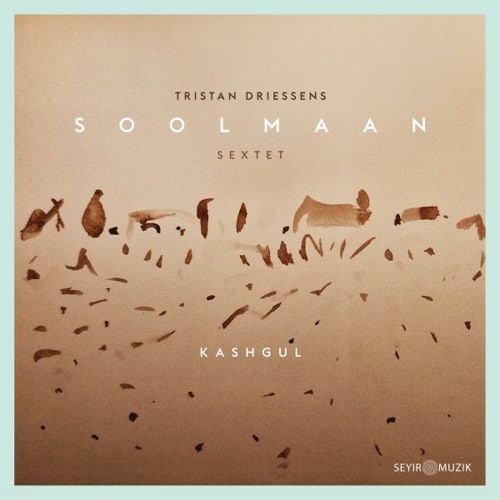 WHO: Soolmaan Sextet, Tristan Driessens
WHAT: Kashgul
LABEL: Seyir Muzik