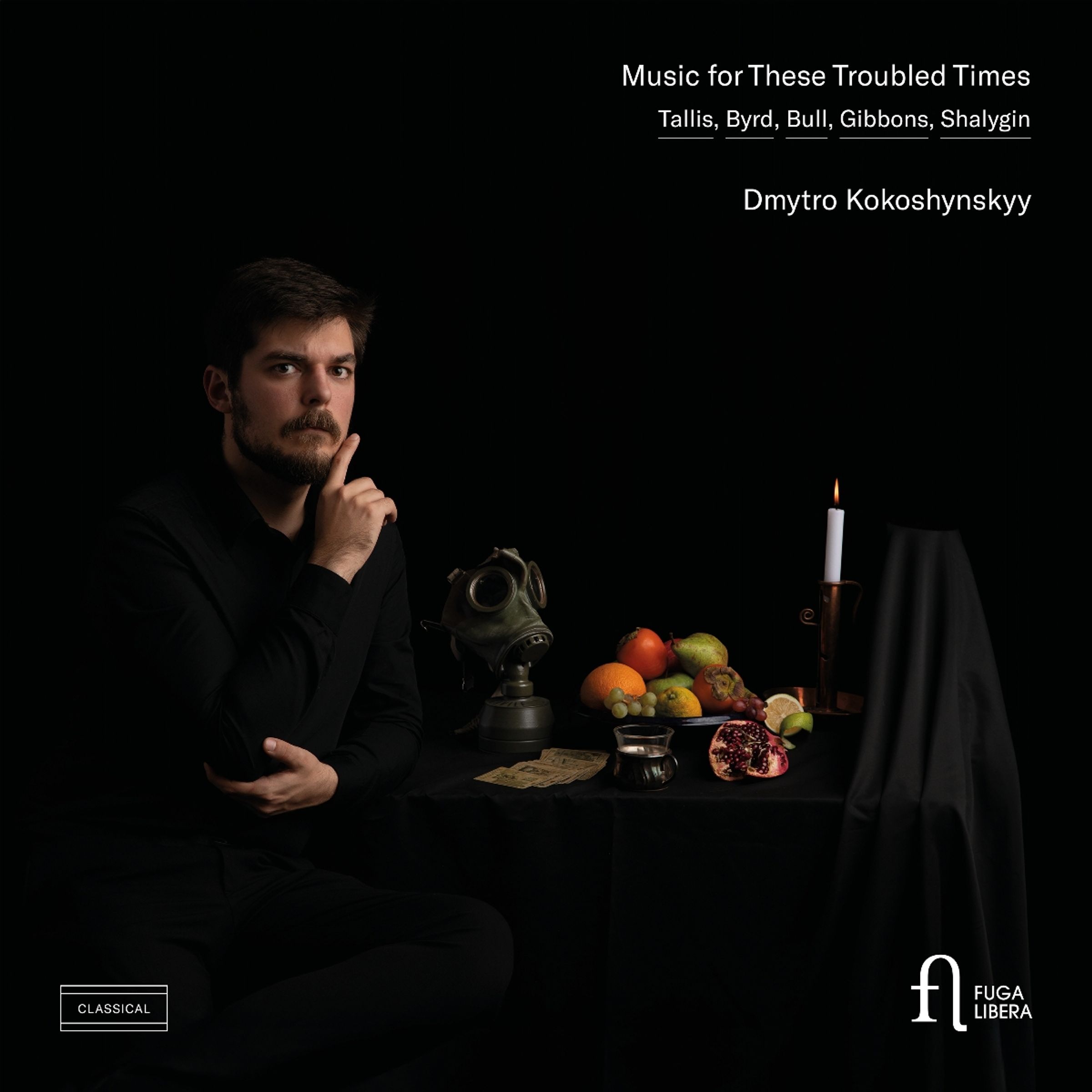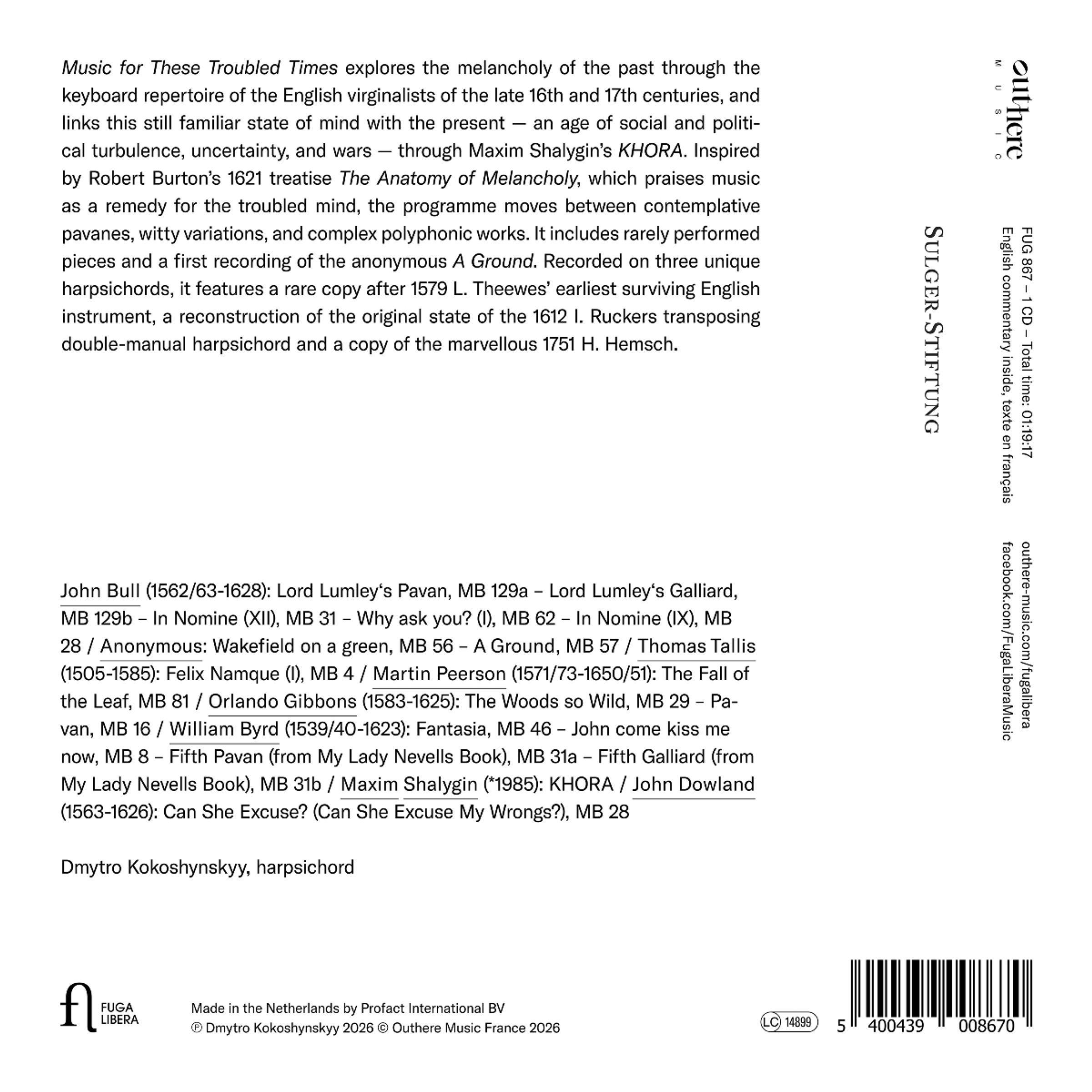

"Music for These Troubled Times" explores the melancholy of the past through the repertoire of English virginal players from the late 16th and 17th centuries. Maxim Shalygin's "KHORA" connects this still-familiar state of mind with the present—an era of social and political unrest, uncertainty, and war. Inspired by Robert Burton's 1621 treatise The Anatomy of Melancholy, in which music is praised as a remedy for the troubled mind, the program moves between contemplative pavans, witty variations, and complex polyphonic works. It features rarely performed pieces and a first recording of the anonymously written "A Ground." The recordings were made on three unique harpsichords: a replica of the earliest surviving English instrument by L. Theewes from 1579, a reconstruction of the two-manual harpsichord by I. Ruckers from 1612, and a replica of the remarkable instrument by H. Hemsch from 1751.