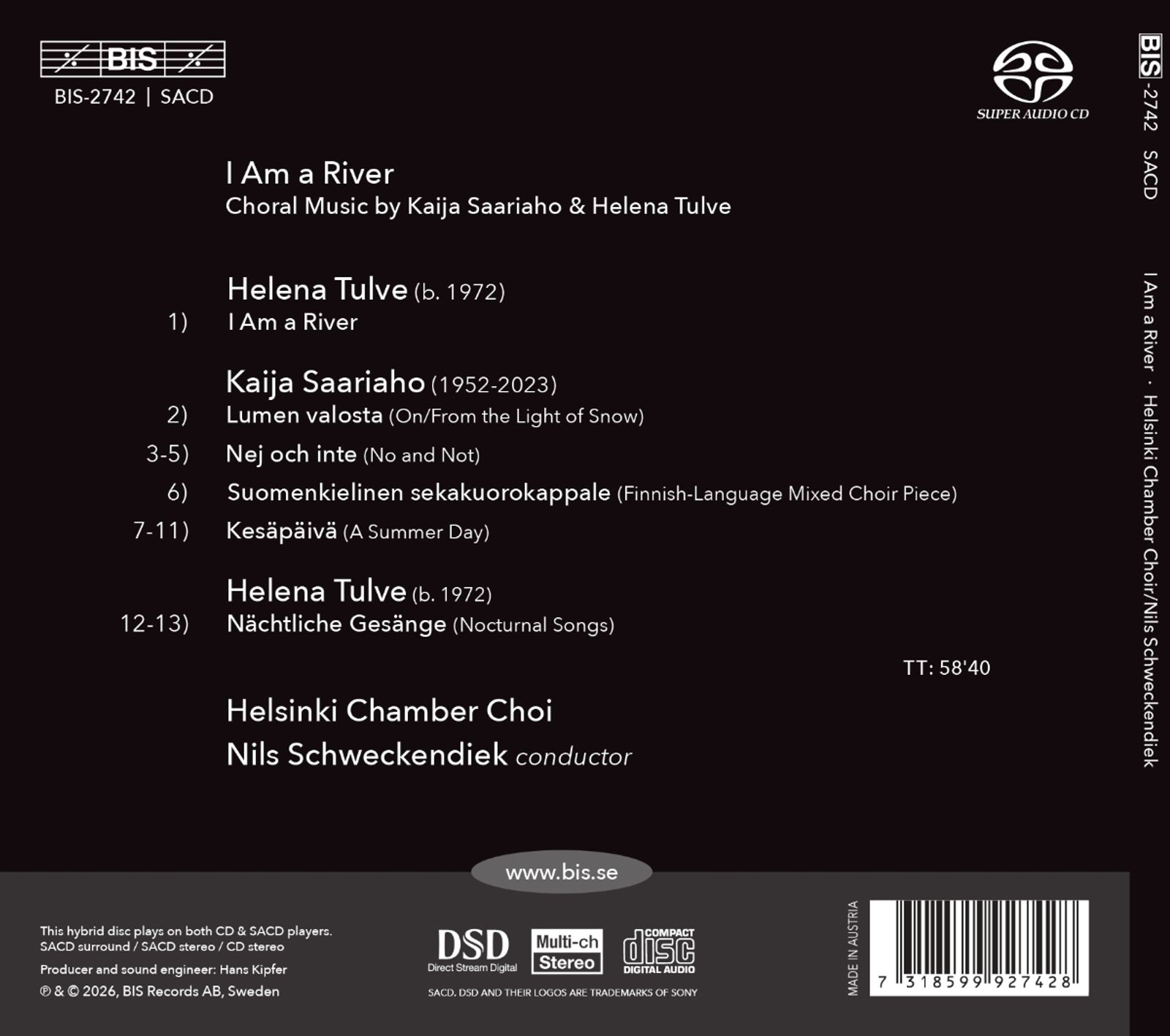

Finnish composer Kaija Saariaho and Estonian Helena Tulve, two composers with highly individual voices, both treat the timbre of instruments as a central element of their work. Especially Saariaho's vocal works reveal the full expressive richness of her music. Early pieces such as "Suomenkielinen sekakuorokappale" and "Nej och inte" established her method of dissolving tonal and semantic units; later works such as "Lumen valosta" and "Kesapaiva" develop this approach further with extended vocal techniques. Tulve's music "springs from simple primary impulses and is influenced by natural patterns, organic elements and synchronicity." 'I Am a River', based on verses by the 13th-century Persian scholar, poet and mystic Rumi, explores the connection between choral music in the acoustics of churches and sensory mysticism. 'Nächtliche Gesänge', based on texts by exiled German-speaking Jewish poets, borrows its sound material from the phonetic properties of the German language. These works of extraordinary beauty were entrusted to the experienced voices of the Helsinki Chamber Choir under the direction of Nils Schweckendiek. Together with the choir, he received a Grammy and many other awards for his earlier album "Reconnaissance" featuring works by Kaija Saariaho.