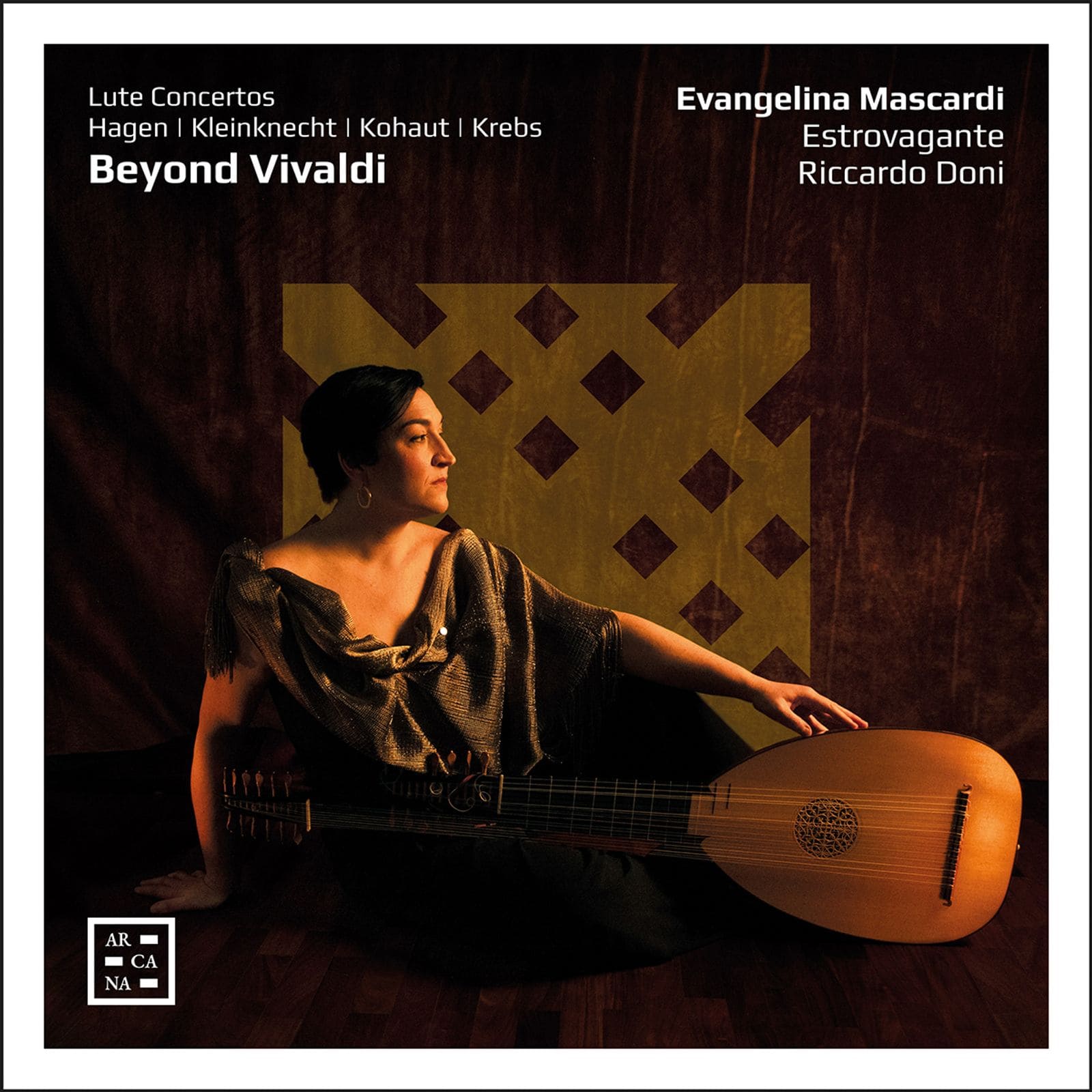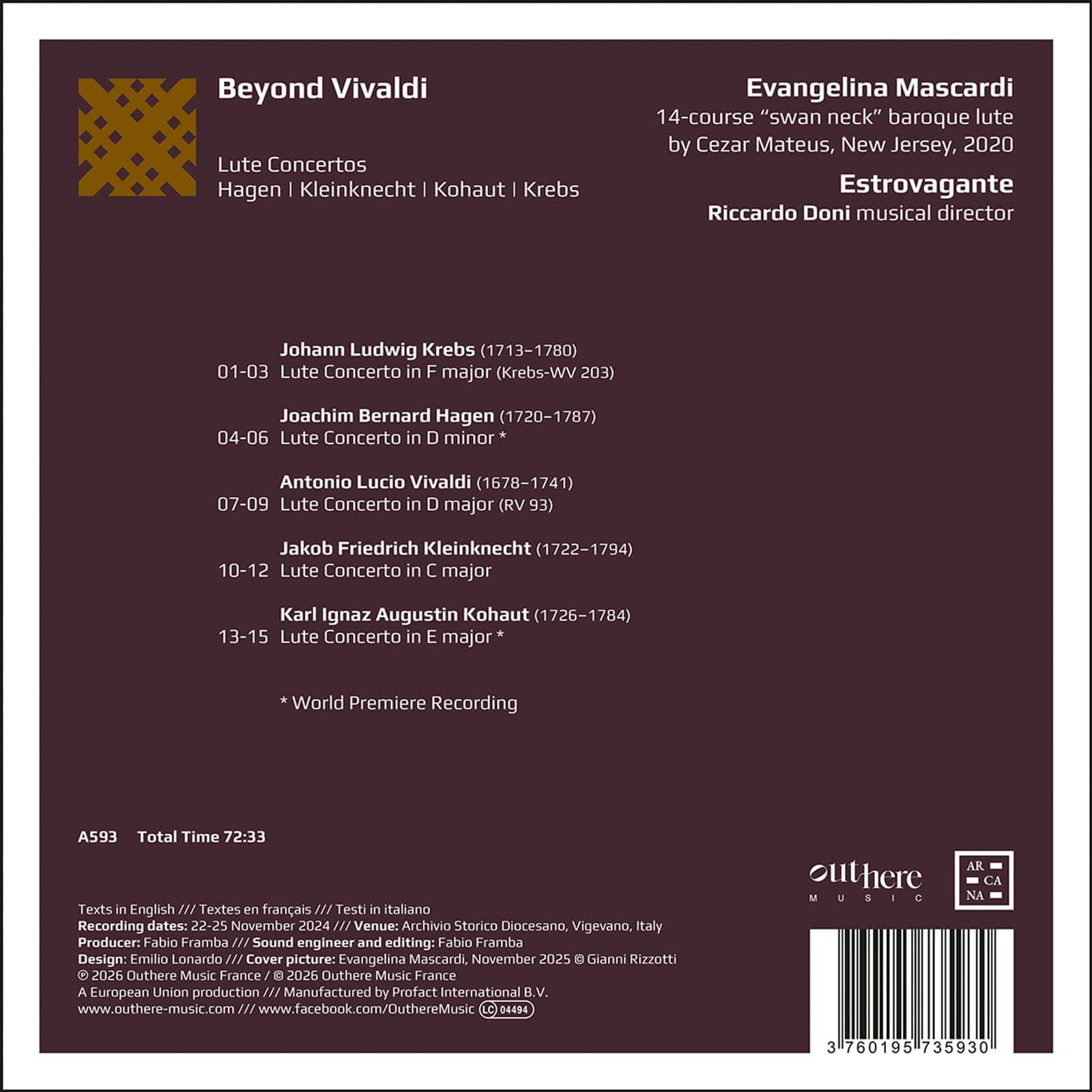
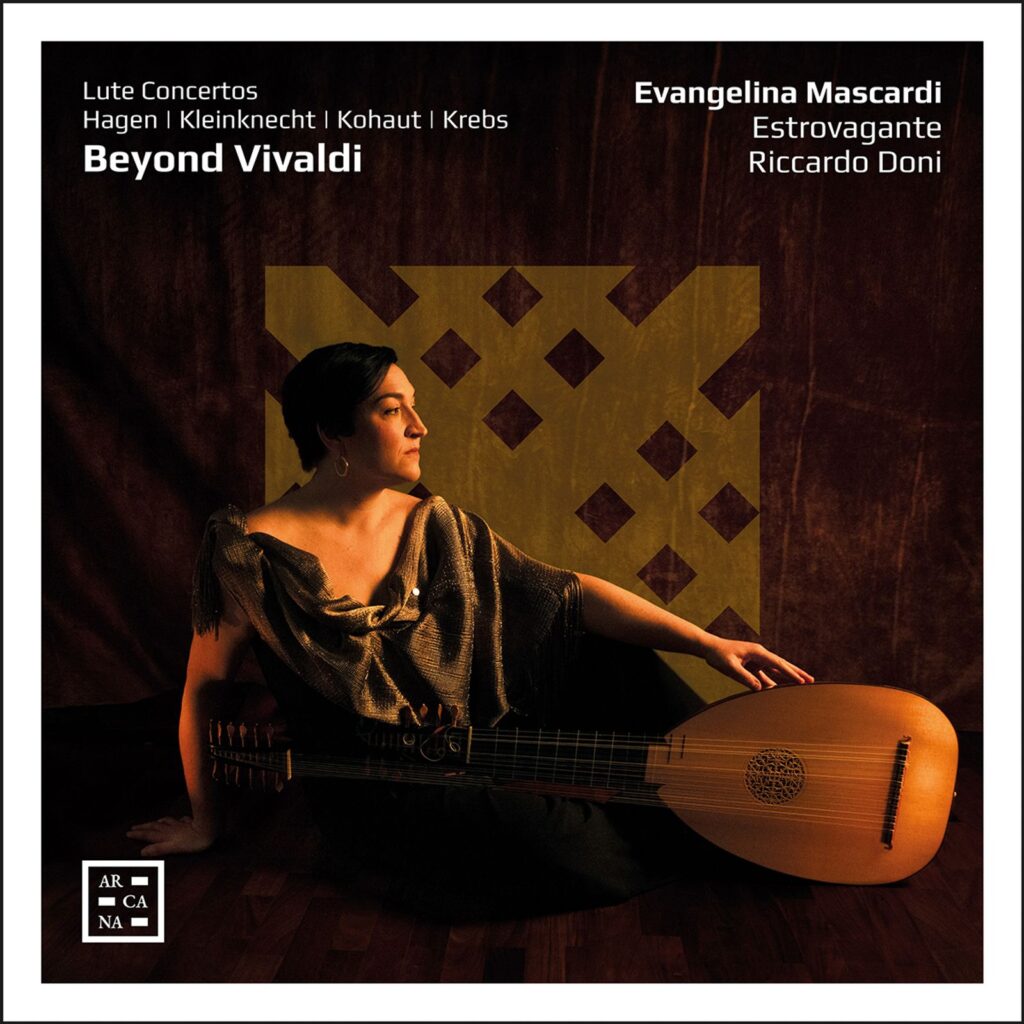
The Lute Concerto RV 93, composed during Antonio Vivaldi's stay in Prague in 1729-30, is the most famous example of a repertoire that is almost entirely neglected today, but was once enormously popular in the German-speaking world, particularly in the Habsburg territories of Austria and Bohemia. Following a definitive edition of the complete works of Johann Sebastian Bach (2022) and a representative selection of the works of Silvius Leopold Weiss (2024), Evangelina Mascardi completes her trilogy on the 18th century by shedding light on a fundamental but largely overlooked chapter in the history of the lute. Alongside Vivaldi's concerto, which guitarists have made one of their most celebrated works since the early 1960s, we find four genuine and virtually unknown gems, such as those composed by Joachim Bernard Hagen and Karl Ignaz Augustin Kohaut, now recorded for the first time. Accompanied by the Estrovagante ensemble under the direction of Riccardo Doni, Mascardi ventures into the rococo idiom, the stylistic context for the last virtuosic masterworks of an instrument that can look back on a rich history but would definitively fade into oblivion within a few years.