On Sunday, 17 August 2025, the warm summer light streamed through the Gothic vaults of the Herderkirche, as if it wished to bear witness to what was about to unfold there. As part of the Albert Schweitzer anniversary year, the Weimarer Orgelsommer offered a musical moment of stillness, inspiration and remembrance. Organist Matthias Roth took his seat at the keyboard of the imposing Sauer organ and presented a surprising, layered programme.
Herderkirche – a sacred space that breathes
Whoever steps into the Herderkirche enters not a museum of faith, but a living space that carries the centuries within it. The late-Gothic hall church, completed around 1500, became a Lutheran town church in 1525 and has since breathed the spirit of Reformation, culture and devotion. Great names found their echo here: court organist Johann Gottfried Walther set the tone there from 1704, and Johann Sebastian Bach was no rare guest. He played, accompanied, had his children baptised there (including Carl Philipp Emanuel) – and in Weimar he presumably wrote music that still moves us to this day.
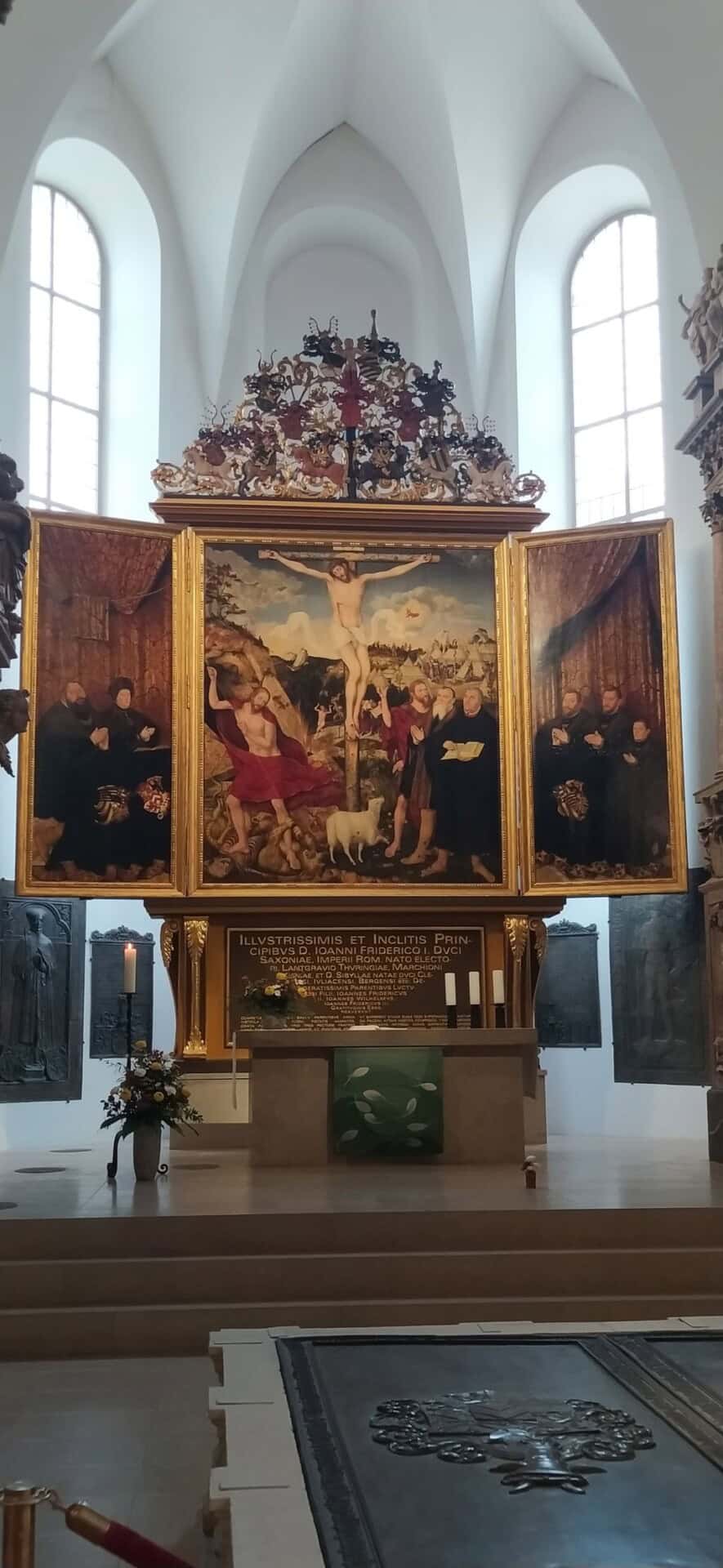
Above the altar, the retable draws the gaze upward: a triptych by Lucas Cranach the Elder, in which faith and Renaissance art meet in hushed drama. The altarpiece not only depicts the crucified Christ, surrounded by Luther, the congregation and contemporaries – it shows how the divine becomes incarnate in the human. To the right stands John the Baptist, pointing to the Lamb of God – an image that touches on Schweitzer's theological vision: not a sense of moral superiority, but a call to shared responsibility and service. Here the music naturally takes on a second breath: every tone, however soft, finds its resonance in wood, stone and silence.
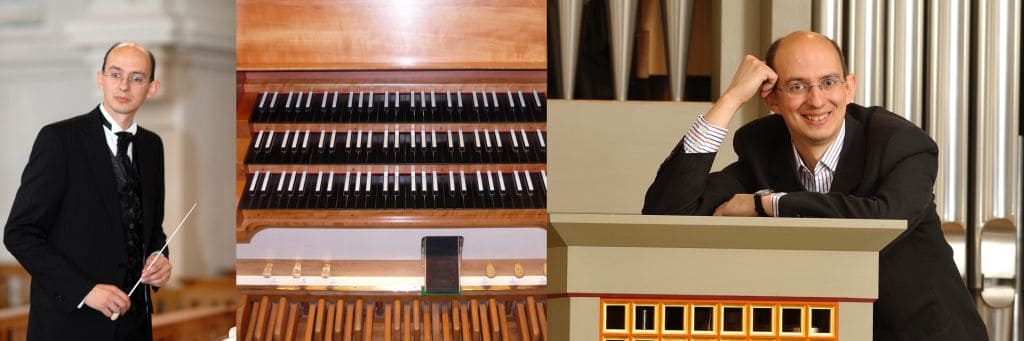
The Sauer organ, tradition and future in one breath
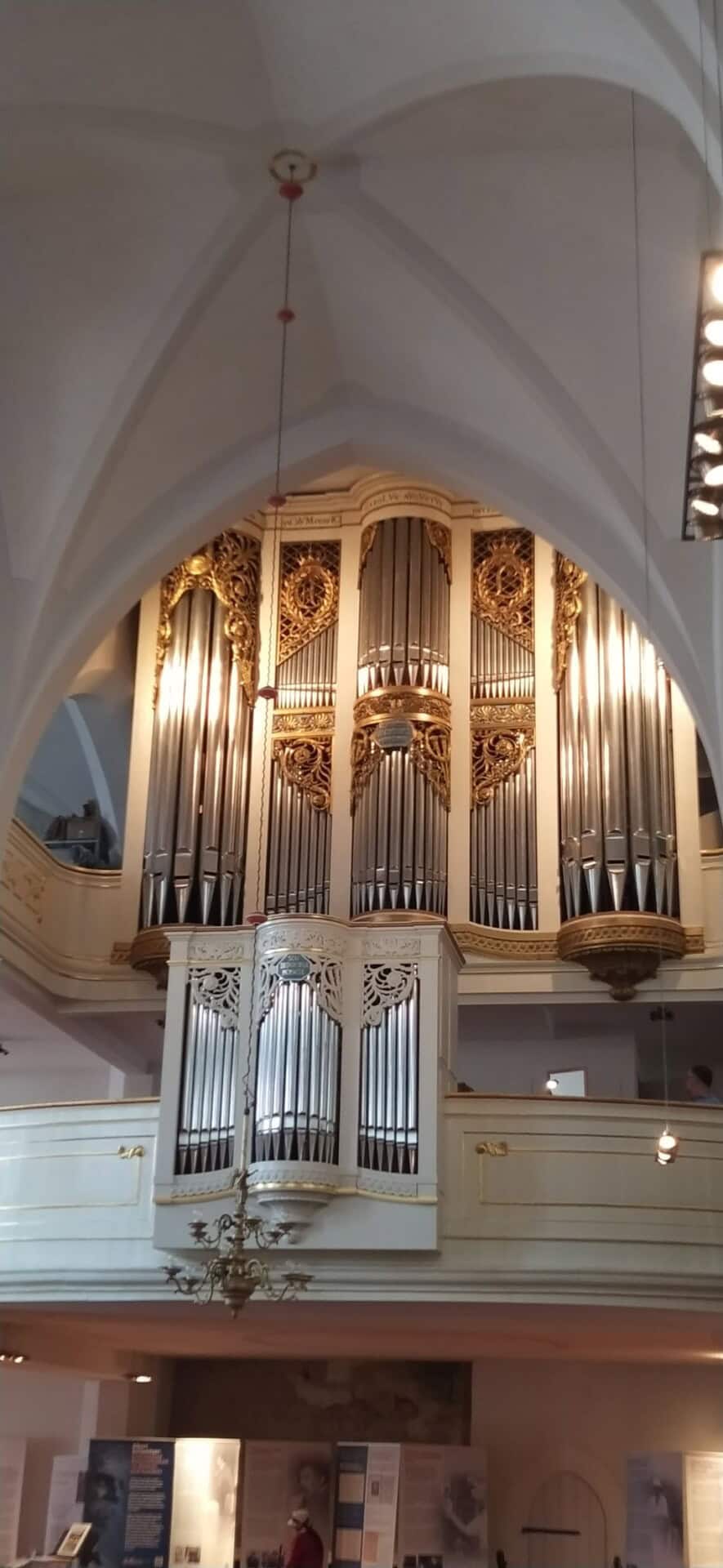
The present organ, a masterwork by Wilhelm Sauer from 2000, is an instrument with a soul. It unites past and present in a single sonic body: with pipework from Walcker (1907), the neoclassical façade by Trampeli (1812) and a modern technical design, it offers a rich palette of colours suited to both Baroque and late-Romantic repertoire.
With 53 stops, distributed over three manuals and pedal, it has the power to rejoice, but also to dissolve softly into the silence. The vision behind this organ is clear: not a reconstruction of the past, but a living instrument that speaks in the spirit of Bach, yet with a sound that breathes in the present.
Schweitzer as silent guide, Herder as cultural foundation
Since 1953, a cycle of organ concerts has sounded in Weimar every summer, becoming part of the city's soul. What began as the Stunde der Orgelmusik, established by Johannes Ernst Köhler, grew into the Weimarer Orgelsommer: a series in which the organ produces not only art, but also liturgy, meditation and engagement.
In 2025 the cycle is devoted to Albert Schweitzer (1875–1965) – physician, theologian, thinker and above all organist who did not merely perform Bach, but lived him. For Schweitzer, music was service, not display. It was precisely this ethos that resounded in Matthias Roth's concert.
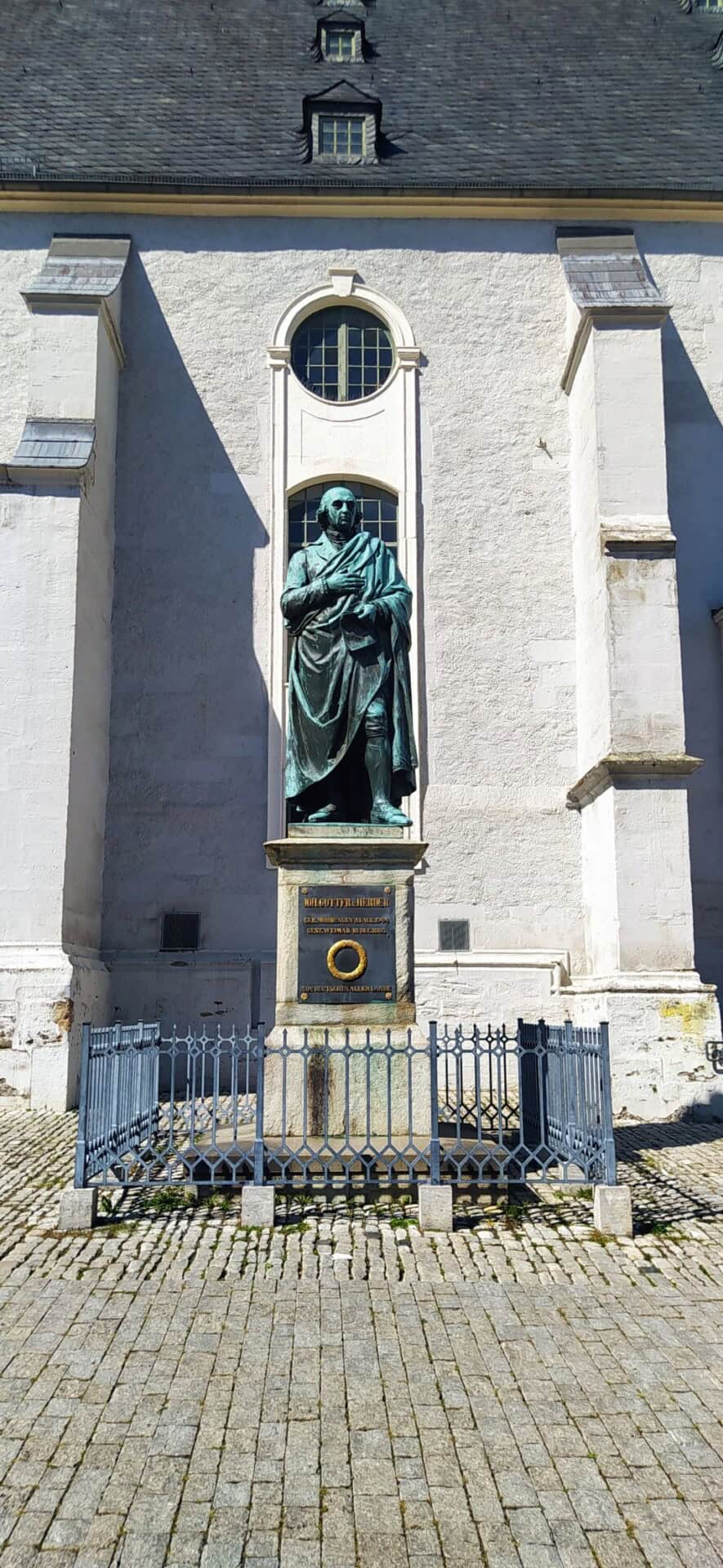
The theme connects seamlessly with the figure after whom the church is named: Johann Gottfried Herder (1744–1803), philosopher, theologian, friend of Goethe and founder of an early-Romantic concept of culture in which people, language, religion and art are expressions of human dignity. Herder wrote: "Wie ein Mensch von einem anderen lernt, so soll auch ein Volk von und mit den anderen Völkern lernen, bis alle die schwere Lektion erfasst haben, dass kein Volk ein von Gott einzig auserwähltes Volk ist." ("Just as one person learns from another, so too should a people learn from and with other peoples, until all have grasped the difficult lesson that no people is the sole chosen people of God.") That idea of intercultural and interhuman learnability sounds all the more urgent today, in a world that still struggles with exclusion, a sense of superiority and nationalism.
Albert Schweitzer also stood in that spiritual current, as the temporary exhibition in the church showed us: “Ich bekenne mich zu der Überzeugung, dass wir das Problem des Friedens nur dann lösen werden, wenn wir den Krieg aus einem ethischen Grunde verwerfen, nämlich weil er uns der Unmenschlichkeit schuldig werden lässt.“ ("I confess that I hold the conviction that we will only solve the problem of peace if we reject war on ethical grounds, namely because it makes us guilty of inhumanity.") He saw in music and culture a universal calling to ethics: “Wahre Kultur ist etwas Geistiges und Ethisches, nämlich die edelste und tiefste Menschlichkeit.“ ("True culture is something spiritual and ethical, namely the noblest and deepest humanity.") Weimar, which flourished under the humanism of the classics and later was tragically defiled under Nazism, is a place where this dialogue can still be felt. The bond between Schweitzer and Weimar was one of spiritual kinship – he corresponded with Köhler, followed organ life in Thuringia, and saw in Bach the moral sound memory of Europe: “Wer möchte jemals ergründen, wie es möglich ist, dass diese Musik unsere Seelen so friedvoll und stille macht … Aber erfahren wird es jeder, der sie nicht nur mit dem Ohr, sondern auch mit der Seele hört, dass er hier auf heiligem Boden wandelt und in Bach einen Freund und Troster besitzt, den Weg der Stille und des Friedens zu finden.“ ("Who would ever wish to fathom how it is possible that this music makes our souls so peaceful and still … But everyone who hears it not only with the ear, but also with the soul, will experience that he walks here on holy ground and possesses in Bach a friend and comforter to find the way of stillness and peace.")
Matthias Roth, an organist driven by inner fire
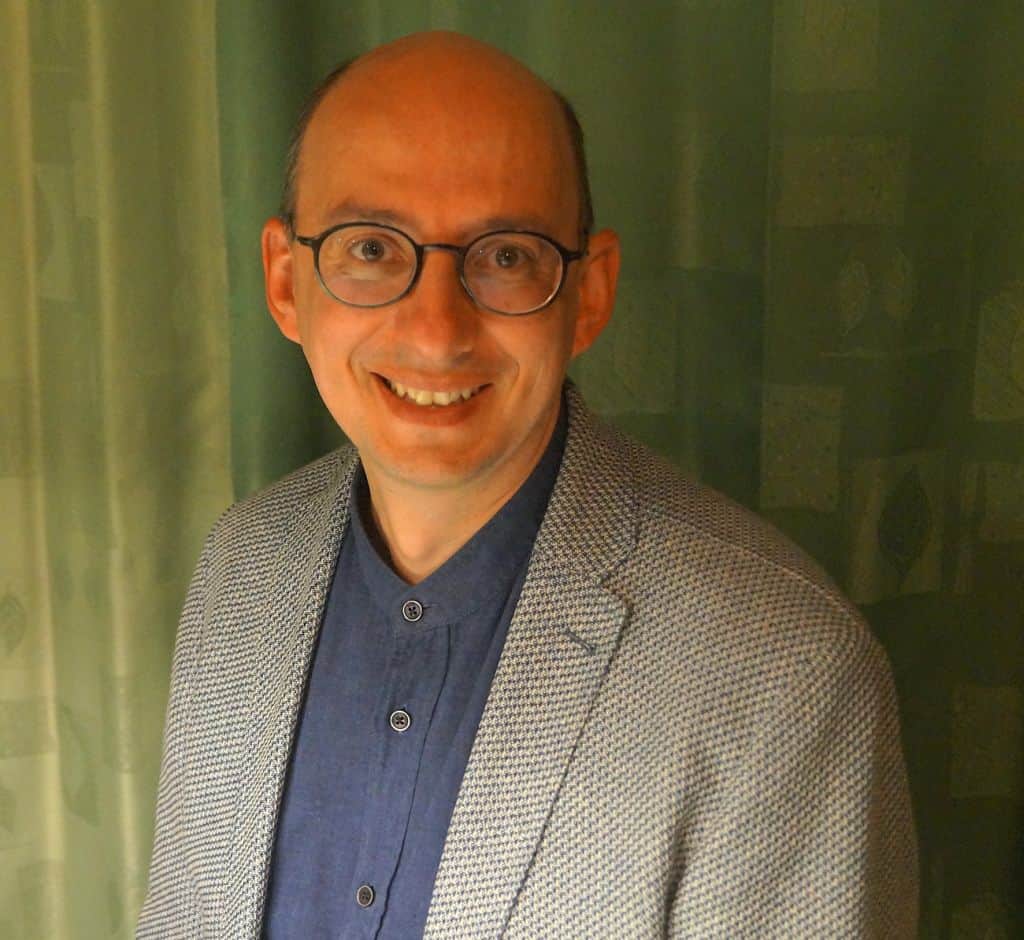
Matthias Roth is not a man of outward display. He is a servant of sound, a listener to what resonates between the notes. His playing bore witness to a deep liturgical commitment and a quiet conviction in the power of music to say more than words ever can.
Roth studied at the Musikhochschule München and was shaped by teachers such as Helmut Lehrndorfer, Edgar Krapp, Roderick Kreile, Wolfram Menschik and Michael Gläser. Since 1999 he has been cantor and organist of the Evangelische Stadtkirche in Bad Reichenhall, and is also active as a guest lecturer, improviser and concert organist at home and abroad. His approach to music revolves around the dialogue between tradition and expression, liturgy and art.
Diverse programme
The programme was a journey through diverse musical worlds and showed the full spectrum of the Sauer organ. The festive "Fanfare" by Franz Lehrndorfer (1928-2013) opened the concert with jubilant sounds and a richness of colour that filled the space. A cheerful and powerful start.
This was followed by the "Sonate in D-Dur" (Wq 70/5) by Carl Philipp Emanuel Bach (1714-1788). Roth performed the work with refined, almost playful tone and subtly revealed the many nuances of the instrument. The alternation between light and dramatic passages was executed with great musicality. In the subsequent "Fuga in d" (Wq 119/2) he displayed his virtuosity: the complex lines sounded clear and lively, with a perfect balance between tempo and depth.
The programme then shifted to a more contemplative mood, with "Wir glauben all' an einen Gott, Vater" (BWV 740) by Johann Sebastian Bach (1685-1750). Roth's interpretation was restrained and meditative, like a prayer filling the space with serene sounds. Every change of registration carried meaning, every note sounded lived-in. The following "Toccata in E-Dur" (BWV 566) formed a powerful contrast: a whirlwind of energy and virtuosity, in which Roth pushed the organ to its limits. The deep registers supported the forceful playing in a captivating way.
The concert closed with the "Passacaglia in a-moll" (op. 40) by Gerard Bunk (1888-1958) – a rarely heard but impressive composition. The passacaglia begins in a dark atmosphere, with repetitions that move like a search for the unsayable. Roth approached the work with patience and devotion: each repetition of the theme felt like a breath unfolding anew. The finale brought a moment of pure intensity. Here Roth proved that even in the shadow of the great masters a unique voice can resonate – if one only listens.
Epilogue – sound as a mirror of the higher
The music fades, but what it touched remains. Such a concert is not display, but an encounter: between player and space, work and listener – and something that rises above all of it.
The Weimarer Orgelsommer once again proved its worth – not by impressing, but by moving. In the Herderkirche, where history speaks through every stone, the music sounded like a living voice, carried by an organ that connects past and future.
And above all this hovered the spirit of Albert Schweitzer – as a silent guide, as an inner compass. As he himself said: “Das Schönste, was wir erleben können, ist das Mysteriöse.” ("The most beautiful thing we can experience is the mysterious.") That mystery sounded, that afternoon, in every note.