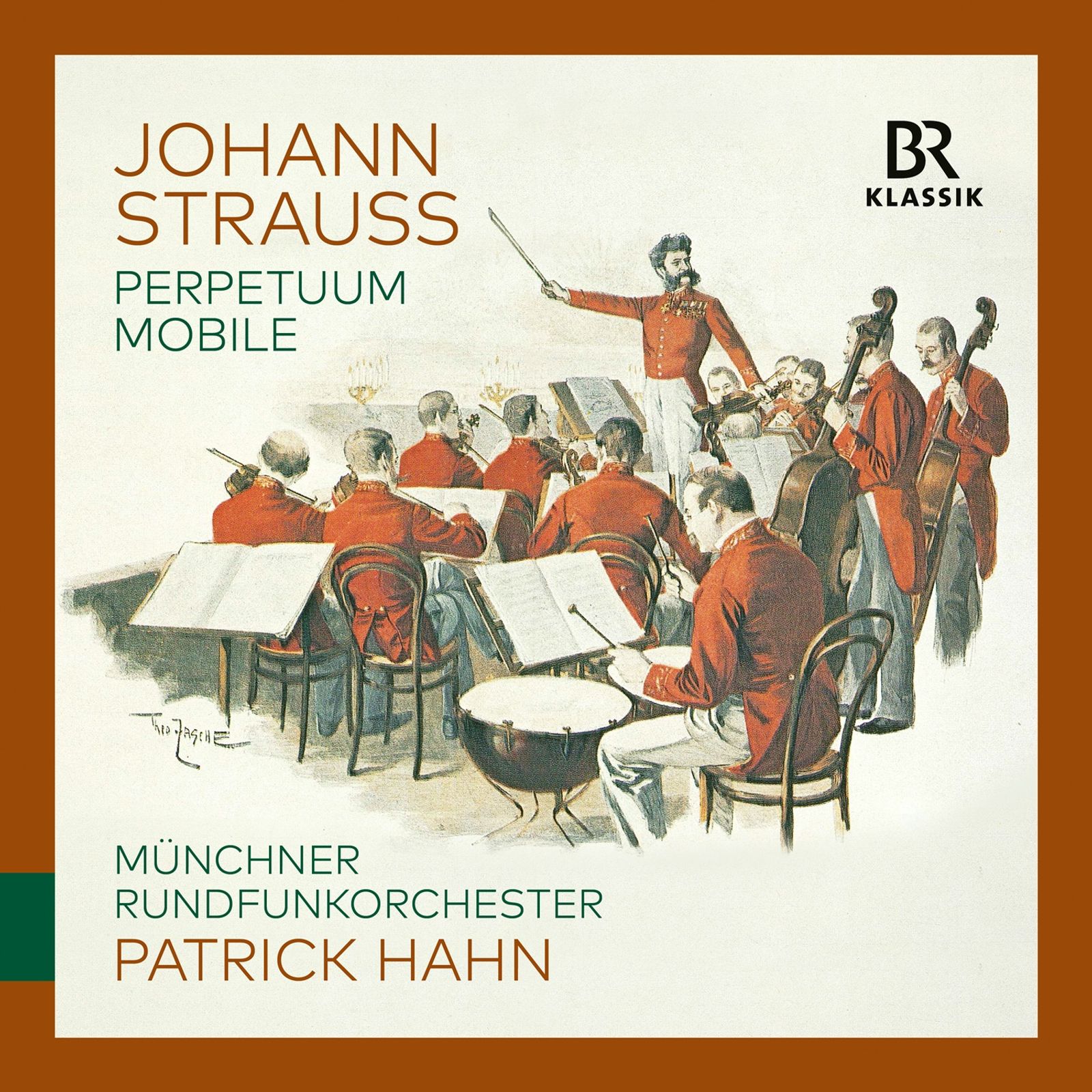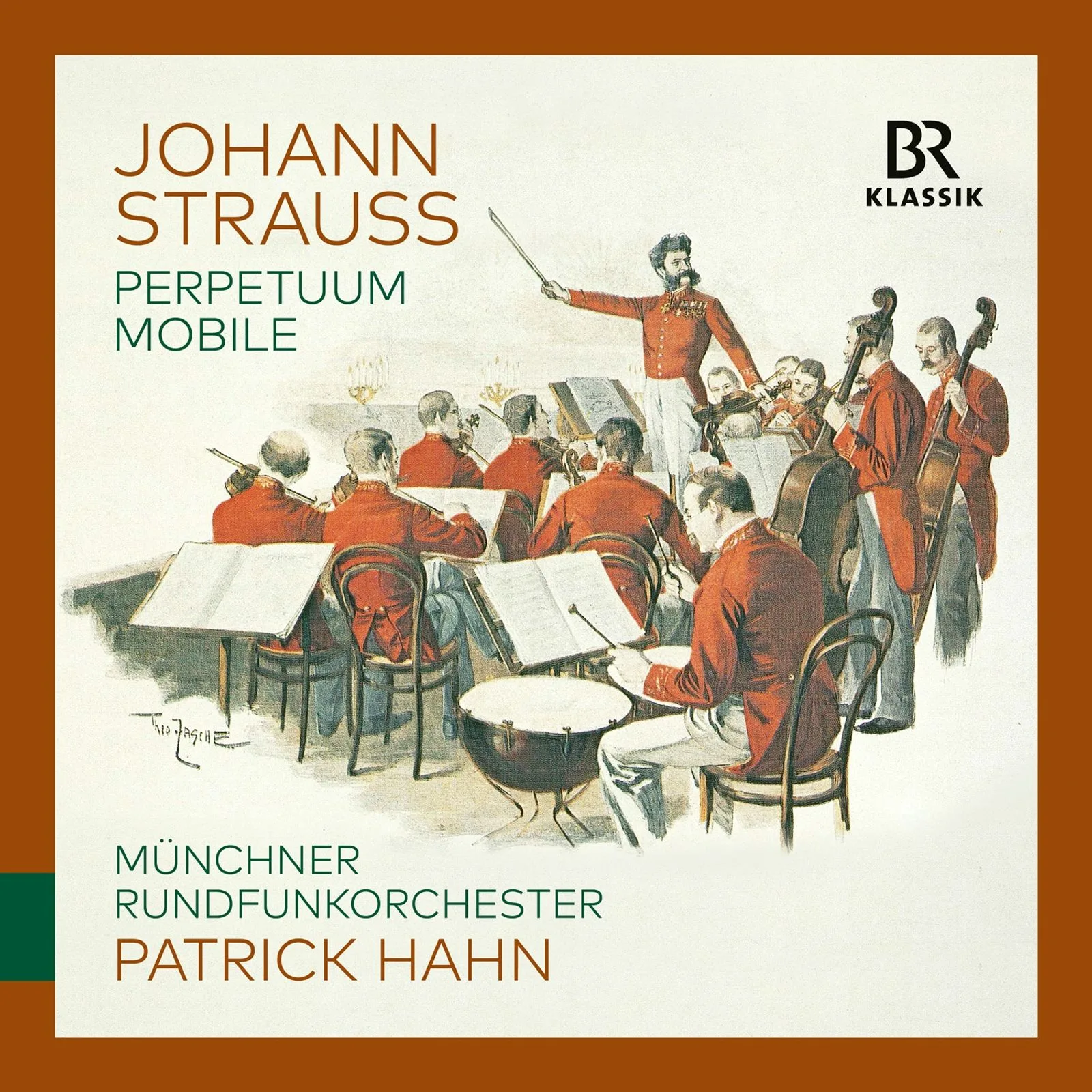
As Johann Strauss Jr. (1825-1899) is mentioned, one almost automatically thinks of the Viennese New Year's concerts, the Blue Danube waltz and a world of elegance, lightness and Viennese charm. That image has become so strong that it easily overshadows the composer himself. Behind the Waltz King lies a composer with a pronounced sense of orchestral colour, rhythmic precision and theatrical timing. The new CD from BR-KLASSIK, with the Münchner Rundfunkorchester under the direction of Patrick Hahn, deliberately chooses less familiar repertoire. In this way a broader picture of Strauss emerges than the repertoire of the annual New Year's concerts usually shows.
More than Viennese conviviality
Already in Perpetuum mobile op. 257, Hahn opts for a light, agile approach, without reducing Strauss to mere entertainment. This short piece from 1861 is built around a simple motif that keeps returning and changes colour with each appearance in the instruments. Hahn keeps the various instrumental interjections clearly audible. The piece thus remains lively without degenerating into a purely mechanical showpiece.
That approach also works in the Revolutions-Marsch op. 54. This early work from 1848 reveals another side of Strauss. Unlike his father, the young Strauss sympathised with the revolutionary movements of 1848, although he himself did not actively take part in the uprisings. After the failure of the revolutions he distanced himself from those earlier sympathies and also tried to remove the march from public memory. Hahn presents the music without burdening it with historical significance. The march sounds direct and energetic, with sharp rhythmic accents that give the music a striking vehemence.
In between, Nordseebilder op. 390 resounds, a waltz from 1879 that originated during stays by Strauss and his second wife Angelika on the island of Föhr. With Hahn, the sea does not become merely picturesque scenery. The broad orchestral movement is given room, while something of the sea's menace remains tangible. At the same time, Strauss' sense of colour comes clearly to the fore, and the performance remains far removed from sweet nostalgia.
A second life
Music theatre also occupies an important place in the programme. The Csárdás from Ritter Pásmán shows how Strauss managed to bring material from a less successful theatre work back to life. His only opera premiered at the Vienna Hofoper in 1892, but disappeared from the stage after a few performances. Various parts, including this Csárdás, survived as independent concert pieces. Hahn does not turn it into an exotic effects piece. He keeps the musical line taut and lets the solo part stand out clearly, while strings, woodwinds and percussion provide a lively orchestralframework. The Hungarian colour remains beautifully measured: rhythmic sharpness and clear accents give the music momentum and character.
The Intermezzo from Tausend und eine Nacht has a very different character. The original operetta Indigo und die 40 Räuber from 1871 never achieved lasting success, and the later version under the title Tausend und eine Nacht likewise failed to re-establish the piece on stage. The Intermezzo did survive as an independent concert piece. Here a more restrained Strauss emerges. The performance begins solemnly, but Hahn then avoids any excessive sentimentality. As a result the melody can unfold calmly. It is precisely this restraint that works convincingly here.
Vom Donaustrande and Carnevalsbilder are also based on material from Der Carneval in Rom, the 1873 operetta that Strauss was inspired to write during a journey to Italy. Vom Donaustrande was later given the form of a polka and is played here with plenty of panache, while Carnevalsbilder, as a fantasy on themes from the operetta, has a more episodic character. Hahn and the Münchner Rundfunkorchester treat both pieces not as curiosities. There is audible pleasure in the music-making, with supple rhythm and attention to the shifting orchestral colours. Especially in Carnevalsbilder the alternation between the various episodes works well, while Vom Donaustrande once again brings out the danceable side of Strauss.
The overture to Der Zigeunerbaron sounds earlier on the CD. It is much better known, but here too Hahn avoids the danger of turning it into an obligatory festive number. The performance remains free of exaggeration and the orchestral details stay clearly audible. In this way, this overture too fits within the theatrical portrait of Strauss that the CD sketches.
The late Strauss
The most intriguing work on the CD is the closing piece Klänge aus der Raimundzeit op. 479 from 1898. Strauss wrote it on the occasion of a monument to Ferdinand Raimund, and incorporated older material, including works by his father and Joseph Lanner, as well as melodies from incidental music that he already knew from his youth. The work thus takes on the character of a musical retrospective on a world that, for Strauss himself, belonged to the past.
This can be heard in the performance. The sparkle of a polka and the dancing movement of a waltz give way to a broader, more contemplative mood. Melodies seem to surface from the past and recede again, so that alongside the familiar elegance a hint of melancholy also becomes audible. Strauss's highest opus number and the ending with two melodies centred on farewell give the work a special place within this programme. Hahn senses this undertone well. He does not turn it into a heavily accented musical testament, but lets the music itself speak.
A joke after the joke
The CD ends with a remarkable bonus: a second version of Perpetuum mobile, this time with rap. Patrick Hahn made the arrangement on a text by Herms Fritz, wiedaamol ualaub, with Johannes Silberschneider as reciter. It is a witty nod to the original work, in which the musical perpetuum mobile itself already plays a joke on the listener. The spoken text makes that humour even more explicit.
As an encore this works excellently, precisely because of its playful reversal of the original concept. For the actual value of the release, however, it is not essential. That lies in the instrumental works and in the way Hahn lifts Strauss out of the familiar framework of New Year's concerts and Viennese nostalgia.
Between precision and spontaneity
The Münchner Rundfunkorchester is a convincing partner in this. The orchestra's broad experience, from opera and operetta to film music and crossover, connects well with Strauss' blend of theatrical flair, sense of colour and rhythmic agility. The musicians play with assurance and at the same time keep hold of the music's energy. Patrick Hahn combines his work as a conductor with activities as a pianist and composer, and he also has a background in jazz. Since 2021 he has been principal guest conductor of the Münchner Rundfunkorchester. Especially his sense of rhythm and of the theatrical side of Strauss comes into its own in this recording.
Still, a small reservation remains. Hahn and the orchestra sometimes work rather too beautifully and polished. The typically Viennese Schmäh, that slightly mischievous, light or unexpected quality the music can have, therefore remains at a distance at times. A touch more ease might have given the performances some extra character. At the same time there is enough playfulness and vitality to carry the programme from start to finish.
None of the works on this CD is a forgotten masterpiece, but the lesser-known theatre repertoire, and above all Klänge aus der Raimundzeit, reveal a Strauss who reaches further than the familiar image of the waltz king: a late, contemplative Strauss, far removed from the Viennese New Year atmosphere.