1918 – 2018. In November this year it will be exactly a century since in a French wagon north of Paris an end came to the horror of the First World War. There are still quite a few commemorations in the works, a tribute to the thousands of men who gave their lives for our freedom.
Although in March spring gradually blossoms, a paradise of scents and colours, the concert 'Elegie' looks back on this dark and grim period. The programme brings together three British composers whose lives and music were marked by the tragedy called the First World War. Composers gave shape in different ways to the collective shellshock that had seized the nation.
Ralph Vaughan Williams Symphony No. 3 'A Pastoral Symphony'
The word 'pastorale' conceals its cruel source of inspiration. As an ambulance driver at the front he was in the midst of the horror and spared wounded or fallen soldiers an anonymous death on the battlefield. The overture, molto moderato' sounds enormously wistful. In the second part 'lento moderato' there are still many hushed passages and a plaintive solo for trumpet. This would refer to a bugling bugler, whose playing during Williams' service as an ambulance driver was regularly heard across the fields. Sounds that made an indelible impression on him in the desolation of the battlefield. In the third and fourth parts 'moderato pesante' and 'lento – moderato maestoso' the music breaks loose with an exceptionally poignant sonority, in which all pent-up emotions find an outlet. In the finale a wordless song can be heard, a stray woman's voice. Beneath soft kettle drum rolls a voice is heard from the wings, the woman sings vocalises of a refreshing lightness and texture. The sound swells and slowly fades away. Music that goes beyond words. A second time the voice is heard, this time supported by soft violin playing. The young much-lauded Flemish soprano Emma Posman devotes herself to this task with dedication, out of sight of the audience, and gives an extra dimension to this pastoral.
Ivor Gurney 'War Elegy'
Ivor Gurney was particularly traumatised by his time at the front. Word and music were an outlet for him. He gained fame as a war poet and composed two orchestral works. It is a pity that such talent was lost, stifled by the suffocating images and experiences of war violence. The traumatic events strengthened his tendency towards introversion and depression. 'War Elegy' sounds somewhat manic, charged with spiritual unrest, lyrical but also feverish. This young man's star shone only briefly. It is good that the Symfonieorkest Vlaanderen rescues this work from oblivion. From 1917 until his death, Ivor Gurney spent time in psychiatry, where he tried to convince the nursing staff that he was Shakespeare.
Edward Elgar 'Cello Concerto' soloist Pieter Wispelwey
Elgar's 'Cello Concerto' is one of the most famous pieces in the cello repertoire. With the devastation and confusion of the war still painfully in memory, Elgar wrote this 'Cello Concerto'. A British audience hears in it a farewell to Edwardian England at the end of the First World War and Elgar's farewell to his career as a composer. It is one of Elgar's best, most original creations. The concise first movement is followed by a lightning-fast, flashing scherzo while the intense adagio with its heart-wrenching appeal returns in a visionary coda of the exuberant finale. This work makes serious technical demands on the soloist, while the performance at the same time requires great subtlety. The pain, despair, crystallises with an impressionistic fragility. In other hands the notes might sound mechanical. Pieter Wispelwey's empathy, power, finger agility and control in the difficult passages display impressive virtuosity. The cello playing is interwoven with the filigree of a rich detailed orchestration. Pieter Wispelwey's interpretation is in a class of its own with superior technique, impressive control, a tight timbre and a kaleidoscopic tonal variation.
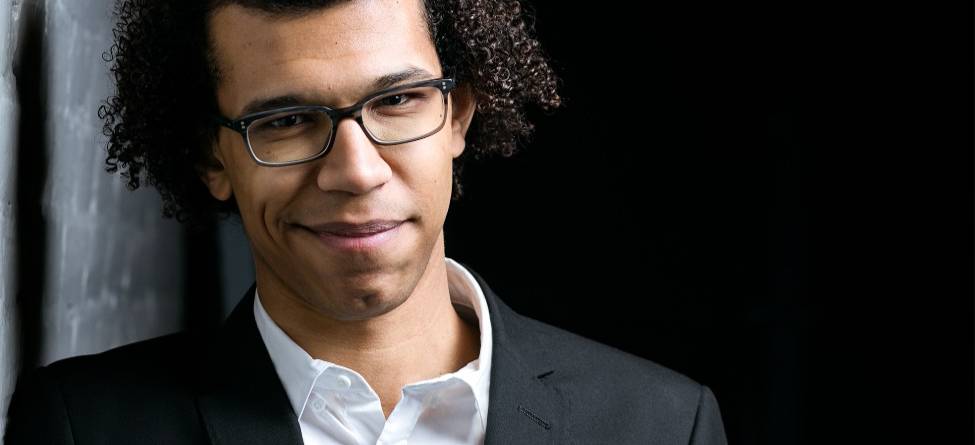
Under the direction of young American conductor Jonathon Heyward, who is considered one of the most talented conductors of his generation, the three compositions gained depth; he reveals with his empathetic interpretation the humanity of the music.
- WHAT: Elegy, work by Ralph Vaughan Williams, Ivor Gurney and Edward Elgar
- WHO: Symfonieorkest Vlaanderen, conductor Jonathon Heyward, cello Pieter Wispelwey, soprano Emma Posman
- WHERE AND WHEN: Sunday 11 March 2018, deSingel, Antwerpen