The Klara Top 100 is a list, Klara 20 was a birthday. Between the two lies a world of difference. Both evolved, that's true. One slightly each year. The other changed a lot over those twenty years. And how! In the list, newcomer Arvo Pärt displaced the old faithful Bach. But over those twenty years, much more has changed. How else could Klara stand out with a silence book and a jazz publication.
Klara embraces it without shame, two quite divergent music genres. A sign of the times? Is Klara then no longer that beloved classical station? Recently two professors gave their opinion on the Top 100 list. Musicologist Pieter Bergé found in it a "longing for slowness", and added: "hopefully that is not only a longing of increasingly aging classical music lovers." Music philosopher Marlies De Munck found the list, with a contemporary composer like Arvo Pärt at the top, actually proof that classical really still lives. With the difference that Bach directs your attention outward and Pärt invites you to direct that attention inward. Has a changed way of listening emerged among us? And if we were now to balance that attention between outward and inward in our listening, was her suggestion. "Listening can be learned."
Classical lives!
Is that not precisely what the station has been doing for years, opening our ears? And succeeds in doing so! Foreign stations also make popularity lists. Recently the German classical station celebrated ten years of "WDR 3 Lieblingsstücke." It became such a predictable and especially truly "classical" Top 100. No Arvo Pärt nor Pergolesi to be found. Beethoven's Ninth at the top, followed by four seasons and a famous river, the Moldau. Plus Peer Gynt and the Bolero. That would not have been a choice even for Radio 3 listeners from more than twenty years ago. Here only "Music for the Millions". Where there's nothing wrong with, by the way. But still.
The classics also come into play at Klara. Listen in the morning to Bart Stouten and in the afternoon to Mark Janssens. The duo is a rock in the classical surf. But they too regularly leave those well-trodden paths, however beautiful they sound. Recently Bart Stouten talked in his "Classical lives" about Stockhausen. He did so following a work by postminimalist Jòhanns Jòhannsson. A composer of the "new melodious" functional music"? In any case not a Karlheinz Stockhausen, nor a Xenakis or Varèse. I understand that. That belongs in the late evening programs. For real discoveries and surprises with truly contemporary guests we have to take shelter in that late evening. There can be more than just Richter or Einaudi. Film music composers also get their place. France Musique dared recently to organize a "Journée de la Création". You heard there all day long numerous iconic works that were once created in their Maison de la Musique. And Varèse was among them. Still a rarity.
More than classical
There is another trend that has also not escaped foreign classical stations. Recently I heard Katelijne Boon open her "Admirers" program with "There's no business like showbusiness." A song by musical composer Irving Berlin. Yes, then you know there is evolution at Klara. And that was followed seamlessly by "Sposa non mi conosci". Baroque of the highest order by Gemiano Giacommelli, of course with that restrained and heavenly voice of Cecilia Bartoli. That can all work. And speaking of "easy listening", BBC3 has a program with that name. And I too am a fan of Klara's "Django" in the busy early evening on the way home. Just like the similar "La Dolce Vita" at Musiq 3, "pour commencer une soirée en douceur." They also happen to have two other of those toppers with "Farniente", a program "où le plaisir et l'éclectisme sont le fil rouge" and "Sunset boulevard" where there's even room for crooners. Mix and cross-overs, they are established at "classical" stations.
Jazzy in life
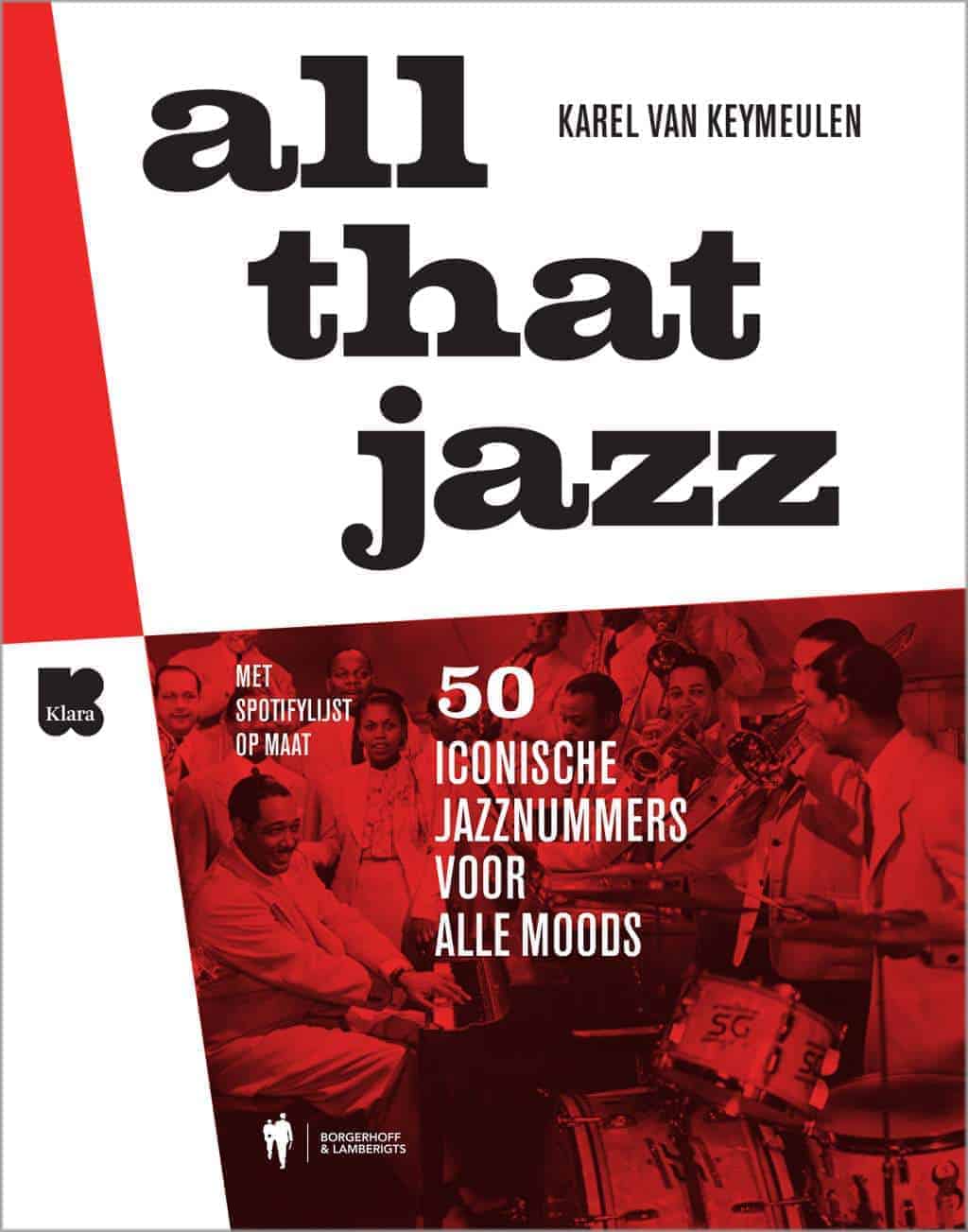
And Klara has something with jazz too, of course. For years now, from Elias Gistelinck via Rob Leurentop and Marc Van den Hoof to the book by Karel Van Keymeulen: "All That Jazz". It contains fifty "iconic jazz numbers for all moods." And those are eight emotions, each with an appropriate selection of numbers. A few examples from the eight little chapters? He starts with a feeling of Drive, so characteristic of almost every jazz number and the first example couldn't be better chosen to illustrate that drive, Moanin' by Art Blakey. With Swing, Count Basie cannot be missing with his One o'clock jump. His colleague and competitor Duke Ellington takes his turn in the Spirit section and under Blue Note he cites among others Coleman Hawkins. I would have liked to see him under Swing as well, because when you hear him in the recordings with The Ramblers when he played in Europe for a couple of years: that was real swing. With Blues you can't get past Miles Davis with All Blues from "what is called that ultimate jazz album: Kind of Blue." When you want to feel unrest and suspense and Freedom, Van Keymeulen recommends Charlie Parker for example with his "Koko". "Virtuoso improvisation at a scorching tempo" he writes. If your heart revolts against injustice you can indulge yourself with Billie Holiday and that tragic "Strange Fruit". And finally, if you want to be surprised about what has become of jazz, you'll find your thing in the last mood "Surprise" with among others Brad Mehldau and Vijay Iyer. With each of those numbers you get background information about the musician and his time, some anecdote or other and – importantly – what you will hear in terms of content. It looks like a picture book, so beautifully is it produced, but it is a reading and learning book and above all a listening book, with a Spotify playlist included. That's fine!
The silence of then and now
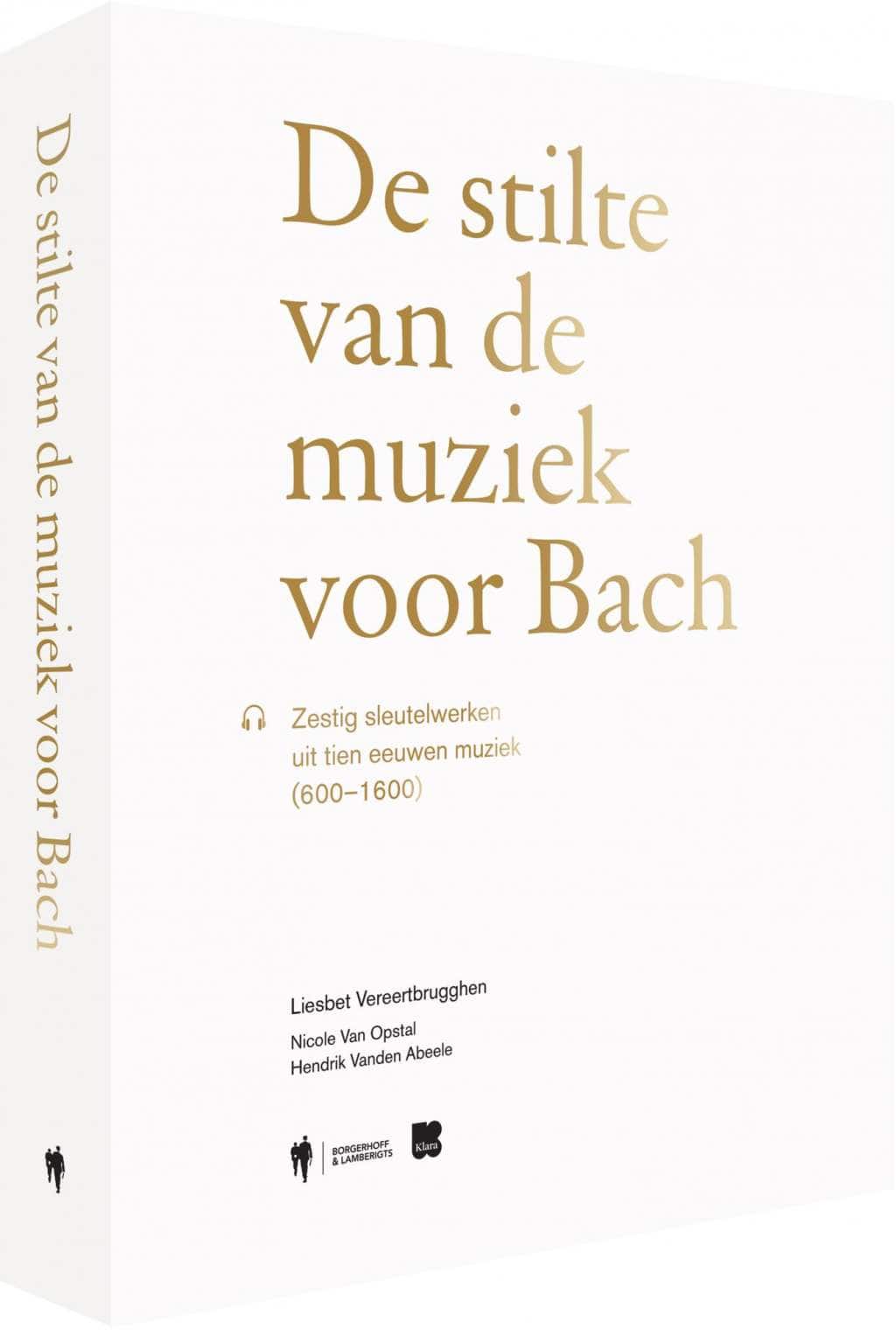
That other new Klara book is even more beautifully produced, also by Borgerhoff & Lamberigts. "The silence of music before Bach." Klara-network coordinator Liesbet Vereertbrugghen is its originator, her colleague and presenter Nicole Van Opstal and musicologist Hendrik Vanden Abeele are the co-authors. Here not fifty but "sixty key works from ten centuries of music" and that ranges from 600 to 1600, from the monastic world and the troubadours to polyphony. Not only Low Countries music from the Franco-Flemish period. You'll also find quite a few other European composers. All the well-knowns (Thomas Tallis with his Spes Allium or Guillaume Dufay with that unique Nuper rosarum flores) and also many lesser-knowns (Adam de la Halle for example) get their place. With each of the chosen works there is context to be found, explanation and musicological insight, all very understandable annotations. Also important: all song texts get their translation. The authors ask for more than one listen. "Do it, again and again" and they recommend slow listening. And it's already a Spotify playlist of together 5 hours and 25 minutes… Also peculiar: they end with silence in contemporary music. And yes, Arvo Pärt is included but also Satie, Feldman, Cage, Messiaen, Scelsi and Max Richter and Jòhanns Jòhannsson. So we're back at that attention to slowness, restraint, quietness: "It's about music that takes time and even stops it." Music to give you goosebumps, but inwardly, as a witness told the author. You also become quiet when browsing through the surprisingly beautiful illustrations in the book. Not just from the miniature or score books of that time or images of Flemish Primitives. Also from among others Dirk Braekman, Michaël Borremans or Berlinde De Bruyckere.
Both books prove that neither early music nor jazz are niche products, but rightfully belong in that broad range of sounds of the Klara universe. Especially if we also add that other successful book from 2014, "Iedereen klassiek". Which by the way is in its third printing and perfectly fills the gap between the other two. The collaboration with the Klara festival, especially now that it had to go online out of necessity (with admittedly 12,000 'visitors'!) proves that Klara can handle the digital age. And also the time that – who knows – other platforms might one day displace linear radio. Already the station is on YouTube and has podcasts. As far as I'm concerned, Klara keeps amazing.
- WHAT: Karel Van Keymeulen, "All that Jazz. 50 iconic jazz numbers for all moods", Borgerhoff & Lamberigts/Klara, Gent, 2020, 225 pp
- WHAT: Liesbet Vereertbrugghen, Nicole Van Opstal and Hendrik Vanden Abeele, "The silence of music before Bach. Sixty key works from ten centuries of music 600-1600", Borgerhoff & Lamberigts/Klara, Gent, 2020