

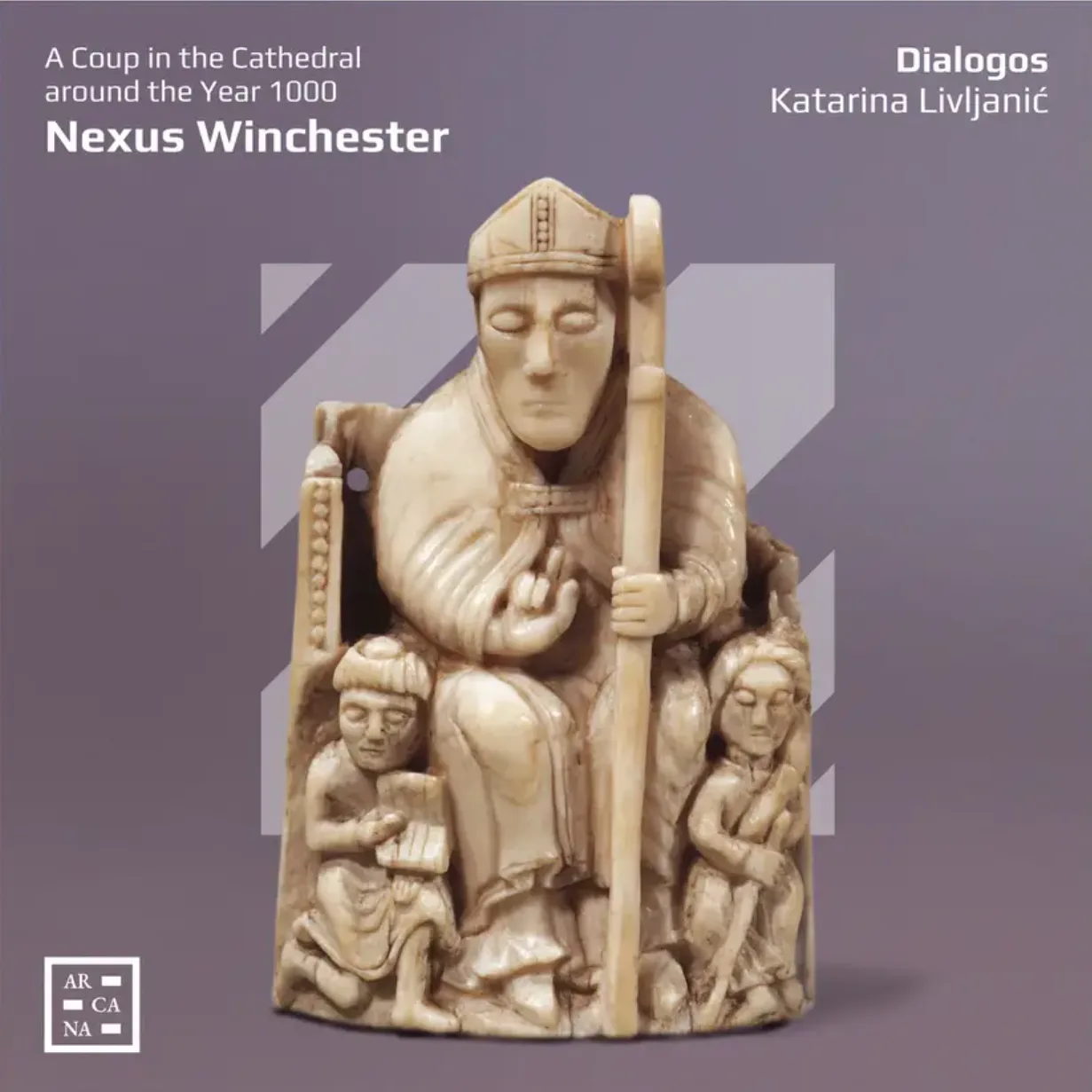
The first time I listened to this new recording by Dialogos, I simply let the music do its work. That was quite pleasant, but at the same time I had the feeling that I was missing something. And that turned out to be the case. Only when I picked up the booklet and began following the story did this CD acquire its full meaning.
Nexus Winchester: A Coup in the Cathedral around the Year 1000 revolves around a remarkable chapter from the history of Winchester. On 19 February 964, Bishop Æthelwold expelled the canons from the cathedral and replaced them with monks from Abingdon. This led to tensions, intrigue and, according to the surviving sources, even an attempt to poison the bishop. It sounds almost like a medieval musical, complete with heroes, villains, conspiracies and unexpected turns. Anyone who has ever watched Vikings will, moreover, recognise a remarkable number of names.
That history forms the common thread of a programme in which chants from the famous Winchester Troper alternate with reconstructed passages from the life of Æthelwold. As a result, you are not listening to a collection of loose pieces, but to a story that gradually unfolds. It does require considerable attention from the listener. This is not a CD to use as background music. Those willing to follow the texts and immerse themselves somewhat in the context will get considerably more out of it.
This also makes this release interesting from a historical perspective. Much of this material has survived in sources that are not always unambiguous. How this music exactly sounded, we will never know. The musicians therefore have to make choices, reconstruct and sometimes also dare to fill in where the sources remain silent. Dialogos does so with expertise and, above all, with a clear idea of what the story must convey. Several pieces are even recorded here for the first time.
Anyone who knows the ensemble roughly knows what to expect. The typical sound of Dialogos is immediately recognisable. The voices sound direct and natural. The instruments are given a clear role within the whole, and the interplay between the two constantly holds the attention. Especially in the more dramatic moments of the story, you notice how carefully everything has been built up. At no point do you get the impression that the historical background is considered more important than the music itself.
Still, while listening I repeatedly thought that this project could work even more powerfully in a live performance. The succession of scenes naturally evokes images. You can almost see the monks arriving, the conspirators forging their plans and the poisoned bishop struggling with his fate. I am actually surprised that nobody has yet built a full-fledged staging around it.
That said, this recording works excellently on CD. For lovers of medieval music, this is without question an interesting release. For those who have followed Dialogos for some time, it once again confirms why the ensemble has for years been among the most compelling advocates of this repertoire. And for anyone who wants to discover how a thousand-year-old story can be told anew today, here is a recording that asks for more than a superficial listen, but that repays that investment amply.