

Can music save the world? Yes! Unequivocally yes! You probably didn't expect any other answer. And there isn't one. The why you can read below.
That thought crossed my mind more than once during Harmonische Freude, the concert by Dorothee Mields and Hathor Consort in the chapel of Hof Bladelin in Bruges. It sounds like a bold statement, especially in a time when conflict, polarisation and mistrust resonate louder than nuance and dialogue. But that was exactly what this afternoon was about: friendship. Friendship between composers, friendship between musicians and, above all, the possibility of listening to one another across differences through art. When you sing or make music together, there is no time for quarrelling, only for a smile (and now and then a bit of healthy stress).
The preparatory conversation with Amory Gillot, maker of the podcast Discours met de Boys, proved to be much more than a side activity. It formed the perfect introduction to what would follow musically. Can harmony arise without discourse? The answer came an hour later, not in words but in music.
Despite the Bruges marathon and an inner city that was difficult to reach for many, a lovely audience still found its way to Hof Bladelin. And no wonder: when Dorothee Mields comes to Flanders, surrounded by the magnificent Hathor Consort under the direction of Romina Lischka, you don't want to miss it.
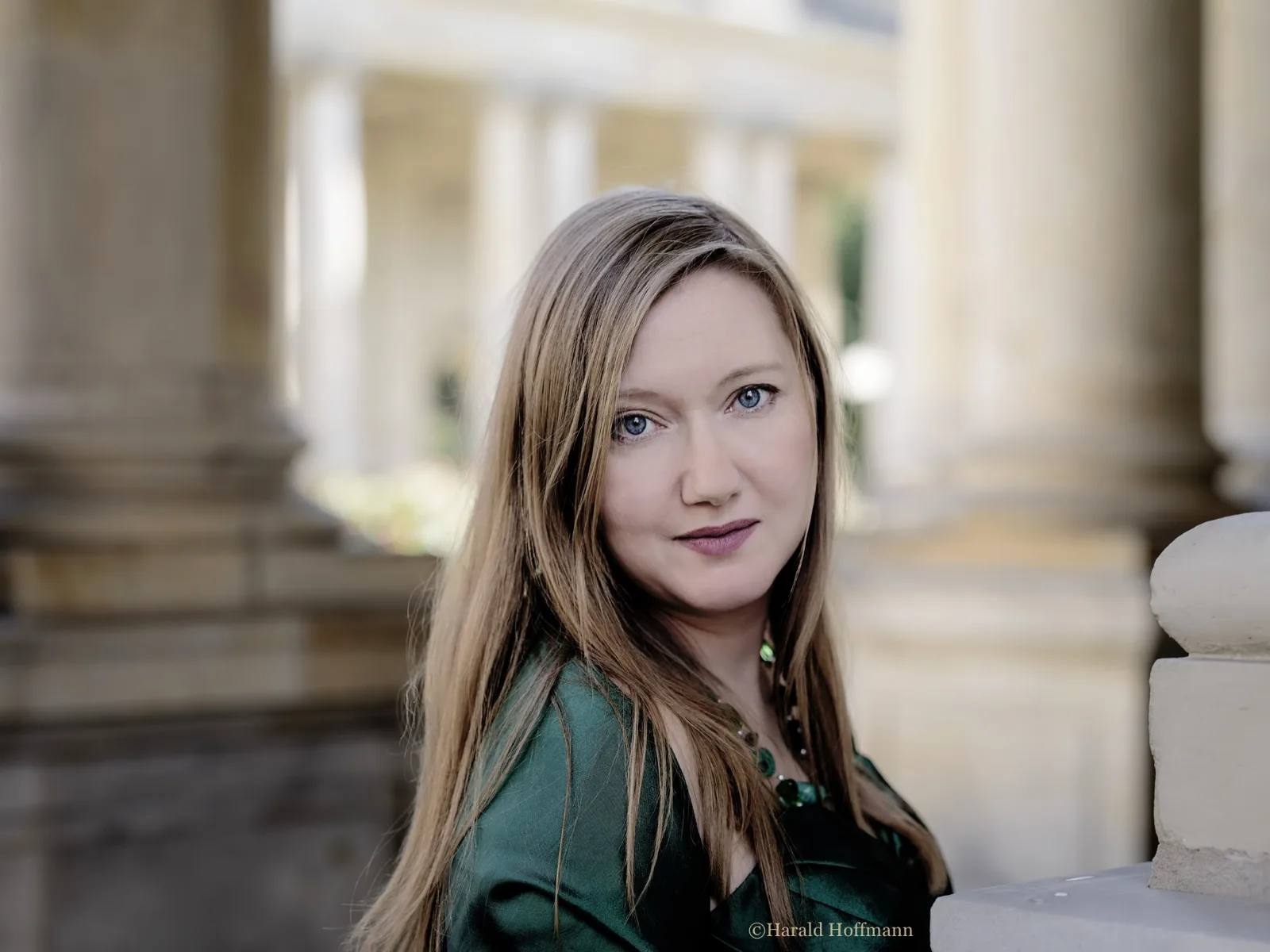 Mields has for years been one of the most beloved interpreters of seventeenth- and eighteenth-century repertoire. Her recordings with, among others, the Nederlandse Bachvereniging, Collegium Vocale Gent and Bach Collegium Japan are reference points. At the same time, Hathor Consort has built an impressive track record. The combination of four strings and harpsichord produces a sound world of intense warmth, transparency and colour.
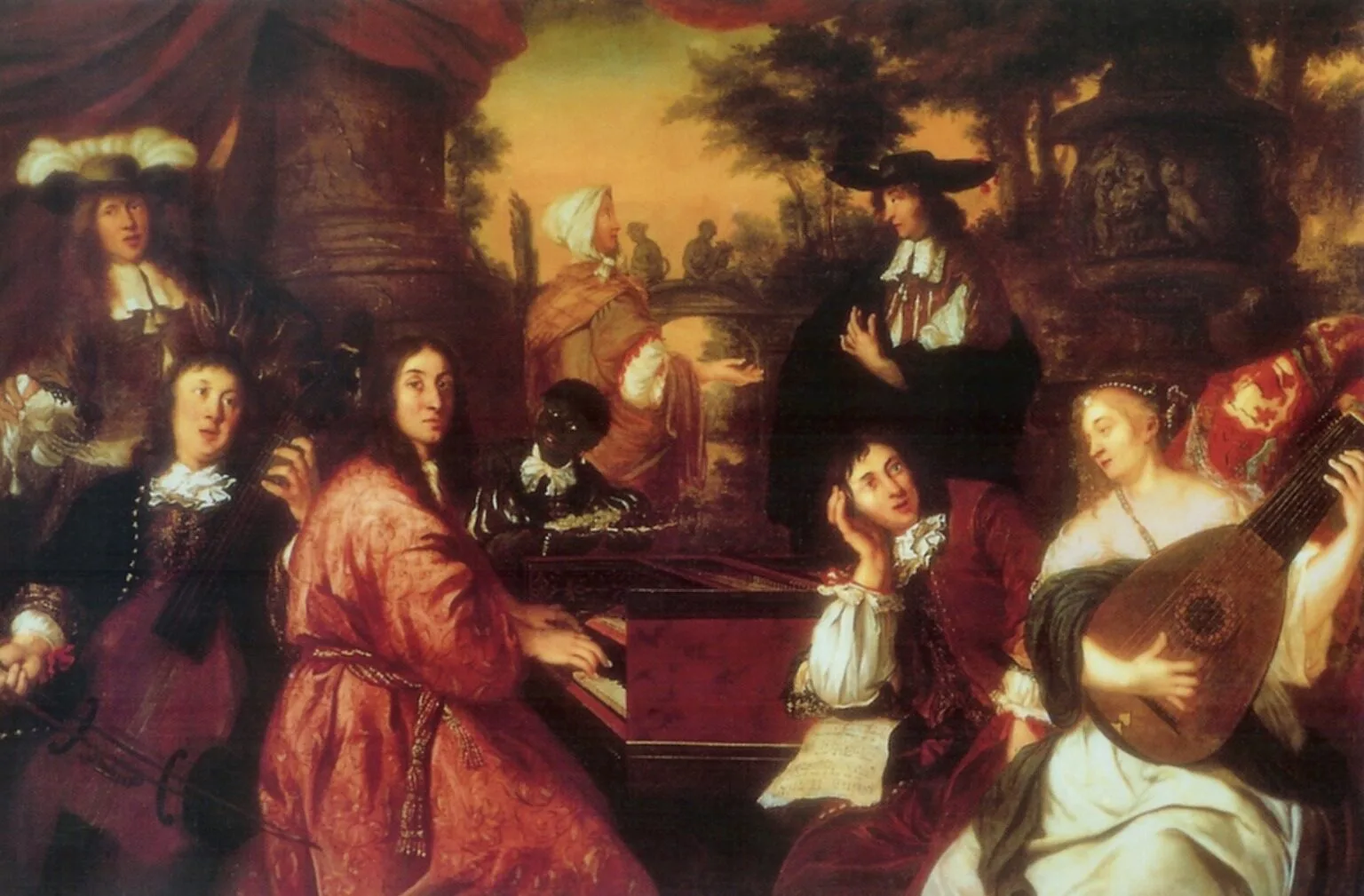
The concert opened with the eight-part canon depicted in the painting Musikalische Freundschaft by Johannes Voorhout. A somewhat atypical start perhaps, but a particularly successful one. Immediately it became clear what this evening was about. Mields' voice blended organically with the soft viols. No struggle between soloist and accompaniment, but a continuous conversation between instruments and voice.
Buxtehude's Herr, wenn ich nur dich hab (BuxWV 38) was the first major opener of the evening. I know Buxtehude mainly from his masterpieces of choral music such as Membra Jesu Nostri. His solo songs are less familiar territory for me. That is precisely why it was so refreshing to hear this repertoire unfolded in such a natural and convincing way. Mields sang with impressive textual expression and diction, with exactly the right effects and without ever overdoing it. Every ornament seemed to arise from the text itself.
Perhaps even more impressive was the coherence of the whole. The ensemble had only met a few days before the concert to finalise this programme. That was hard to believe. Of course, details can still mature as the programme is performed more often. Some transitions will probably feel even more organic in time. But the foundation was already fully in place. More than that: there was an effortless interplay that cannot be rehearsed. That arises only when excellent musicians (and friends) truly listen to one another.
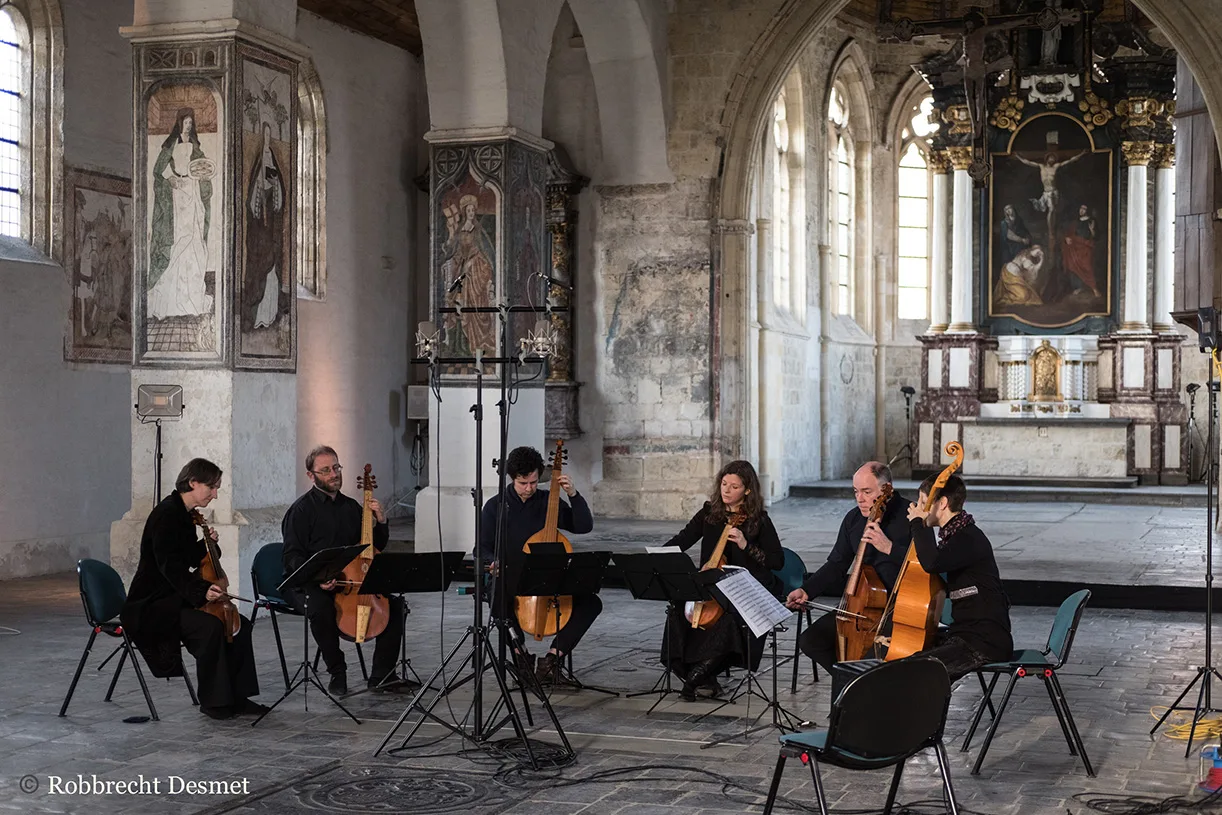
That listening could be heard constantly. In Reincken's Sonata no. 4 in D minor, for example. The Allegro was played with an infectious energy, but without haste. The four viols remained perfectly audible. At no moment did the tension slacken. Nowhere did routine or familiarity creep into the playing. On the contrary. The musicians remained curious about one another and invited the audience to do the same.
Mields' stage presence also contributed greatly to this. She did not stand aloof from the ensemble but visibly formed part of the whole. Her radiance was pure pleasure. Regularly she sought contact with the audience and with her colleagues. That joy and smile were contagious.
A moment that particularly struck me came at the end of Erlebach's Ciaconna. Mields came forward again visibly moved by those final notes. You could see how emotional she was, and she let us share in it. Suddenly it became clear how close joy and emotion sometimes lie to one another. And this became literal when she launched, full of fire, into Buxtehude's O fröhliche Stunden.
And they really were joyful moments. The long applause spoke volumes. The encore was clearly savoured by an audience that did not yet want to go home.
I also want to pause briefly for the organisation behind Early Music - Last Minute. With this concert they realised their thirtieth event. That deserves respect. Without major sponsors and without structural excess of resources, they manage to give a stage to musicians who more than deserve it. Sometimes they are established names, sometimes artists who less easily reach the large concert halls, but who are no less inspiring or virtuosic for that.
A well-deserved salute, then, to the driving forces behind this initiative. Not only for the concerts themselves, but also for the conviction and the deeper reason behind it, which the festival's director shared so openly. For her, music is not merely cultural decor, but a way to bring people together and to reach a higher goal. Plenty of ingredients to talk about that soon as well.
And then there was a birthday boy. Bart Stouten celebrated his seventieth birthday, surrounded by beautiful music and visibly enjoying every moment. Everyone in the hall seemed to wish him this wholeheartedly. Congratulations, Bart, and thank you for the lovely introduction to the concert.
Congratulations also to Hathor Consort, to Dorothee Mields, and to everyone who made this afternoon possible.
Should this programme by Hathor Consort and Dorothee Mields turn up elsewhere in the coming months, do not hesitate. You will not only hear how beautiful this music is. Above all, you will feel why people have gone on believing for centuries in friendship, dialogue and connection.
And perhaps, just perhaps, also why music may yet be able to save the world.

This concert was also recorded by Concertzender and will be broadcast later. Follow the website, download the handy app, and don't miss the broadcast of this concert!