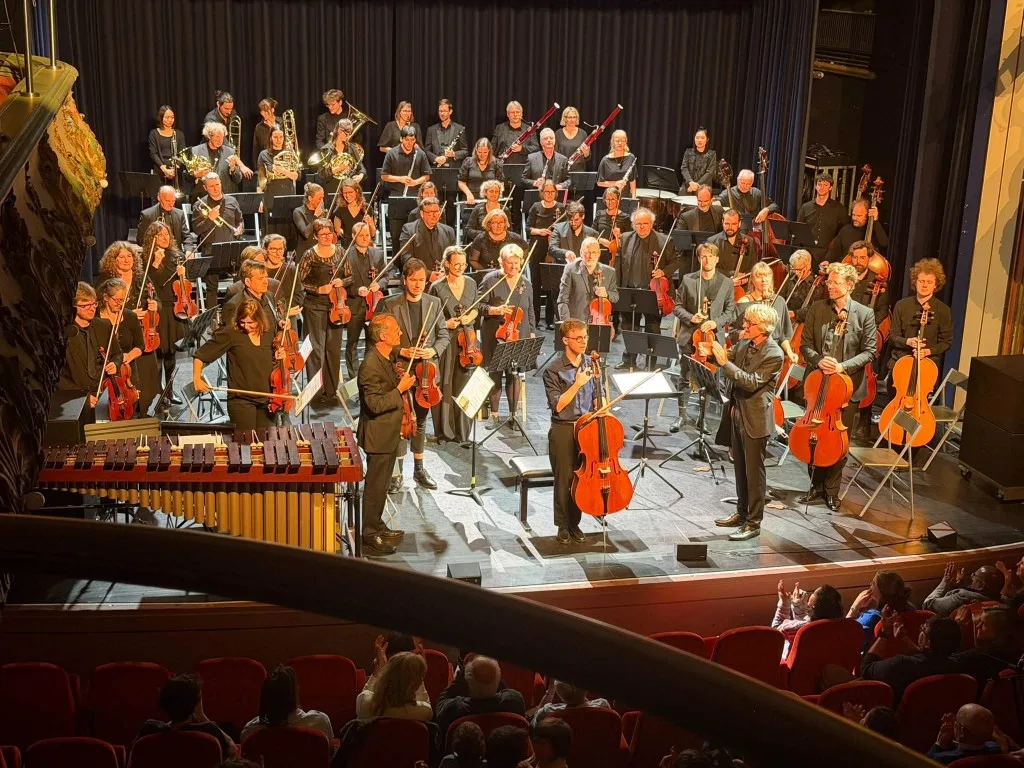
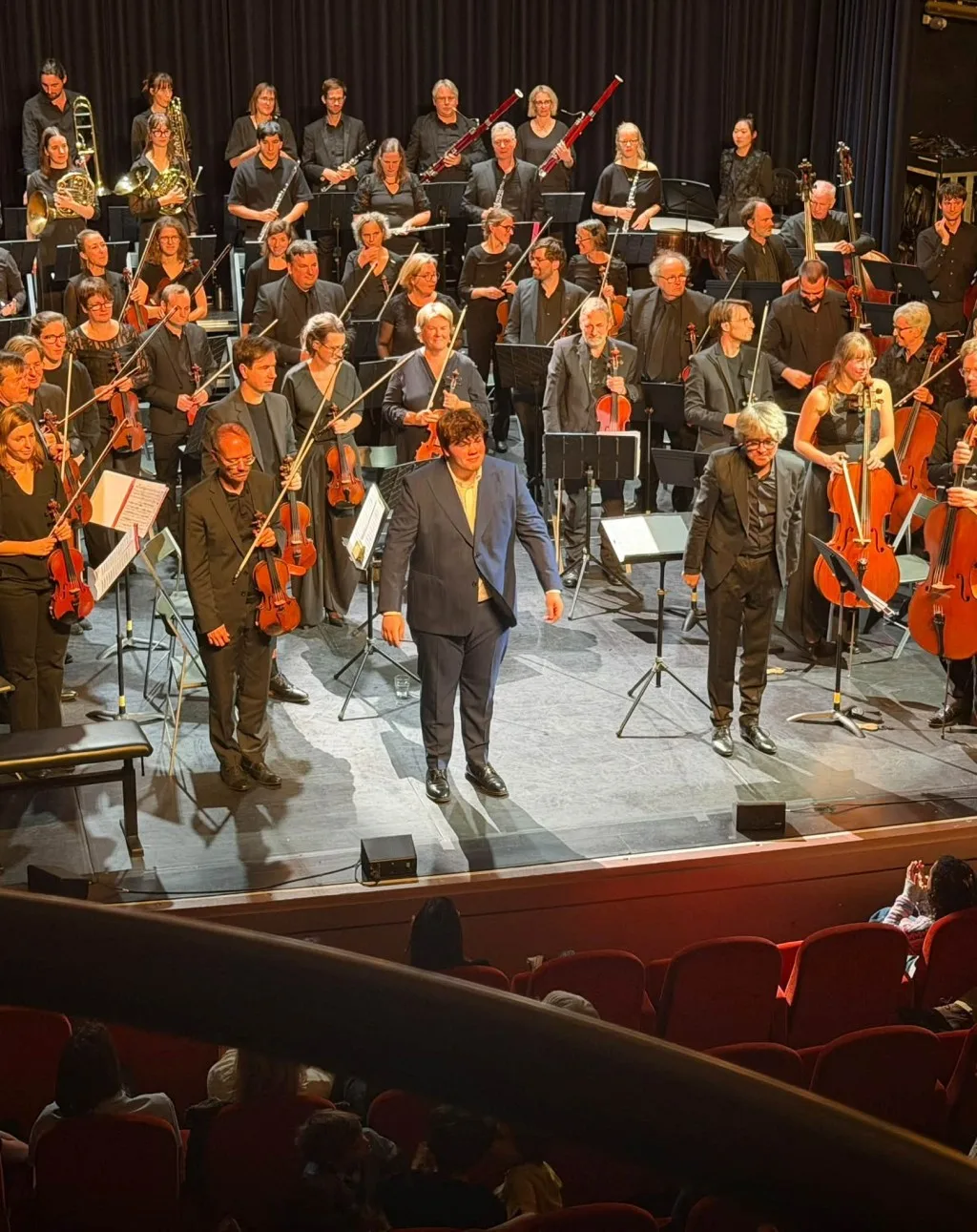
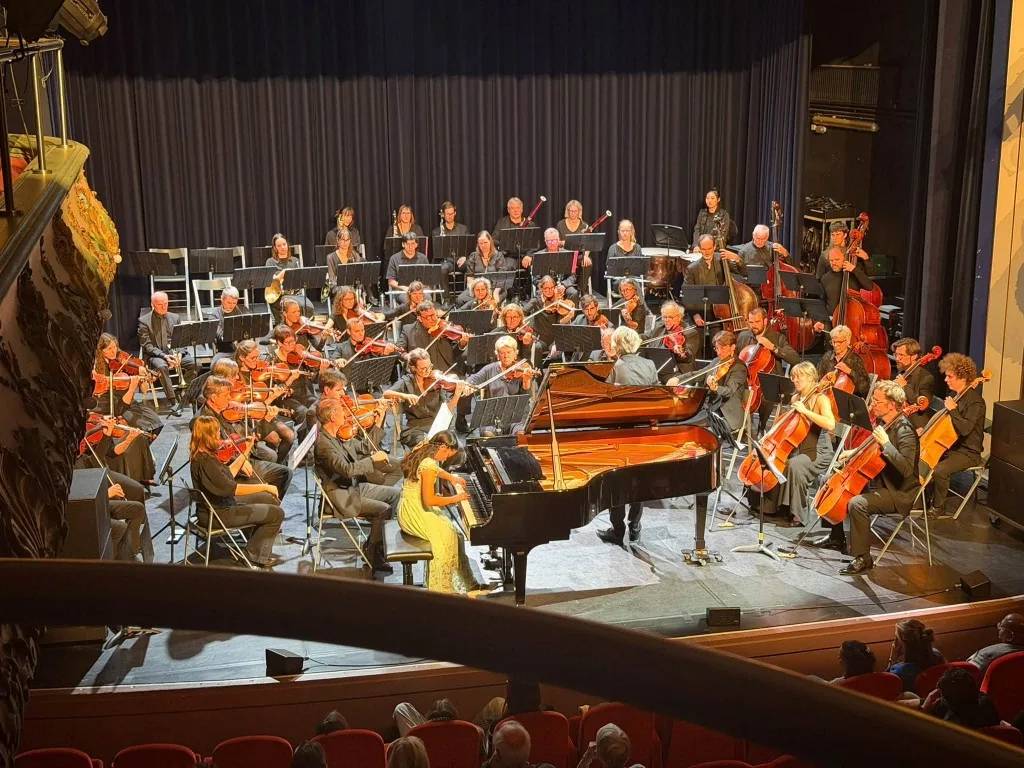
After a pre-selection based on video recordings and an audition, six candidates remained. On Sunday afternoon they were given the chance to show their best, accompanied by the Mechels Kamerorkest, concertmaster Kris Janssens and conductor Piet Van Bockstal. This was the orchestra that could be heard in 2017 in the Canvas programme 'Thomas speelt het hard', when it accompanied Thomas Vanderveken in the Piano Concerto by Grieg. The MKO attaches great importance to accompanying young talent.
The stage was packed with some fifty passionate musicians. The Stadsschouwburg was filled to the brim with interested audience members and enthusiastic family members.
Six winners, five instruments
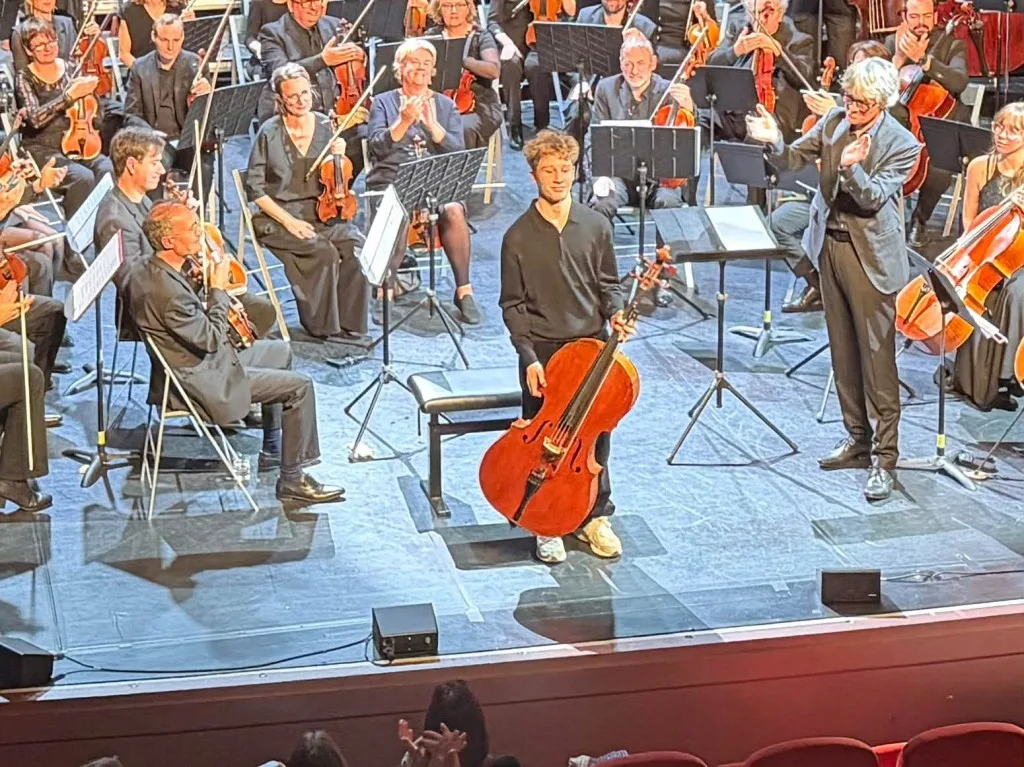
The cello was represented twice. Hendrik De Ryck played the first movement, Allegro, from the Cello Concerto by Dvořák. He is bitten by the cello and combines his studies with Marie Hallynck at the 'Conservatoire de Musique de Bruxelles' and masterclasses with, among others, Stéphanie Huang and the dynamic Pierre Fontenelle, with participation in national and international competitions and performances.
Felix Callot tackled the unsurpassed Cello Concerto by Elgar and played no fewer than three movements with 'Schwung' and 'aisance'. If the name Callot rings a bell, that is thanks to father Nicolas Callot. Blood will out, so there is a third Callot, brother and violinist Jacob. Together with other Young Talents Quinten de Graaf and Titus van Rijn, the Callots form the Merula String Quartet. They are regularly heard at Arte Amanti, the Flemish chamber music festival that offers young talent and international artists a platform under the artistic direction of Reinilde Leyers. Here too, Felix proved a worthy pupil of the renowned Justus Grimm, and captivated with his deeply felt interpretation of Elgar.
Cello and more
The imposing marimba on stage was intended for Jonathan Vercauteren. He played with ease the Concerto for marimba, strings and vibraphone by Frank Nuyts. Post-modern yet engaging, multi-layered and performed virtuosically. From De Boeck, through traditional classical music, to Frank Nuyts: this choice closed the circle.
The voice also had its moment, in the form of Door Van Bergen, nearly twenty years old. I had already heard him in the impressive 'Lamentations of Jeremiah' by Ignaz Vitzthumb (1751–1838). I heard him in Schumann with Jef Kolacny at the piano. Door already has a great deal of stage experience. Now he placed his full, carrying voice in the service of Mozart (Davide Penitente), Tchaikovsky (Eugene Onegin) and Rossini (Stabat Mater). If I may compare, I would rank the satisfaction in this order: Rossini, Tchaikovsky, Mozart. 'Cujus animam' was heavenly. 'Kuda Kuda' came from a rather restrained Lensky. That is perfectly acceptable, compared with the exaggerated expressions of remorse we are sometimes subjected to. 'A te, fra tanti affani' sounded somewhat flat.
'Musiciennes'
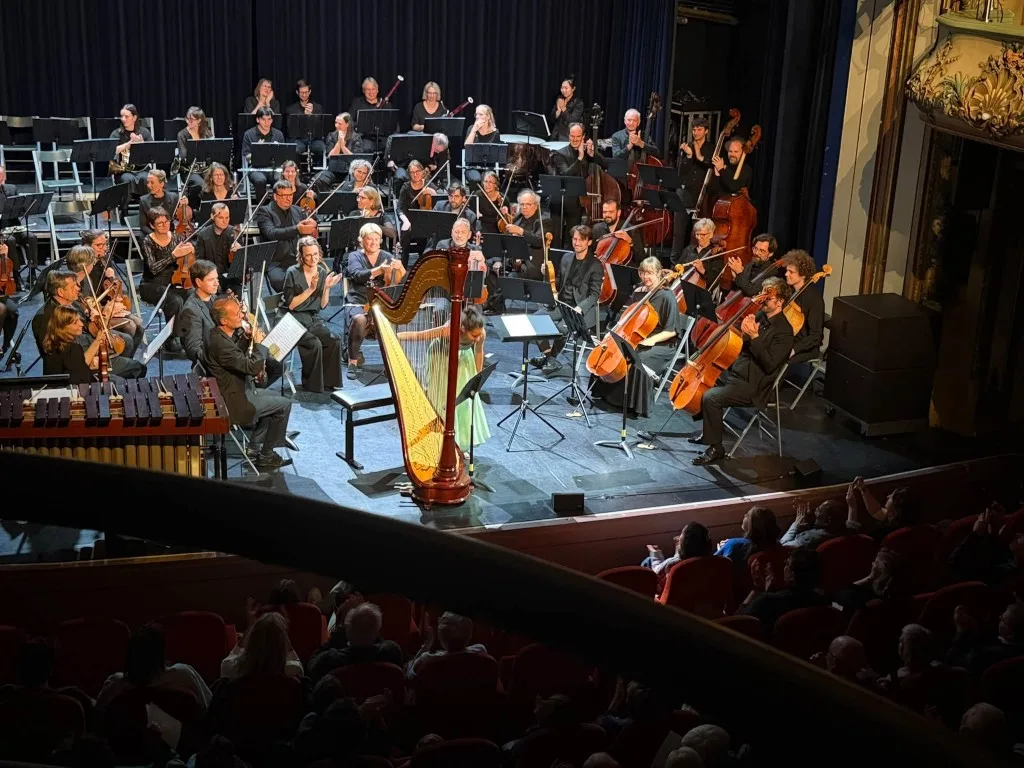
Then there were two very young artists: harpist Norah Arras and pianist Akari Bastiaens. Both in festive water-green, as if it had been agreed. Norah is 14. When she was 9, she intuitively but firmly chose the harp. That shaped her whole being and clearly gives her self-confidence, a sense of self-worth and joy. Her choice fell on a fine 'Morceau de concert' by Camille Saint-Saëns. Karen Peeters at the Lier Academy and Fanny Konings at the Antwerp Kunsthumaniora are her teachers. Akari Bastiaens is taught by Tatiana Abayeva and Boris Federov.
Akari has already collected a multitude of (inter)national prizes. We heard her in the Cantabile Competition and at Liebrecht Vanbeckevoort's Pianolab in Alden Biesen. In Mechelen too she played the Larghetto from Chopin's Piano Concerto No. 2. And she did so exemplarily, precisely, personally. Heartfelt, that still needs to grow a little. She plays and speaks with a surprising maturity. Was Schumann right after all, when he claimed: 'Pour jouer Schumann (read also 'Chopin'), il faut avoir vingt ans et avoir souffert'?
Such mastery from such young people confirms the essence of what every conservatory should aim for: cherishing the past, living the present, making the future possible.