Versatile artistic talent Sidi Larbi Cherkaoui: dancer, choreographer, singer, artistic director, philosopher, maker of video clips for world stars, lip-dubs for films, bridge builder. Name it. He has done it all. Overwhelmed with five-star reviews and prestigious awards at home and abroad.
Personally, I find his theater productions strongest. Also impressive is how he takes for him obvious steps in his career and life. He has a brother dead on repetition and keeps reinventing himself. A charismatic natural talent and superintelligent. He observes the world around him and analyzes reality.
With a Flemish mother and a Moroccan father, he was given a dual identity from the start. Many young people then get lost, feeling at home neither in one nor the other culture. For him it became an inexhaustible source: Bible or Quran, Moses or Buddha, paradise or hell, West or East, Belgium or Morocco, you or me, family or freedom, the village or the world… he explores the contradictions. He is an artist pure sang who knows no boundaries: neither in his productions nor in the continents. With an open gaze, openness and respect, he moves in all cultures. He turned out to be a nomad and cosmopolitan.
His name Sidi Larbi Cherkaoui can be translated as 'the Arabian nobility that comes from the east'. He does it justice. A few years ago he created a production 'Vlaamsch (chez moi), an ode to his mother. In this second installment 'Ihsane' he focuses on the father/son relationship. A relationship that was not always smooth. His father was from his culture a fairly dominant person. That clashed. 'Ihsane' is therefore a dance production full of resonances. Between the many layers so much can be read and interpreted: memory and loss, origin and difference, sexuality, obviousness and mystery. As an adult man, he shines his analytical-philosophical light in this production on the love for his father, its dissolution through the broader worldview of the sensitive and intelligent son, but also grief over the loss in a razor-sharp analysis of the father/son relationship. Ihsane goes against all forms of division and compartmentalization that our society endlessly tears apart.
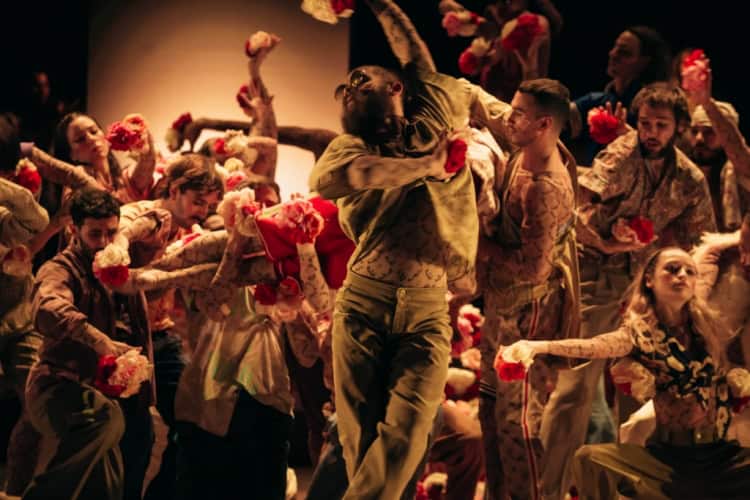
The Arabic word 'Ihsane' also reaches broader and refers to goodness and connection with the universe, but it is also the name of the first known fatal victim of homophobia in Belgium. Cherkaoui commemorates the victim with a striking scene and reflects with his dancers and musicians on the endless cycle of destruction and rebirth. It resulted once again in a brilliant and engaged production. Sidi Larbi Cherkaoui surrounded himself with an excellent artistic team of eighteen dancers from the four corners of the earth, five brilliant musicians. The instrumental accompaniment is provided by traditional instruments. Tunisian viola d'amore virtuoso Jasser Haj Youssef composed the music and performs it with Lebanese star singer Fadia Tomb el-Hage and Moroccan singer Mohammed El Arabi-Serghini, Yasamin Shahhasseini from Iran plays the oud, Gabrielle Miracle Bragantini: percussion. They breathe new life into the traditional repertoire. The songs combine energy and melody, two complementary elements, so that they strengthen each other. The universal connection around the sacred character of Eastern music thus offers a return to the sources of inspiration.
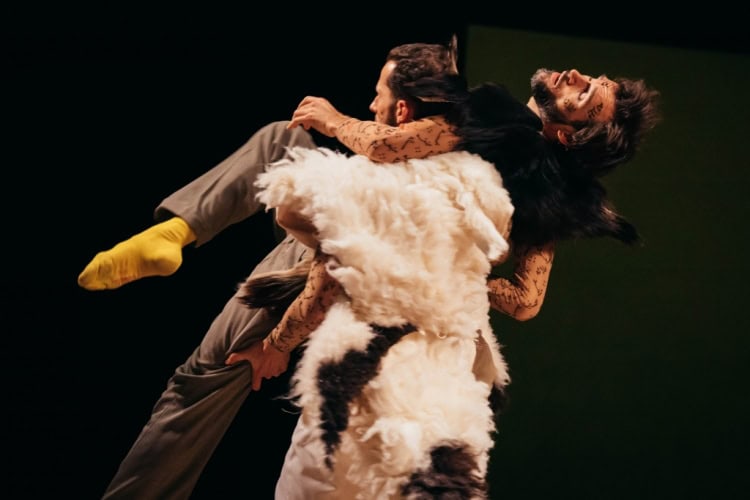
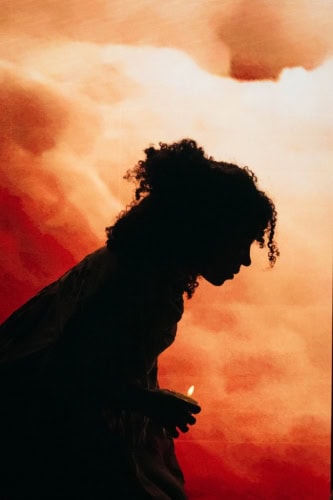
The production opens in a refined Arabic setting with a bunch of young people receiving instruction. A teacher writes a word on a board, articulates it and they have to repeat it. Cherkaoui immediately involves the audience in the production, they too must repeat the Arabic word. Two words still work, but a complete sentence becomes hilarious. The students disappear through the golden gate. Then follows the scene in which young Ihsane is kicked and beaten by a homophobe. A production with a multitude of dance forms and scenic details. How Cherkaoui translates music into movement remains unique. The dancer tames, exorcises the music, has the ability to create beauty.
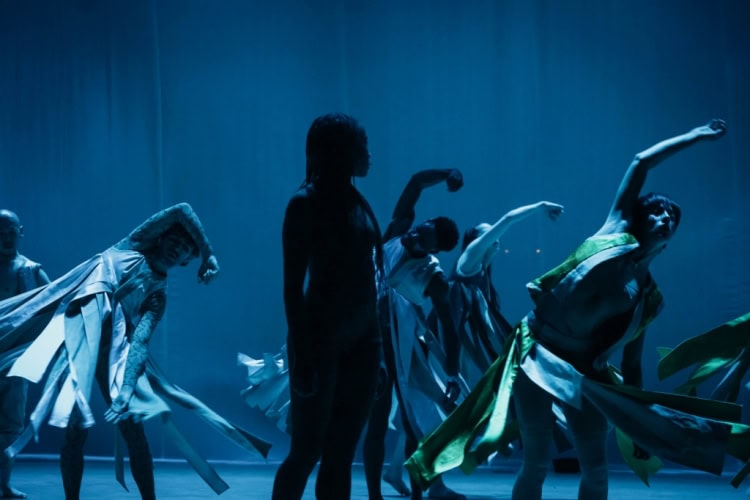
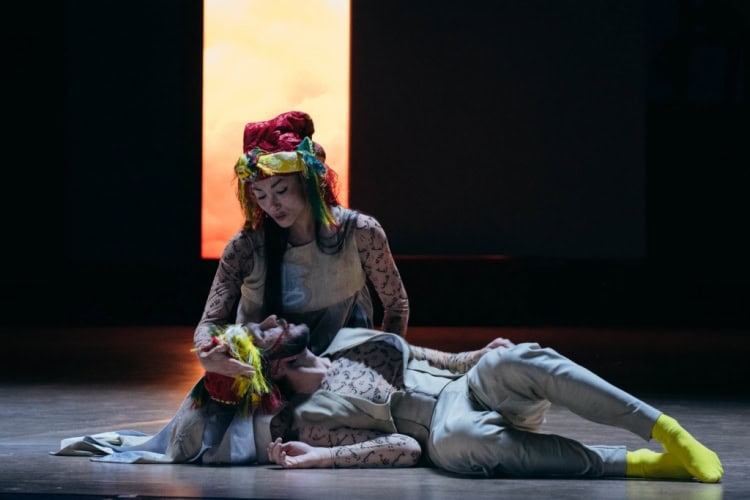
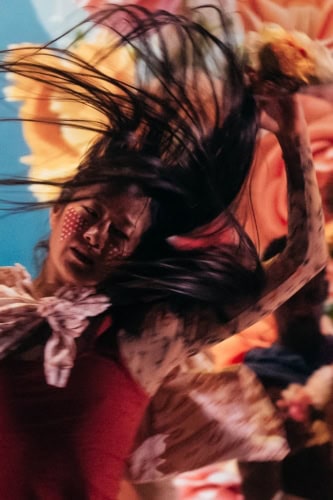
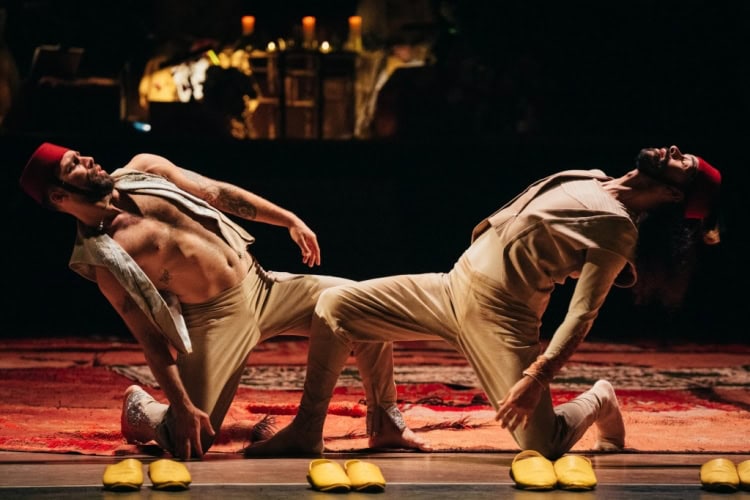
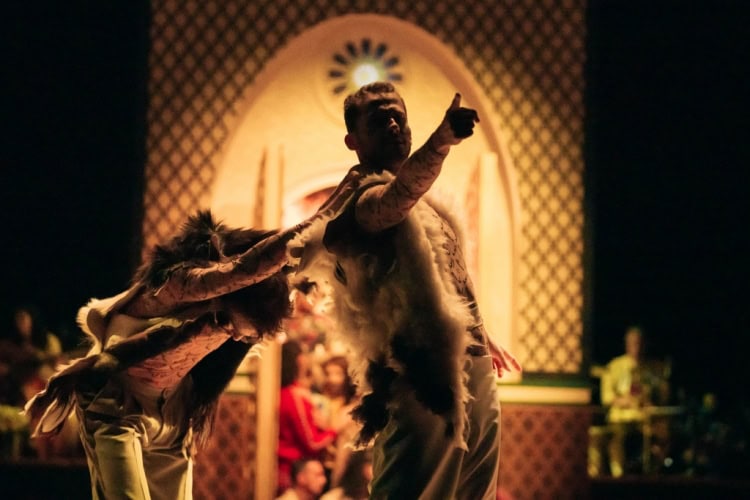
There is a beautiful group scene with the hallmark of Cherkaoui: movements with only hands and arms. A simple movement, a turn with the hand, but then he adds another, and another, until a complicated movement sequence emerges. Attesting to extraordinary suppleness and precision. They remind me of the images of ancient Egyptian dancers in the pyramids. Cherkaoui's dance career began as a teenager with breakdance, a part of street dance and requires a lot of strength and technique to spin on the vertical axis. There are a couple of impressive examples of this in the production. Dance both athletic and aesthetic in a multitude of classical ballet and contemporary with solos, couples and group dances with cultural origins such as round dances. After a delicate pas de deux between two men follows another ensemble dance. Where in a first group scene the emphasis was on arm movements, now the feet and legs are in focus. Nothing spectacular: a sequence of simple foot movements, but through uniformity and synchronization it becomes intriguing and refined.
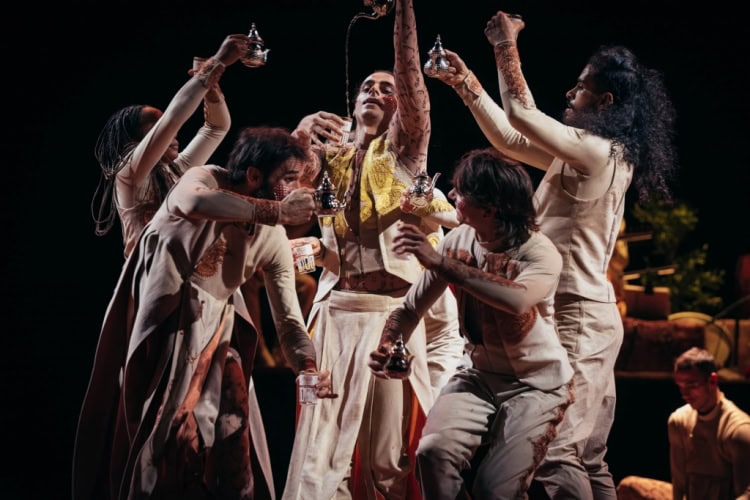
From his culture he shows a tea ceremony with quite a few reminiscences. On the golden trays, the head of a dancer is laid. On the LED screens appears the image of sheep, a lamb, a sin offering. Hands with blood on them. Shortly after the images of villages destroyed by the violence of war. The music and singing enchant. A vocal technique that we in the West do not know. It requires a very developed register and extensive technique.
For the costume design of Ihsane, Cherkaoui collaborated with Amine Bendriouich, a young Moroccan designer, iconoclast in a country of forms and structures. He chose, among other things, dresses with long loose panels that fan out like a flower bud when turning. The word and the music have a particular balance in the performance. There is the use of the Arabic language, but also Dutch and English. Cherkaoui also explores the possibilities of an object in his performances. Here they are carpets/rugs that are spread on the ground in a polygonal figure. Where they initially serve as decor, they later become part of the play. The dancers crawl under them and form monoliths.
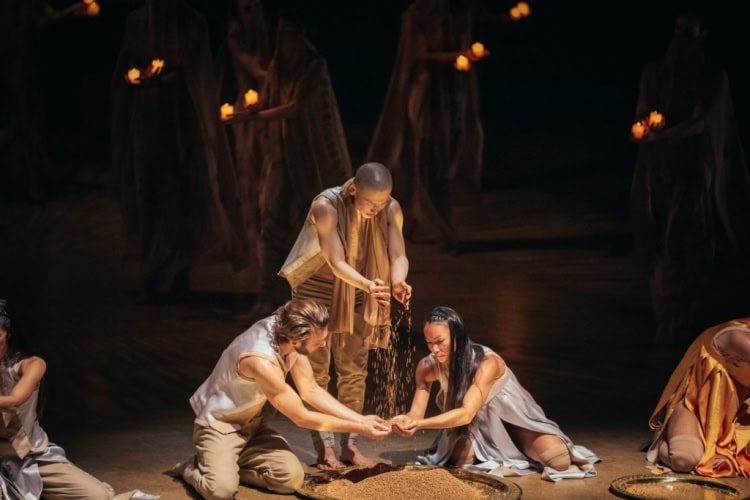
About midway through the performance, a finely decorated enormous cube descends, referring to the tomb of Mohammed, and remains hovering above the stage. Throughout the entire performance, it is saturated with symbolism. Towards the end, a few dancers take center stage. The one in the middle has a mountain of sand on a golden serving platter. He scoops it up and passes it left and right. Life slips away like sand through our fingers. The cube sinks to the ground. A dead man is wrapped in a carpet and peacefully laid in the tomb. Respectfully, he receives one last greeting. The cube rises to heaven. As it rises, sand trickles down. A body that turns to dust. More visual than that cannot be. A powerful final image that grabs you by the throat.
The fantastically homogeneous cast was rewarded with a minutes-long standing ovation. When Sidi Larbi Cherkaoui briefly joined his dancers and performers, the audience went completely wild. A fellow countryman and artist whom they have taken to their hearts and are super proud of.
[embed]https://www.youtube.com/watch?v=I57EfQcPLPw[/embed]