


“The research that resulted in Tranen van Brabant brings to light a wealth of previously unknown repertoire. These rediscovered pieces change our view of the Dutch musical life of the 17th and 18th centuries. There are so many works of high quality that are rarely, if ever, performed. We were struck by the distinctiveness and expressive power of this special repertoire.”
— Judith and Tineke Steenbrink.
Inspiration from monastic life
The research that led to the extensive project Brabant 1653 inspired Tineke and Judith Steenbrink to delve further into the 17th-century repertoire of Brabant. This renewed search led them, through auctions and antiquarians, to forty old liturgical music books from the 17th and 18th centuries, each between 400 and 900 pages, originating from monasteries in North Brabant. It is a collection of Dutch/Brabant Graduales, Antiphonales, Processionales and Vesperales: various books with Gregorian chants for all kinds of occasions. This collection forms the basis of the most recent research by Tineke and Judith Steenbrink, which results in the follow-up program Tranen van Brabant.The Brabant style
Tineke Steenbrink: “While discovering this repertoire, we began to recognize the distinctiveness of the Brabant style. Verrijt, Rosier, Hollanders and of course Benedictus à Sancto Josepho have a unique way of expressing the text. Not over-dramatic or excessive, but strongly emotional. It is a recognizable style that is highly expressive. You can hear this in all the motets. This music is characterized by pure devotion and at the same time a light playfulness.” The discovery of the books initially raised many questions. What was a Processionale or an Antiphonale used for? What were the traditions surrounding the countless feasts and saints? How did this Gregorian chant sound: monophonic with organ accompaniment, as described in the introductions, or in a Baroque style with harmonies, trills and cadences?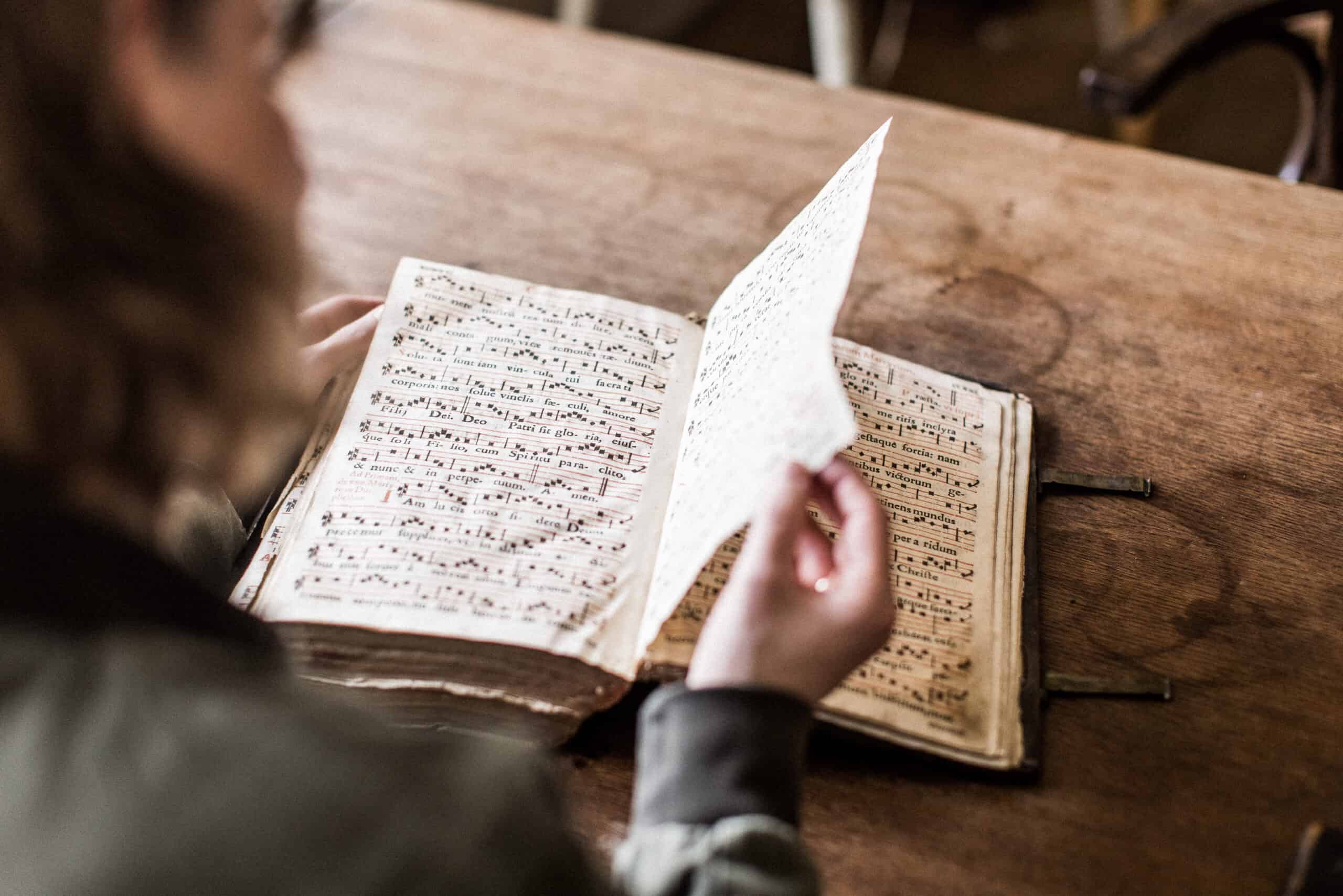
Women's voices
For this program, Holland Baroque has opted for a women's choir ensemble, such as those that could be heard, for example, in the convents of the Poor Clares in Megen, the Carmelite nuns in Boxmeer and the sisters of Maria Refugie in Uden. In Catholic churches and monasteries, the voices of women and men were not mixed. As we read in the preface of the 17th- and 18th-century Graduales: "As women's and men's choirs are held in song; may not penetrate the men's choir into that of the women" (Graduale 1763 Amstelodammi T. Crajenschot). According to musicologists such as Frans Jespers, we can assume that polyphonic singing also took place. Even in the Graduales you find polyphonic settings of Latin chants. While the Protestants, some of whom still hold on to this today, kept to singing monophonic psalms and hymns, Catholics liked to sing polyphonically, both at home and in church.A distinctive, Baroque Gregorian style
Tineke Steenbrink: “Tranen van Brabant shows us that Brabant had its own way of performing Baroque Gregorian chant. Benedictus à Sancto Josepho played a central role in this. Mapping out your own musical landscape is extremely exciting.” Judith Steenbrink: “After the first program surrounding the Brabant composers, Brabant 1653, we see that this repertoire, which had never been performed before, is once again of a very high standard. The richness of the score of, for example, the Missa pro defunctis indicates that there was enormous musical activity, both vocal and instrumental. A true musical discovery.”Performance venues
Amsterdam - Fri 24 March Leeuwarden - Sat 25 March Vries - Sun 26 March Helmond - Wed 29 March Cuijk - Sun 2 April Utrecht - Tue 4 April
more info