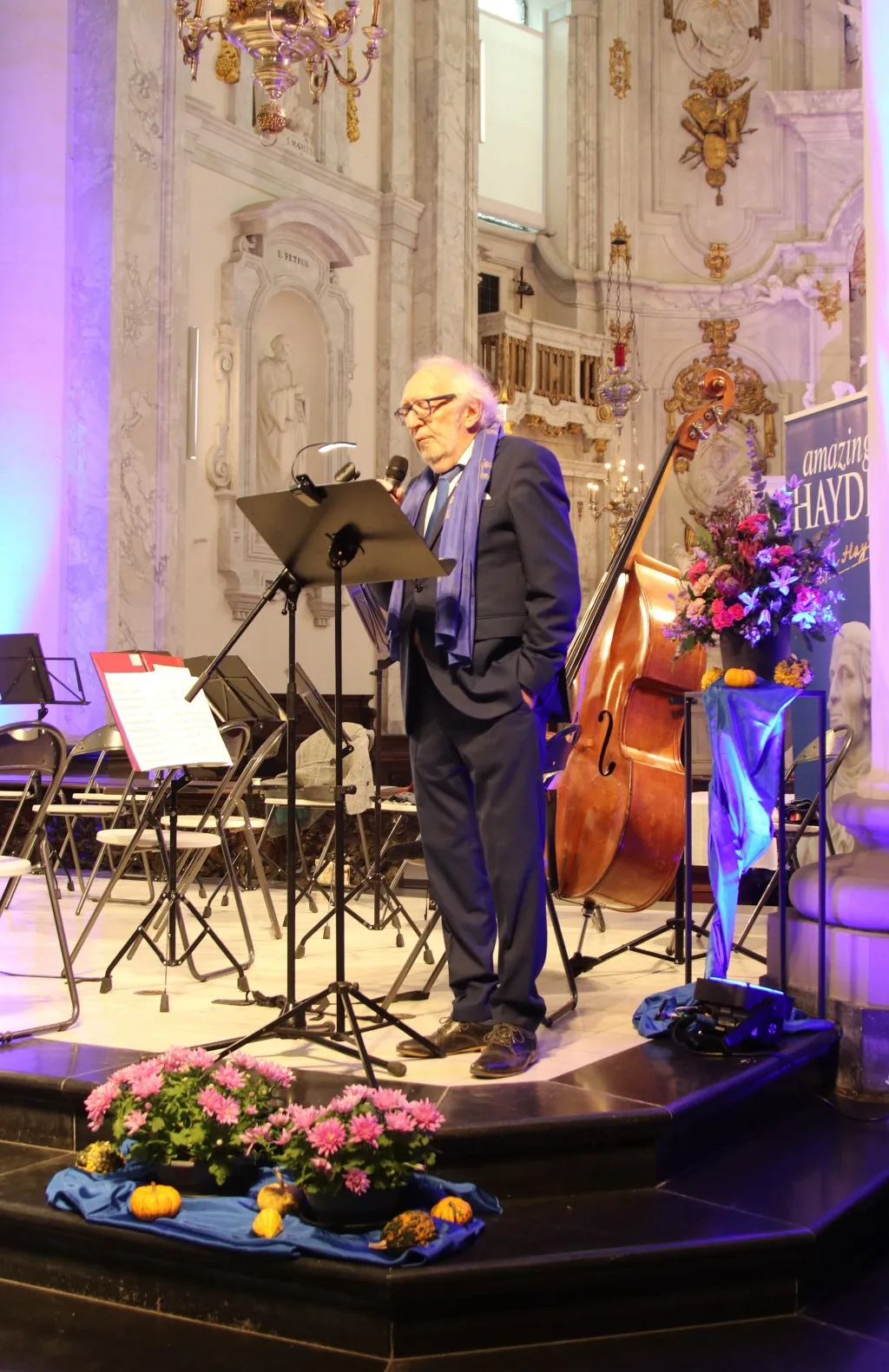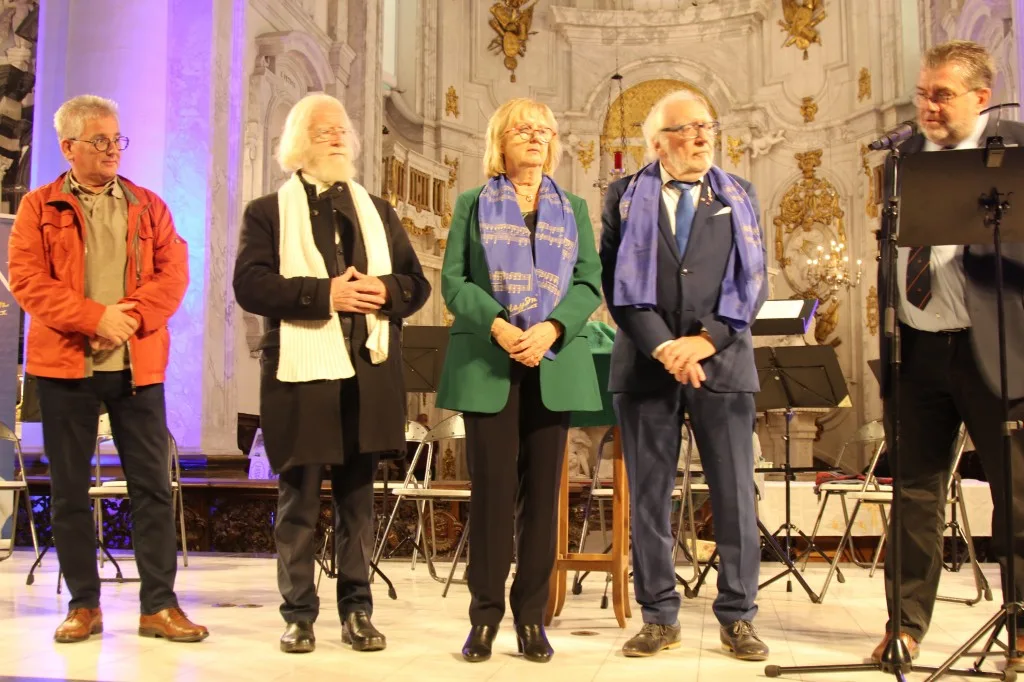
Words of praise from Toon Pans, chairman of the Marnixring, and from former laureate carillonneur Jo Haazen, flowers for Mrs. Marie-Jeanne Deleus-Lambrechts and the traditional little bell, which refers to the well-known oratorio 'Het Bronzen Hart' by Feremans, confirmed his well-deserved recognition and compensated for what the laureate described as "a lack of official support and -above all- interest in his work".
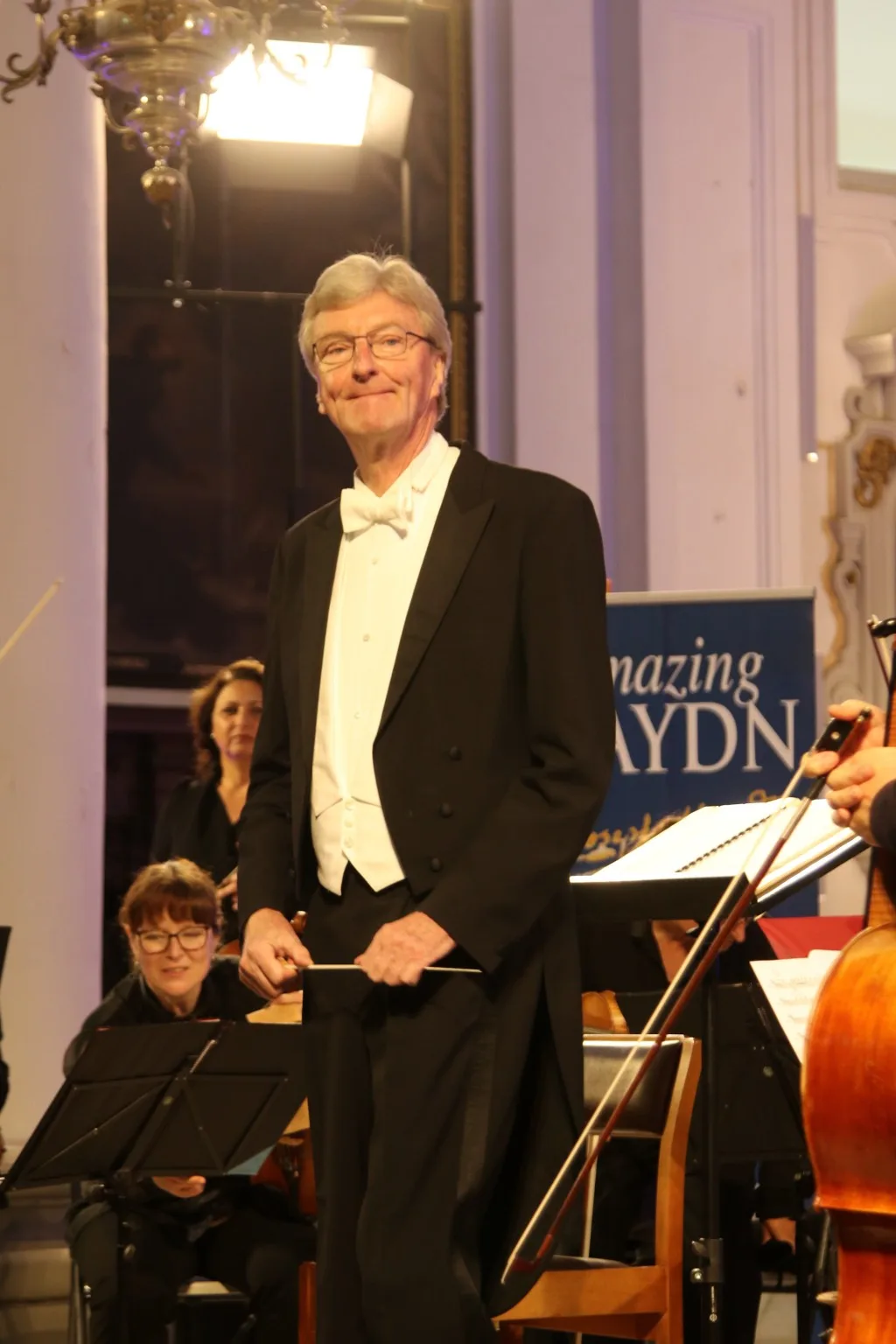
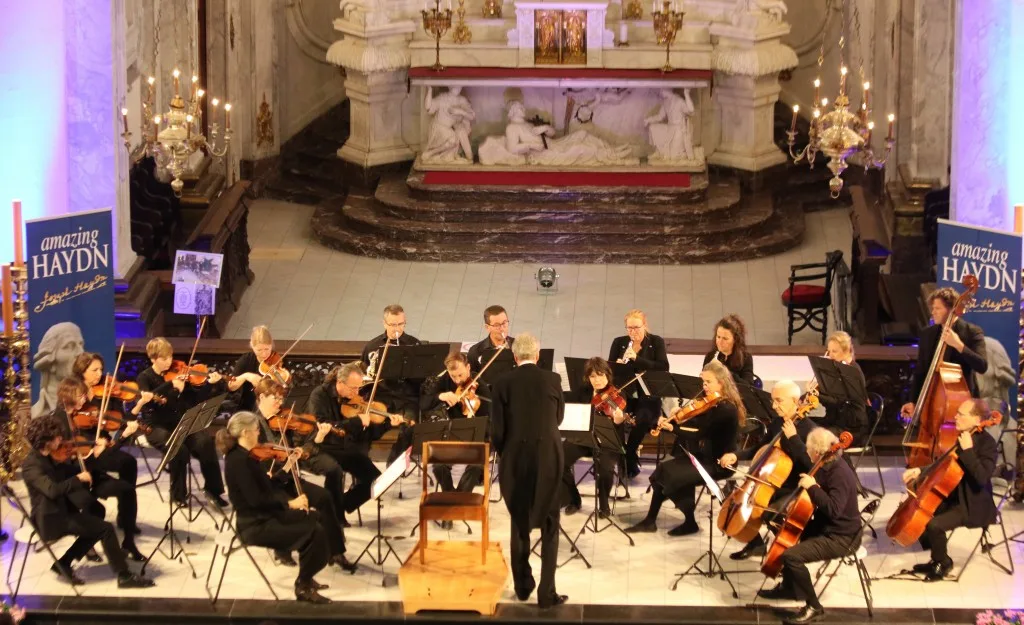
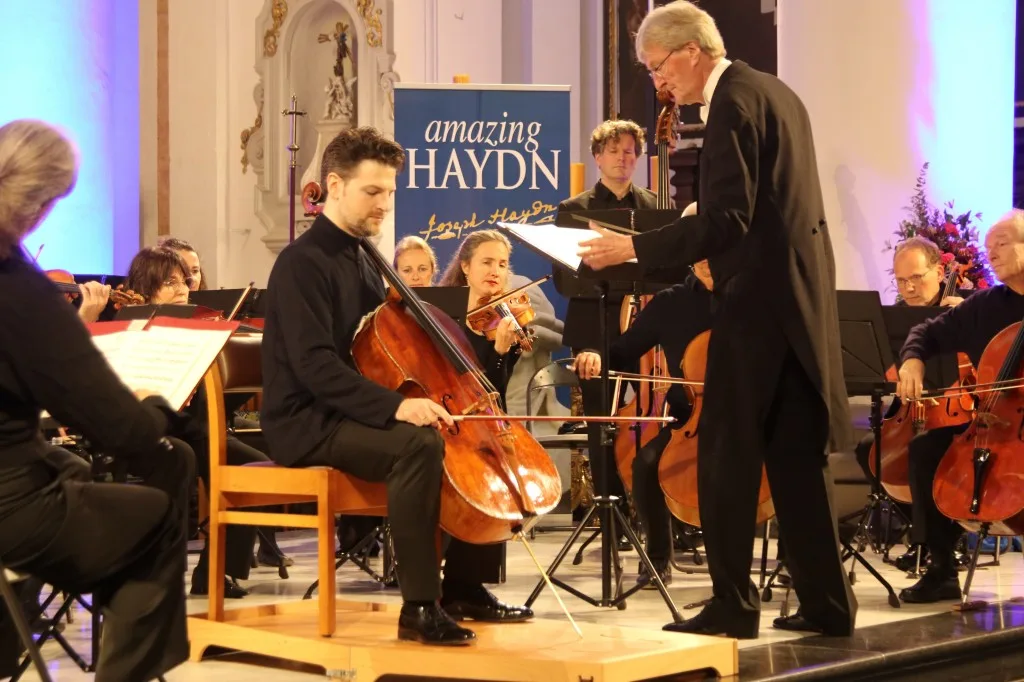
Little of that was noticeable on Sunday afternoon: the Sint-Pieter-en-Paulkerk was filled to the last row, and the audience eagerly anticipated highlights from music history. The Bayerisches Kammerorchester Bad Brückenau took the stage, led by 'old faithful' friend Johannes Moesus, far from appearing in Mechelen for the first time.
And whoever says 'Moesus' says 'Antonio Rosetti'. Moesus devotes himself intensively to discovering and disseminating unknown works and forgotten compositions from the Classical and Romantic periods, such as Vanhal, von Winter, Woelfl, Hoffmeister, von Beeke, Reinecke or Kalliwoda, but his great passion remains the Bohemian from Leitmeritz, the worthy counterpart of Haydn and Mozart, Frantisek Antonin Rössler, alias Antonio Rosetti, who received a Rosetti-Strasse in Mecklenburg-Schwerin. Johannes Moesus founded the Rosetti-Festtage in Donau-Ries in 1992 and is the founder and chairman of the Internationale Rosetti-Gesellschaft.
A symphony by Rosetti was on the program. Not his most famous, which is Symphony 'La Chasse', Murray 20. Nevertheless, this Murray 19 also ends with a hunting evocation. Commendable music!
The other symphony on the program was Mozart's K. 201: a specimen of what the music connoisseur, the late Wouter Paep, called "a Rococo symphony", featherlight and playful, just like the sound of the orchestra. And through that transparency, dictated by first violinist Hannah Weyrich, each instrument received the attention it deserved, both the pleasantly active first cellist Klaus Kämper and the instrument that is usually doomed to be overlooked, the double bass, played here by Karsten Schulz.
Beloved
The works the audience had been eagerly looking forward to were, of course, Grieg's Holberg Suite, with a subtle, gossamer-fine fourth movement, 'Air. Andante religioso', and Joseph Haydn's famous Second Cello Concerto. Although that is a crowd-pleaser par excellence, the Elisabeth Competition Cello nevertheless distanced itself from it in the spring of 2026 and had the 24 participants in the semi-final choose their obligatory work from among Michael Haydn's Cello Concerto, that of Joseph Hofmann, or that of Anton Kraft, three surprising discoveries. In the end, 2 cellists chose Michael Haydn, 11 chose Hofmann and 11 chose Kraft, with the winner Ettore Pagano.
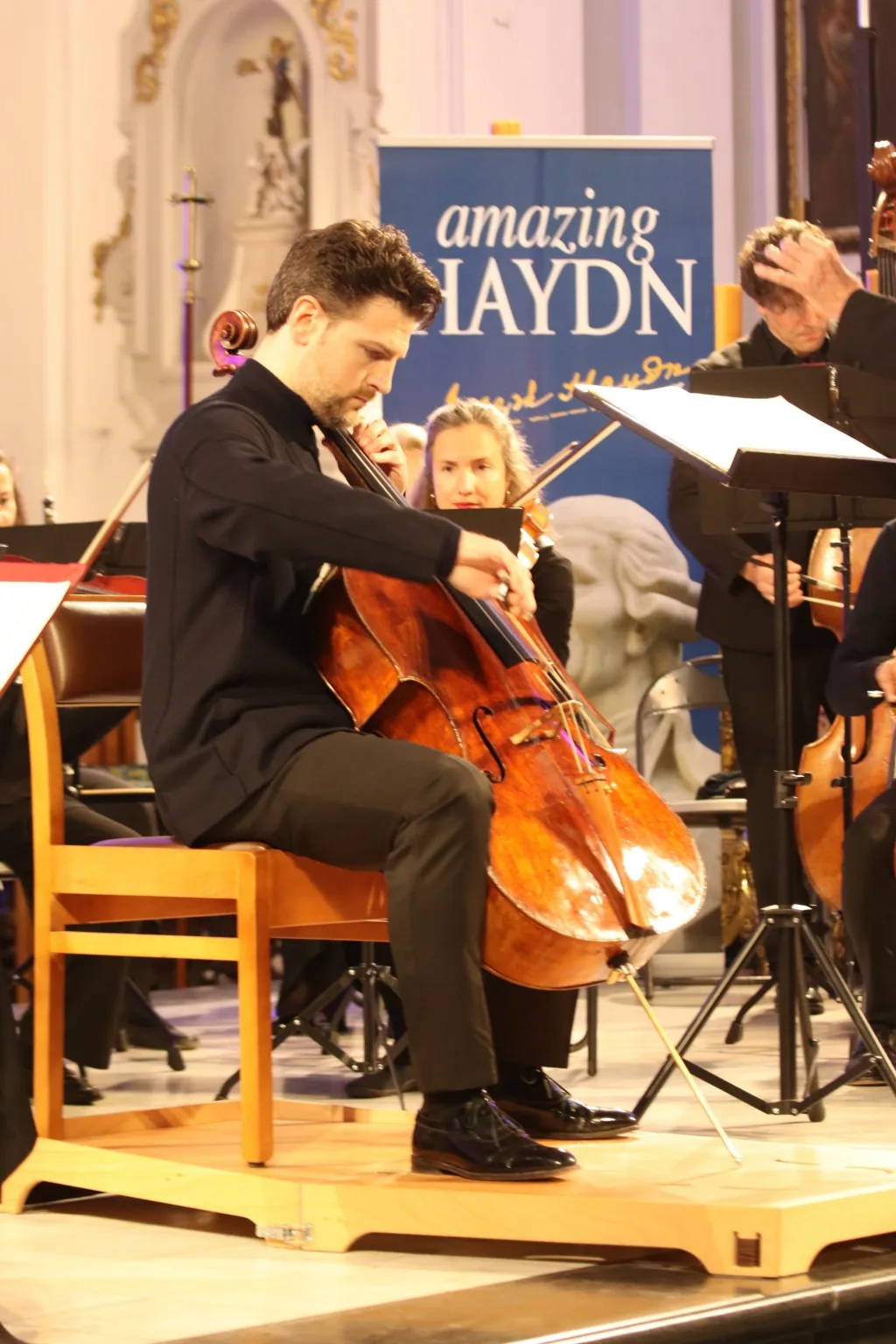
Now all attention went to a pale thirtysomething with raven-black hair and a neat little beard, Gabriel Schwabe. His glossy, flamed cello was, as the program booklet informed us, an "ex Boettcher" from 1685 from Cremona by Giuseppe Guarneri. Sweetly and gently, the orchestra introduced the theme. Vigorously and confidently, the soloist took over and carried the audience along on a gripping journey. It led to a fascinating cadenza, in which fragments of the main theme surfaced twice.
But the surprise was yet to come! With a leap of about 100 years, Schwabe immersed his audience in the wistfulness of Tchaikovsky and his Pezzo capriccioso, with a melody to dream away to, which after capricious wanderings returns to its starting point.
The exuberant setting of the beautifully restored church had to replace the customary real 'curtain calls'. The grateful enthusiasm was no less for it.