

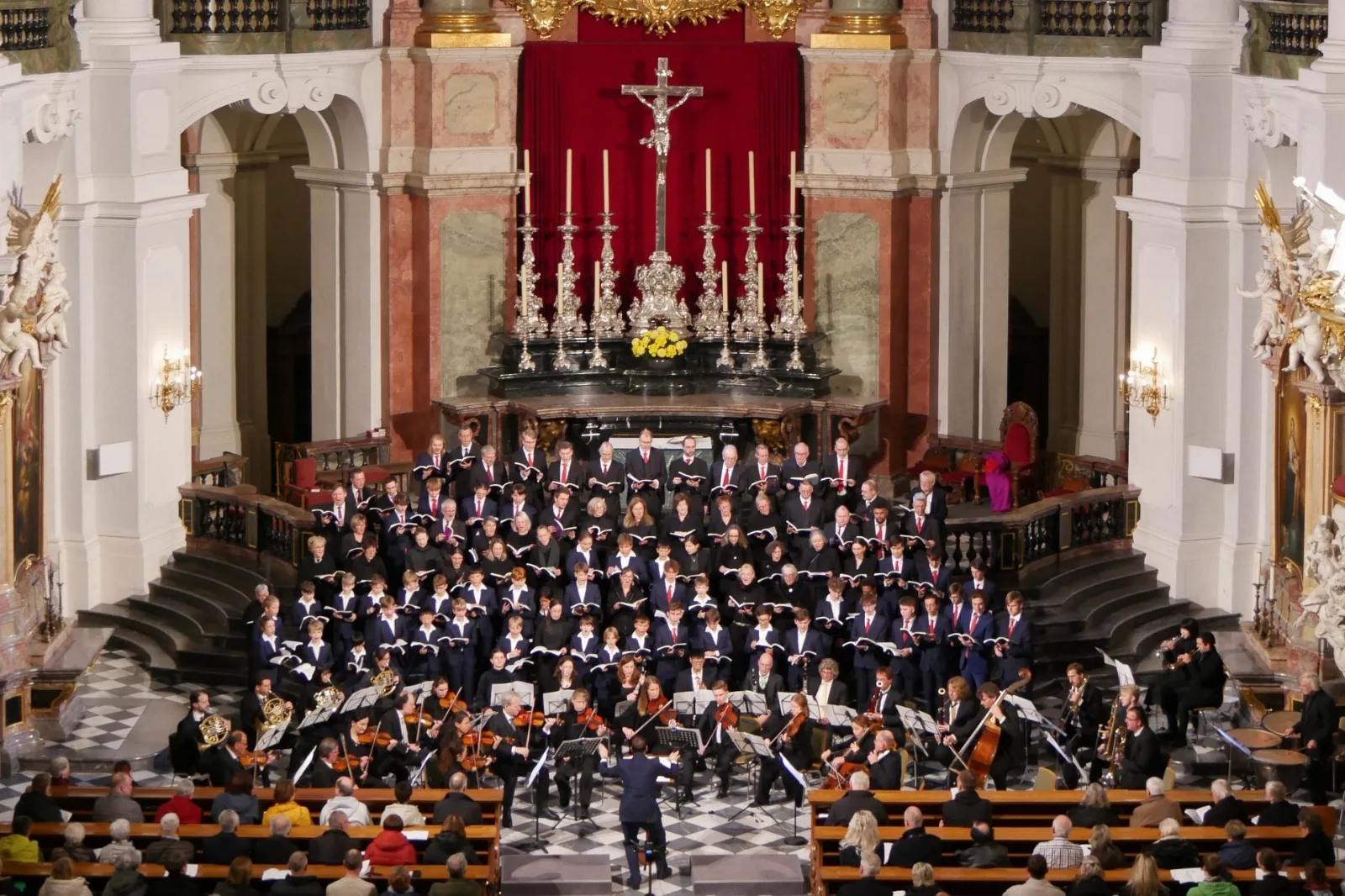
A performance of the substantial oratorio “Paulus” by Felix Mendelssohn (1809-1847) is more than a musical narrative about the conversion of Saul and his later life as an apostle. The work also raises questions about faith, conviction, and the willingness to keep standing up for that conviction. In the cathedral of Dresden, that message received a striking interpretation. Between the various sections the audience remained silent; there was no applause. This suited the concept of the evening, which clearly also wanted to leave room for reflection. Between the two parts there was moreover space for a spiritual moment of contemplation. The preacher called on the congregation to “Wachet auf!”, an appeal that closely matched the message of faith of the oratorio.
An orchestra that understands the space
The overture began in a restrained manner and was given the time to develop gradually. Conductor Christian J. Bonath kept the musical lines carefully in balance. Although the cathedral is a large space, the reverberation was reasonable. Bonath handled the acoustics very well and kept them under control with deliberate tempi and accents. As a result, the various instrumental groups retained their own place, and the text of choirs and soloists also remained intelligible.
The musical accompaniment was in the hands of musicians of the Sächsische Staatskapelle Dresden. At first sight the number of orchestra members might have seemed limited, but it proved well suited to the space and the concept of the performance. This was not a large romantic orchestra that had to fill the cathedral with volume. The sound remained transparent and nuanced, with warm strings, woodwinds that were always clearly audible, and brass that never took the upper hand.
Bonath had an eye for the smaller accents in the score, but also let the dramatic passages receive sufficient sharpness. At certain moments an edginess came into the orchestral sound that gave the events extra force. The whole remained clear and well dosed.
Two choirs, one story
An important role was reserved for the combination of the Kathedralchor Dresden and the Dresdner Kapellknaben. The latter choir has a tradition of more than three hundred years and is, alongside the Dresdner Kreuzchor, a fixed value in the musical life of the city. Together with the adult Kathedralchor they formed a strong vocal ensemble.
Already in the opening chorus Herr, der du bist der Gott, with the words Die Heiden lehnen sich auf, it became clear how well both choirs were attuned to each other. The diction was clear and the text remained almost constantly intelligible. Equally impressive was Denn wir haben ihn sagen hören with the stress on Jesus von Nazareth. The choirs came strongly into their own in the great outbursts, but the more restrained moments also received the necessary attention. Siehe, wir preisen selig, die erduldet haben was a fine example of this. In several chorales that followed a recitative, such as Dir, Herr, dir will ich mich ergeben, it stood out how carefully the crescendo was built up, only to become quiet again toward the end.
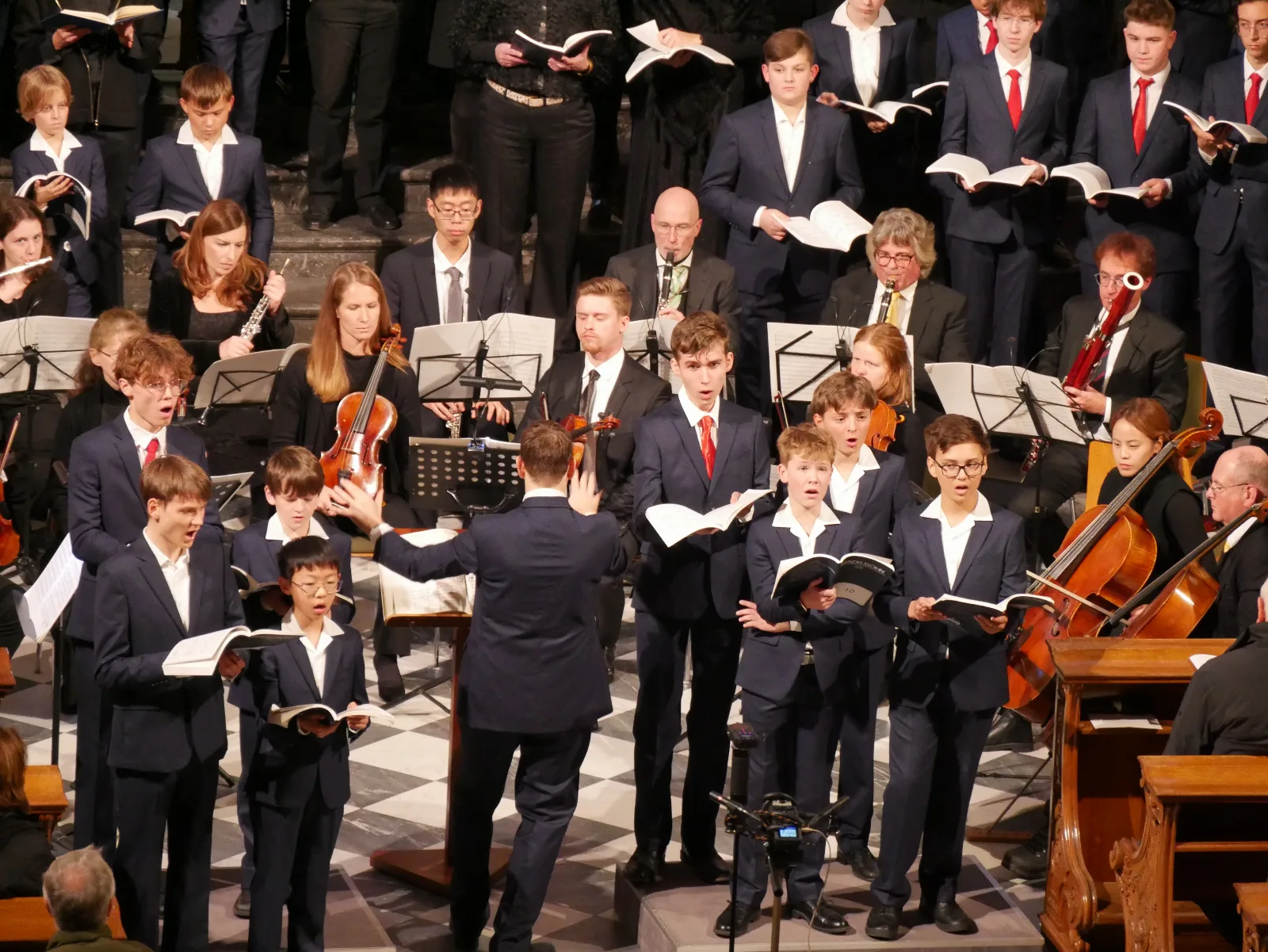 One of the most moving moments was Saul, was verfolgst du mich?, in which the words of the heavenly voice were sung by the boys. That deliberate choice gave the scene an almost superhuman atmosphere. The clear, youthful voices lent this key moment in the conversion of Saul a strong expressive power. At other moments too, when some of the boys were featured as soloists, such as in the second part at Ananias! Stehe auf!, their voices added an extra dimension to the performance and, with their clear sound, fitted well with the religious atmosphere of the work.
The build-up of Mache dich auf! Werde Licht! was also skilful and worked as a clear exhortation to the listeners. In Wachet auf! ruft uns die Stimme followed one of the most impressive choral moments of the first part, which gradually worked toward a powerful climax.
At one moment the cohesion was slightly less smooth, at the beginning of the closing chorus of the first part. It remained a small unevenness in a performance that impressed above all through the commitment with which the singers approached the work.
Soloists with strong personal engagement
The four soloists may not have been names that immediately ring a bell with everyone, but their contribution was very successful. Romy Petrick (soprano), Britta Schwarz (alto), Alexander Schafft (tenor) and Felix Rohleder (bass) proved well suited to this performance. Their voices were well matched, and especially the way they approached the text made an impression.
Romy Petrick possesses a warm voice and excellent diction. In the recitatives she chose a restrained approach without sacrificing expression. In Jerusalem! Die du tötest die Propheten she came strongly to the fore. The way she sang the words, with a striking accentuation at the end on Jerusalem, made this a sincere and moving moment. In the second part she again convinced with her interpretation of the arioso Lasst uns singen von der Gnade des Herrn.
Britta Schwarz has a more limited solo role, but in Doch der Herr vergisst der Seinen nicht she showed a refined approach. Her voice fitted beautifully with the subdued character of this moment.
Alexander Schafft delivered the narrative as tenor with great depth. His singing was consistently marked by a strong engagement with the text. His performance of Sei getreu bis in den Tod was moving. In the duet with the bass, Denn also hat uns der Herr geboten, the two voices also blended beautifully.
 The greatest impression on me, however, was made by Felix Rohleder. He was not simply the bass performing the part of Saulus and Paulus: he was Paulus. His voice had feeling, drama and a remarkable capacity for empathy. He sang the famous aria Gott, sei mir gnädig nach deiner Güte from memory. It never felt like showmanship, but like a completely lived-in interpretation. The intensity with which he delivered these words moved me to the core. In the aria Wisset ihr nicht, daß ihr Gottes Tempel seid? and the poignant passage Was machet ihr, daß ihr weinet und brechet mir mein Herz? he also showed how strongly he felt connected to the role and the text. He is still young, but what he revealed this evening was, for me, the absolute peak. I sincerely hope his name will appear much more often in the coming years.
The message of faith gains increasing weight
In the second part, the thematic line of the oratorio was developed further. The chorus Der Erdkreis ist nun des Herrn had a powerful build-up and sounded like a clear proclamation of the faith that stands at the centre of the work. Wie lieblich sind die Boten also contributed to the further development of the narrative.
The drama returned in Ist das nicht der zu Jerusalem …?, where the hostility towards Paul again became palpable. In Hier ist des Herren Tempel too, the threat of persecution came strongly to the fore. Those passages show how Mendelssohn musically shapes the tension between faith, incomprehension and persecution.
One of the most beautiful moments came with Schone doch deiner selbst! The first words were sung by the boys' voices, after which the full chorus took over the musical argument. That contrast worked very well. Then, with Was machet ihr, daß ihr weinet und brechet mir mein Herz?, Felix Rohleder once again created a moving moment as Paulus.
The strength of the collective performance
In the closing chorus Nicht aber ihm allein, sondern allen, what had been palpable all evening came together: every singer, soloist or choir member seemed aware of the meaning of the words they were singing. That conviction gave the performance a sincerity that went beyond a merely polished musical rendition. Mendelssohn's message thereby found a clear place in the performance.
In this way, "Paulus" became an impressive overall experience. Christian J. Bonath carefully balanced the musical lines and forged orchestra and choirs into a coherent whole. The transparent orchestral playing, the achievements of the Dresdner Kapellknaben and the Kathedralchor Dresden, and the contributions of the soloists made this performance a musically rich evening. Above all, Felix Rohleder's performance will stay with me: for me he was the standout, but his achievement came so strongly into its own thanks to the quality and commitment of all the performers and the atmosphere of the cathedral.