

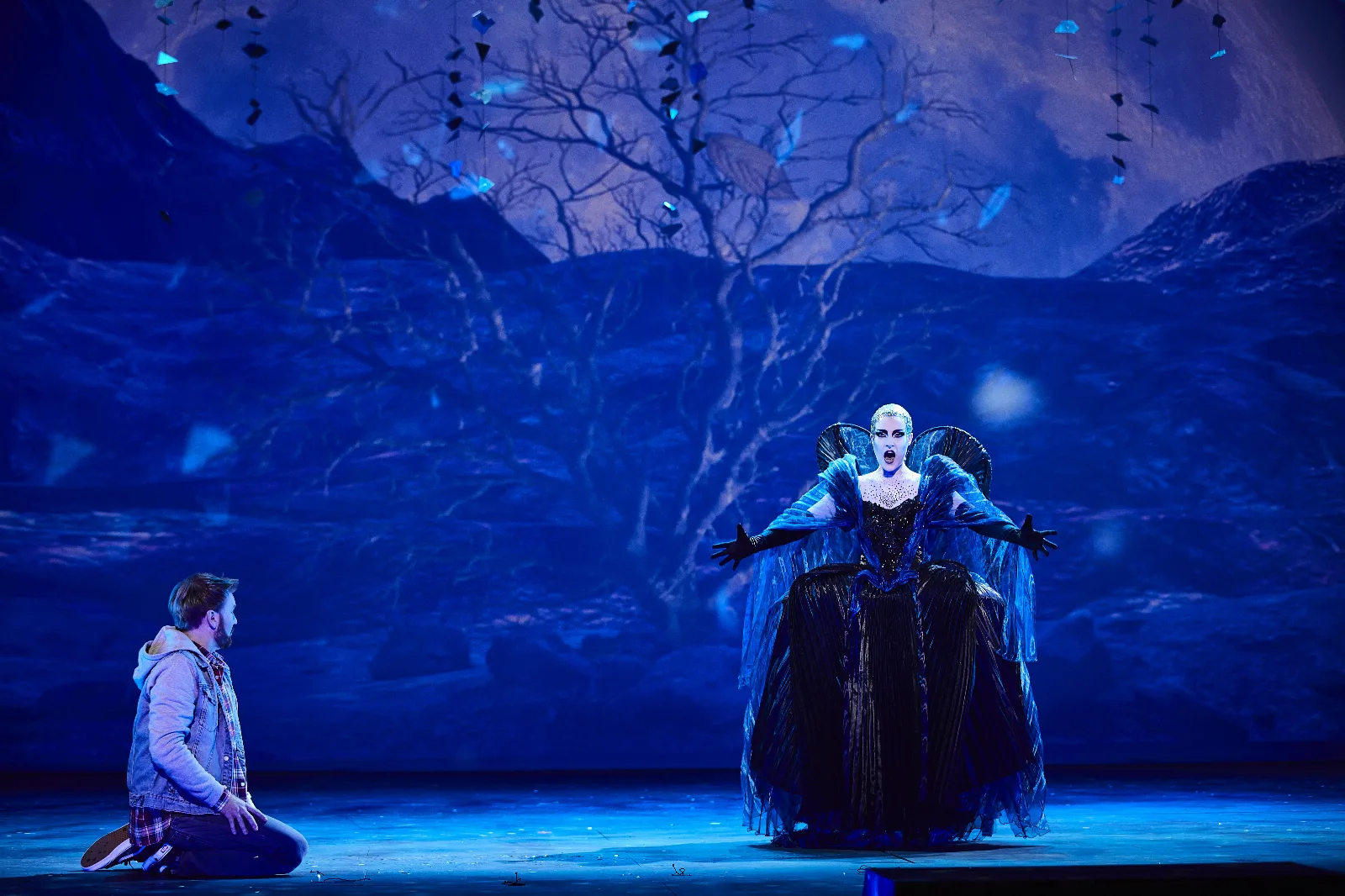
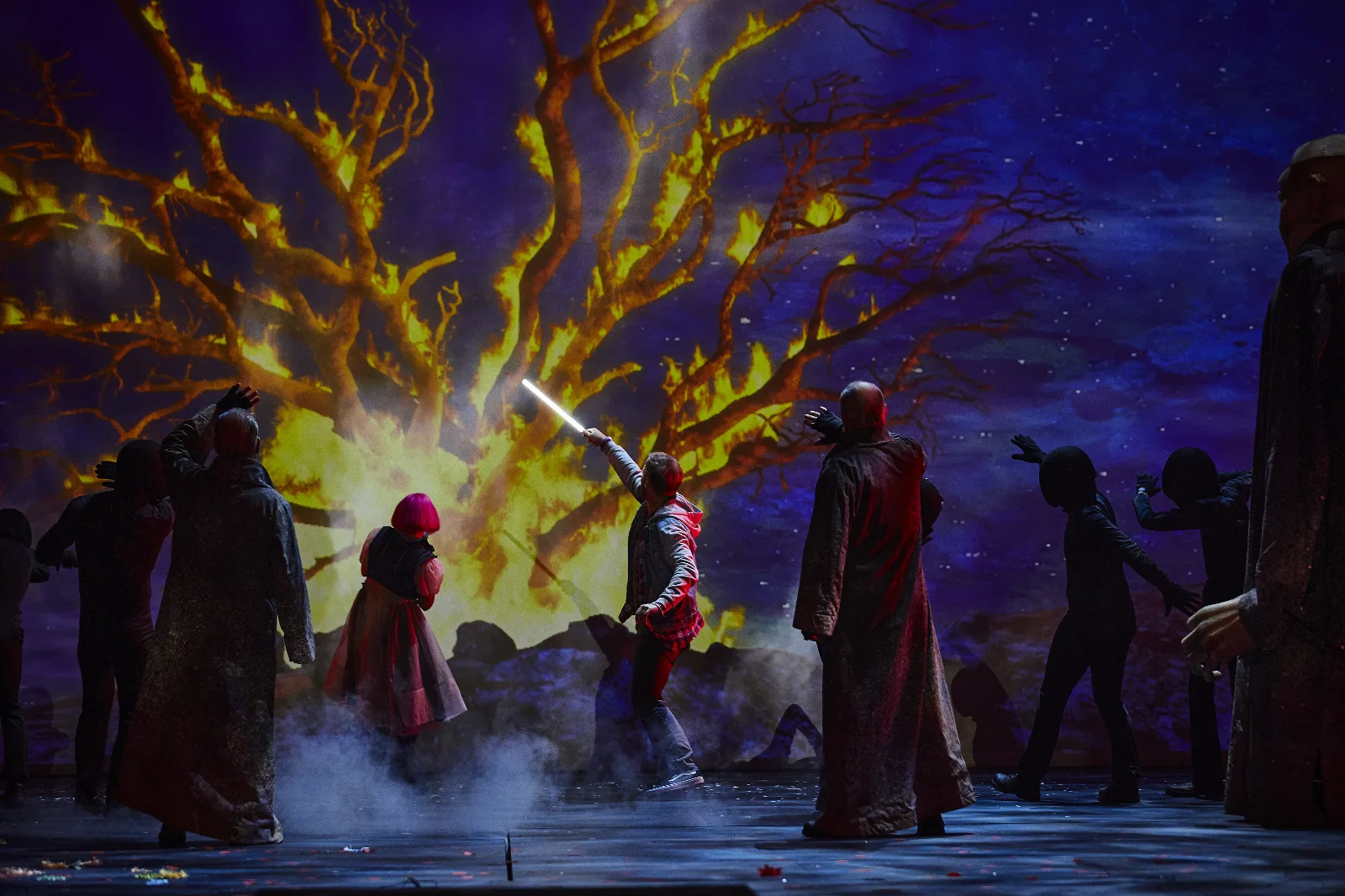
A withered tree with just one remaining leaf: it is an image with which the staging of Die Zauberflöte by Wolfgang Amadeus Mozart (1756-1791) at the Semperoper Dresden immediately sets the tone. Josef E. Köpplinger's production, which celebrated its 131st performance on 2 November 2026, is a fascinating interpretation, full of playful inventions and humour, yet with equal attention to the tender and at times downright harrowing moments of the story. The result is a production that continually surprises without losing sight of the human core of the work.
Playful, visual and full of inventions
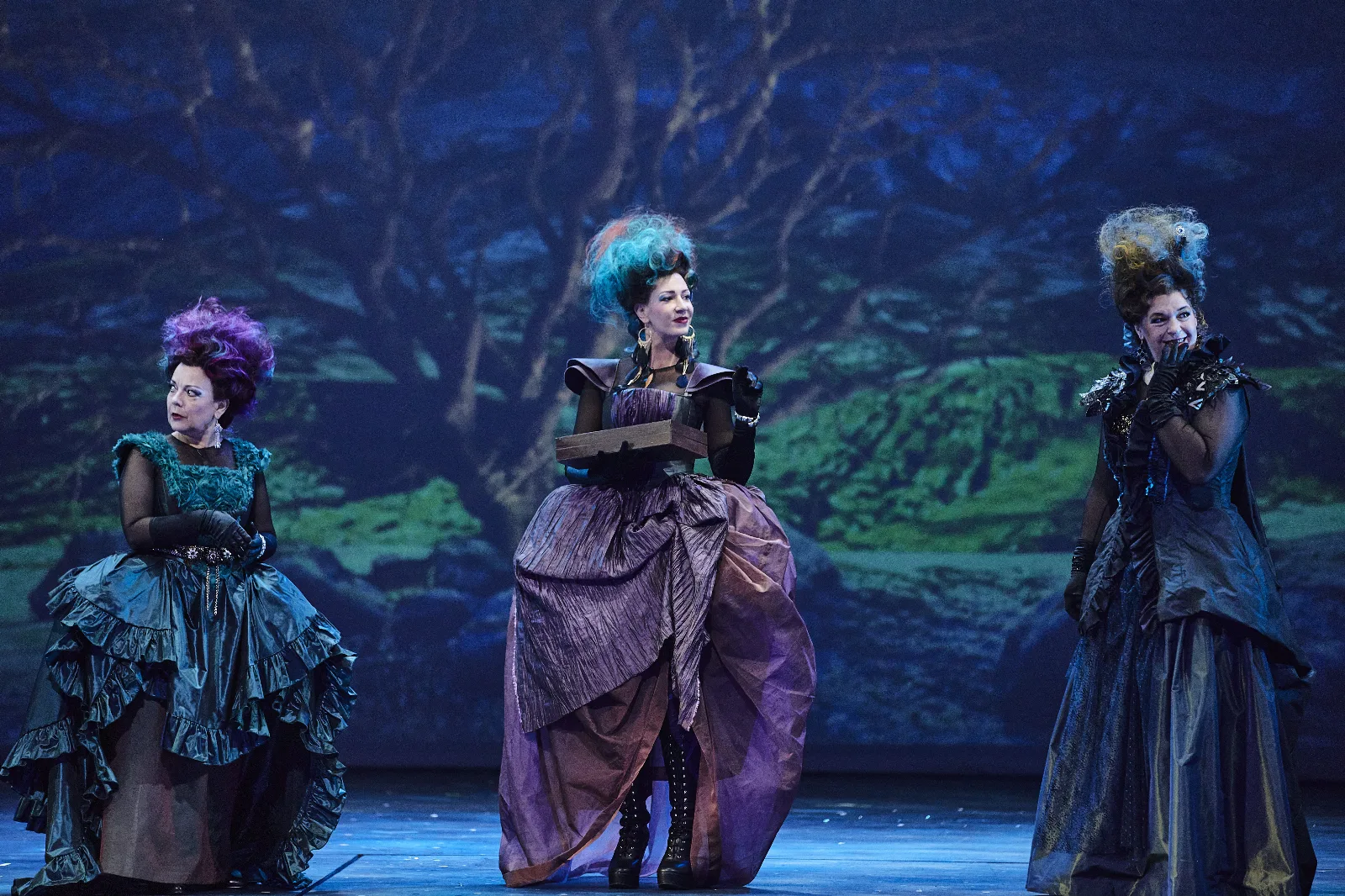
The direction plays inventively with the characters and their appearance. Costumes, hairstyles and hair colours contribute to their characterisation. At times the exaggeration of a character becomes rather emphatic, but precisely because of this the humour often works all the better. The three ladies, for example, seem to have stepped straight out of a Disney film or a musical such as Wicked. They are not somewhat otherworldly old spinsters, but three distinctly drawn figures who are excellently attuned to one another both vocally and theatrically.
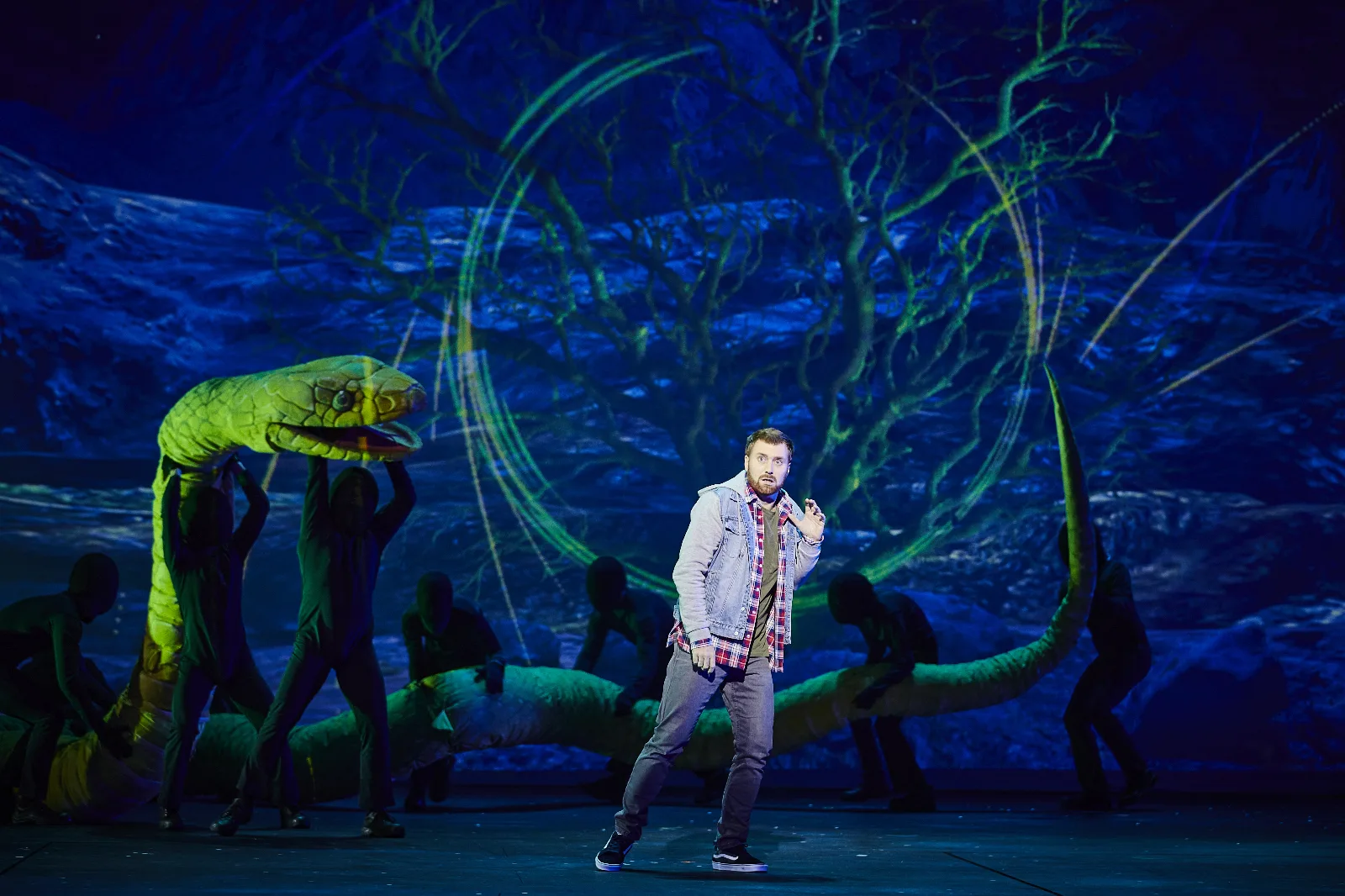
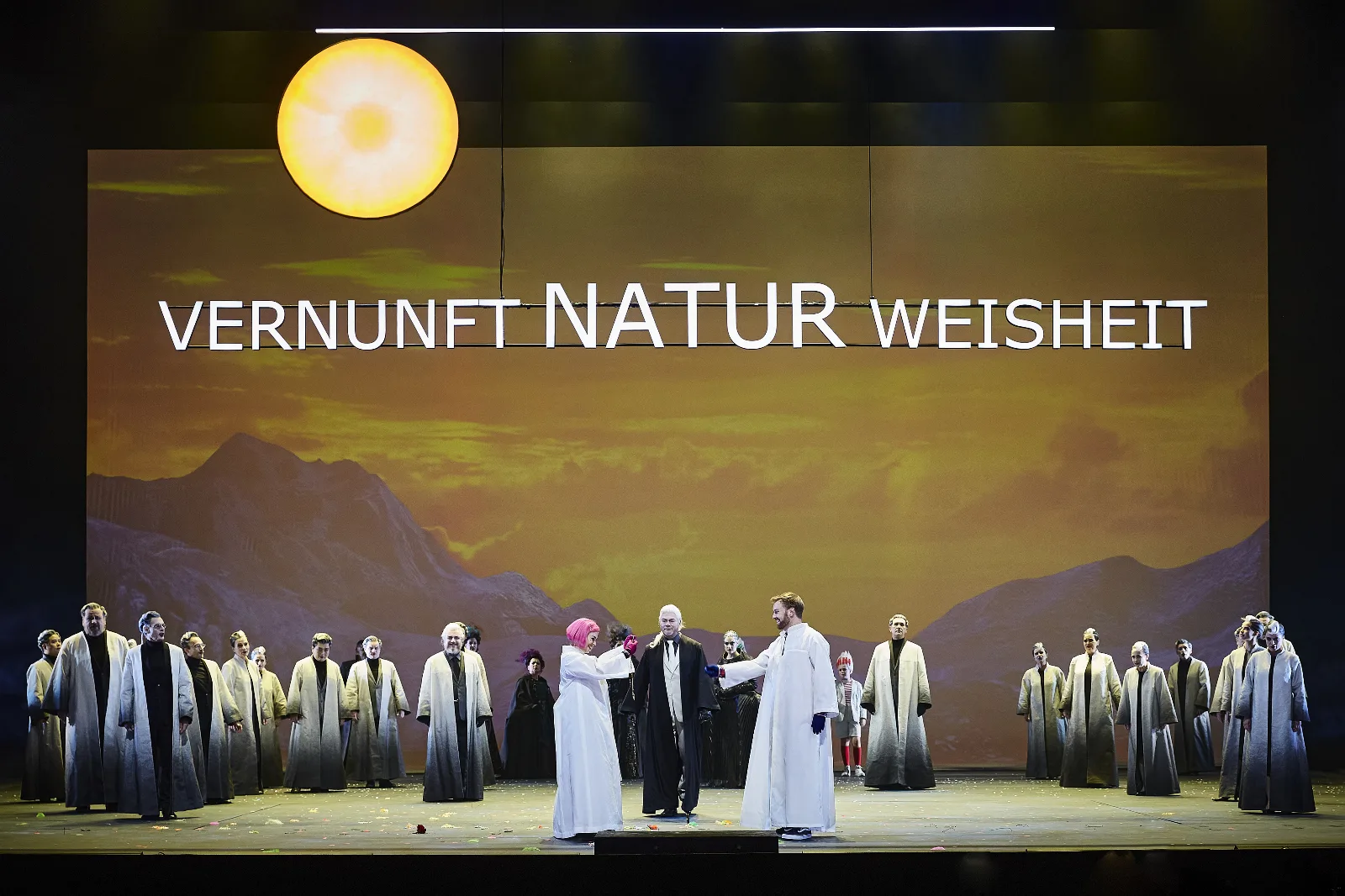
The visual language is also strong. The withered tree with that single remaining leaf evokes associations with a painting by Caspar David Friedrich and gradually acquires a symbolic meaning: hope, life and the quest for wisdom. In the second act the tree disappears and only returns for the final trial of Tamino and Pamina. Meanwhile the projections create a disquieting world with an almost ethereal atmosphere, somewhere between a landscape and an underwater world, in which the lighting plays an important role.
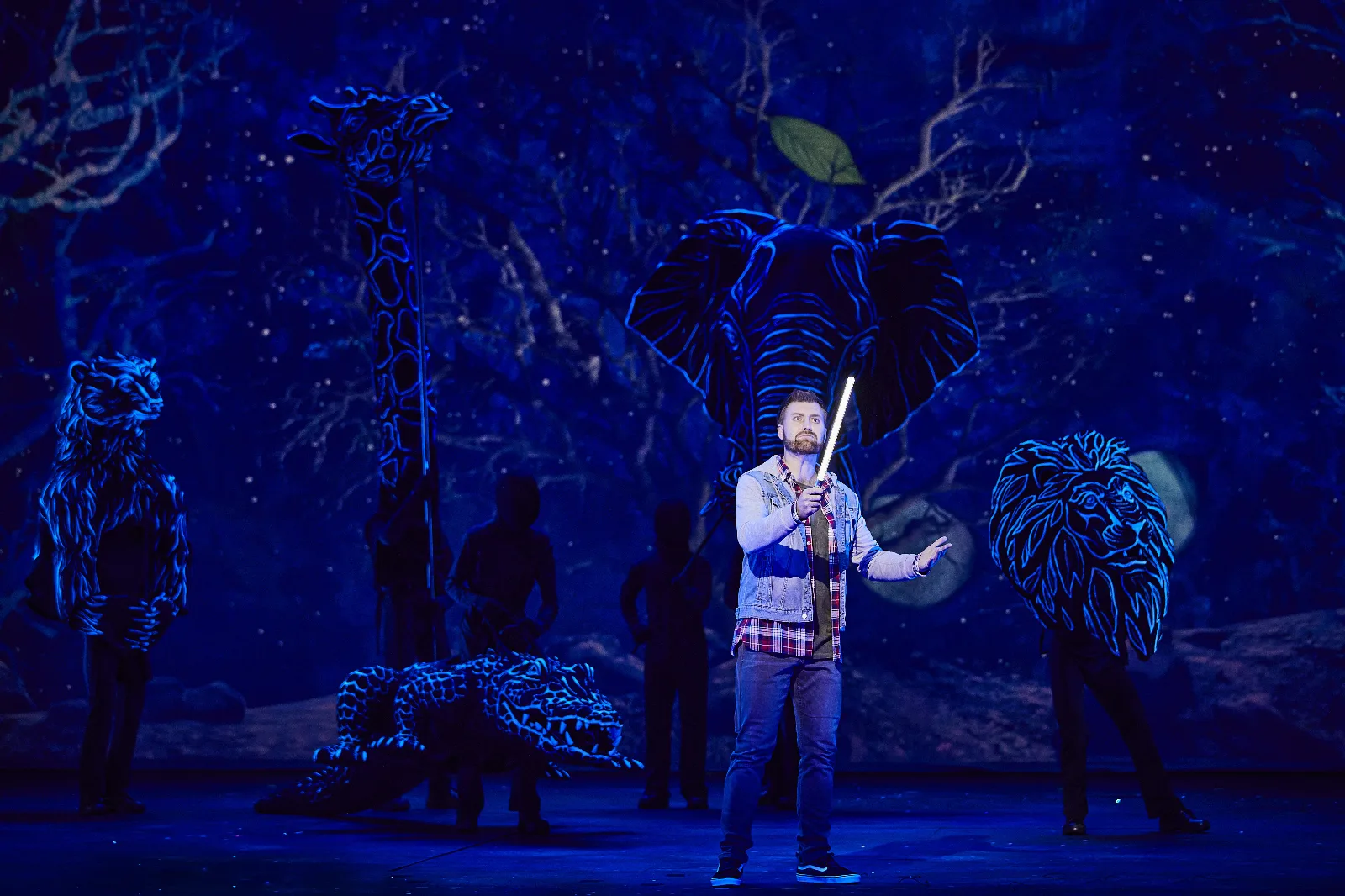
It is also striking that in this production Tamino is not given a flute but a light staff, a clear wink to the Enlightenment. When he plays it for the first time, all kinds of animals appear on stage. The ostrich was dazzling, above all for its playful gait and the hand that represented its head. In this way the enchanting power of music becomes literally visible.
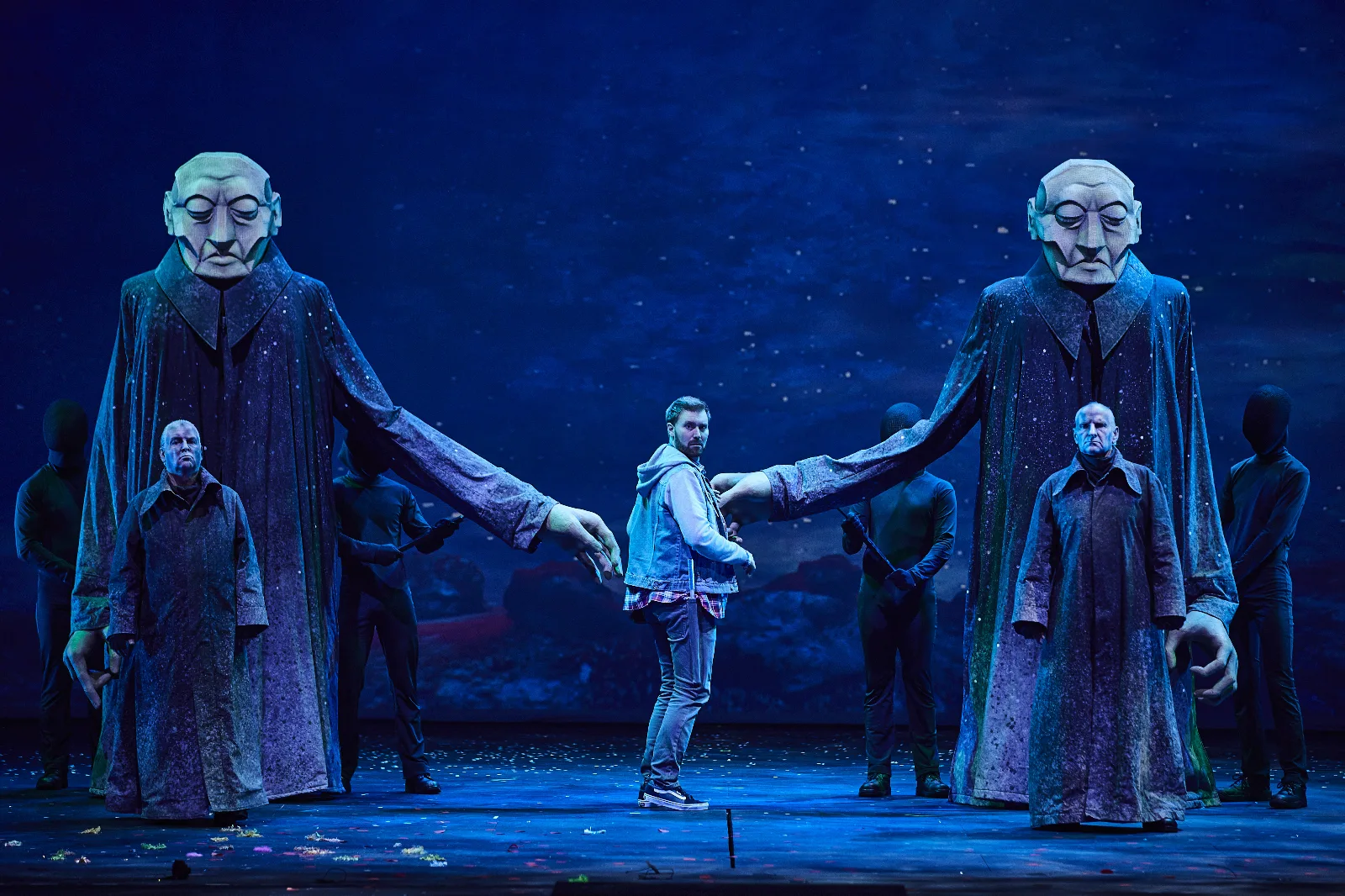
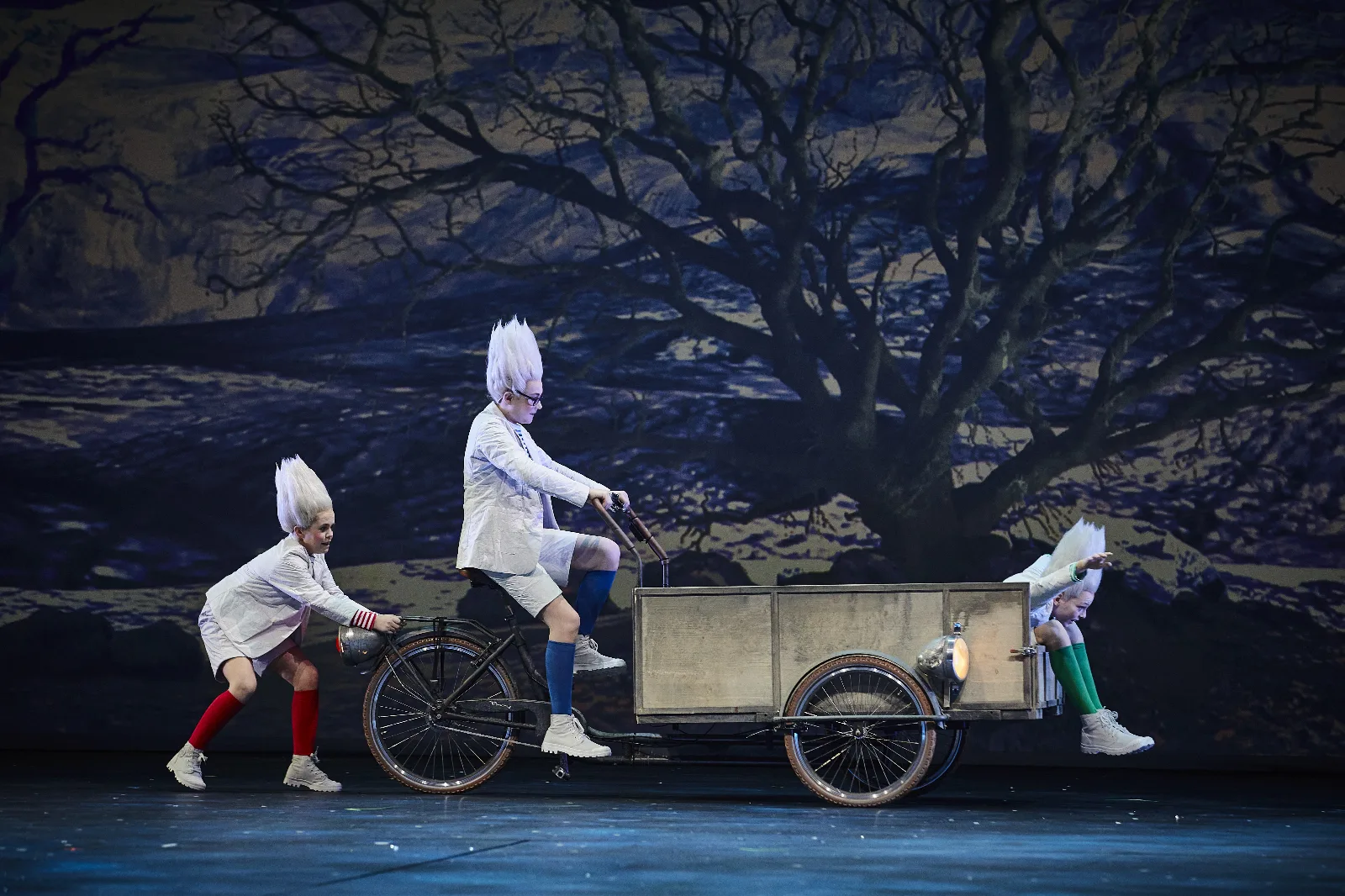
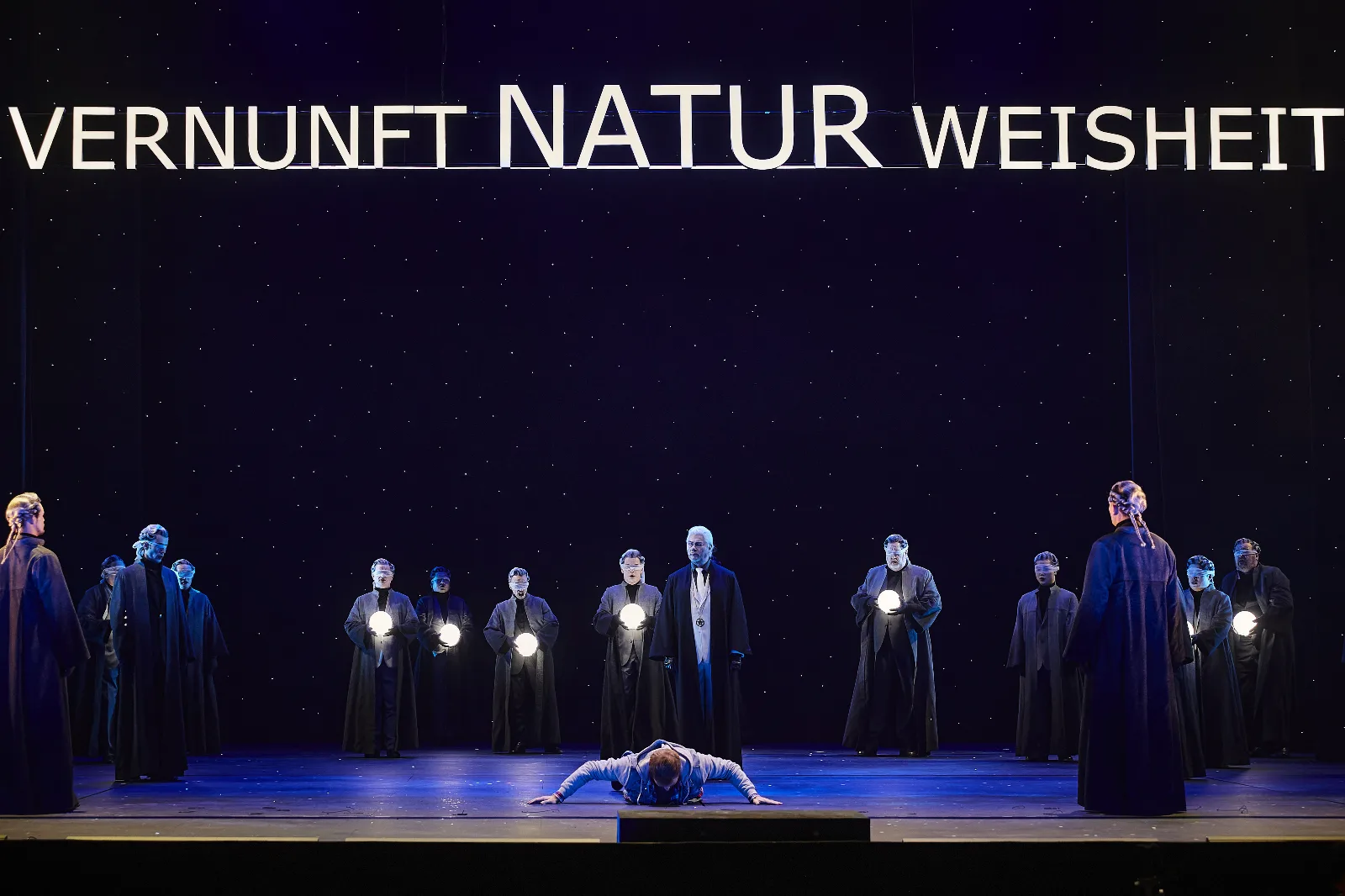
Another striking invention is the large puppets which, together with the Geharnischten, represent the entrance to the temple. They reinforce the theatrical and somewhat surreal character of the staging. The three boys of the Dresdner Kreuzchor are also more than mere musical messengers. They appear at unexpected moments, move actively through the stage picture and respond with a disarming sensitivity to the characters. Their voices sometimes sound somewhat fragile and the text is not always entirely intelligible, but precisely that sound of boys' voices fits the original musical world of Mozart. Their presence gives some emotional moments additional depth.
Humour with a dark edge
The direction moreover does not shy away from the darker sides of the story. When Pamina, in her despair, reaches for a knife and Papageno uses a rope, thoughts of suicide are made strikingly direct. This is done without sensationalism, but with an openness that underlines the vulnerability of both characters. The humour thereby receives a counterweight of sincere empathy. The comic scenes, too, often hit the mark. When Papageno descends in a little aeroplane, a literal deus ex machina, and behaves as if he had single-handedly brought about the rescue, it is an entrance as unexpected as it is delightful. The magic bells, meanwhile, provide a witty scene: the guards, tough-looking types who seem to have stepped out of a leather bar, threaten to overpower Pamina and Papageno, but are suddenly seduced by the music into playful dancing. The audience responds enthusiastically.
In the first act the transition to the temple remains fairly classical and stately. The real dramatic momentum comes mainly in the second act. The atmospheric orchestral introduction gains an extra dimension because the singers, during the spoken dialogues, are positioned on the balconies, thereby also involving the spectators in the action. Unfortunately this invention is not carried through into the sung passages. It could have further strengthened the audience's involvement had the singers also sung from the balconies.
Monostatos, meanwhile, receives an interesting portrayal. When he is labelled as unworthy or foreign, he repeatedly points at himself, as if to stress that he is the one being excluded. At the same time the direction reveals without disguise his dubious intentions towards Pamina, with his attempt to have sex with her.
Köpplinger saves one of the boldest choices for the end. Tamino and Pamina take off their cloaks and leave the temple, while the others remain somewhat bewildered. The director does not explain what we are meant to infer from this. That is a good decision: the spectator is free to give their own meaning to this conclusion. From a contemporary perspective, there is certainly something to be said for the young couple's choice to turn their back on this male community. The worldview that speaks from Schikaneder's libretto is, after all, not particularly woman-friendly. The openness of the ending makes the production all the more provocative.
A splendid orchestra and strong voices
Musically, too, there was much to enjoy. The Sächsische Staatskapelle Dresden once again demonstrated its exceptional class. From the overture onwards there was that warm orchestral sound, the playfulness and the richness of detail. The woodwinds in particular were a delight to the ear, and many musicians visibly played with pleasure, often with a smile on their faces.
Conductor Katharina Müllner, whom I saw at work for the first time this evening, consistently found the right atmosphere and kept a close eye on the singers. She let the orchestra sparkle where needed, yet also knew how to accompany with finesse. In Sarastro's aria she clearly tempered the volume to give the voice all the space it needed. Her approach reflected attentiveness, a sense of proportion and a strong feeling for the theatre. I hope to hear her again soon in a full concert programme: a conductor to follow.
The vocal cast was, on the whole, well chosen, with a few genuine standouts. James Ley delivered a convincing Tamino. In his performance of Dies Bildnis ist bezaubernd schön he initially remained somewhat restrained, and in the spoken dialogues his diction was not always as clear, but his singing was otherwise excellent. Magdalena Lucjan portrayed a rather restrained Pamina. Her performance gained particular intensity in Ach, ich fühl's. The attentive reaction of the three boys at that moment made the scene all the more moving.
The absolute vocal triumph came from Jasmin Delfs as the Queen of the Night. In O zittre nicht she seemed to still be somewhat conserving her strength, but in Der Hölle Rache she was phenomenal. I have rarely heard this aria so flawlessly in tune, not even on CD. The coloratura sounded effortless, with remarkable control. She did not opt for excessive bravura, but let the virtuosity speak for itself.
Michael Nagl was a delightful Papageno. His voice sounded remarkably mature and full, certainly for his age, and he carried the role with an ease that also held up in the spoken dialogues. In Ein Mädchen oder Weibchen he combined musicality with an infectious playfulness. His interaction with Tamino was pleasant, and with Papagena, sung by Christine Hosefeld, he formed a strong duo. Their Pa-Pa-Pa became one of the merriest moments of the evening. The joke with the eggs, one of which eventually lands against the wall, made for a witty conclusion.
Tilmann Rönnebeck's Sarastro left a less convincing impression. Especially in the low register his voice lacked the depth and carrying power the role demands. He sounded somewhat better in the aria In diesen heil'gen Hallen, but in the trio the limitation became apparent once again.
The chorus under the direction of Jan Hoffmann was of great distinction. The tone was homogeneous, the diction clear and the dynamics precisely matched to what the music required: powerful where necessary, refined in the softer passages. The acoustic balance in the Semperoper was also good. Orchestra, soloists and chorus were all given ample space without crowding one another.
What I take away
The combination of a production that regularly makes you laugh and at other moments makes you think, with an orchestra and a conductor who give Mozart all the splendour his music deserves: that made this evening worthwhile. Köpplinger's production gives the work its own theatrical interpretation, yet never loses sight of the human emotions. This is especially visible in the three boys, who follow the characters with such sensitivity, and in Michael Nagl's Papageno, who earned both the laughter and the warmth of the audience. And with Jasmin Delfs, whose Queen of the Night I will not soon forget, the evening reached a vocal peak of real stature. This was no ordinary Zauberflöte: you leave the Semperoper with a smile and a question mark.
Artistic team
- Sächsische Staatskapelle Dresden
- Sächsischer Staatsopernchor Dresden
- Conductor: Katharina Müllner
- Director: Josef E. Köpplinger
- Set design: Walter Vogelweider
- Costumes: Dagmar Morell
- Lighting: Fabio Antoci
- Choreography: Ricarda Regina Ludigkeit
- Chorus master: Jan Hoffmann
- Dramaturgy: Johann Casimir Eule
Cast
- Sarastro: Tilmann Rönnebeck
- Königin der Nacht: Jasmin Delfs
- Pamina: Magdalena Lucjan
- Tamino: James Ley
- Papageno: Michael Nagl
- Erste Dame: Ute Selbig
- Zweite Dame: Nicole Chirka
- Dritte Dame: Ekaterina Chayka-Rubinstein
- Monostatos: Jongwoo Hong
- Drei Knaben: Cornelius Mühlhans, Thiago Brützer and Kolja Raatz