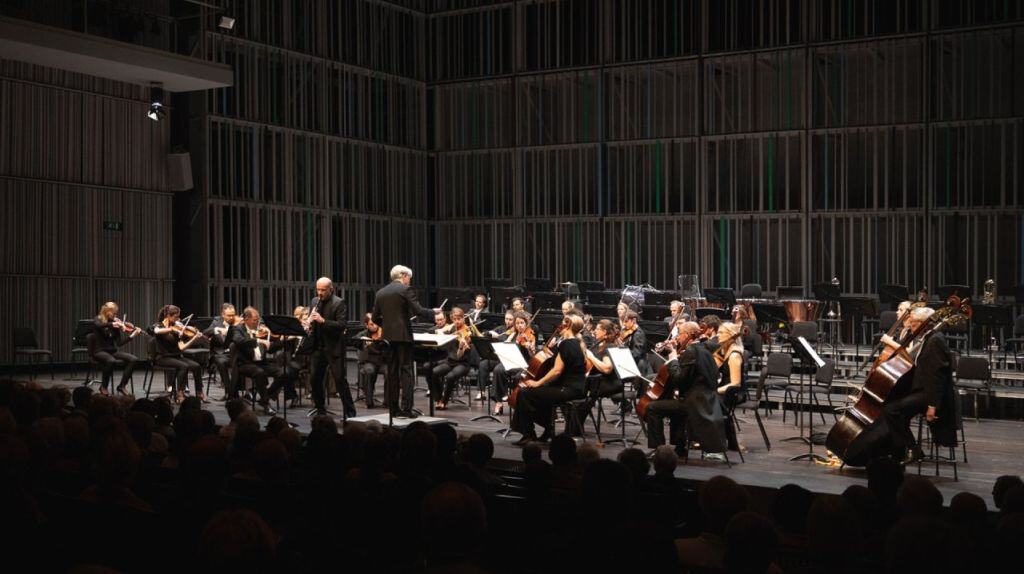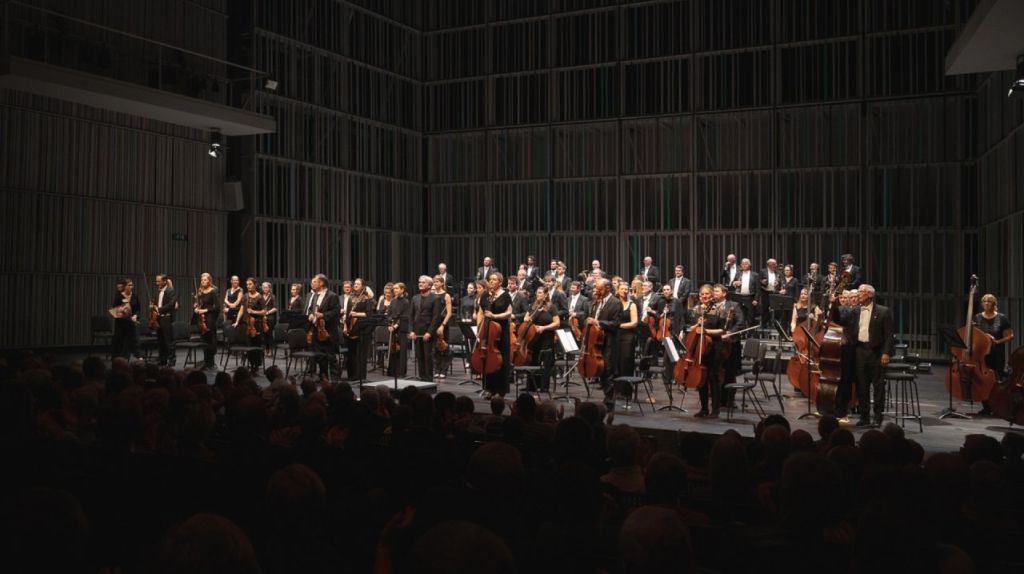
On Sunday afternoon, September 21, a subtle dialogue with Romanticism unfolded at Concertgebouw Brugge – far removed from bombast and excess. The London Philharmonic Orchestra, under the driven leadership of Ukrainian conductor Natalia Ponomarchuk, brought a carefully assembled program in which forgotten female composers and their male contemporaries appeared in a new light.
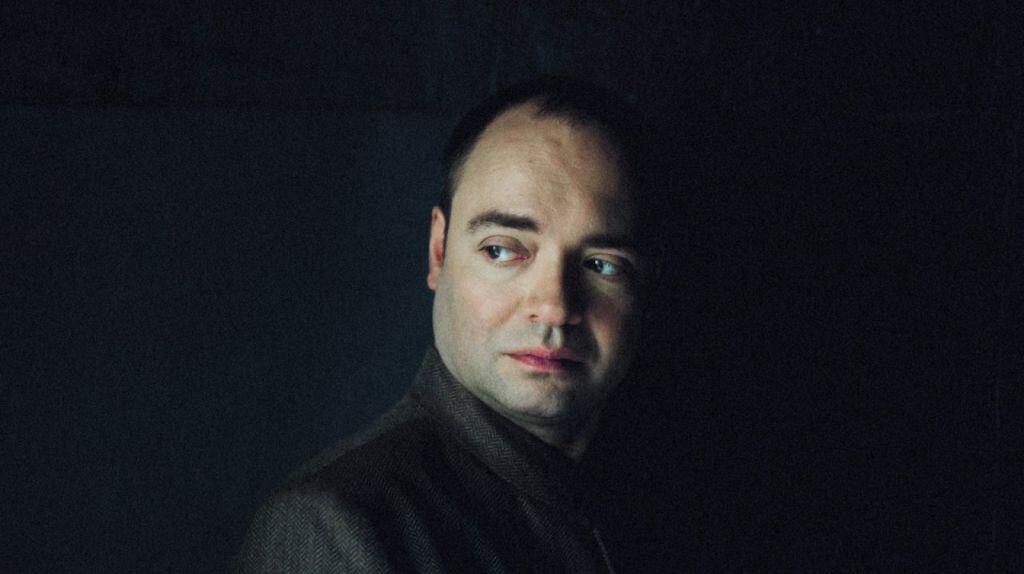
Russian pianist Alexander Melnikov took the stage as co-narrator, full of empathy and restrained power, in a concert of pure lyricism and refined emotion, in which two accomplished musicians found themselves in subtle harmony across nationalities.
Clarity with an undercurrent of fire
The "Ouverture in C" by Fanny Mendelssohn-Hensel (1805-1847), (too) long remained invisible, received a central place. This early work – her only large-scale orchestral composition – was written at a time when her music was rarely performed publicly. It revealed a masterful command of classical forms, mingled with playful modulations and romantic tension arcs. The orchestra approached the work with clear sound and classical precision, allowing the thematic development to unfold carefully. Ponomarchuk's direction gave room for restrained intensity, causing the orchestration to sparkle without falling into excess. Thus sounded a Romantic work that felt both new and familiar, as if a voice from the past resonated cautiously but resolutely.
A unique voice between passion and refinement
Alexander Melnikov then took the stage with the rarely performed Piano Concerto in A minor, opus 7 by Clara Schumann (1819-1896) – a work that reflects her exceptional youthful genius and inner sensitivity. Clara, who long stood in the shadow of her famous husband Robert, managed with this concerto to speak her own musical language: full of refinement, passion and melancholic depth that was ahead of her time.
Melnikov's playing was a poetic synthesis of technical mastery and emotional transparency. His tone was clear and warm, each phrase breathed and received careful coloring. The orchestra accompanied with gentle alertness, creating an intimate interplay between soloist and ensemble. In the Romanze, the middle movement, the music – breathtakingly performed by the solo cellist – radiated vulnerable lyricism, as if a quiet voice was unfolding her inner world. The final section combined playfulness and virtuosity without resorting to effect-seeking, making Clara's early genius palpable in a sparkling, unique light.
A dialogue full of layered emotions
Next came the Piano Concerto in A minor, opus 54, by Robert Schumann (1810-1856) – one of the greatest pearls of the Romantic repertoire. It was particularly striking to hear both works in succession. In this concerto, Schumann weaves personal emotions, psychological struggle and hope into an impressive whole, saturated with autobiographical elements.
Melnikov's muted opening set the tone immediately: richly nuanced playing in which the drama was not amplified, but grew organically. His rubato and phrasings left room for Schumann's constant alternation between melancholy and passion. The first movement unfolded as a tense but intimate conversation, in which soloist and orchestra found each other with intense involvement. Ponomarchuk conducted with transparency and acuteness.
The Intermezzo, serene and introspective, became a pilgrimage toward inner quietness. Melnikov touched each note with thoughtful tenderness. The finale, restrained yet more passionate, breathed no spectacle but inspired fire. Thanks to Ponomarchuk's tight dynamics, the orchestra sounded like a living organism, a breathing heart that supported Melnikov's expression with complete devotion.
Mysticism and melancholy
As a finale, the orchestra brought the Third Symphony in A minor, opus 56, by Felix Mendelssohn (1809-1847), the celebrated "Scottish" – one of the most evocative symphonies of the Romantic era. Inspired by his travels through the rugged Scottish Highlands, Mendelssohn paints a musical landscape full of mist, ruins, festivities and above all a deeply felt nostalgia.
Under Ponomarchuk's poetic yet controlled direction, the London Philharmonic Orchestra found the fragile balance between lyricism and grandeur. The opening passages carried a tragic undertone, with darkly colored woodwinds and sober strings that sonified the solitude of the landscape. The scherzo was a lively dance, rhythmically sharp and agile – an ode to Scottish folk character. After a disruptive cell phone call, the slow movement unfolded as a broadly painted canvas of melancholy and reflection. The finale brought no theatrical eruption, but a restrained triumph: a jubilation that slowly built from silence, into a haunting form of victory.
Musicality without a mask
Over the past two days I have watched conductor Natalia Ponomarchuk at work. Thoughtfully, she took the stage, with a modest presence; she received the applause with a certain shyness. But as soon as she turned to the orchestra, a transformation took place: her entire body became music. With expressive, but never theatrical gestures, she shaped the phrasings, breathed along with the soloists, and guided the orchestra with a rarely seen intensity. She did not fire with grand arm gestures, but with a deep inner conviction. Her musicality was no display, but purely lived and shared. Rarely do you experience as a listener such honest, sincere music-making – an experience that lingers. Ponomarchuk is a name to cherish: wherever she conducts, her concerts invite you to experience known and forgotten works anew – and especially to listen with an open heart, in which every note resonates softly like a whisper of the soul.
Subtlety as signature
What made this concert exceptional was the coherent and restrained interpretation: a love for detail, a disdain for effect-seeking, and an intense musical dialogue. The London Philharmonic Orchestra, often praised for its symphonic power, revealed itself here above all as an orchestra of refinement and sound sculpture. Natalia Ponomarchuk placed herself entirely in service of the music and her musicians, without pushing herself forward. Alexander Melnikov chose not for bravura, but for poetry in its purest form.
Together they paid tribute to Romanticism as a quest for emotional truth and authentic expression.
Those who missed this afternoon let a rare moment pass by: a tender, hushed encounter with the power of music – not to overwhelm, but to touch deep in the heart.