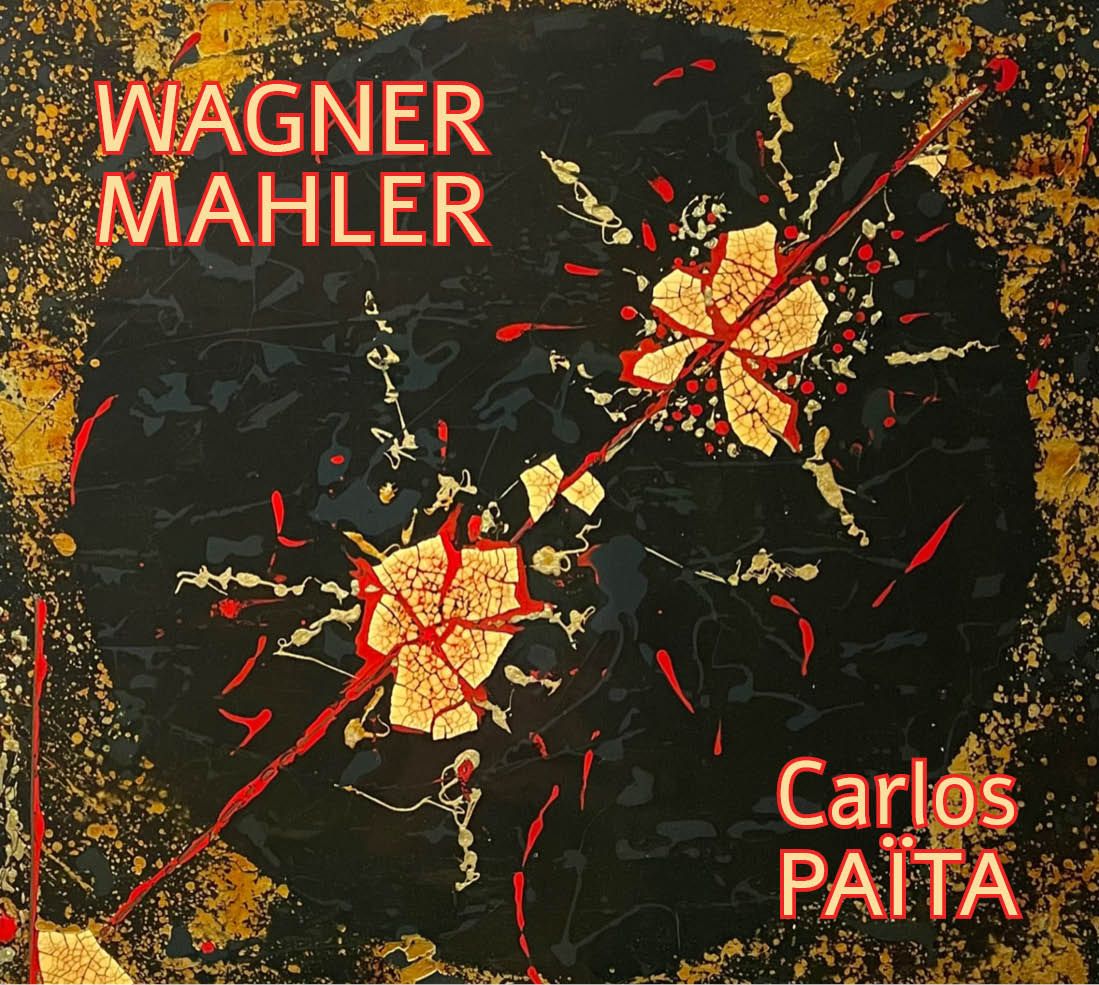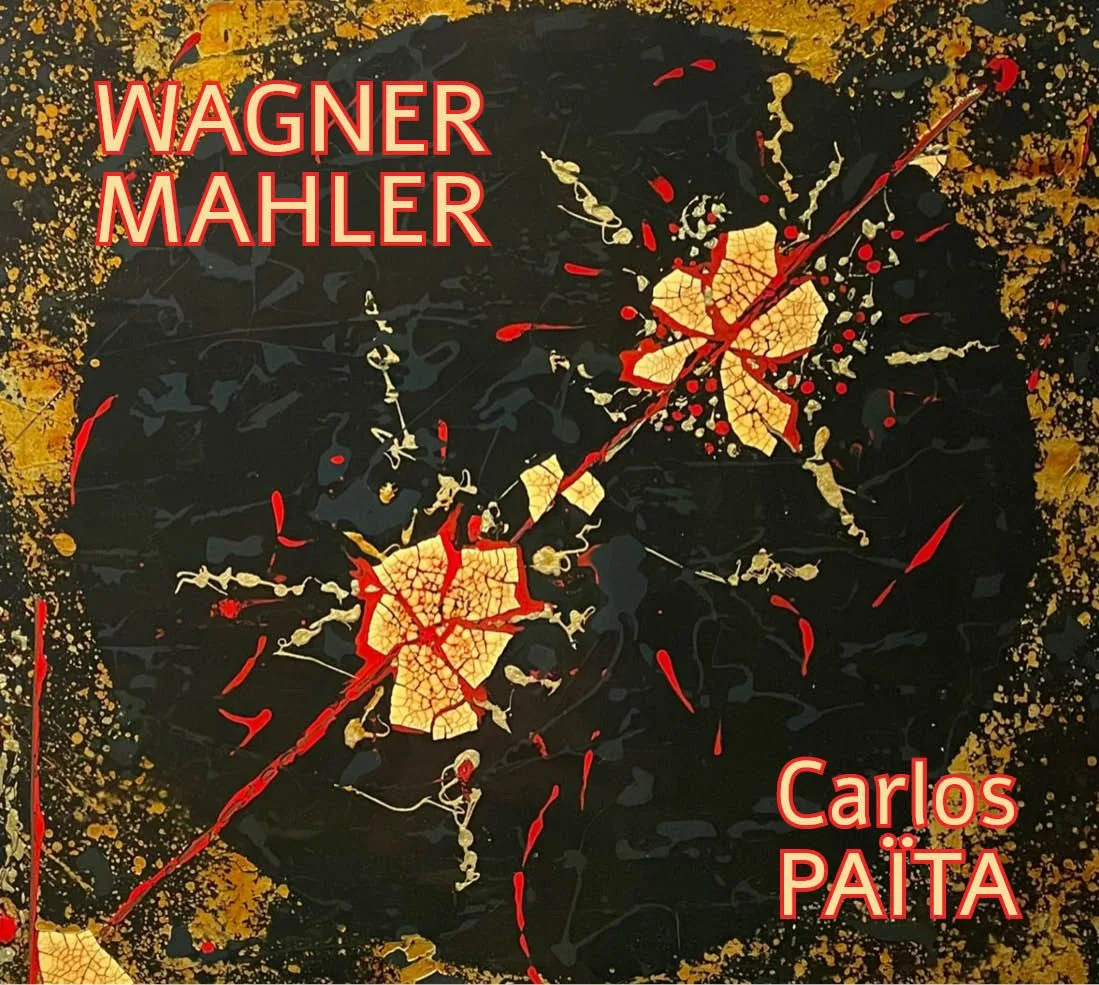
There are moments when an orchestra seems less to be making music than to be bringing a world to life. A world in which beauty and menace lie close together, in which a heroic thought suddenly takes on a tragic undertone, and in which even a familiar melody can conceal something unsettling. Richard Wagner (1813-1883) and Gustav Mahler (1860-1911) knew better than anyone how to translate such contradictions into sound. On this CD they meet in performances by Carlos Païta (1932-2015), a conductor who liked to push the dramatic force of a score to its limits.
Drama without words
You hear more than twenty minutes from Götterdämmerung, the final part of Wagner's Ring des Nibelungen, and you spontaneously wonder what it would be like to experience the complete opera, or even the entire Ring, under Carlos Païta's direction, because the two orchestral excerpts on this CD make you curious about what he would have done with the larger whole.
In Siegfrieds Rheinfahrt there is no trace of a sluggish approach. Païta gives the music momentum and allows the orchestral sound to take on a raw quality from time to time, without doing violence to the drama. On the contrary, that impetuosity fits remarkably well with the heroic movement of the music and with the menace that remains present beneath the surface. The horn solo stands out, but above all the way Païta guides the tension towards a climax leaves an impression. After that eruption follows a striking hush, which carries the music into a very different emotional world.
In Siegfrieds Tod und Trauermarsch the interpretation reaches an even greater intensity. The timpani lend the dramatic build-up an impressive weight, but never become the sole focus: the strings also keep claiming their share and provide the necessary depth. The orchestra is not always perfectly accurate, but the dramatic conviction remains intact. Païta turns the funeral march not into a stately commemoration but into a poignant confrontation with Siegfried's death. The monumental gestures acquire something inexorable, while the various orchestral groups keep feeding the tension.
Extremes that need each other
With Gustav Mahler's First Symphony, the attention shifts to a composer who интертwines natural sounds, folk music, irony and heroism. Païta's sense of contrast does full justice here too, but it is above all the gradual build-up and the interplay between the different tempi that characterise this performance.
The first movement unfolds as one flowing musical stream. The tension grows without the music being needlessly slowed down or dragging. When the playful character comes more to the fore, it is given full room. The horns that sound from afar retain their spatial effect despite the age of the recording. Particularly successful is the build-up to the great climax: the tension is held for a long time, after which the winds and percussion burst forth with full force. In this way the hushed opening grows into an impressive orchestral eruption.
In the second movement, the sharply profiled rhythm provides a firm dance-like movement. Païta breaks this with a pronounced slowing down, whereby the music suddenly loses its natural forward motion. It is one of the moments in which he seeks out the extremes. The intervention is striking, yet it works within Mahler's capricious musical world: the dance acquires something wilful. The lovely interplay of woodwinds and strings, moreover, keeps the music lively and colourful.
The third movement begins as a desolate funeral march with the double bass playing Frère Jacques. The simplicity of the melody only makes the atmosphere stranger. Païta gives the lyrical passages sufficient room and lets the klezmer-like episodes, with their folk-music character, contrast with the solemn march. Melancholy, irony and a touch of grotesque humour intermingle. Towards the end the music gradually dies away. This forms a beautifully calculated contrast with the earlier passages, as if the strange world Mahler has conjured up is slowly disappearing again.
The finale enters with great urgency. Païta constantly lets the music change shape: explosive passages alternate with moments in which the tempo falls back sharply. Halfway through the movement the music seems almost to fall completely silent. That far-reaching hush makes the renewed build-up to the climax all the more impressive. When winds and percussion come in again with full force, the finale acquires an irresistible momentum. The triumphant conclusion therefore does not sound like an obvious endpoint, but like the outcome of a musical struggle fought to the utmost.
A pronounced vision
This reissue on Le Palais des Dégustateurs brings together two previously released recordings. The Wagner excerpts were recorded in 1982-1983, Mahler's First Symphony dates from 1977. Both recordings were made at Kingsway Hall in London. For Wagner the Philharmonic Symphony Orchestra plays, for Mahler the Royal Symphony Orchestra.
The sound betrays the age of the recordings, but important details come through clearly. The horns in Mahler's first movement retain their spatial effect. In Wagner the timpani come forward impressively, without the strings disappearing into the background. The orchestral finish is not always precise, but that does little to diminish the persuasive power of these performances. What lingers above all is Païta's ability to sharpen the music and let it cross familiar boundaries. For listeners who enjoy being challenged by a pronounced interpretation, this CD is highly recommended.