Nikolai Rimsky-Korsakov is perhaps best known for the popular "The Flight of the Bumblebee" and few people realize that it is a fragment from one of his imaginative operas, The Tale of Tsar Saltan. It is fortunate that the Muntschouwburg has both this opera and The Golden Cockerel in its repertoire, but we did not want to miss the opportunity to see The Night Before Christmas at the Frankfurt opera house.
Naval officer becomes composer
Nikolai Rimsky-Korsakov was born in 1844 into an old but impoverished aristocratic family. He was destined for a career in the navy. He received training at the cadet school in Saint Petersburg and music was a passionate pastime. He received piano lessons and joined in 1861 as the youngest member of the "Mighty Handful," which included Modest Mussorgsky, César Cui and Alexander Borodin. After completing his naval studies, he sailed around the world for about two years. On these journeys he was fascinated by various natural phenomena and cosmological events. This is reflected in his opera stories.
Fairy-tale fantasy and color richness are the two main characteristics of his work, whether it is the symphonic suite Sheherazade or his fifteen operas. In his operatic oeuvre we find historical drama alongside fairy tale, magic play alongside legend and satire. He does not compose an opera set in realistic everyday life with intimate emotional events, as Peter Tchaikovsky does in Eugene Onegin or The Queen of Spades. No passion, no exploration of psychology, but he chooses a fairy-tale tone, the fantastic, nature painting and the mystical.
The Night Before Christmas, a fantastic love story
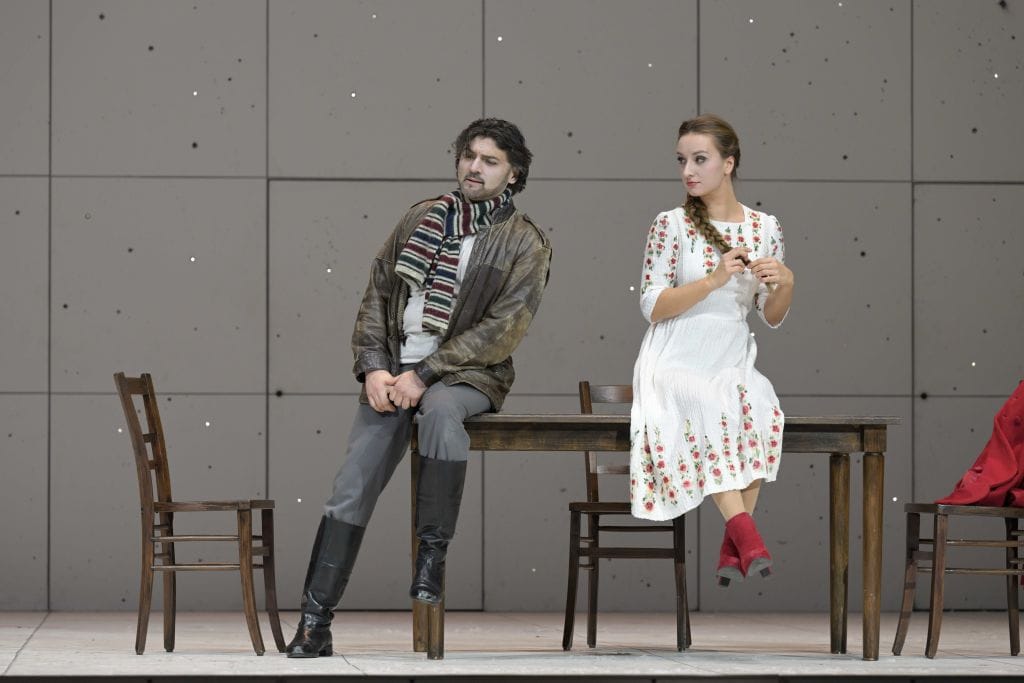
The Night Before Christmas is based on stories by Nikolai Gogol that contain motifs of Ukrainian folklore and mix events from everyday village life with fantastic elements. The story takes place on Christmas Eve. In the Ukrainian village of Dikanka, the blacksmith Vakula is deeply in love with Oksana, the daughter of a landowner. She will only marry him if he can give her the golden slippers of the tsarina. Desperate, Vakula calls upon the devil for help, who helps him fly to the capital, but of course has his own ulterior motives. But once at the tsarina's, she gives him her most beautiful pair of slippers. Back in Dikanka, Oksana regrets her strict condition and realizes her love for Vakula. Now nothing stands in the way of their marriage.
Nikolai Rimsky-Korsakov intertwines the Christian Christmas celebration with pre-Christian customs of the winter solstice. Behind the reality of village life with its songs and dances, a second archaic world appears. The Kolyadya songs of the winter solstice give Rimsky-Korsakov the opportunity for colorful, vital scenes. Nature magic, conjuring of the supernatural and musical folklore – as in the dance of the stars or the witches' ride – are typical aspects of Rimsky-Korsakov's style, alongside poetry and drastic humor.
Christoph Loy: once again a fantastic director
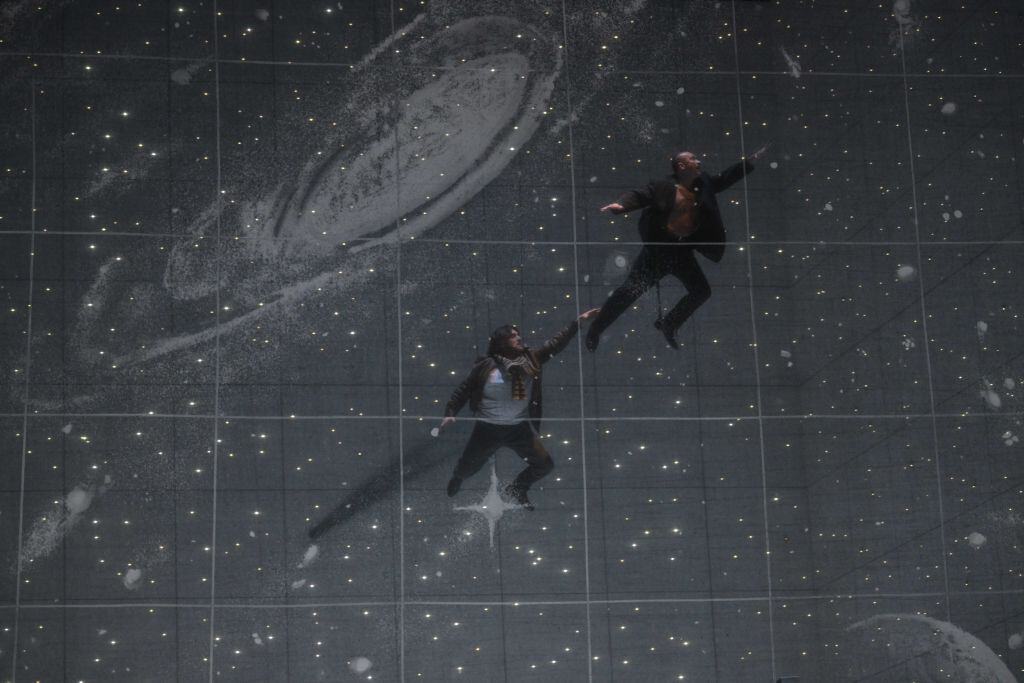
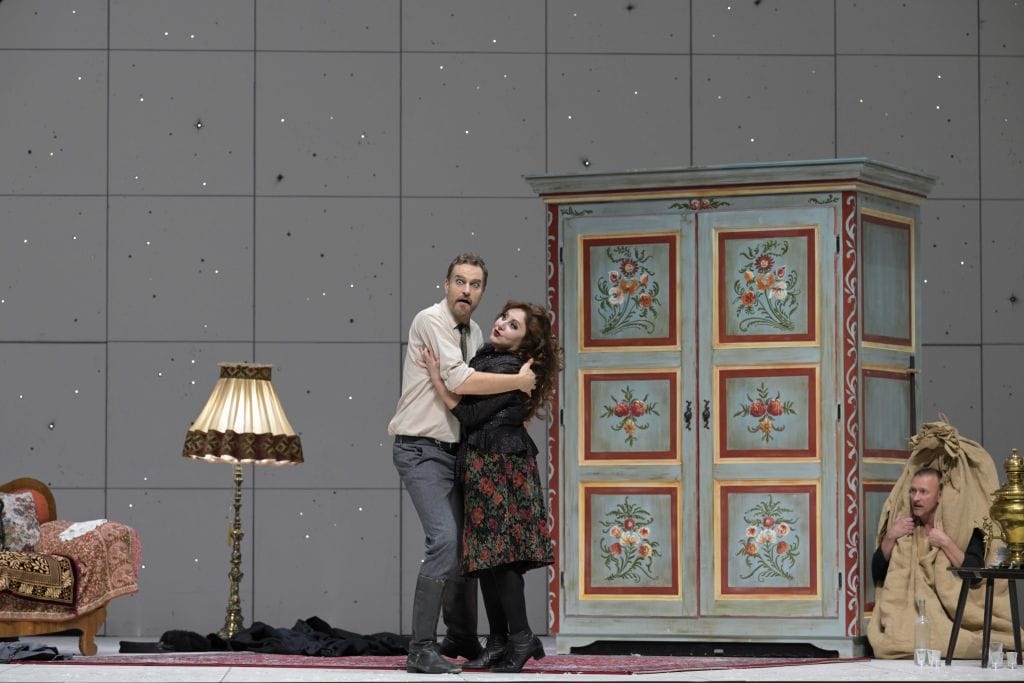
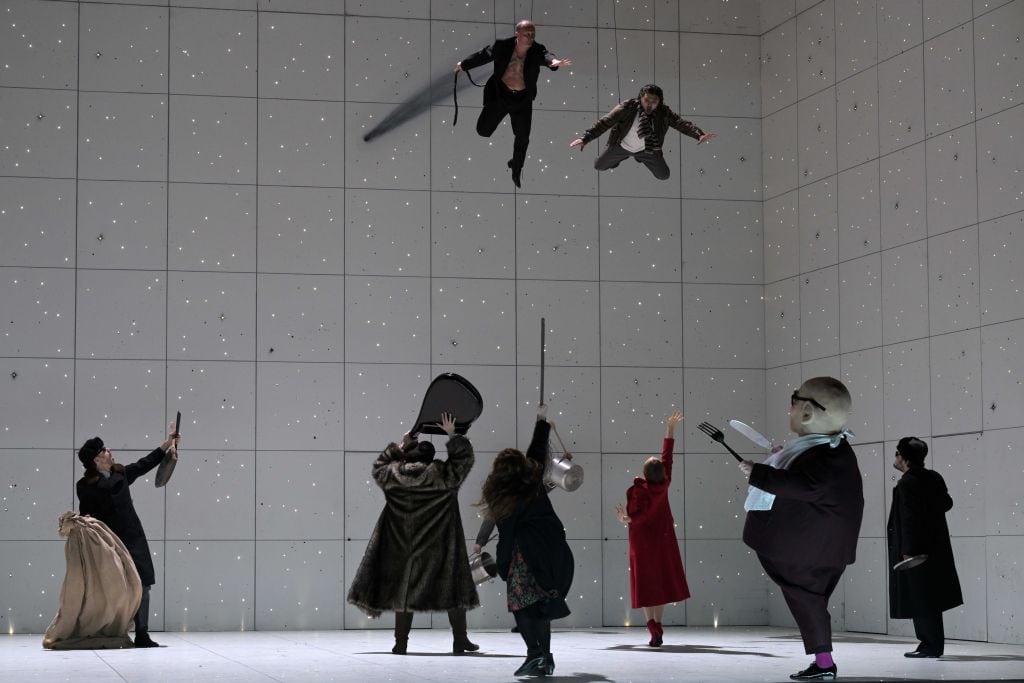
It is a perfect fit for director Christoph Loy. This production (in Russian) of Die Nacht vor Weihnachten in Frankfurt is once again proof that Christoph Loy understands the spirit of the work he stages and stages it with incredible inspiration yet always with respect! The front curtain of the stage is, for the occasion, a cosmic scene with celestial bodies and stars. Loy thus alludes to the natural phenomena that inspire Rimsky-Korsakov for the color richness and light play that he transforms into sound in his operas. It stimulates the fairy-tale fantasy that fills the production. The characters who receive a characteristic intonation in the music, Loy portrays with the right diversity and fantasy, such as the simple Vakula and the complex witch, the delightfully attractive girl Oksana and the wicked devil. And yes, the witch can fly on her broomstick and soar through the air with the devil. There is no lack of acrobatics, what a feat by the actors!
At the same time, the staging shows that Nikolai Rimsky-Korsakov is anything but a naive fairy-tale teller, for human wickedness also comes into play, for instance when Oksana's rival curses Vakula so that he can never obtain the tsarina's slippers and have a chance to win his bride. In the scene where the witch Solocha and the devil plot against Vakula and repeatedly stuff the arriving guest into a sack, Loy exploits the story to the full for mockery, humor and satire. Equally, the happy ending is portrayed wonderfully, funny and touching.
Gripping musicality
This production was first seen in 2021 in Frankfurt and was then lauded by Opernwelt as "production of the year". At this revival, young conductor Takeshi Moriuchi takes the baton and makes a musical feast with the orchestra. Each scene receives its proper orchestral intonation, from exuberant to serene, from devilish to heavenly, with the beautiful love confession of Oksana emphasizing the emotional cello. The solo parts are cast with singers from the Oper Frankfurt ensemble and it speaks volumes about the wealth of talent present there. Polish soprano Monika Buczkowska-Ward sang Oksana with crystal-clear voice, Enkelejda Shkoza was a chilling witch (Solocha), Georgy Vasiliev a gripping Vakula. The folk scenes that Rimsky-Korsakov paints with musical color richness are delightful choral passages.
Let us hear from the important musicologist of Russian music Richard Taruskin: "Rimsky-Korsakov is a composer who cannot easily be transplanted. But for those who approach him with the proper openness, it can be the most exciting and captivating music in the world". Taruskin makes an appeal to intendants, dramaturges and directors to bring his work into the spotlight!
[embed]https://youtu.be/9sRrmyU86eY[/embed]