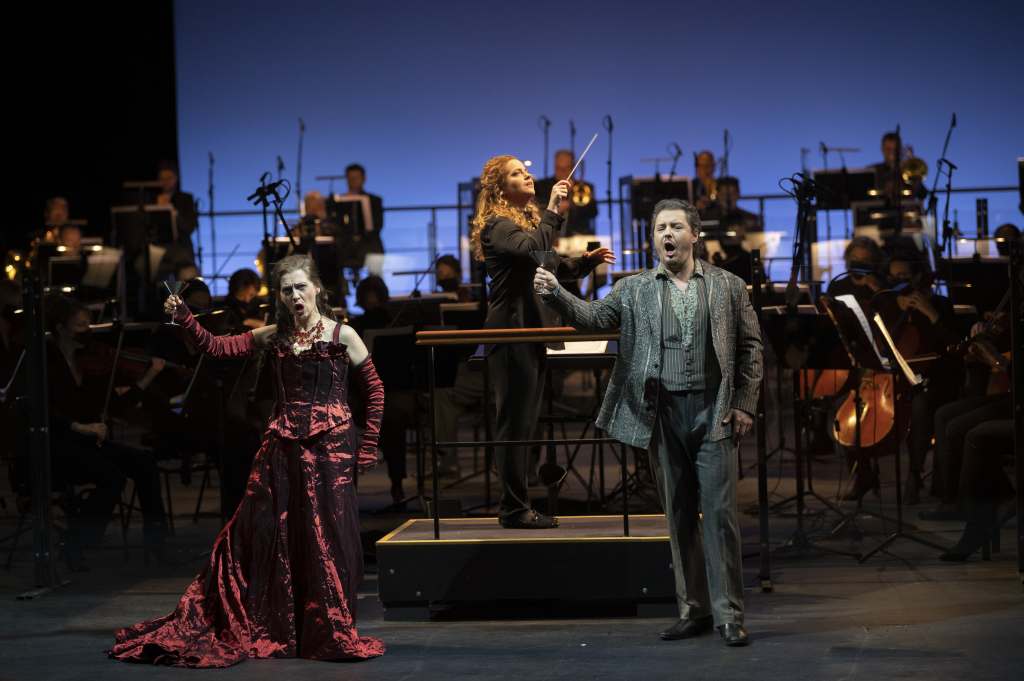
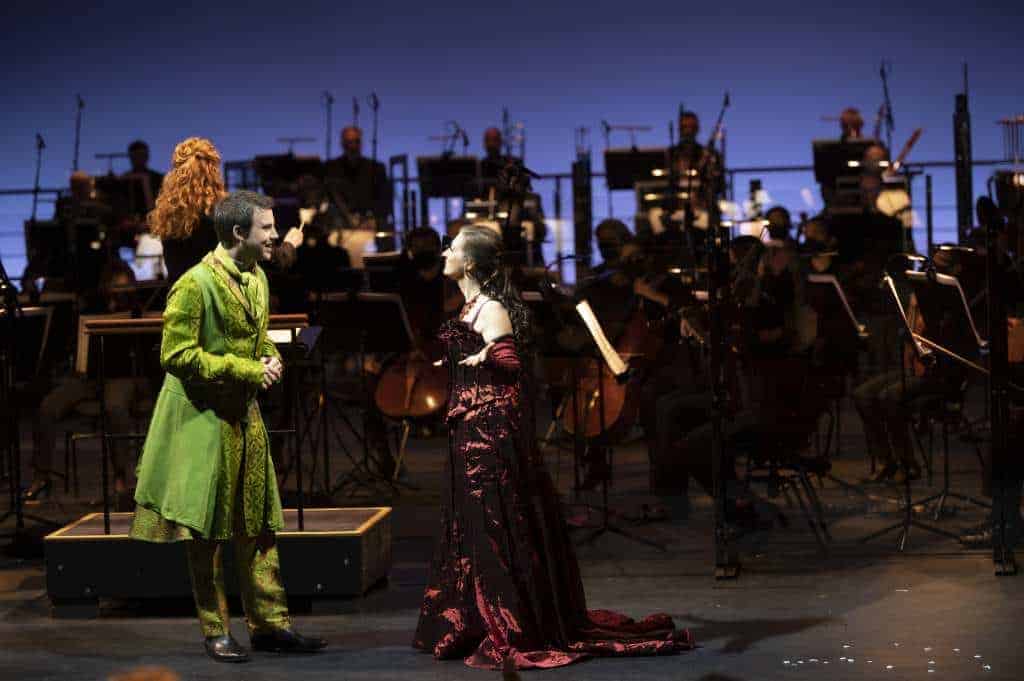
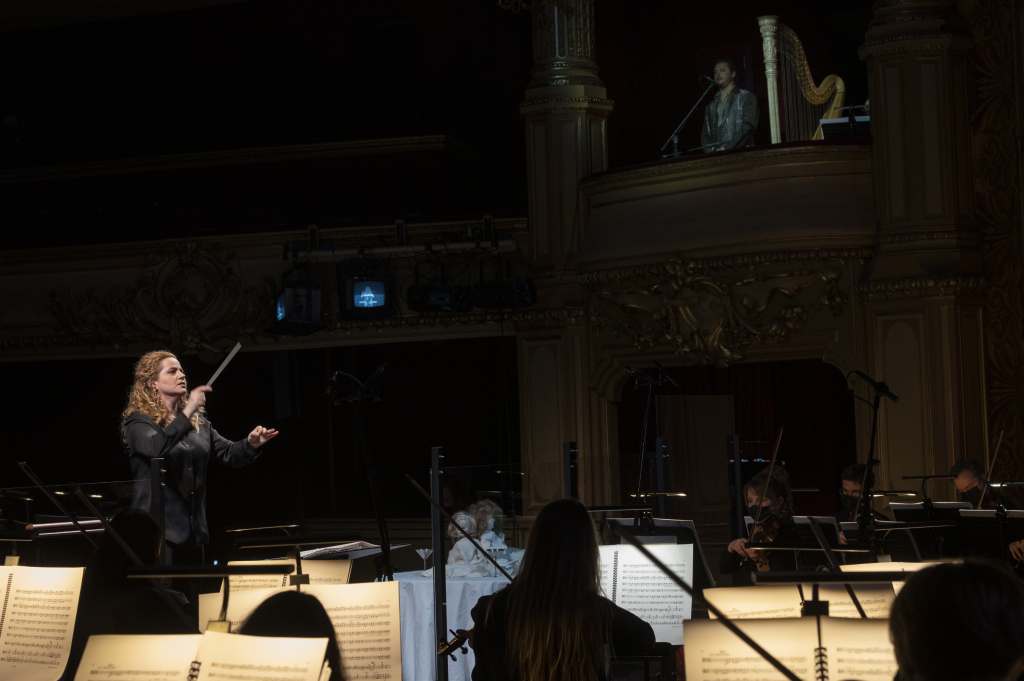
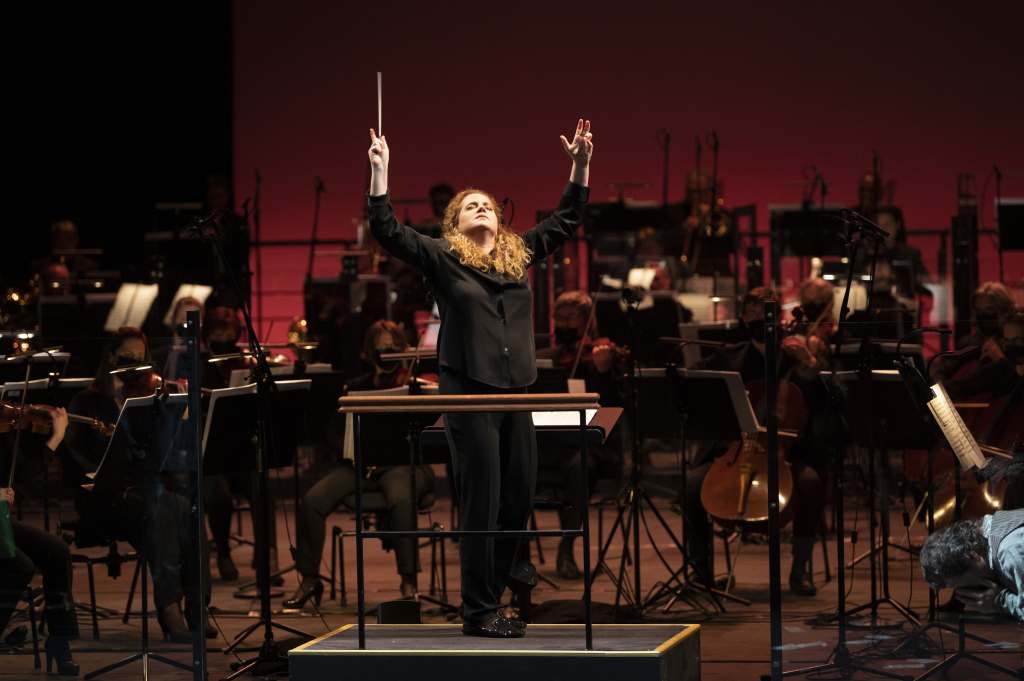
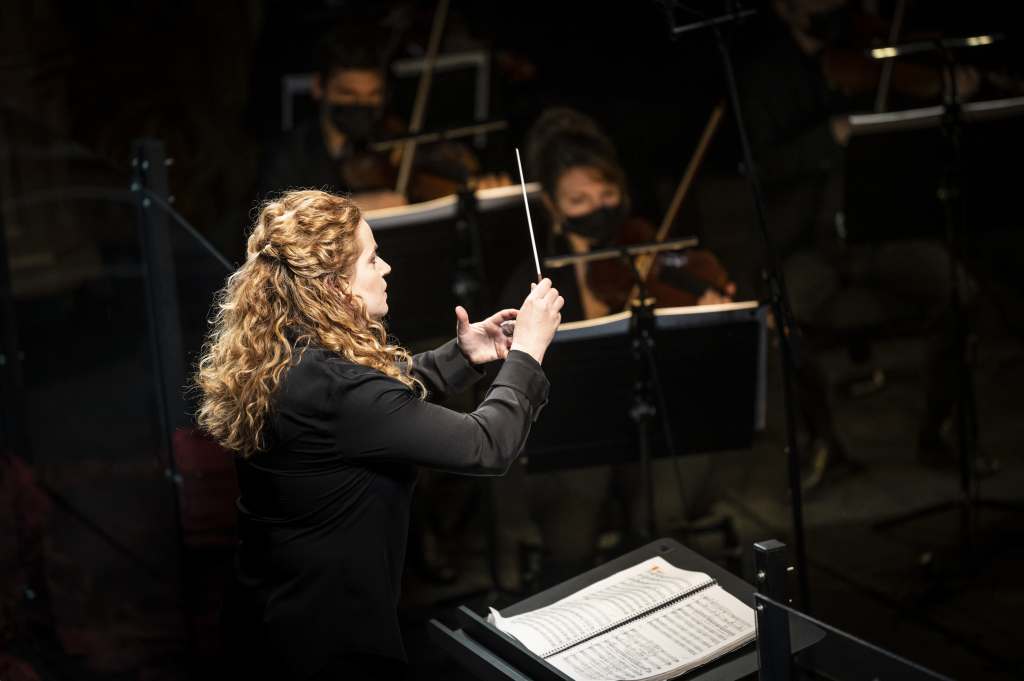
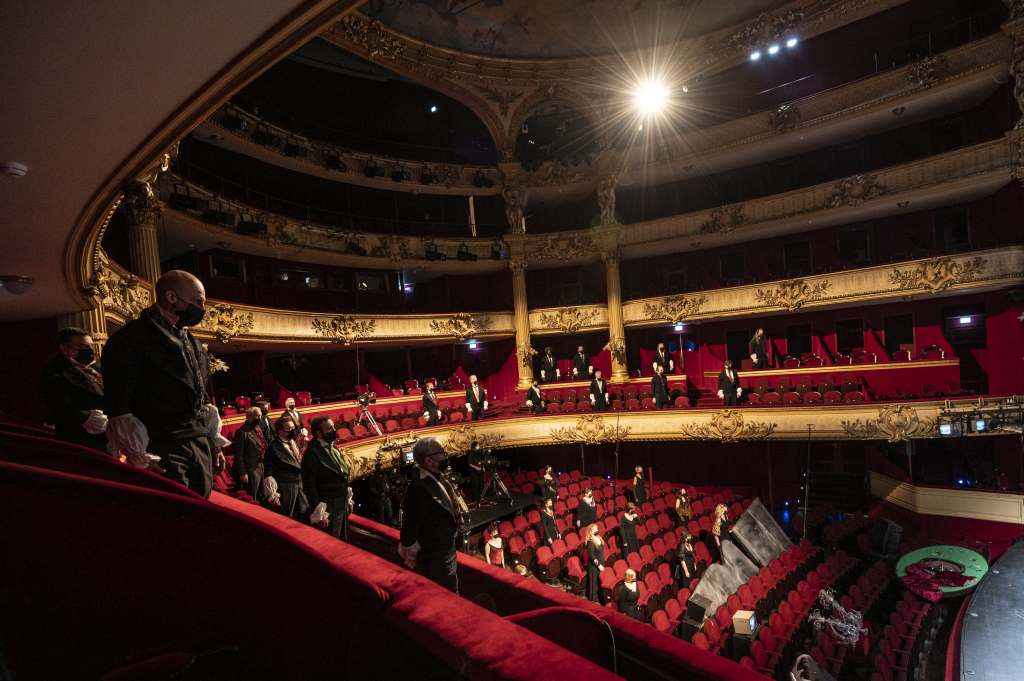
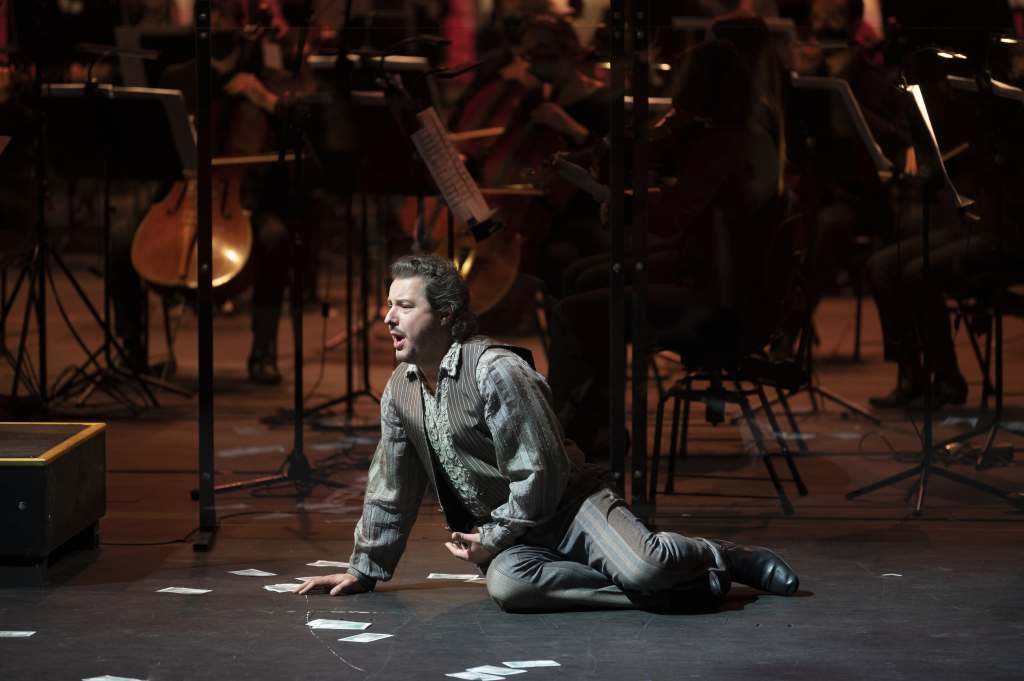
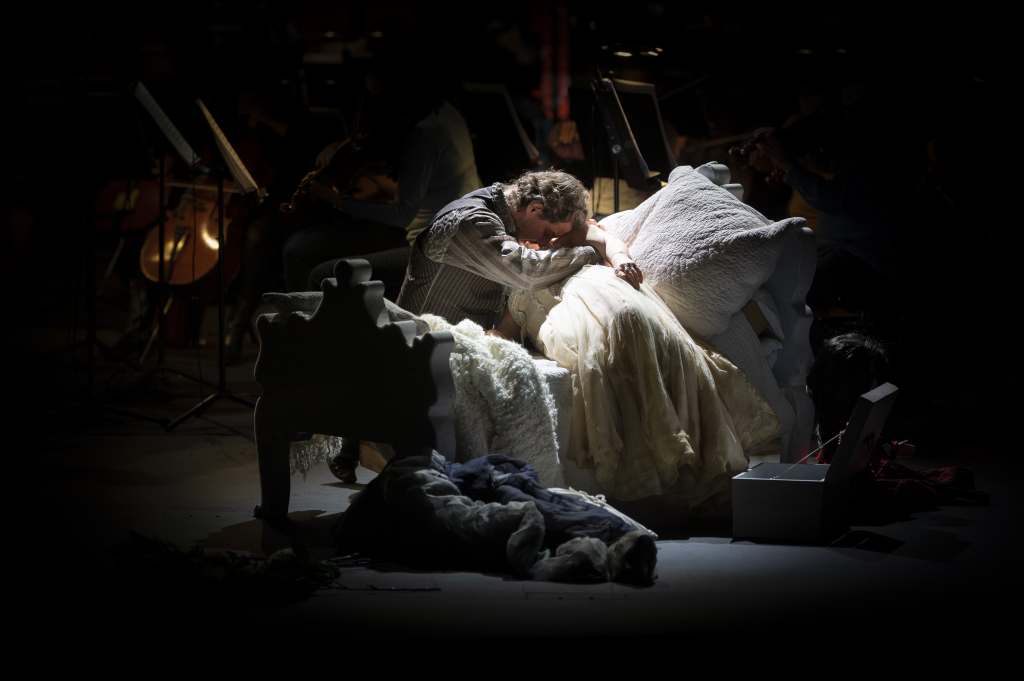
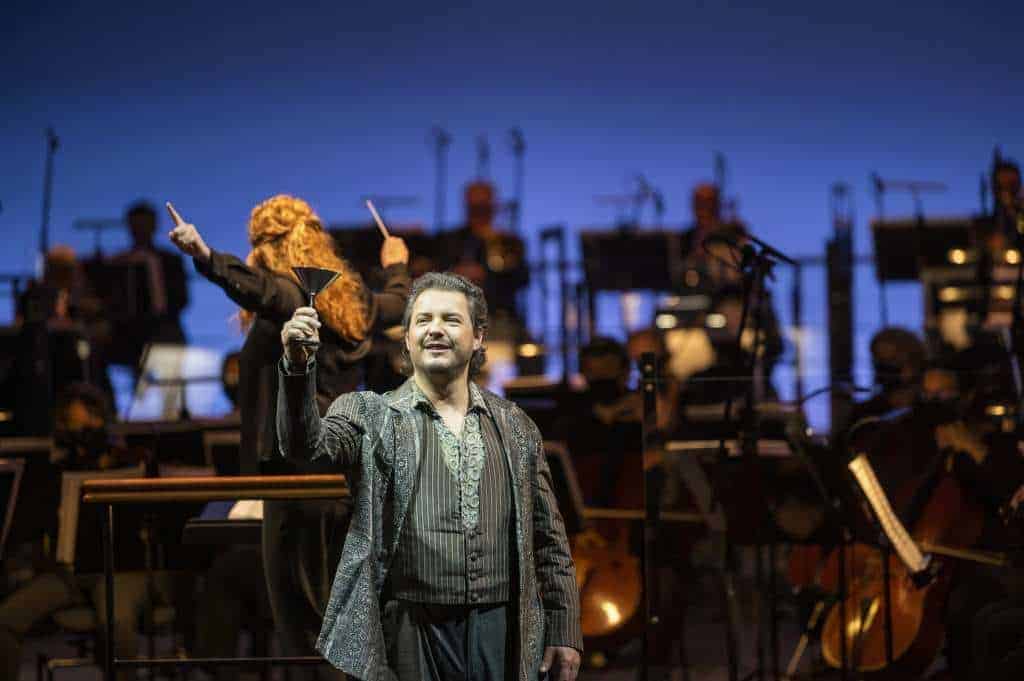
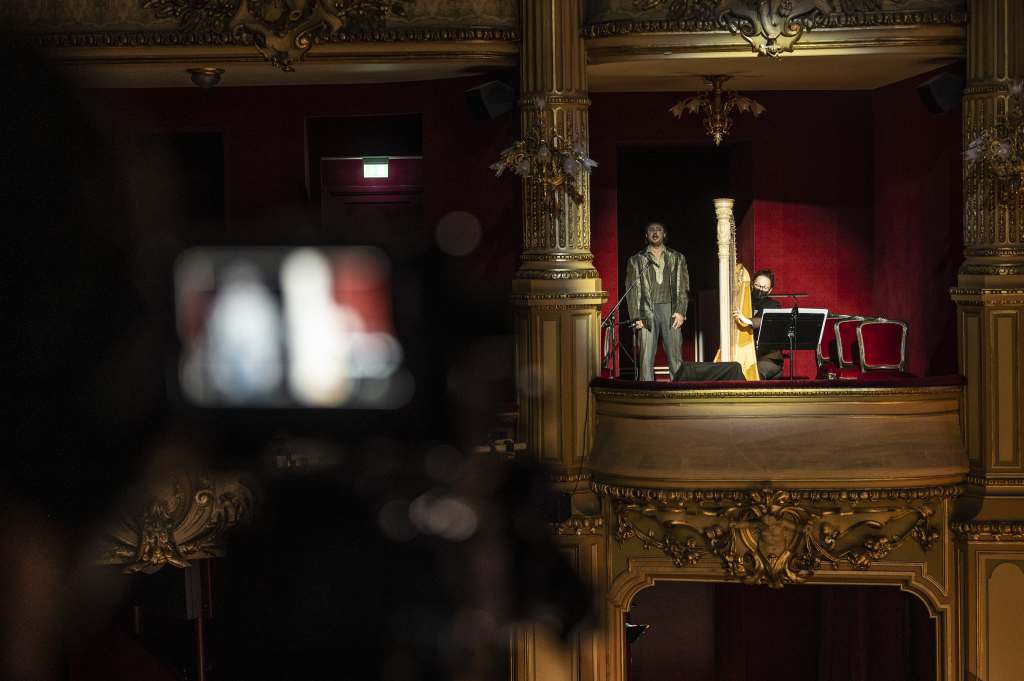
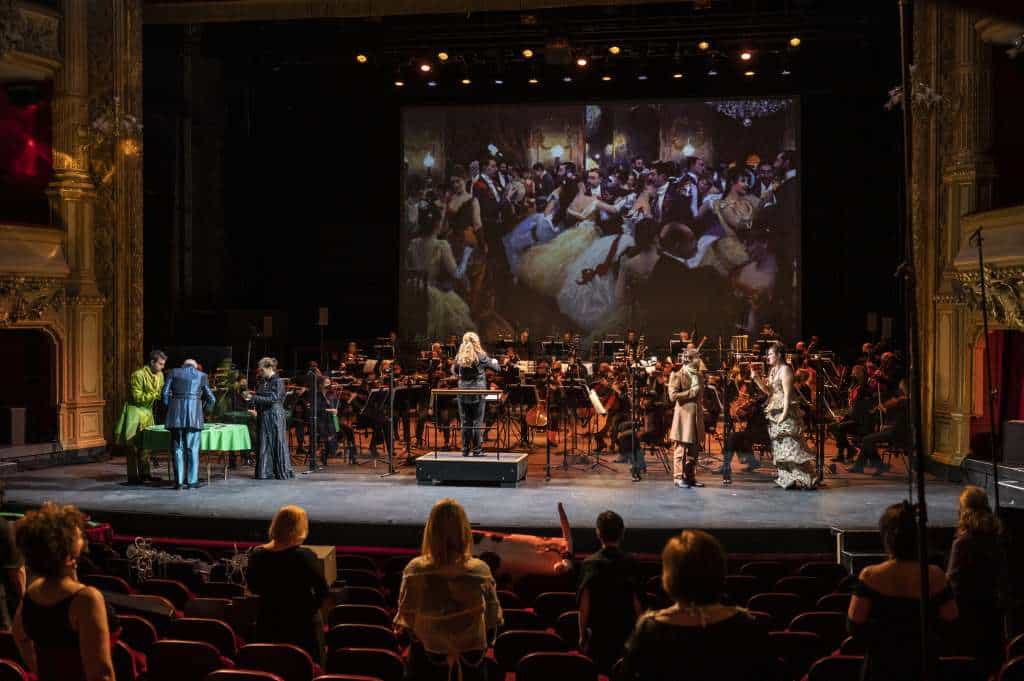
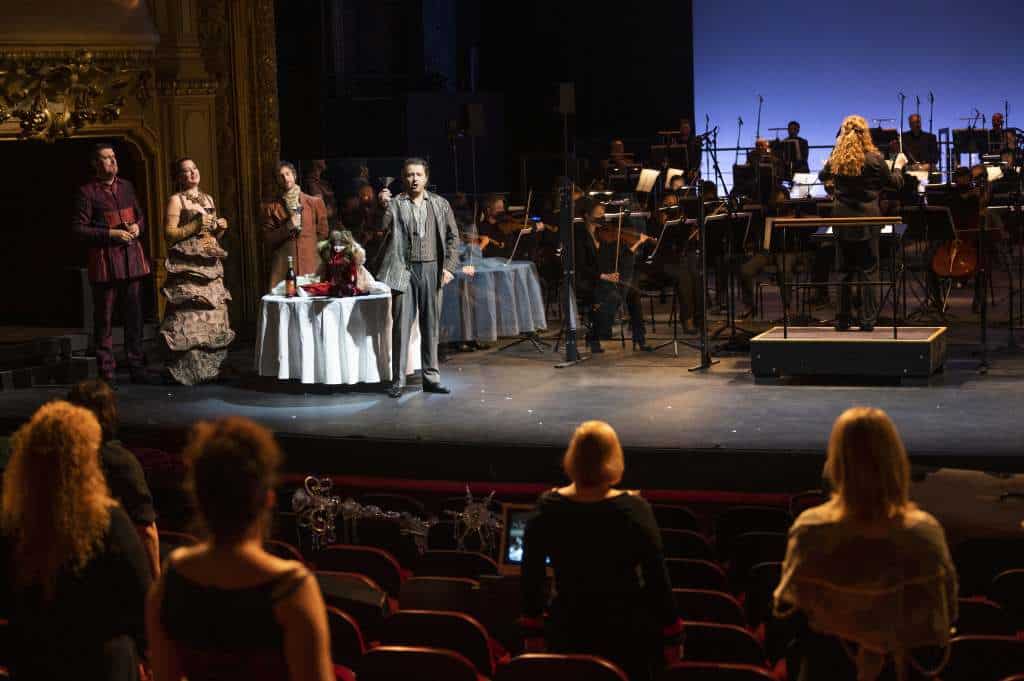
With La Traviata (1853), the compelling love drama by composer Guiseppe Verdi, the Opéra Royal de Wallonie-Liège reopens its – virtual – doors. With this sensitive semi-concert production, the opera house, following the death of director and intendant Stefano Mazzonis di Pralafera, is starting this season anew. With respect for current times, Verdi's opera, conducted by Speranza Scappucci, demonstrates the fragility of love and life.
Around 1853, Verdi experienced a series of successes with Rigoletto (1851), Il Trovatore (1853) and his most intimate opera La Traviata. Based on the novel La Dame aux camélias by Alexandre Dumas fils (junior), La Traviata tells the story of the fallen woman in French high society. Dumas had based the story on his own mistress Marie Duplessis, but for Verdi too this tragedy had a double layer. The soprano Giuseppina Strepponi, the second wife of the Italian composer, had a complicated personal life. Because of this, conservative and Catholic Italian society did not always treat her as a "full" and "pure" woman. Nevertheless, the love between Verdi and Strepponi lasted long after her death.
The Fallen Madonna
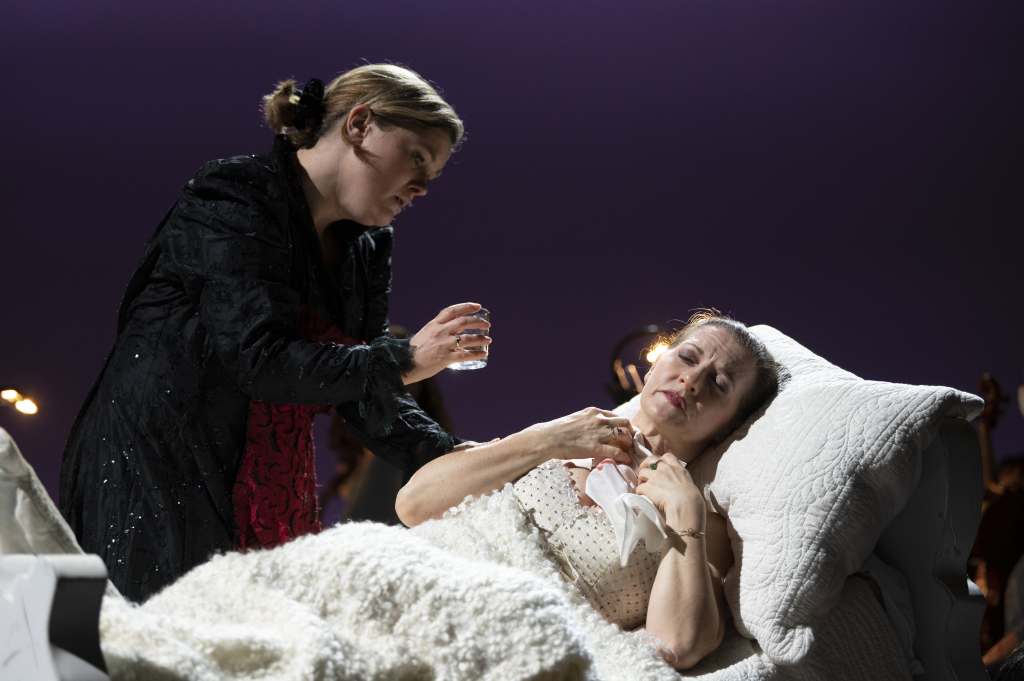
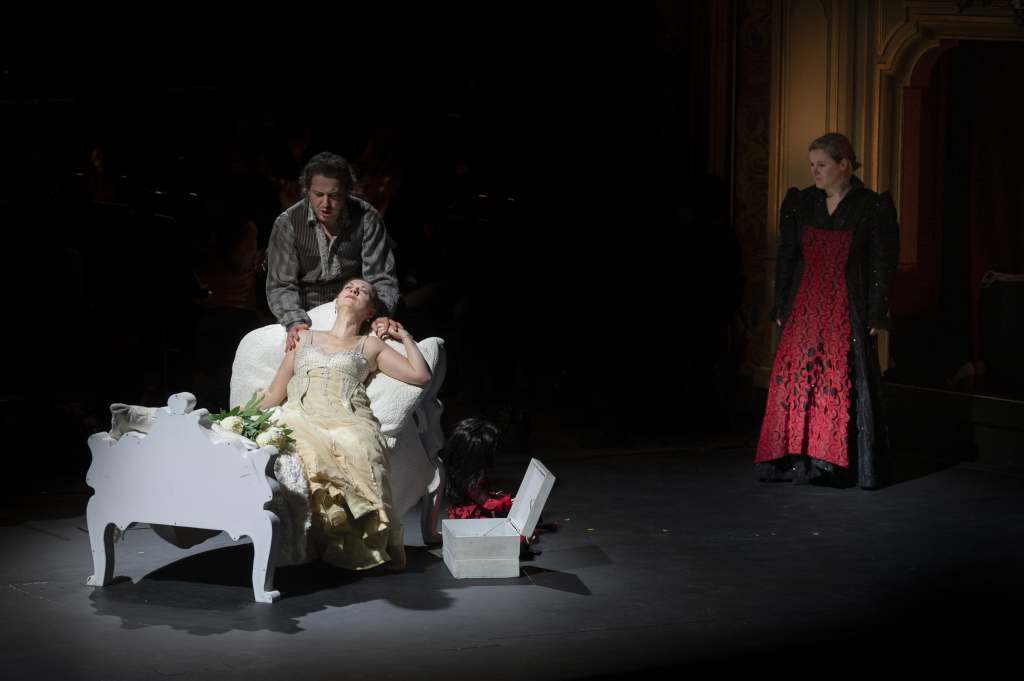
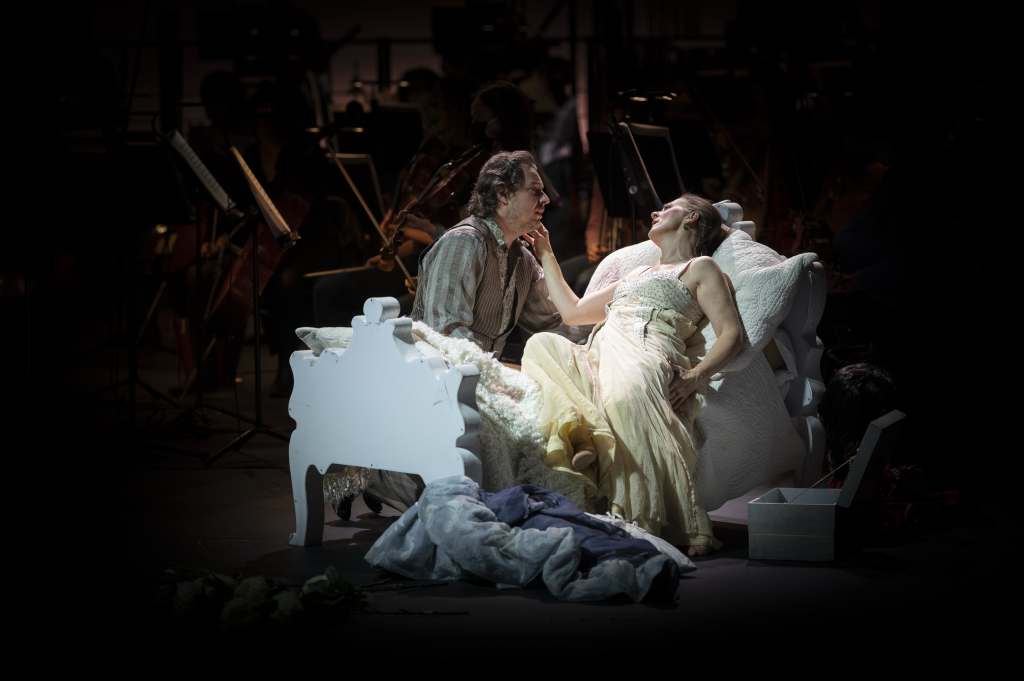
La Traviata shows how social appearance and true love sometimes lie far apart. Violetta Valéry, the protagonist of the story, is sick and thus a victim of fate at the beginning of the opera. As a courtesan, she seems to know her place in society throughout the opera. At first, she steadfastly denies the usefulness and necessity of love. But when she does give in to it, she is not granted this happiness. This loss is expressed in the form of Giorgio Germont, who comes to ask her not to tarnish his family with her scandalous reputation. Her love for his son Alfredo is unwanted. Throughout the opera runs a tragic line, clearly audible in the fragile, demure strings of the Violetta theme, in which no matter what Violetta does, she will never win. Her fate is known, and yet she dies after a final burst of energy, a final grasp at what she really wanted from life: to be happy.
Italian Tragedy
That Verdi with his tragic, sometimes almost autobiographical opera La Traviata struck a sensitive chord in Catholic Italy is well known. It took until the end of the nineteenth century before the opera was allowed to be performed in a realistic setting. The subject was too close, too sensitive for the Italian public.
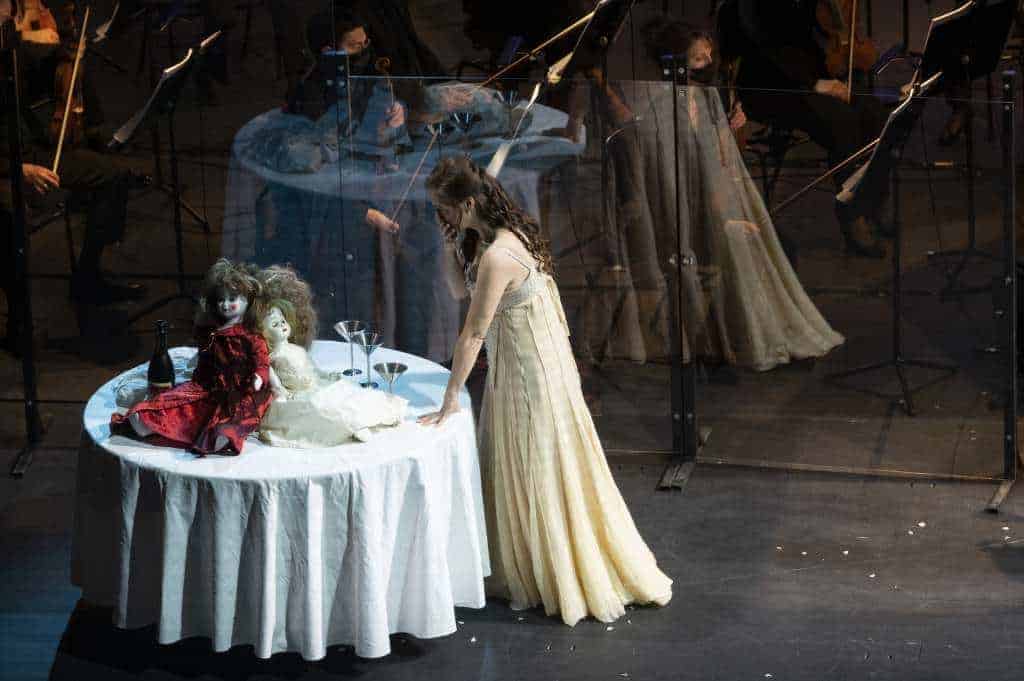
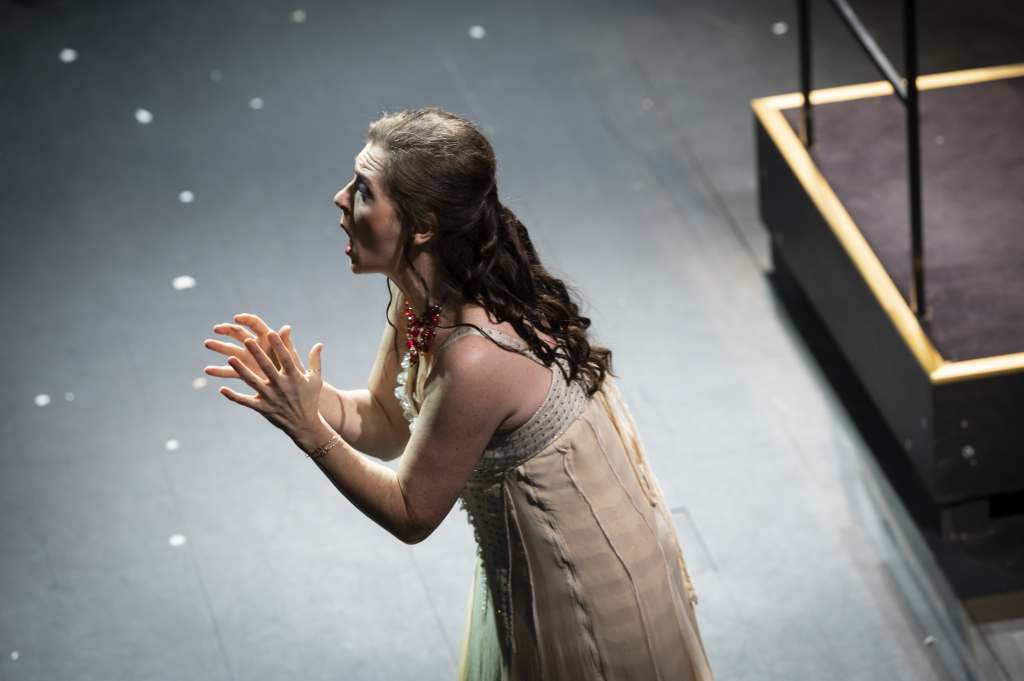
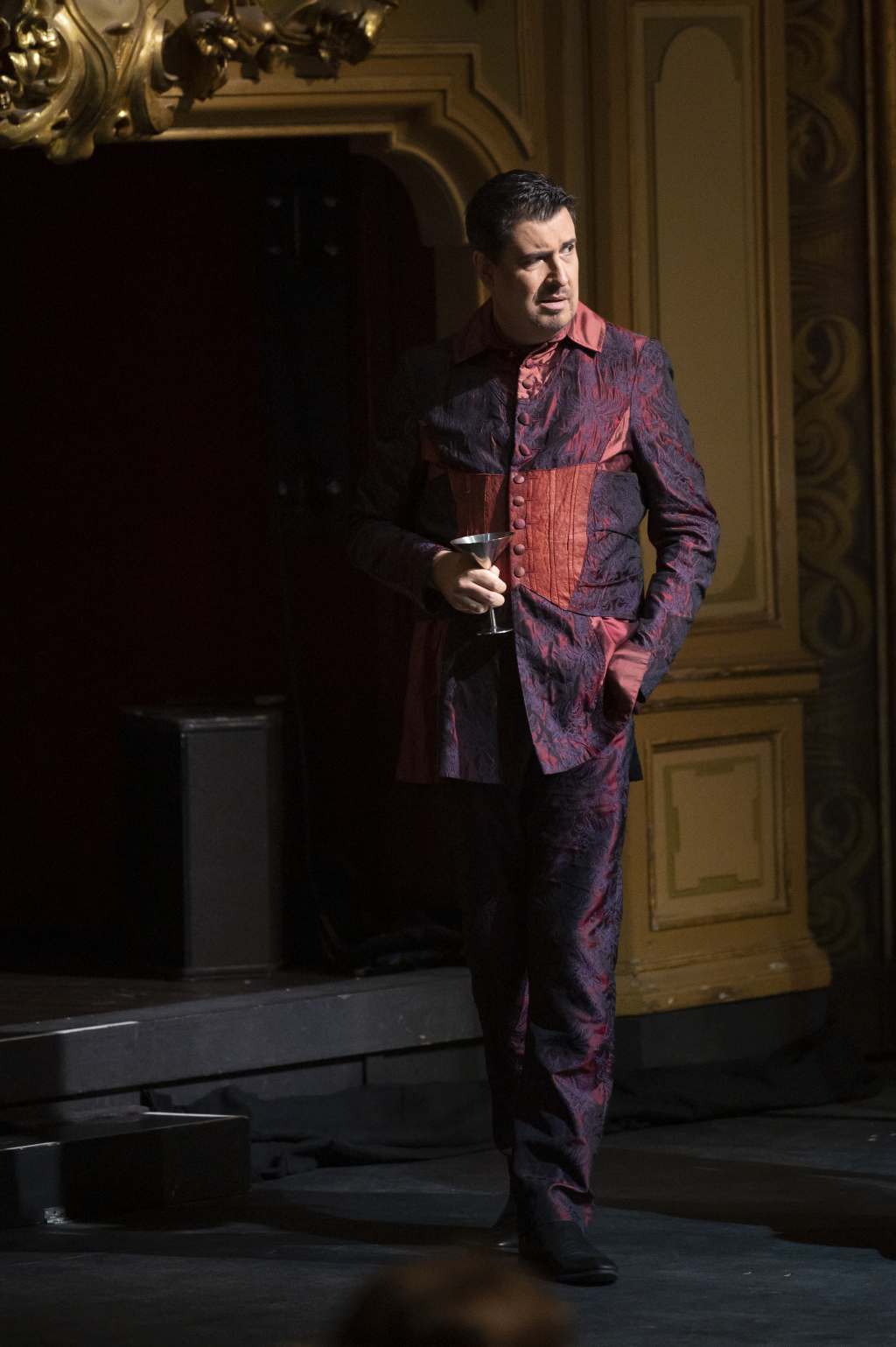
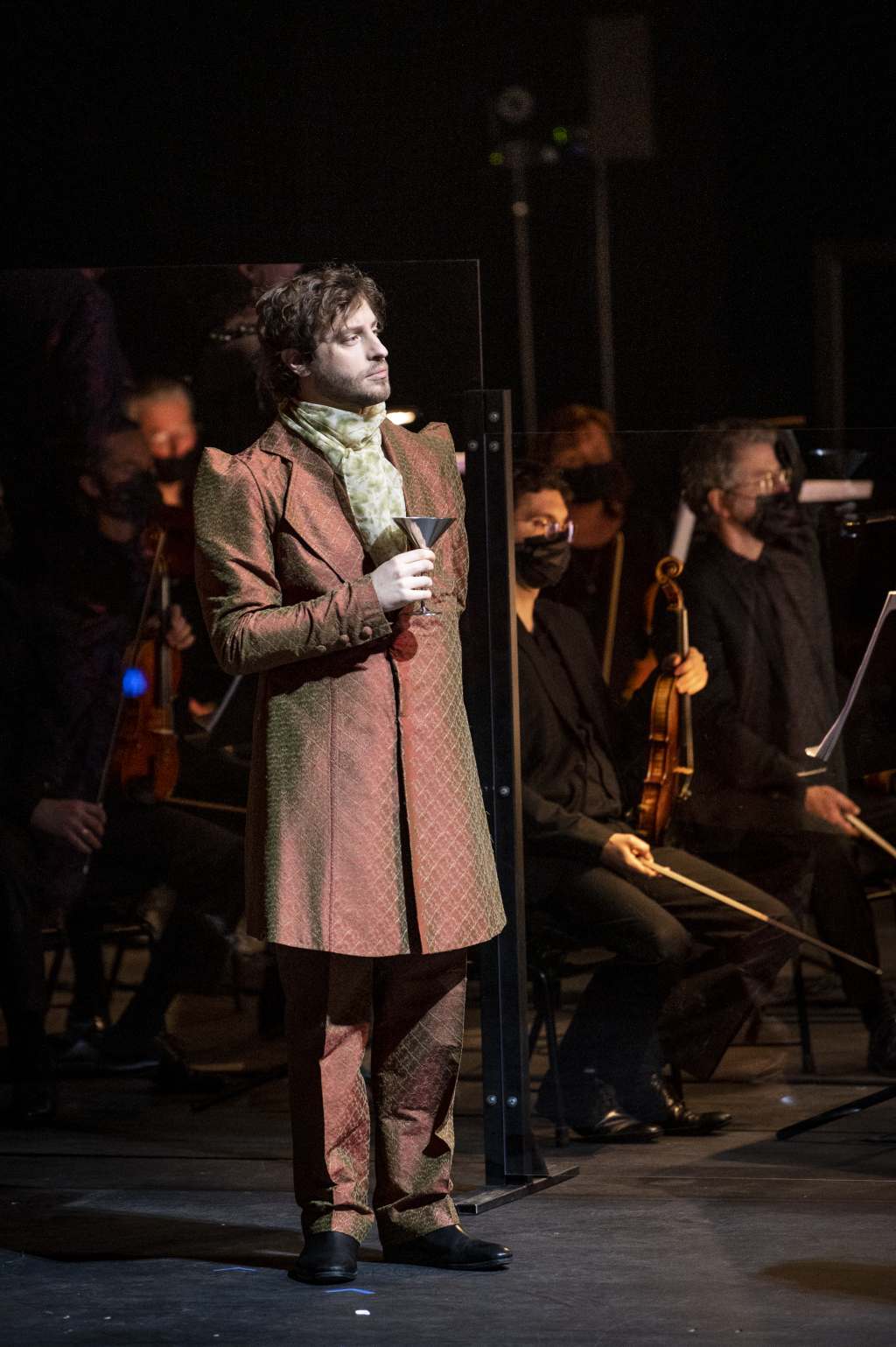
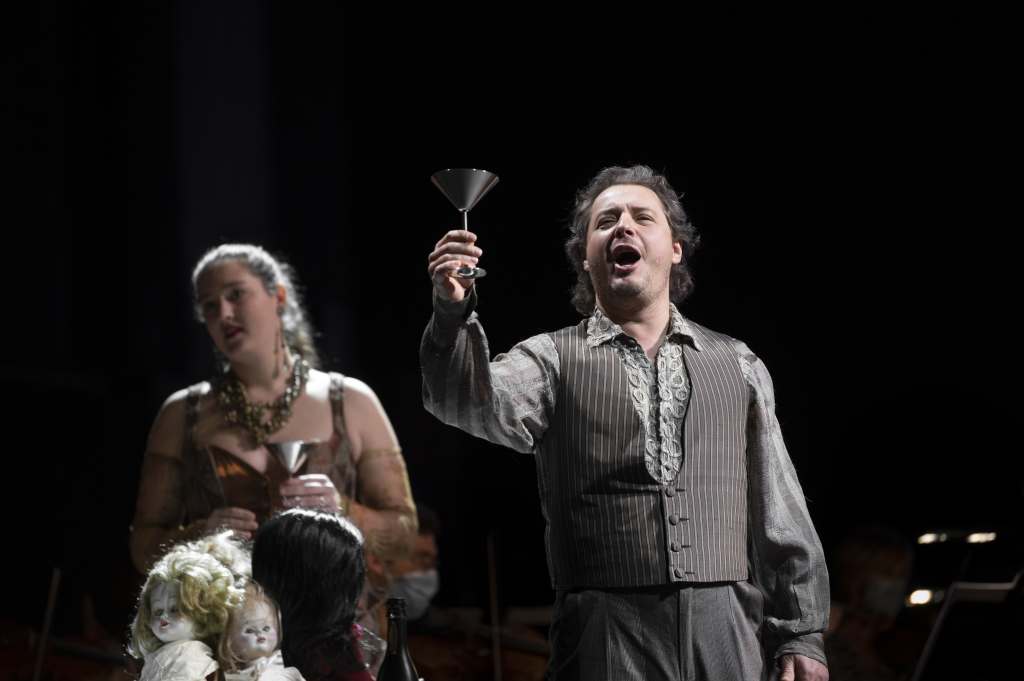
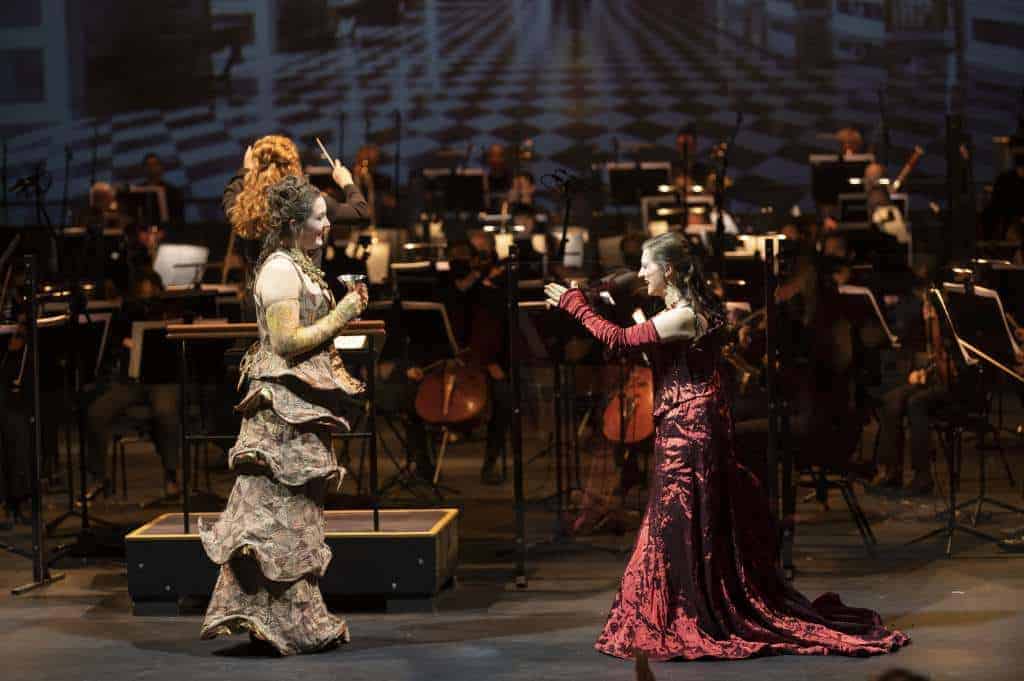
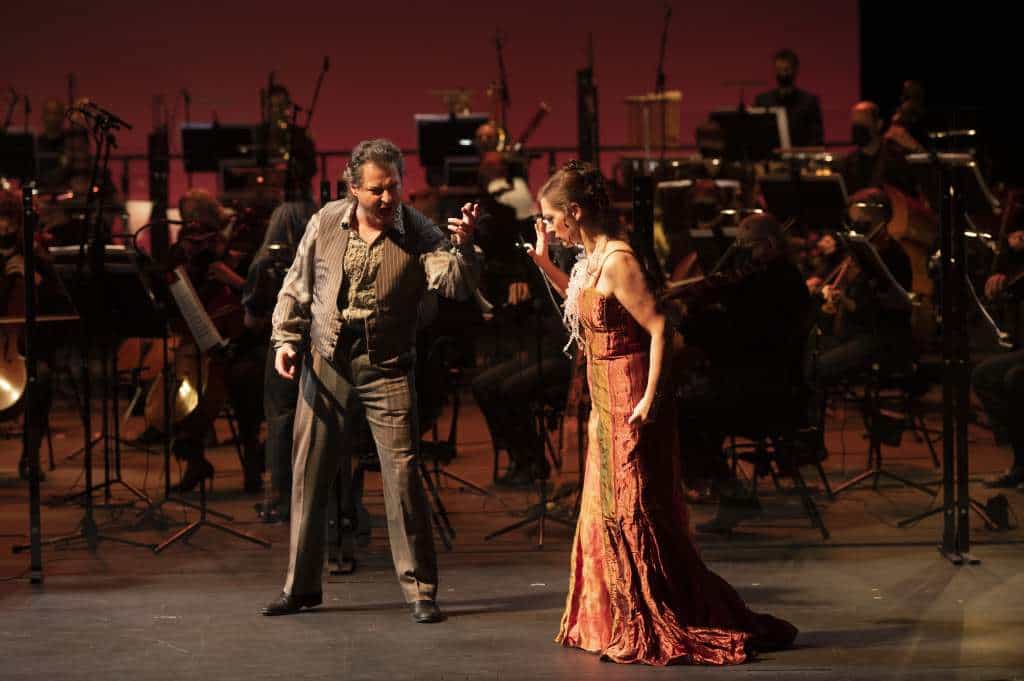
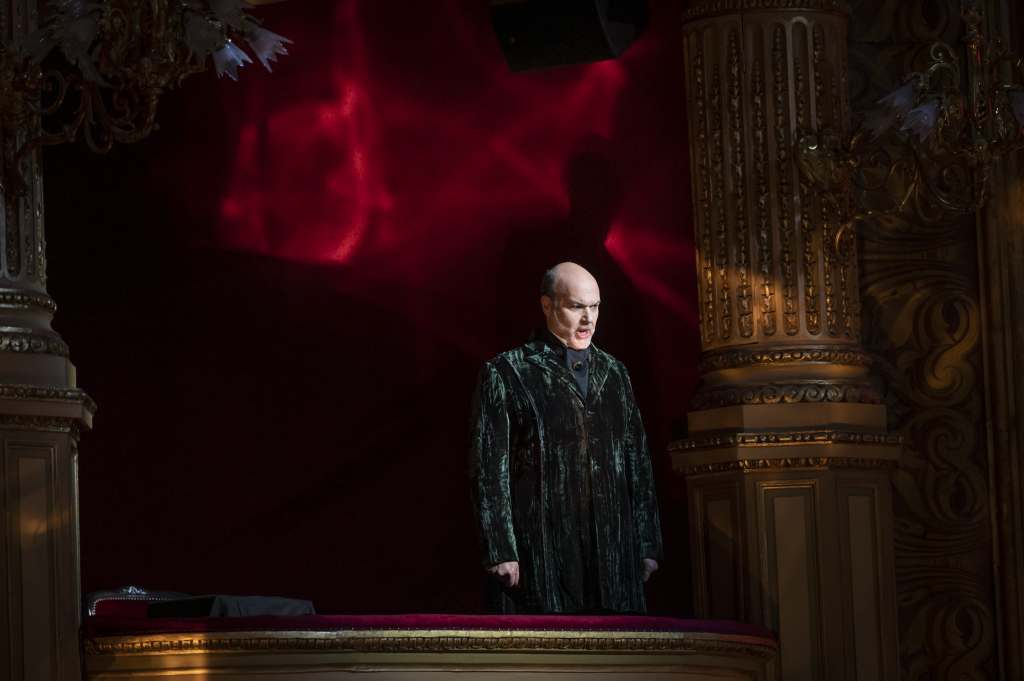
For the production of the Opéra Royal de Wallonie-Liège, it is precisely this sensitivity that has become the focus. No exaggerated glitter and glamour of the Parisian bourgeoisie, but above all a sensitive protagonist. Violetta (coloratura soprano Patrizia Ciofi) has in this production a fragile strength that resembles how soprano Maria Callas always encouraged her colleagues to sing this role: sensitively, almost breaking in her greatest final piece "Addio del passato" (third act). The coloratura is remarkable because it is not only sustained, but also lets the strength of fragility speak throughout the opera production. Violetta is not just high jumps and fast runs, but above all strength in fate. This is clearly audible in Ciofi's performance. The other singers, such as tenor Dmitry Korchak (Alfredo Germont), baritone Giovanni Meoni (Giorgio Germont) and mezzo-soprano Caroline de Mahieu (Flora Bervoix) are certainly not to be outdone. The tragic Germont letter, read by opera director Stefano Mazzonis di Pralafera himself, gives deeper meaning to the performance.
The composition of the cast for this production shows that a good performance of La Traviata does not depend on its spectacular looks – although this opera certainly lends itself to considerable glitter and glamour – but on the right and powerful voices. With a technically strong team, this production brings just that little extra to the well-known arias and choral pieces of what is one of Verdi's most famous operas.
With La Traviata, the Opéra Royal de Wallonie-Liège presents a classical opera in its purest form as a new start. The performance reminds the audience not only of the past, but also of the future. There is ultimately nothing as timely as the sensitivity of life and love.
- WHAT: Guiseppe Verdi's La Traviata (1853)
- WHO: Orchestra and choir of the Opéra Royal de Wallonie-Liège, conductor Speranza Scappucci, director Gianni Santucci, coloratura soprano Patrizia Ciofi (Violetta), tenor Dmitry Korchak (Alfredo Germont), baritone Giovanni Meoni (Giorgio Germont), mezzo-soprano Caroline de Mahieu (Flora Bervoix) and soloists of the Opéra de Wallonie-Liège
- WHERE: Opéra Royal de Wallonie-Liège
- WHEN: From 8 April to 18 April 2021 via video on demand
- PRODUCTION: Opéra Royal de Wallonie-Liège, seen 8 April 2021
- PHOTOS: © Opéra Royal de Wallonie-Liège