


The ukulele has a rich history and is played in various musical styles and genres. Yet Giovanni Albini manages to surprise. The range of sounds he produces on its four strings and one soundbox is remarkable. Fourteen composers, each with a different musical language, can be heard. With this versatile programme, Albini wants to secure a permanent place for the ukulele in the contemporary classical music landscape.
[caption id="attachment_38695" align="alignleft" width="203"] © Beatrice Buzzi[/caption]
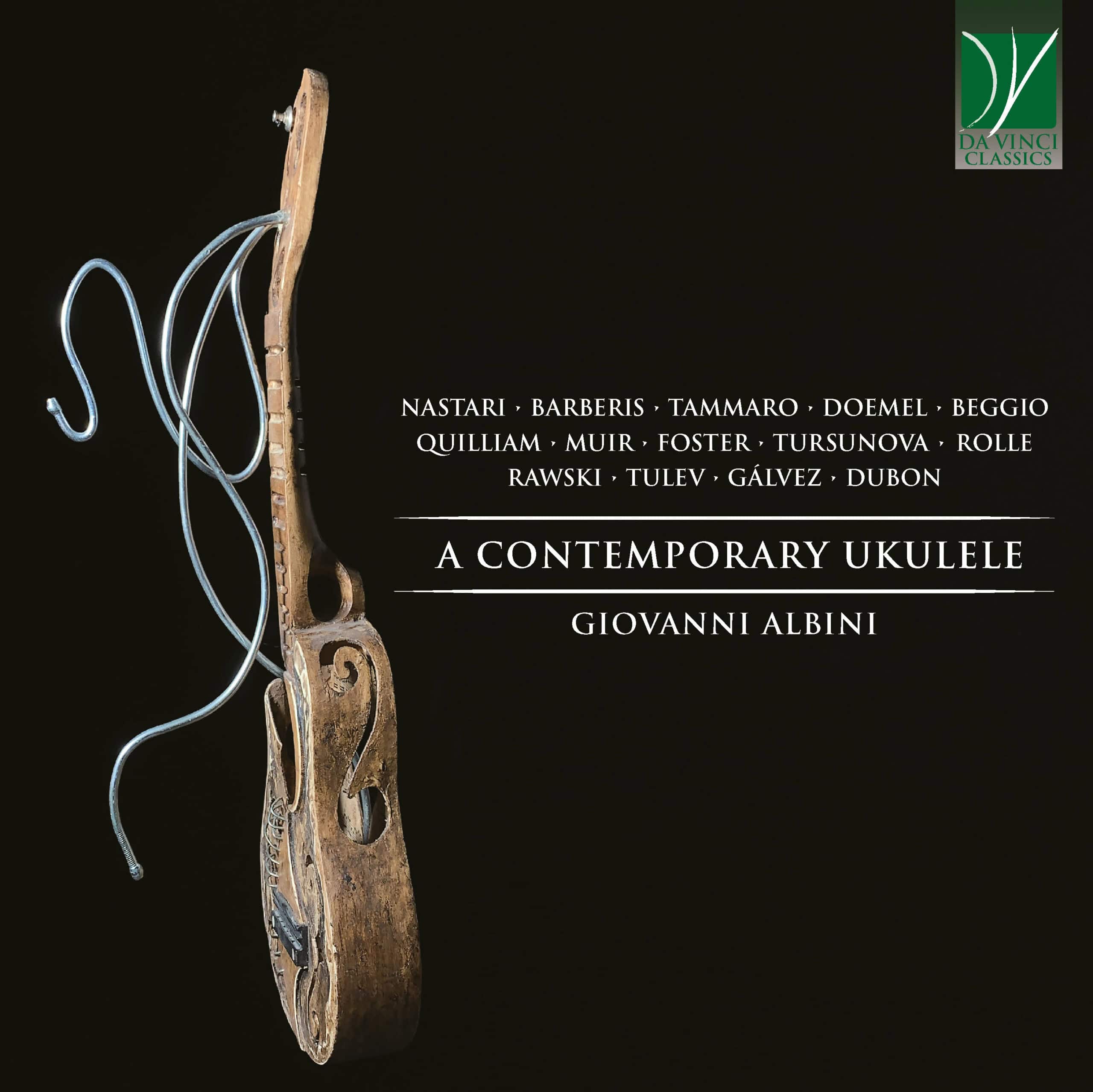
Giovanni Albini (b. 1982) is a composer, ukulele player, music theorist and professor at the "Antonio Vivaldi" Conservatory in Alessandria (Italy). He is a ukulele player who focuses on the modern and classical repertoire. He commissions and performs new contemporary classical music written for the ukulele, and transcribes classical and renowned contemporary and twentieth-century scores for the ukulele. With his latest CD A Contemporary Ukulele, he explores the newest repertoire for the ukulele.
The red thread running through the programme is the dialogue with existing music and the classical music tradition. Dies Rainbow [track 01] by Fabrizio Nastari (b. 1990), with which the CD opens, is, like its title, a fusion of two different musical worlds. On the one hand, the ukulele classic Somewhere over the Rainbow forms one of the two main motifs. Opposite it stands the age-old Gregorian melody of the Dies Irae as the second motif. The result is playful, ironic and technically demanding.
Besides musical links, the use of electronics is a second important element on this CD. In compositions such as Preludio Variato [track 02] by Alberto Barberis (b. 1988), the sound of the ukulele is reinvented through web app software (live electronics). Everything revolves around timbre development. This search for a new identity leads to a post-rock sound cast in a free musical form.
In Obscure Particles [track 05] by Andrea Beggio (b. 1985), electronics are used to escape the nickname of "pocket instrument". This composition does not use live electronics but pre-recorded fragments. Rather than traditional plucking on the scordatura strings, other sound elements of the instrument are explored through extended techniques. The recorded tape fragments serve as triggers for musical exploration. The boundaries of what is possible are sought out. It makes one want to see which actions produce which sound effects.
Such an exploration with more traditional sounds can be heard in Milan, Miseremembered [track 11] by Frederick Rawski (b. 19??). Echoes of a 16th-century pavane by the Spanish lutenist and composer Luis de Milán (c. 1500–c. 1561) resound. The word echoes may be taken literally in this composition, as a digital delay doubles the ukulele playing. The traditional pavane rhythm is fragmented and the overall musical picture broken. The title "misremembered" is perfectly chosen.
"Besides the intrinsic musical value […] there is another important performance choice. Although each piece was written for the ukulele, Albini chose many different ukuleles, depending on each piece, selecting a particular size and tessitura (soprano, concert, tenor, etc.) in accordance with both the technical and expressive needs of the score," wrote Giovanni Cestino.
This CD thus showcases not only the stylistic musical possibilities but also the timbre diversity of the members of the ukulele family. In doing so, Giovanni Albini succeeds in illuminating the various aspects of the ukulele and puts an end to the unjust nickname "pocket instrument".
3.6/5
- WHO: Giovanni Albini [ukulele]
- WHAT: A Contemporary Ukulele
- RELEASES: Da Vinci Classics (7.46160911472)
- ORDER: JPC