


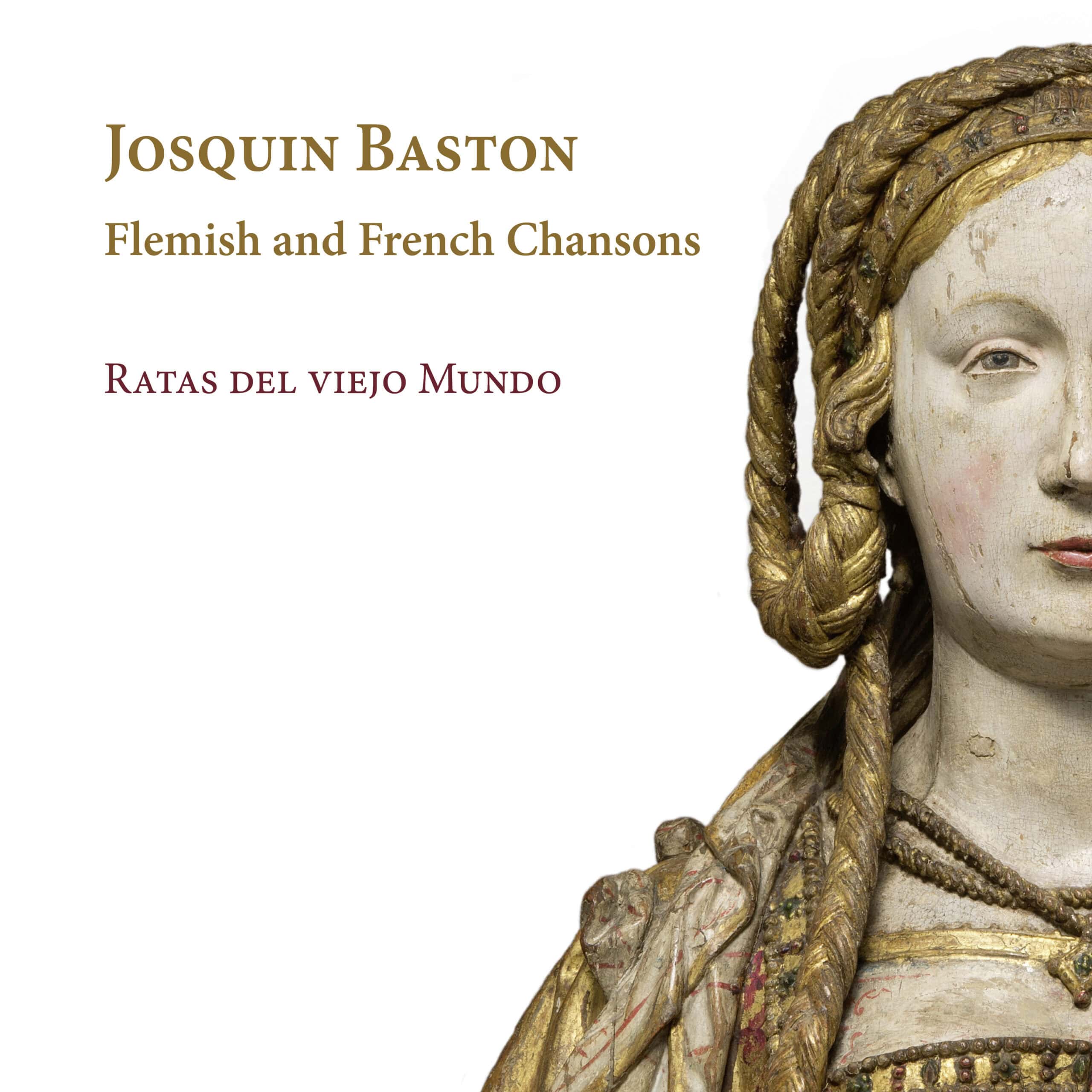
Josquin Baston
Flemish and French Chansons
Ratas del viejo Mundo
1 CD Ramée
The forgotten polyphonist Josquin Baston is being rediscovered. Little is known about the composer's life. A mysterious veil hangs over his name. Baston's oeuvre is characterized by charm, quality and expressiveness. Floris De Rycker and his ensemble Ratas del viejo Mundo bring with their CD 'Baston: Flemish and French Chansons' a tribute to this Franco-Flemish composer. Through his chansons they show how Baston played with the formes fixes of the 16th century. Stylistically, his secular and religious music are almost identical to each other. The key word is almost. The difference lies in the details. Ratas del viejo Mundo has understood this message well. With attention to phrasing and rhythmic accents, they highlight these more subtle differences in a lively manner. (Helena Gaudeus)
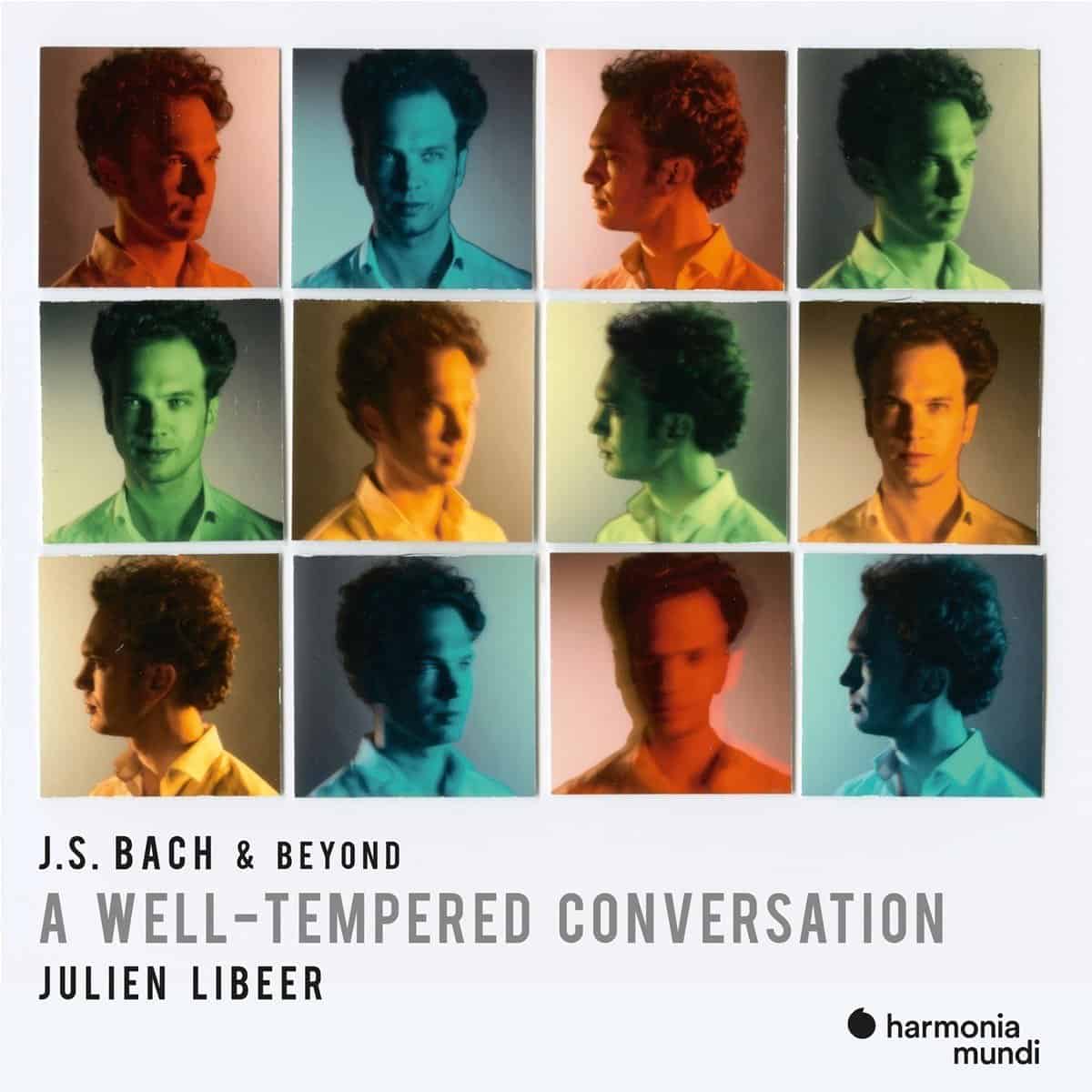
Bach & Beyond
A Well-Tempered Conversation
J.S. Bach, Preludes & Fugues in major keys fromBook 1 of The Well-Tempered Clavier, BWV 846-868 – Works in minor keys by Beethoven, Chopin, Rachmaninov, Fauré, Ravel, Mozart, Brahms, Shostakovich, Busoni, Ligeti, Reger, Schoenberg
Julien Libeer
2 CD Harmonia Mundi
Pianist Julien Libeer departs from Bach's landmark work Das Wohltemperierte Klavier but does not perform the 24 preludes and fugues in all keys integrally. On 'A Well-Tempered Conversation' he pairs the pieces in major keys with a carefully chosen minor key work by a later composer, as a dialogue across the centuries. His choices are very conscientious, ranging from Beethoven and Mozart to Schoenberg and Shostakovich. Libeer succeeds remarkably in making these music-historical connections clearly audible in his performance, by finding a musical language that perfectly suits both Bach's high Baroque as well as all his illustrious successors. (Jasper Croonen)
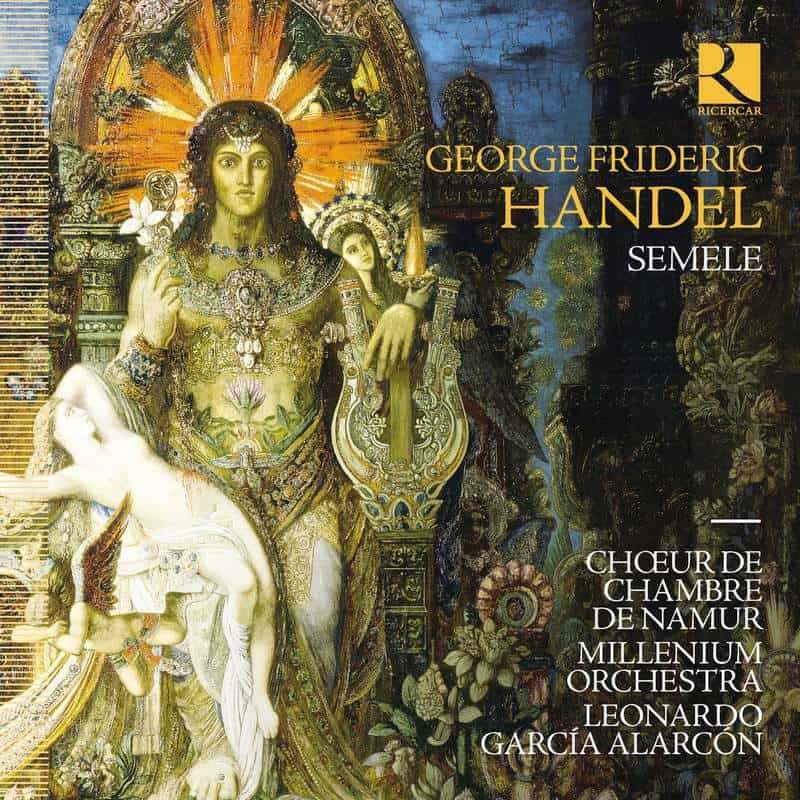
George Frideric Handel
Semele HWV 58
Chœur de chambre de Namur, Millenium Orchestra
Ana Maria Labin, Dara Savinoya, Lawrence Zazzo, Gwendoline Blondeel, Matthew Newlin, Chiara Skerath, Andreas Wolf
Leonardo García Alarcón
3 CD Ricercar
Handel's first English "opera" is now regarded as one of the best creations of the Saxon composer's maturity. Semele - which is actually nothing more than a concert divertimento - displays features of both Italian opera seria and the English tradition of masque and semi-opera. The chorus plays a leading role, bringing the work very close to a secular oratorio. The Chœur de chambre de Namur and the Millenium Orchestra make a great impression with their breathtaking vitality and deliver a flamboyant interpretation in which the richness and theatricality of the musical drama come to full fruition. The soloists are ideal here and perform excellently the emotional and psychological state of the protagonists. Arias and ensembles are both virtuosic and lyrical and display a wide range of humor, amorous tenderness, frustrated desires and tragic jealousy. (Olivier Vrins)
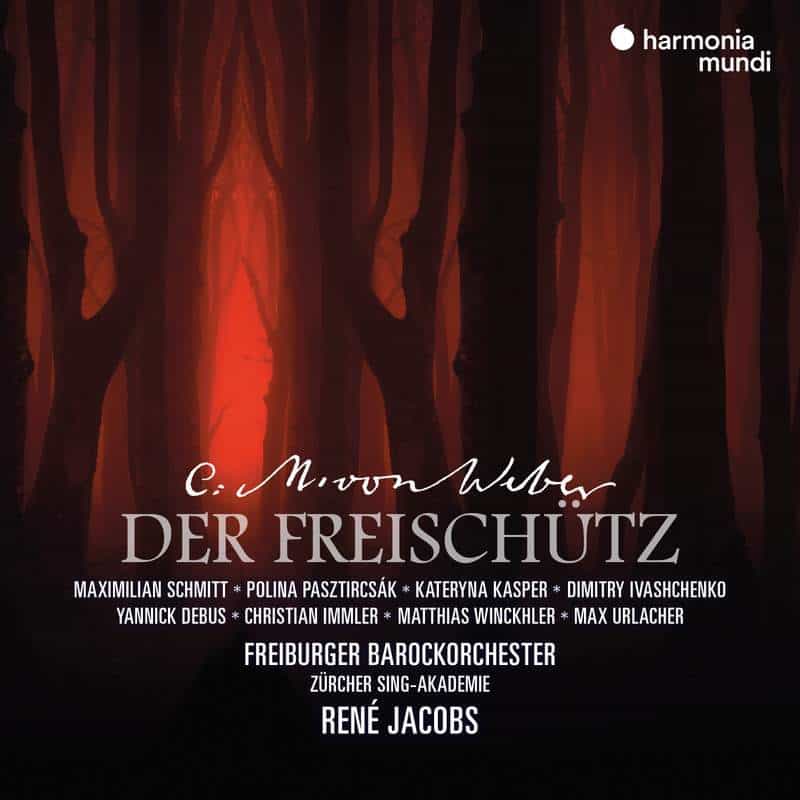
Carl Maria von Weber
Der Freischütz
Christian Immler, Polina Pasztircsák, Kateryna Kasper, Maximilian Schmitt, Yannick Debus, Matthias Winckhler, Max Urlacher, Dimitry Ivashchenko
Zürcher Sing-Akademie, Freiburger Barockorchester
René Jacobs
2 CD Harmonia Mundi
René Jacobs takes a fresh look at Weber's fantastic Singspiel (with the "prologue" that the composer deleted at the request of his wife just before the premiere) and turns it into a gripping audio play. The language of this Freischütz is somewhat modernized, the original dialogues shortened - taking into account the folk tale of the same name by Johann August Apel - the appearance of the Hermit at the beginning of the opera is restored. Jacobs does not have this opening scene - which was never officially set to music, but which was certainly intended to be sung - performed by actors (as many directors have done in the past) nor does he use music "in the style of Weber" - as the conscientious composer Oskar Möricke wrote it. Instead, he uses beautiful harmonies, taking the music of the author of Aufforderung zum Tanz as a starting point, but also drawing elsewhere - such as from Schubert - for Kuno's "ballad". The end result is an audio play in which nothing of the beauty of the original work is lost, but which certainly gains in coherence. And this with the active cooperation of an equally committed and convincing team of singers! (Olivier Vrins)
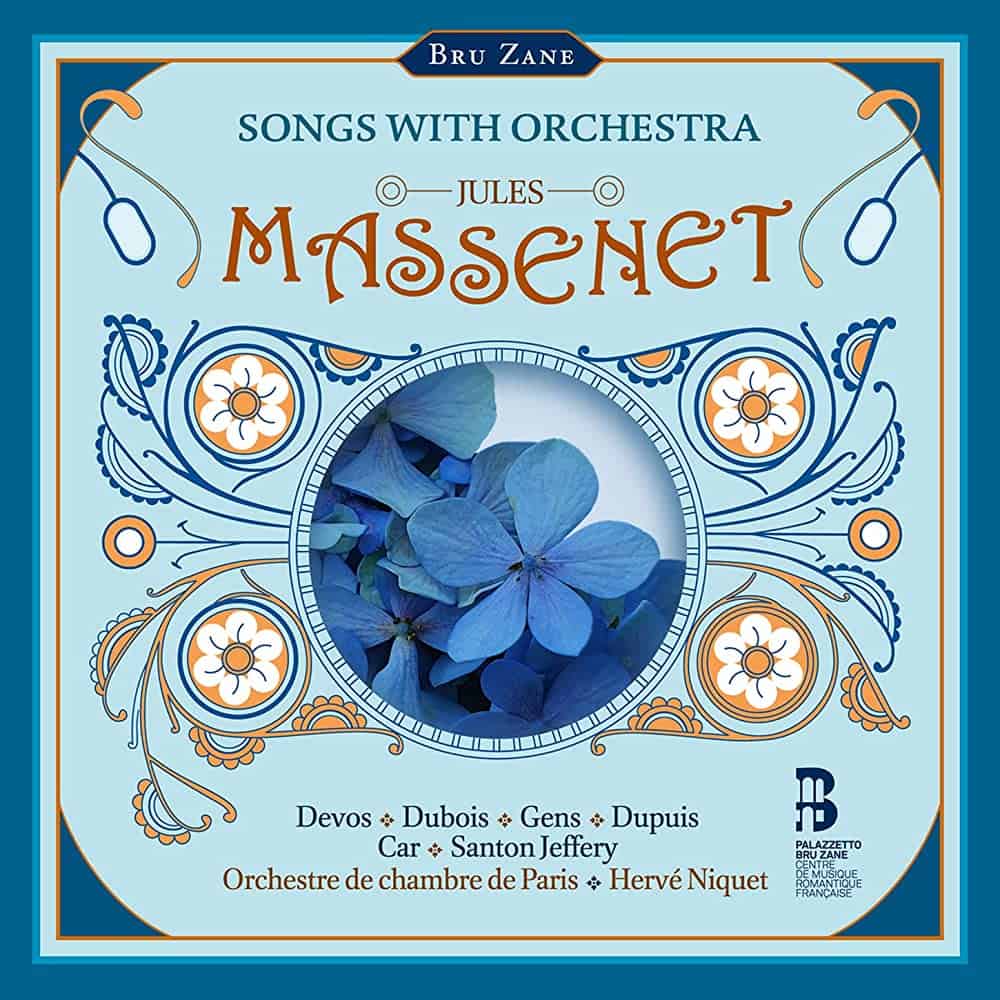
Jules Massenet
Songs with Orchestra
Nicole Car, Jodie Devos, Cyrille Dubois, Etienne Dupuis, Véronique Gens, Chantal Santon Jeffery
Orchestre de chambre de Paris
Hervé Niquet
1 CD Palazzetto Bru Zane
This recording will certainly come as a surprise to those who believe that Massenet could only write sentimental and overly sweet music. There sometimes hangs over these songs with orchestral accompaniment an unmistakable findesiècle perfume, but these subtly orchestrated compositions captivate through elegance and refinement, but sometimes also through humour. The cream of today's French-speaking voices and conductor Hervé Niquet provide a meticulously crafted interpretation. (Patrice Lieberman)

Karol Szymanowski
Preludes op. 1 (Nos. 1, 2, 7 & 8), Masques op. 34, Mazurkas op. 50 (Nos. 13-16), Variations on a Polish Folk Theme op. 10
Krystian Zimerman
1 CD Deutsche Grammophon
When one mentions Polish preludes and mazurkas, one says Frédéric Chopin. Piano icon Krystian Zimerman offers a different starting point with his album, and directs you towards Karol Szymanowski. These piano miniatures are also steeped in folk influences thanks to subtle rhythmic elements and catchy melodies. Yet with Szymanowski, it is primarily Slavic melancholy that shines through. Zimerman masterfully captures the tone of this music with subtle touches, with compelling clarity in the polyphony and with a rubato that yearns with longing. Some of these recordings had been gathering dust for almost thirty years. Fortunately, they have finally been released! (Jasper Croonen)
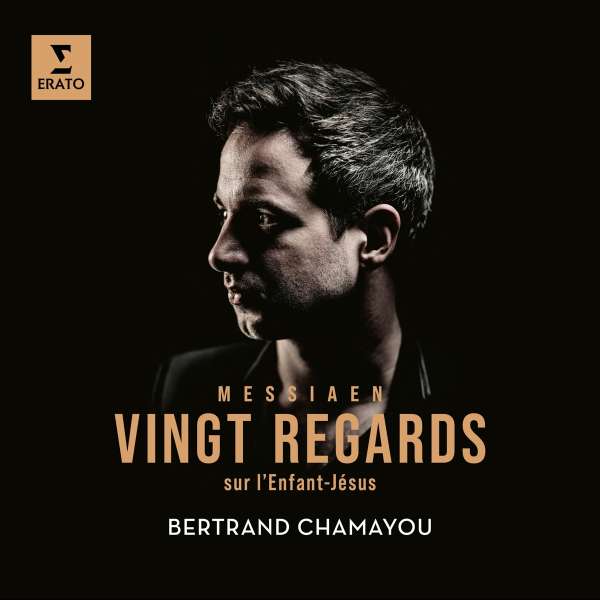
Olivier Messiaen
Vingt Regards sur l'Enfant-Jésus
Bertrand Chamayou
2 CD Erato
Chamayou was only nine years old when he first heard the Vingt Regards, a moving work that echoed within him forever. This recording reveals the consequences of a shock that has lost none of its power in the meantime. As a pianist who always sheds light on the music, Chamayou commits himself completely to this demanding, sharp and gleaming score. He impresses with his infallible taste, his brilliant control of dynamics and endlessly varied touch, transforming this rhythmically incredibly complex music into a stained-glass window worthy of Chagall. Nothing is lost in this extraordinary performance: the piano – silky soft or percussive – becomes an orchestra, the sound recalls the gamelan or birdsong, and this to decipher the "mystical language of love, at once multifaceted, tender, sometimes brutal, with multicoloured arrangements" that the composer invented. Forty years after the version of this work by Yvonne Loriod, also published by Erato at the time, Chamayou provides a new reference recording. (Olivier Vrins)

Isang Yun
Silla – Violin Concerto No. 3 – Chamber Symphony
Sueye Park
Seoul Philharmonic Orchestra
Osmo Vänskä
1 CD BIS
Traditional Korean music, European avant-garde and impressive timbral knowledge: these are the three qualities that perfectly summarize the style of Korean composer Isang Yun (1917-1995). His oeuvre is known for its stylistic difficulties and technical challenges. The many individual lines must sound clear and equal, the abundant ornamentation must be carefully coordinated and tonal nuances are crucial. The album Isang Yun - Three Late Works proves this well enough. The Seoul Philharmonic Orchestra under the direction of Osmo Vänskä performs no fewer than three of Yun's symphonic works. For the violin concerto they are accompanied by Korean violinist Sueye Park. Together they deliver an impressive performance with attention to timbral nuances. (Helena Gaudeus)
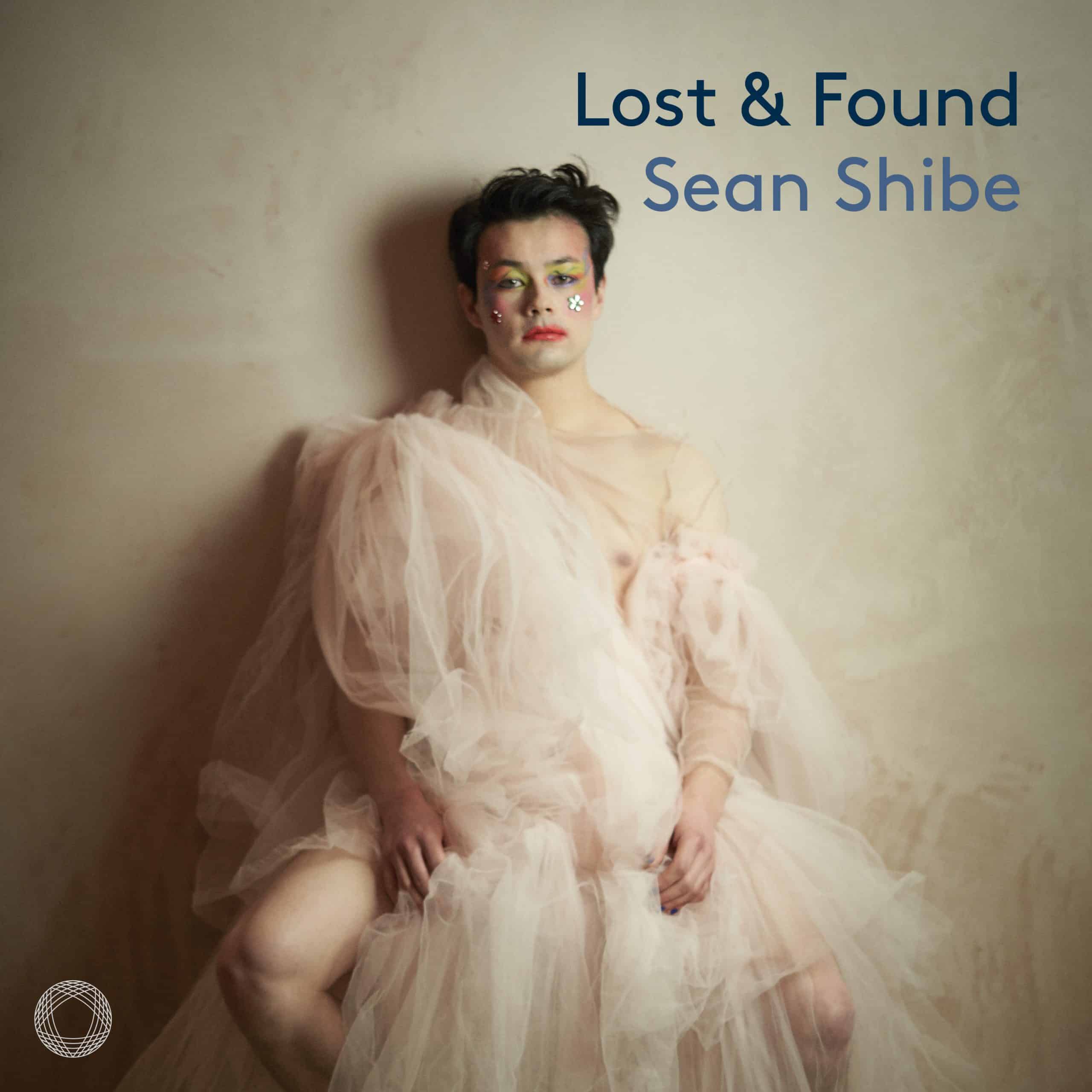
Lost & Found
Hildergard von Bingen, Chick Corea, Julius Eastman, Bill Evans, Shiva Feshareki, Daniel Kidane, Oliver Leith, Olivier Messiaen, Meredith Monk, Moondog
Sean Shibe
1 CD Pentatone
Sean Shibe is a unique figure, not pinned down to any style or tradition. On Lost & Found he rearranges music by, among others, Hildegard von Bingen, Chick Corea, Moondog and Olivier Messiaen for his electric Fender guitar. The result is a play with the subtlety of electric sound, a fresh breath through centuries-old repertoire. His playing is extremely soothing, unexpectedly fragile for this instrument. Enchanting without falling into clichés, because just when Shibe seems to cross the boundary into ambient in that quietness, he jolts the listener awake with well-placed pep, virtuosic fingerpicking and grating distortion. (Jasper Croonen)
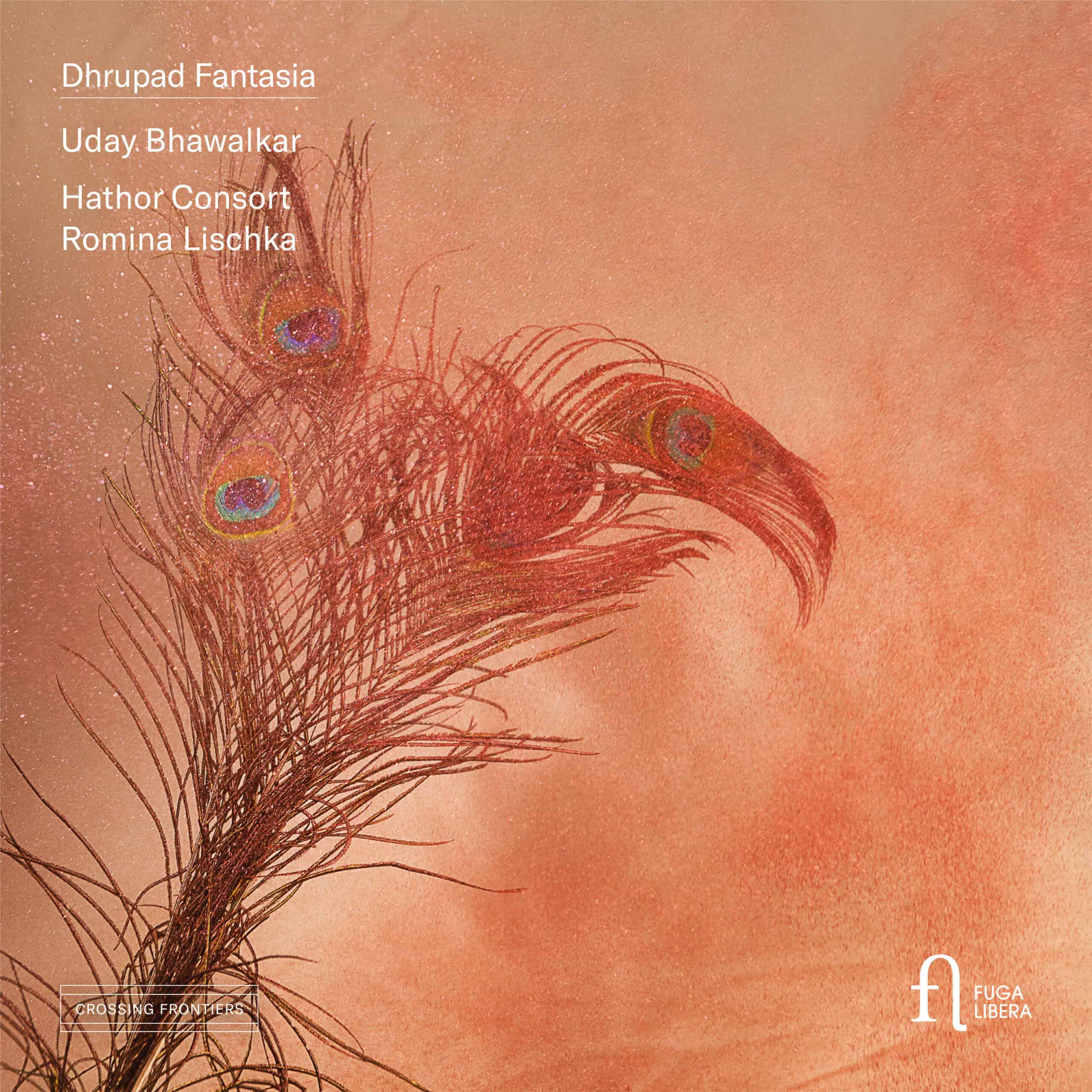
Dhrupad Fantasia
Uday Bhawalkar, John Dowland, Tobias Hume, Romina Lischka, Robert Parsons
Uday Bhawalkar
Romina Lischka
Hathor Consort
Romina Lischka
1 CD Fuga Libera
In this extraordinary recital, viola da gamba virtuoso Romina Lischka and colleagues together with dhrupad singer Uday Bhawalkar (who accompanies himself on tanpura) and percussionist Pratap Awad (pakhawaj) bring two at first sight incompatible music systems together: one western, baroque and harmonic; the second Indian, timeless and rhythmic. And it works! Thanks to the resonance of the tanpura, the subtle embroidery of the pakhawaj, the subtle adjustment of certain pieces whereby one gets the impression that dissonances are 'resolved', and finally thanks to Romina Lischka's familiarity with the Indian musical language (she also masters the technique of Indian singing...), this recording offers alongside repertoire pieces also moments of newly invented, lively and rich music. (Martine D. Mergeay)
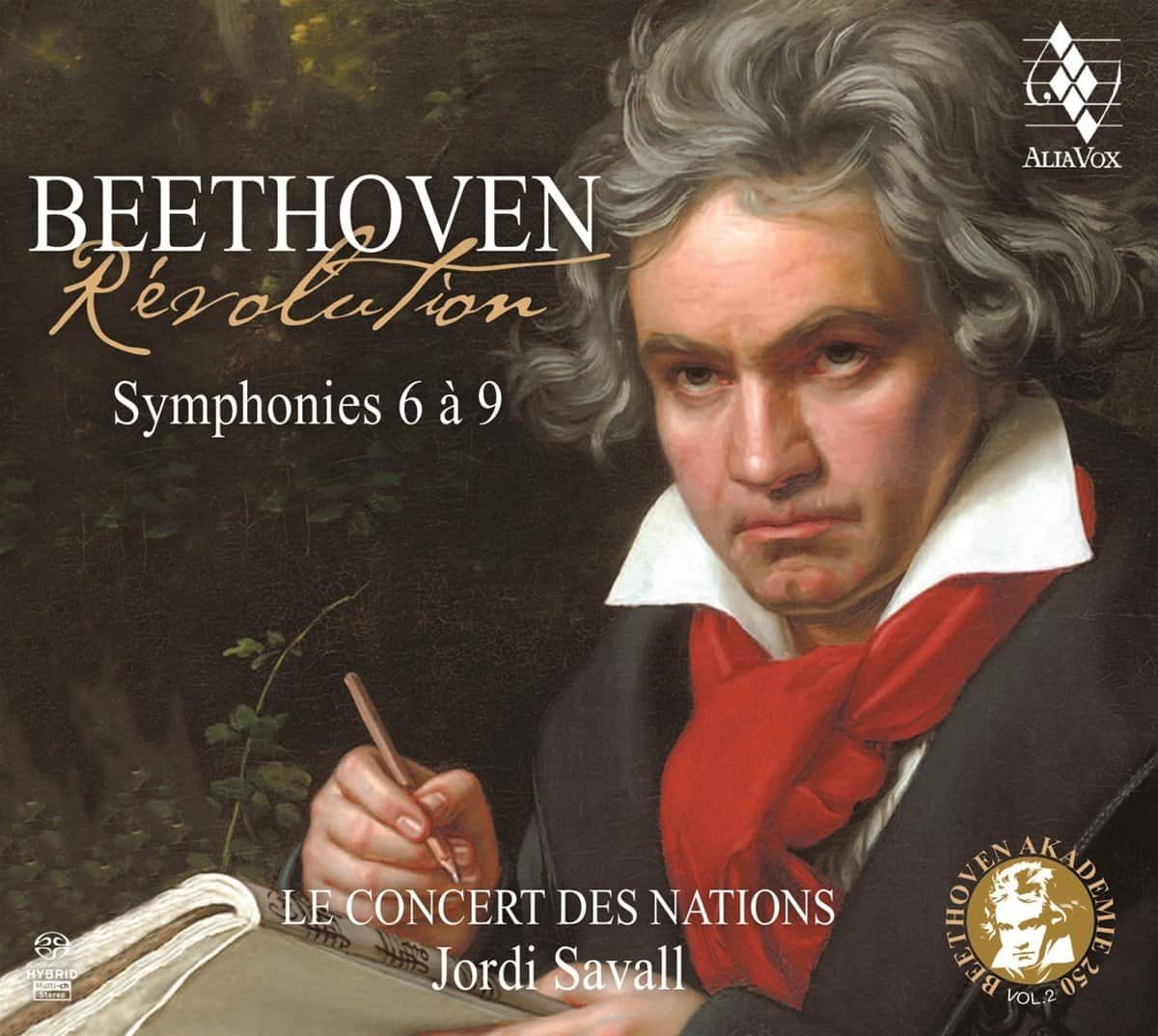
Ludwig van Beethoven
Symphonies 6 to 9
Sara Gouzy, Laila Salome Fischer, Mingjie Lei, Manuel Walser
Le Concert des Nations, La Capella Nacional de Catalunya
Jordi Savall
2 CD Alia Vox
SPECIAL PRIZE: Coup de cœur
Is there still need for new recordings of Beethoven's symphonies? If they are characterized by so much intelligence, humanity, humility and quiet passion entirely in the service of ever new and surprising music, the answer can only be a resounding 'yes'. Savall and Le Concert des Nations opt for an authentic approach but it is not their intention to prove themselves right at all costs. The result is an extremely convincing version of these timeless works. (Patrice Lieberman)
César Franck
Complete Orchestral Works
Orchestre Philharmonique Royal de Liège
Christian Arming, Pierre Bleuse, Gergely Madaras, Hervé Niquet, François-Xavier Roth
Florian Noack, Cédric Tiberghien
Chœur de Radio France, Lionel Show
4 CD Fuga Libera
BARGAIN PRIZE
For an excellent Belgian production
Among the numerous integrals released on the occasion of the bicentenary of César Franck's birth, this edition devoted to his orchestral work stands out both through the chronological presentation of his oeuvre - Franck was barely twelve years old when he penned his two series of Variations brillantes! - as well as through the portrait we are offered of the orchestra under a series of different musical directors. Most remarkable is certainly the continuity between - to give but one example - these Variations from Franck's childhood (performed by Florian Noack and Pierre Bleuse) and the Symphonic Variations that the composer wrote half a century later, here presented by Cédric Tiberghien and François-Xavier Roth. Franck's resourcefulness and surprisingly early mastery carry away our admiration just as the care with which his fellow citizens from his birthplace do honour to his genius. (Martine D. Mergeay)
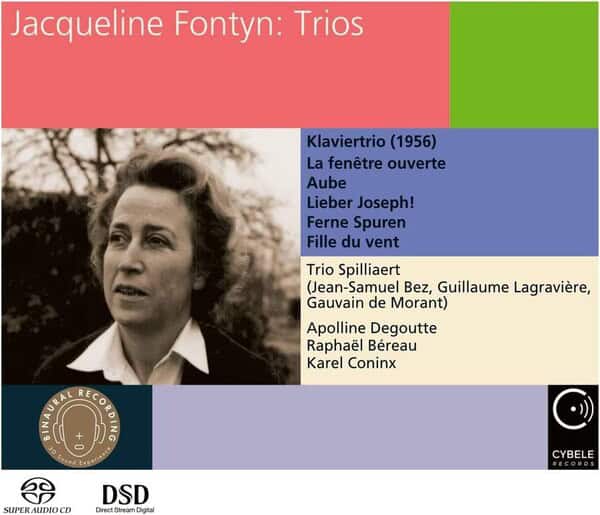
Jacqueline Fontyn
Trios
Trio Spilliaert (Jean-Samuel Bez, Guillaume Lagravière, Gauvain de Morant)
Apolline Degoutte, Raphael Béreau et Karel Coninx
1 CD Cybele
CAREER PRIZE
In an era where brilliant female composers remain conspicuously absent from the heavens, this cd brings true euphoria. The recording encourages us to (re)discover Jacqueline Fontyn, with six works between 1956 - "last use of classical forms" - and 2013 being performed. Trio Spilliaert takes the stage here with two piano trios in classical formation (violin, cello, piano) plus three other trios where a role for flute, guitar and viola is in each case provided. The exceptional level of the performers, their commitment, their joy in playing are in the service of music that overflows with imagination. We are dealing here with a completely controlled compositional style that shows both learning and freedom, and can be both concise and light-footed. This perfect and contemporary art finds ideal interpreters. (Martine D. Mergeay)