

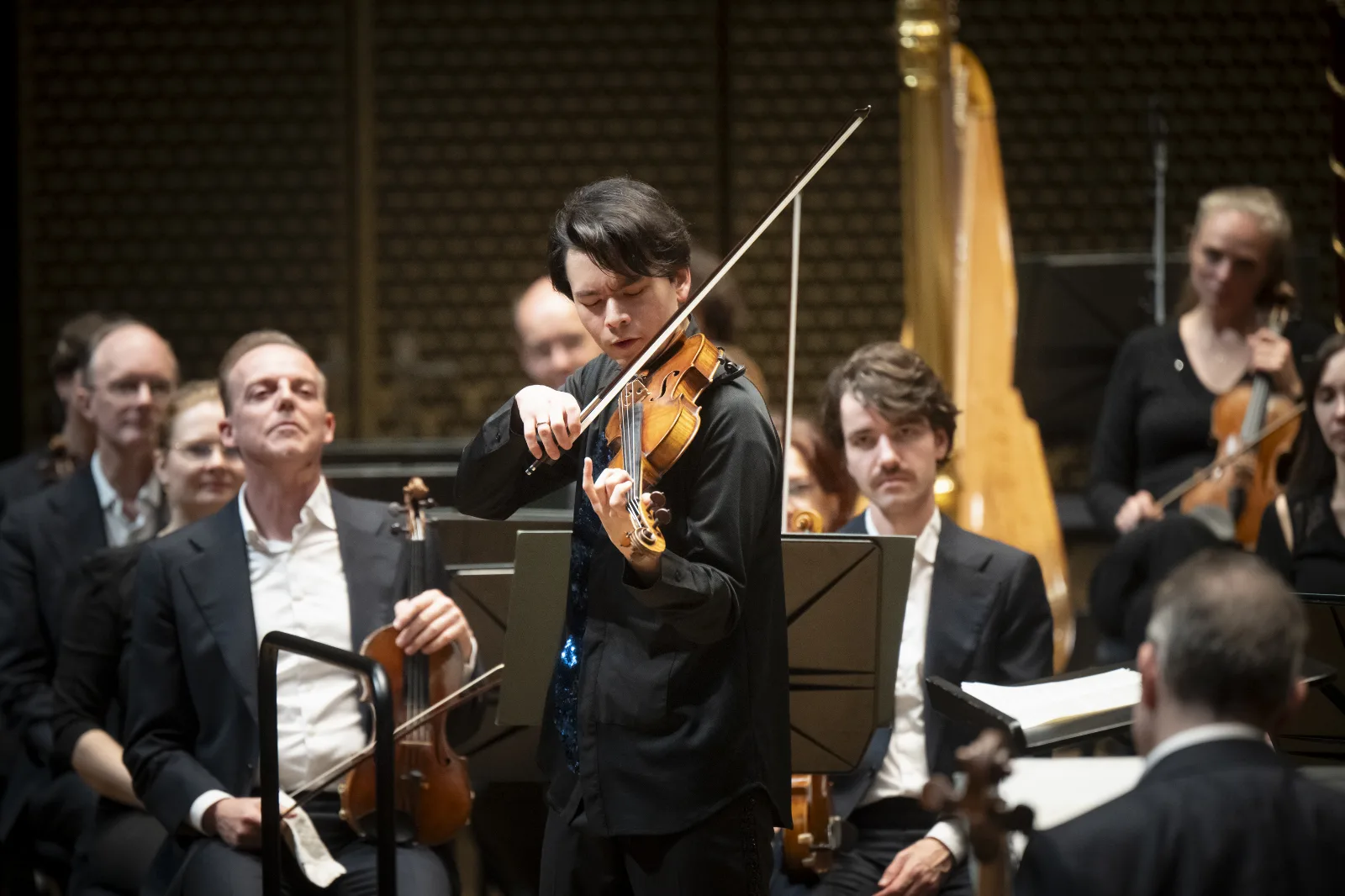
Some performances impress with their technical perfection, others let you experience music in a new way. Very rarely, they touch a deeper layer, beyond familiar emotions and admiration for craftsmanship. The concert that the Residentie Orkest gave on Sunday, 11 October, under chief conductor Jun Märkl in Amare in The Hague offered both experiences. In Pyotr Tchaikovsky's (1840-1893) Violin Concerto, Stefan Jackiw revealed an unexpectedly intimate, deeply human world. After the interval, the orchestra showed in Richard Strauss's (1864-1949) Ein Heldenleben how the various sections can together form one gripping musical story. Two masterpieces, two completely different sound worlds, and a conductor who drew the best from his musicians in both.
From within
Anyone performing Tchaikovsky's Violin Concerto can hardly avoid its virtuosity. The work is known for its demanding solo part, sweeping melodies and exuberant finale, but behind that outward brilliance lies more than romantic rapture. In Stefan Jackiw's performance this difference was particularly tangible. He placed his technical mastery entirely at the service of expression. Jackiw revealed a distinctly inward side of Tchaikovsky: intimate, introspective and of a moving humanity.
Precisely because Jackiw did not constantly drive the music towards a climax, his interpretation became so intense. He gave the music all the time it needed to breathe and made the silences, the hesitations and the undercurrent of tension just as palpable as the melodies. The violin became not an instrument with which the soloist asserted himself against the orchestra, but a voice with something very personal to say. What Jackiw let us hear, I had never before experienced in this work in this way. He laid bare the deeply human side of Tchaikovsky and touched me to the core.
The Canzonetta, the slow middle movement, thereby acquired a special significance. This music calls not for grand gestures but for a fragile, natural tone and phrasing that gives the melody complete freedom. With Jackiw, each phrase seemed to have its own breath. Because he never forced the expression, the emotional impact arrived all the more powerfully.
This made the finale even more convincing. Of course there was bravura, and Tchaikovsky's dance-like energy came fully into its own. But even when the virtuosity seemed to take the upper hand, Jackiw continued to guard the musical line. In the slower section he returned to the stillness that characterised his interpretation. The finale thus became more than a demonstration of technical control: exuberance and introspection constantly complemented each other.
Jun Märkl also played an important role in this. He fully entered into Jackiw's interpretation and carefully attuned the orchestral parts to the soloist's refined approach. Even in the louder passages the balance remained exemplary. The orchestra was not a background accompanist but a full-fledged conversation partner. The musicians listened attentively to Jackiw and responded with great flexibility to his phrasing and dynamics. The interplay between them frequently recalled chamber music. Märkl understood that this interpretation derived its power above all from the tension between what was spoken and what remained unspoken.
As an encore, Jackiw chose not a virtuosic showpiece but the Largo from Johann Sebastian Bach's Third Sonata in C major. With an extremely concentrated delivery, he let the silence speak and the music, as it were, fade away in the hall. The piece continued the same attentive, inward-looking manner of music-making that had made his Tchaikovsky so special.
In full glory
After the inward-turned world of Tchaikovsky, the transition to Richard Strauss's Ein Heldenleben was vast. Here the composer deploys the full symphony orchestra to evoke a universe of sound, colour and movement. Strauss leads his hero past adversaries, battle and love, before finally looking back on his life. The score demands not only technical mastery but also musicality, mutual coordination and a sense for great arcs of tension.
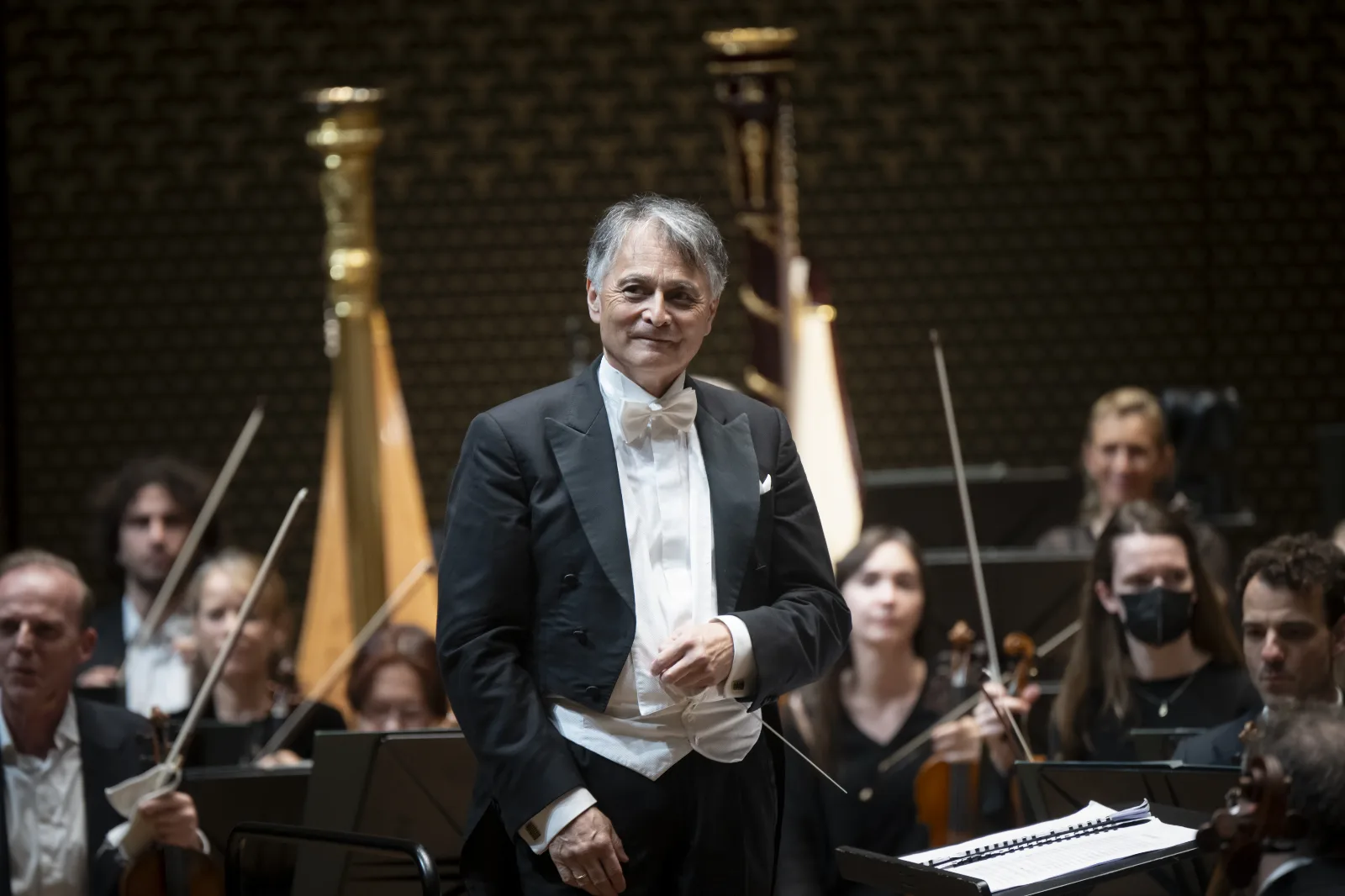 From the first bars, the orchestra set down an infectious energy that governed the entire performance. Märkl chose tempi that gave the music a natural momentum and let the various episodes flow smoothly into one another. The heroic exuberance of the opening, the sharp interventions of the adversaries, the lyrical violin solo and the tempestuous battle scene together formed a richly varied narrative. Despite the many contrasts, the musical line remained continually palpable.
The woodwinds drew attention with their striking, sometimes sharp interventions. In the passages where Strauss evokes the hero's adversaries, their characteristic sounds came through clearly. Even in the fullest orchestral passages they remained distinctly audible. Märkl kept the different sound groups in balance, even when the full orchestra played at full strength. The brass added to the richness of the orchestration with their radiant sound and precision.
A particularly special moment was the violin solo by concertmaster Wouter Vossen, in which the hero's beloved makes her entrance. Vossen struck exactly the right tone: singing, elegant and intimate. In the midst of the sumptuous orchestral sound, a personal emotional world emerged. Virtuosity was not the focus; rather, it was the way in which the violin found a voice of its own. The solo thus formed a human resting point within Strauss's monumental orchestral world.
In der Schlachtszene wurde das musikalische Chaos greifbar. Rhythmische Impulse, Blechbläserfanfaren und Schlagzeugakzente trieben die Spannung immer weiter voran, während die Orchestergruppen einander herauszufordern und zu übertönen schienen. Dennoch blieben die einzelnen Linien erkennbar. Märkl ließ das Orchester voll aufspielen, hielt die verschiedenen Stimmen jedoch zusammen. Die Passage überzeugte durch ihre ungezügelte Energie und die Art und Weise, wie Märkl sie in geordnete Bahnen lenkte.
Im Schluss kam die aufgebaute Spannung noch einmal eindringlich zum Ausdruck. Nach der langen, bewegten musikalischen Reise verebbte das Violinsolo allmählich, woraufhin Blech und Schlagwerk das letzte Wort erhielten. Auch hier bewahrte Märkl den Spannungsbogen und gab der Aufführung einen kraftvollen Abschluss.
Eine kollektive Spitzenleistung
Das Residentie Orkest überzeugte in Ein Heldenleben mit einer reichen Palette an Orchesterfarben, einem kraftvollen Klang und präzisem Zusammenspiel. Unter Märkls Leitung behielten die verschiedenen Gruppen ihren eigenen Charakter und trugen zu einer zusammenhängenden Aufführung bei. Der lyrische Beitrag von Konzertmeister Wouter Vossen verlieh dem monumentalen Orchesterklang überdies eine menschliche Dimension.
Was dieses Konzert so besonders machte, war der Kontrast zwischen beiden Werken. Bei Tschaikowski führte Stefan Jackiw mich in eine äußerst persönliche Welt, in der die Musik ihre tiefste Bedeutung in dem fand, was kaum ausgesprochen wurde. Bei Strauss wuchs der Ausdruck zu einer großartigen orchestralen Erzählung heran, in der Dutzende individueller Stimmen gemeinsam eine gewaltige musikalische Geschichte erzählten.
Auch Jun Märkl zeigte dabei zwei Seiten seines Könnens. Bei Tschaikowski folgte er mit großer Feinfühligkeit der musikalischen Vision Jackiws; bei Strauss gab er dem Orchester allen Raum, seinen farbenreichen Klangreichtum zu entfalten, ohne den Zusammenhalt aus dem Blick zu verlieren. Dennoch bleibt für mich vor allem Jackiw im Gedächtnis: Er ließ mich eine Seite von Tschaikowskis Violinkonzert hören, die ich so zuvor nicht erlebt hatte. Die Intimität und Verletzlichkeit, die hinter den virtuosen Passagen und mitreißenden Melodien sichtbar wurden, haben meine Sicht auf dieses vertraute Meisterwerk vertieft.