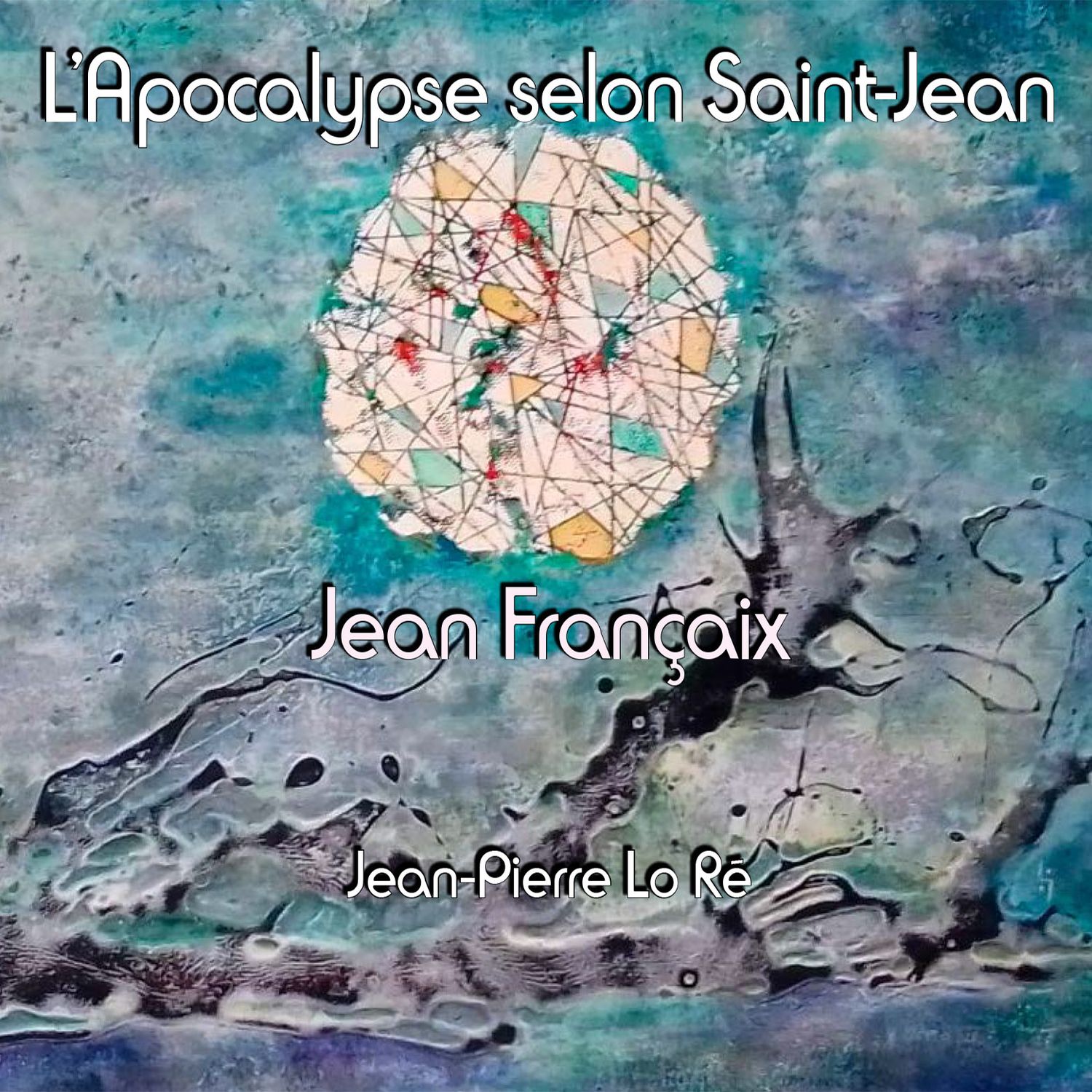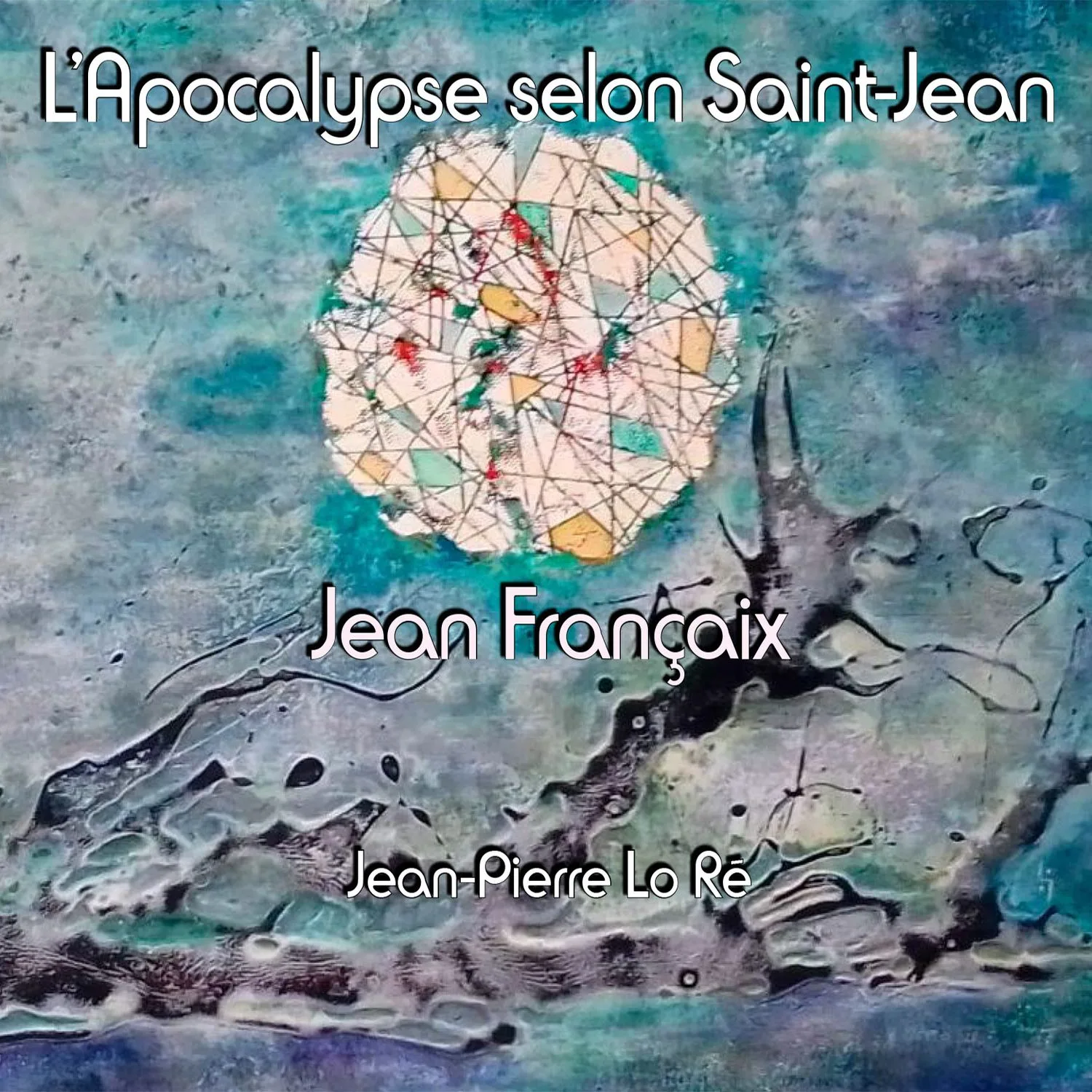
Jean Françaix (1912–1997) is often associated with a refined, witty musical language, in which clarity and lightness go hand in hand with a strong sense of form. L’Apocalypse selon Saint-Jean reveals another side of his artistry. In this substantial oratorio he turns to one of the most dramatic texts of the New Testament. The combination with the Piano Concerto in D, in which Françaix himself can be heard as soloist, makes this release from Le Palais des Dégustateurs interesting: two works in which the same composer manifests himself in very different ways.
An unusual musical imagination
Françaix worked on L’Apocalypse selon Saint-Jean in 1939. The idea for the work had arisen a few years earlier, during a return journey from the United States, when a violent storm confronted him with the overwhelming force of nature and the vulnerability of humankind. That experience led him to the visions of John. The spirit of the times should not be overlooked either: the work came into being in the years when Europe was once again plunged into war. Whether that historical context resonates directly in the music is hard to say, but it gives the confrontation with downfall and redemption an additional dimension. On 11 June 1942 the oratorio premiered in Paris under the direction of Charles Munch.
The scoring is exceptional. Four soloists – soprano, alto, tenor and baritone – and a mixed choir are combined with orchestra. Alongside the usual orchestral instruments, the score includes, among others, two harps, organ, saxophones, accordion, mandolin and electric guitar. For a composer known for his clear and often playful musical language, this is a remarkable choice. His sense of tone colour takes on a different function here: it helps to evoke a world in which the familiar is constantly under pressure.
The oratorio moves from the letters to the seven churches and the visions around God’s throne to the opening of the seals, the trumpets of the angels and the battle between Michael and the dragon. The music connects widely varying moods, from contemplation to menace, and from massed choral sound to passages in which individual voices come more to the fore. The orchestration is more than a colourful detail: with its unusual combination of instruments, Françaix gives musical shape to the shifting perspectives and apocalyptic images. At the same time, John’s Apocalypse is not limited to a vision of downfall. It is also a revelation: behind the destruction of the old world lies the prospect of a new one.
That thought finds its resolution in the appearance of the heavenly Jerusalem. In the run-up to La Jérusalem céleste, organ, choir and orchestra are brought together in a monumental sound world, alternating with more intimate solo contributions. This alternation between grandeur and stillness gives the finale a penetrating intensity. The musical structure is convincing, but the performance does not quite reach the level this passage demands.
On this recording the Orchestre Français d’Oratorio is conducted by Jean-Pierre Lo Ré, with the Chœur Français d’Oratorio and several other choirs. The solo parts are sung by soprano Tatiana Probst, alto Daïa Durimel, tenor Patrick Garayt and baritone Jean-Gabriel Saint-Martin. Caroline Glory (cello) and Sotiris Kyriazopoulos (violin) are also listed as soloists.
The vocal soloists deliver fine contributions, and their text is clearly audible. With the choir it is more difficult. When the orchestra plays at full volume, the choral sound regularly recedes and the words are not always easy to follow. In passages a cappella or with soft orchestral accompaniment, the text is somewhat better understood. There are also clear intonation problems in both the choir and the brass, which, especially in the closing passages, detract from the musical impact. The woodwinds also sound somewhat shrill at times. Nevertheless, in the more agile passages the liveliness of the performance stands out, making the musical possibilities of Françaix’s ambitious score palpable.
The recording was made during performances in May and June 2024 in the Église de la Trinité in Paris. The sound quality is decent, although the acoustics sometimes produce reverberation. This gives the music room, but does not help the intelligibility of the choir. The instrumental colours come across sufficiently to give an impression of the unusual design of the score.
The composer behind the piano
After the monumental close of L’Apocalypse selon Saint-Jean, the transition to the Piano Concerto in D could hardly be more striking. The serious sound world of the oratorio gives way to a lively, jazzy work in which Françaix’s sense of rhythm and melody has full scope. This abrupt change asks for a moment’s adjustment in listening, but offers a very different view of the composer.
The concerto, written between 1932 and 1936, is heard here in a historical recording of 22 November 1960. Françaix plays the solo part himself, accompanied by the Orchestre de l’ORTF under Georges Prêtre. The age of the recording cannot be disguised: the sound lacks the clarity and detail we have grown used to in contemporary recordings. Yet this does little to diminish the sheer pleasure of playing that radiates from this performance.
Especially the jazzy character comes beautifully to the fore. The piano seems to follow a single, uninterrupted melodic line, with a naturalness that keeps the music light and buoyant. The balance between soloist and orchestra is good, and the orchestral musicians are given room in their solo contributions to respond to that melodic flow. In this way a lively interplay arises in which the various instrumental colours complement one another. Françaix lets his music swing as if it were the most natural thing in the world.
Two Faces
The combination of L’Apocalypse selon Saint-Jean and the Piano Concerto in D reveals how diverse Françaix’s musical imagination is. Set against the dramatic seriousness and the unusual sound world of the oratorio stands the rhythmic suppleness and jazzy character of the piano concerto, in which the composer himself can be heard as soloist.
The release thus offers a fascinating introduction to less familiar music by Françaix. The piano concerto in particular convinces through the effortless playing pleasure of the composer; the oratorio impresses with its ambitious conception, although the shortcomings of the performance remain audible.