


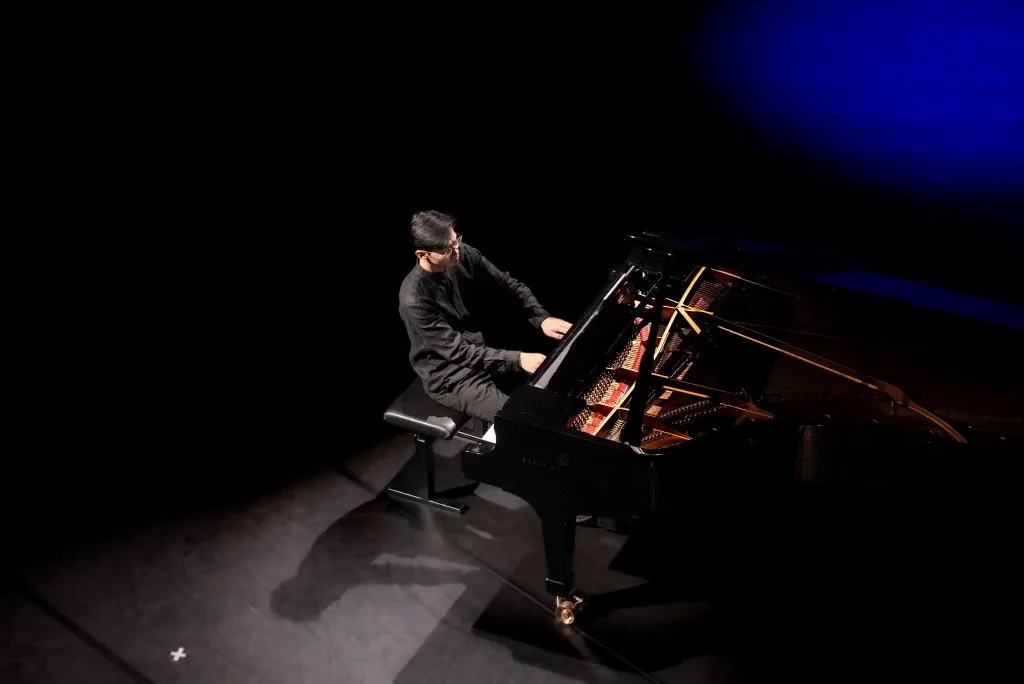
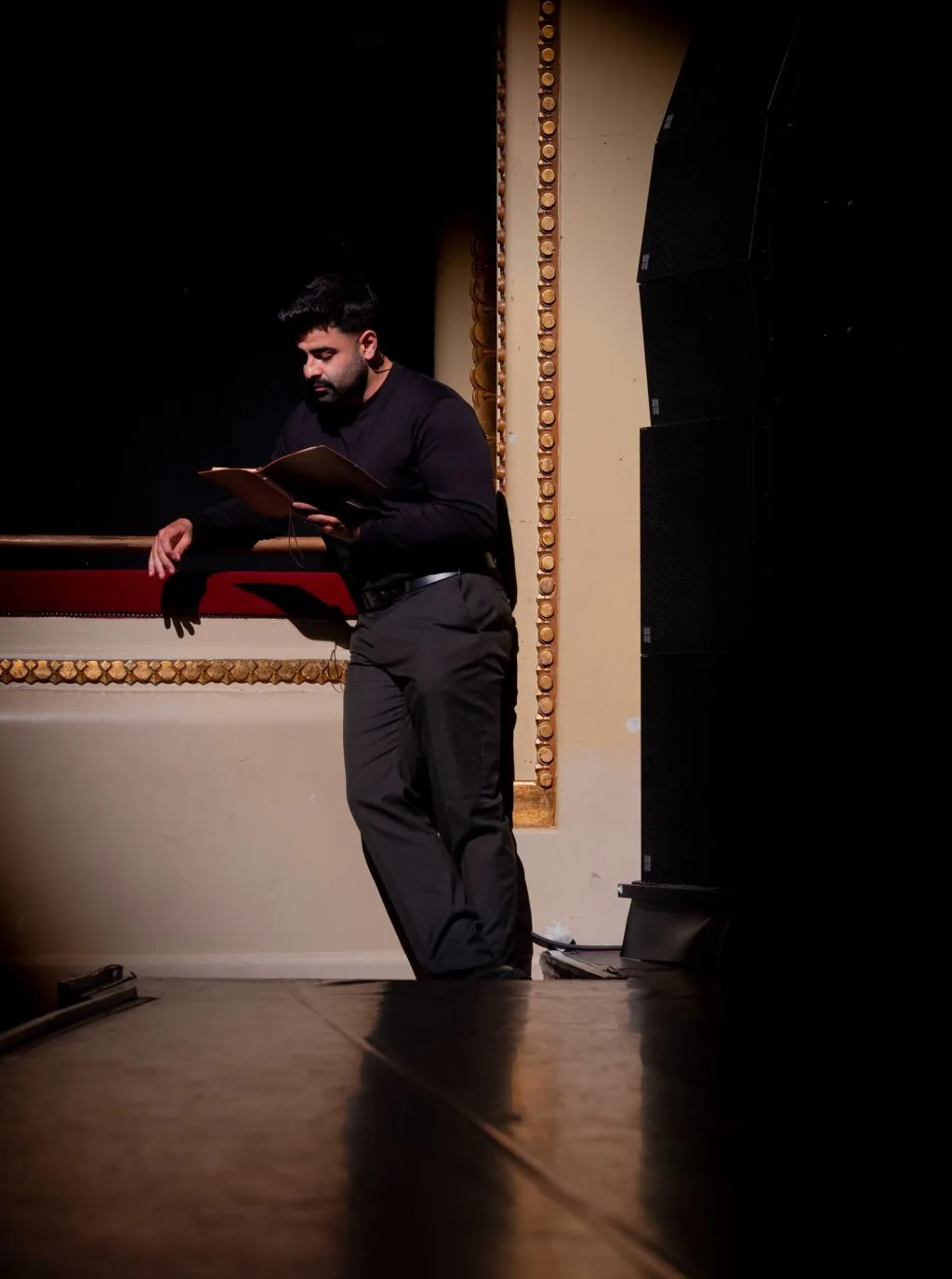
With this opening concert, the musicians wished to give special significance to their performance and to show that there is continuity with the Schubertiade tradition that arose in the 19th century. They presented a programme of about an hour: songs for tenor and piano, chamber music from trio to octet, and in between a narrator. Actor Armin Mola linked the music to a story based on a text by Rik Vanden Broeck.
It was a concert in which young talents take their first steps towards their careers. They revealed a wide range of qualities: sensitivity, musical talent, dedication, resilience, perseverance…
Schubert (1797-1828) wrote a number of the most performed compositions in the world, in all kinds of genres. He lived in a time when aesthetic ideals were changing. People responded critically to the classical Enlightenment and wanted to go beyond the age of "reason alone", towards the richness of feeling and the wisdom of earlier times. Inspired by the typical themes of Romanticism – spirituality, nature, love, folk dance – Schubert won the affection of the public and left behind a repertoire that will continue to live on for centuries. Those themes returned in the programme of the evening.
The songs: nature, love and longing
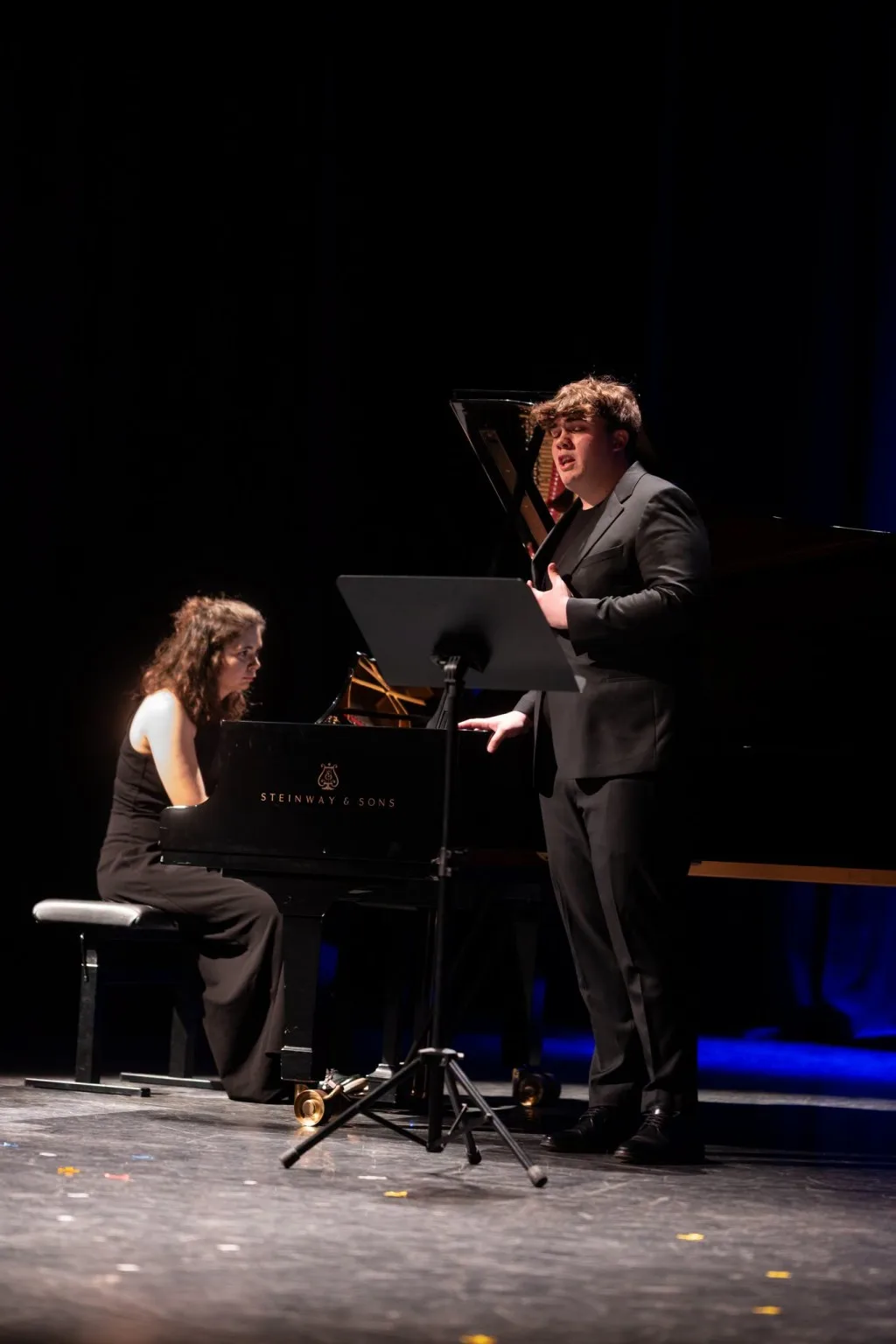
In all the songs of the evening, the promising voice of the tenor stood out: moderate in volume, with pure intonation, a great deal of expression, good legato phrasing and clear articulation, although the tension of the tone sometimes left room for improvement.
The concert opened with Die Forelle (1817), an allegory of the human soul and the dangers into which it can fall. The song also formed the basis for another composition, the Trout Quintet, with which the concert would close the circle at the end.
Gretchen am Spinnrade (Gretchen at the Spinning Wheel, 1814), on a text from Goethe's Faust, is regarded as the first art song ever composed and established the genre of the Lied. In this work every musical phrase follows each line of the text precisely, and auditory and visual aspects merge, with emphasis on the balanced interplay between voice and piano. The turning motion of the wheel – again an allegory of the human soul, caught in the whirl of emotions – is rendered by the right hand, which plays clusters of sixteenth notes, a movement rhythmically marked by the pedal.
In line with these beloved Romantic themes stands Der Wanderer (The Wanderer, 1816), a song of 72 bars with as its leitmotif the bohemian longing for distant lands and a constant restlessness, which equates the state of the dreamy artist. The idea of winding, labyrinthine paths is expressed in long, slow phrases with stimulating accelerations, marked "alla breve". It is the illusion that happiness lies somewhere far away, vaguely present and fascinating, with all the exposure and danger that entails for the soul, which can become trapped in devastating adventures.
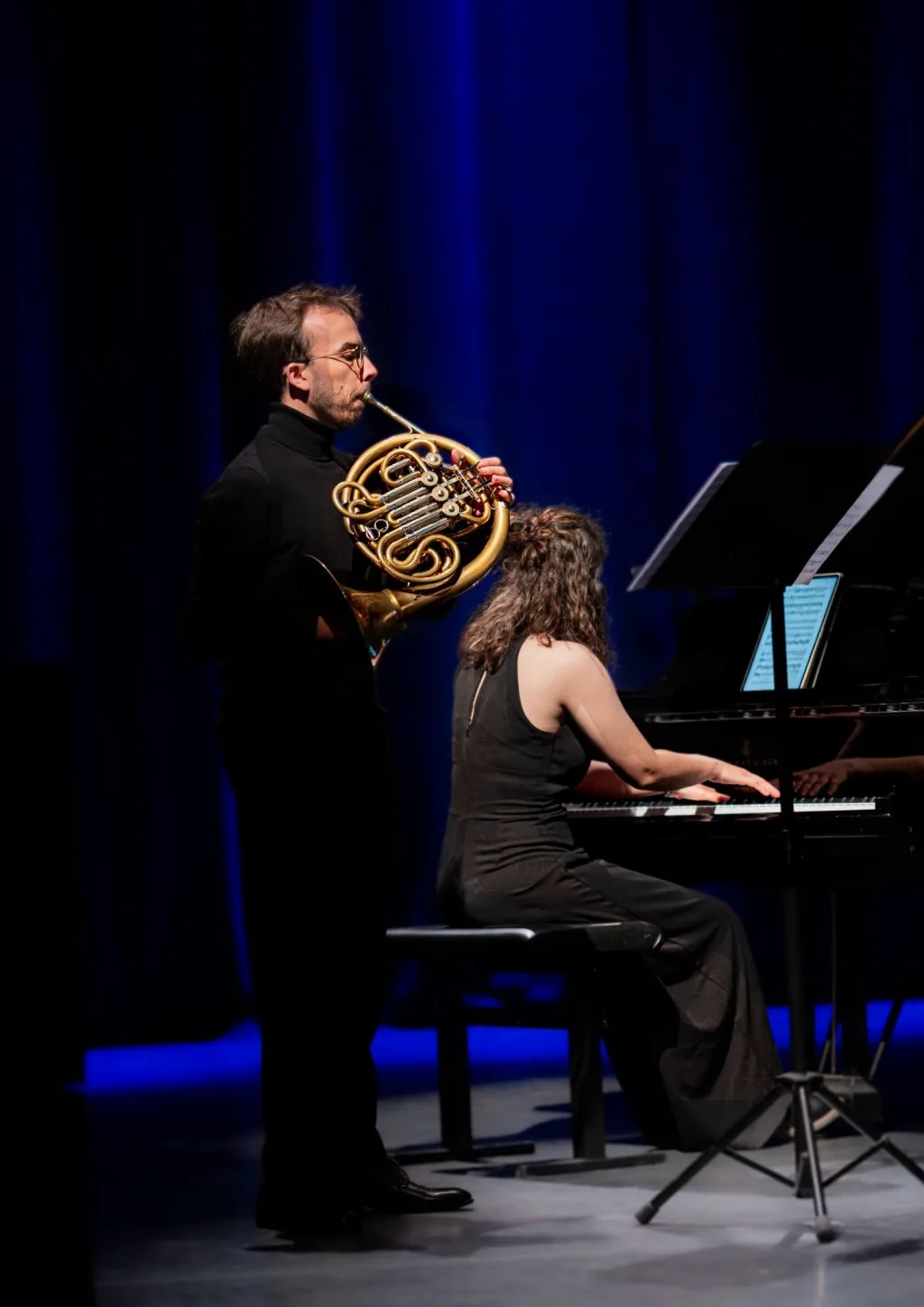
The high point of the evening was meant to be Auf dem Strom (On the River, 1828), a song for voice, horn and piano on a text by Ludwig Rellstab, a Berliner regarded as the first music critic ever and as the founder of music criticism as a discipline. The text speaks, on two time levels, past and future, of irreplaceable loss. The song was dedicated to the first commemoration of Beethoven's death, whom Schubert deeply admired. It was also the first time Schubert accompanied one of his own works in public: he played the piano part himself and made it a success. The horn has a wholly elegiac part here, but in this performance it was too loud and did not fit well into the whole. It completely overpowered the voice and the piano, to the astonishment of the artists and the audience.
Chamber music and ensemble playing
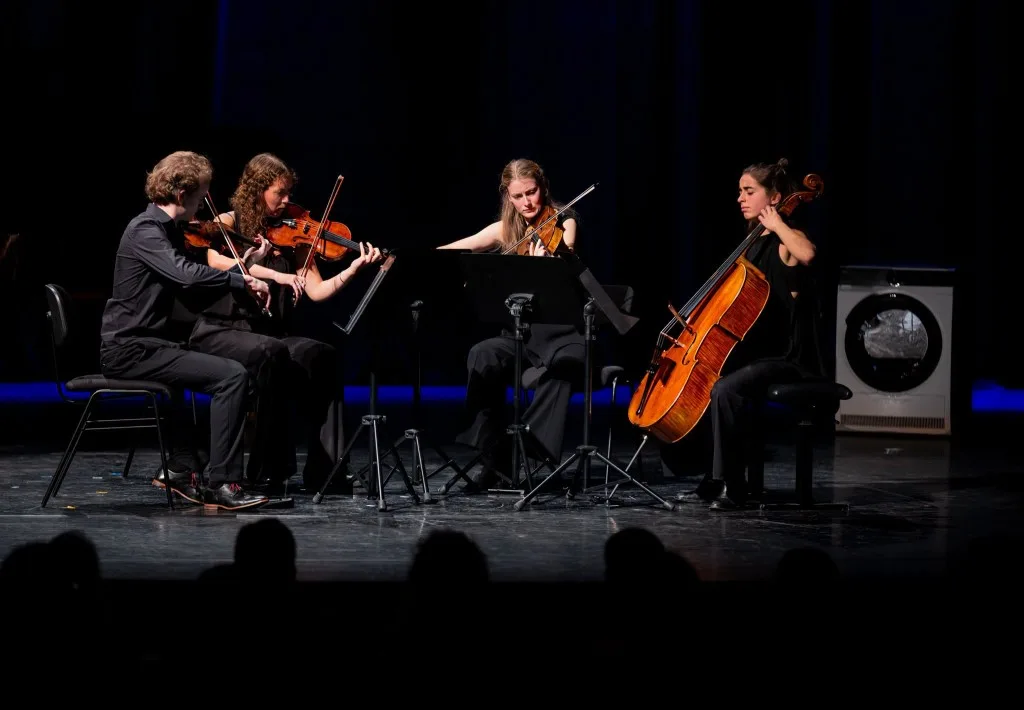
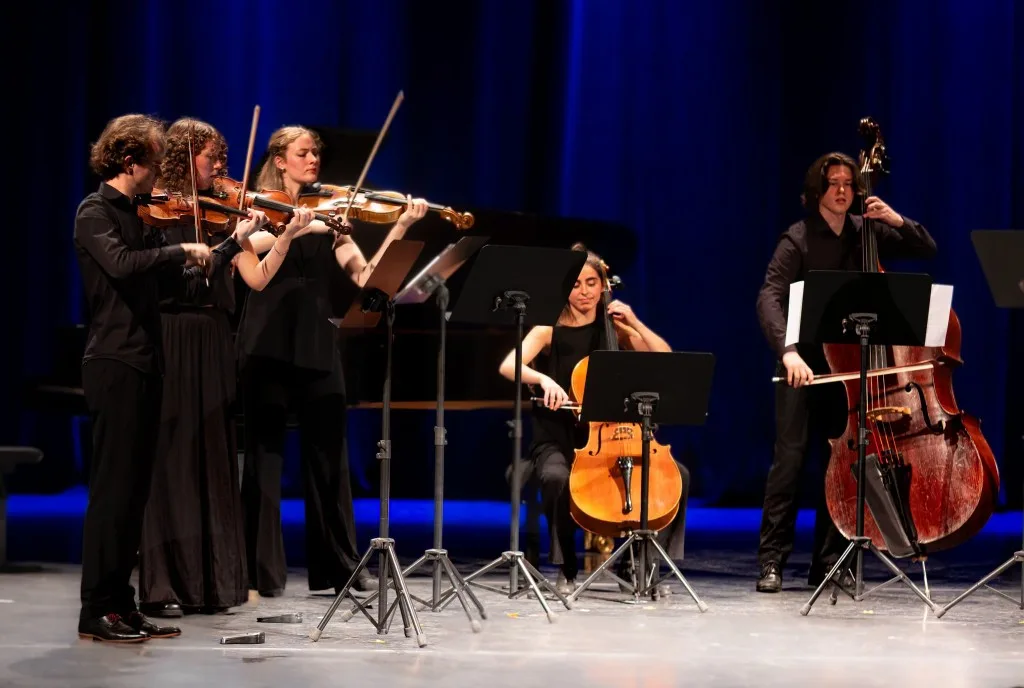
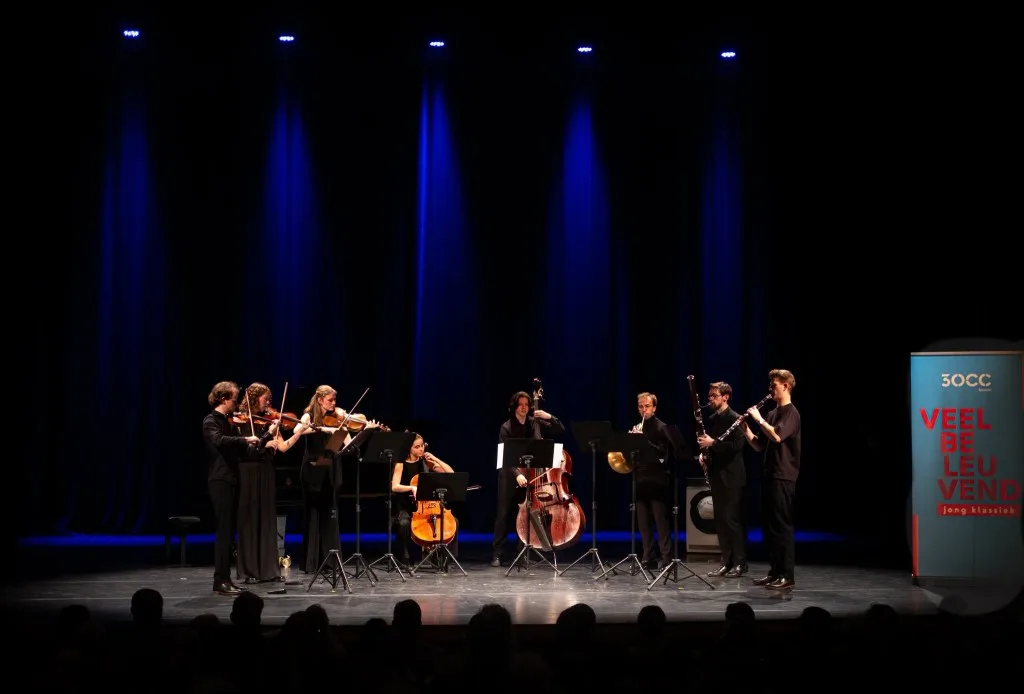
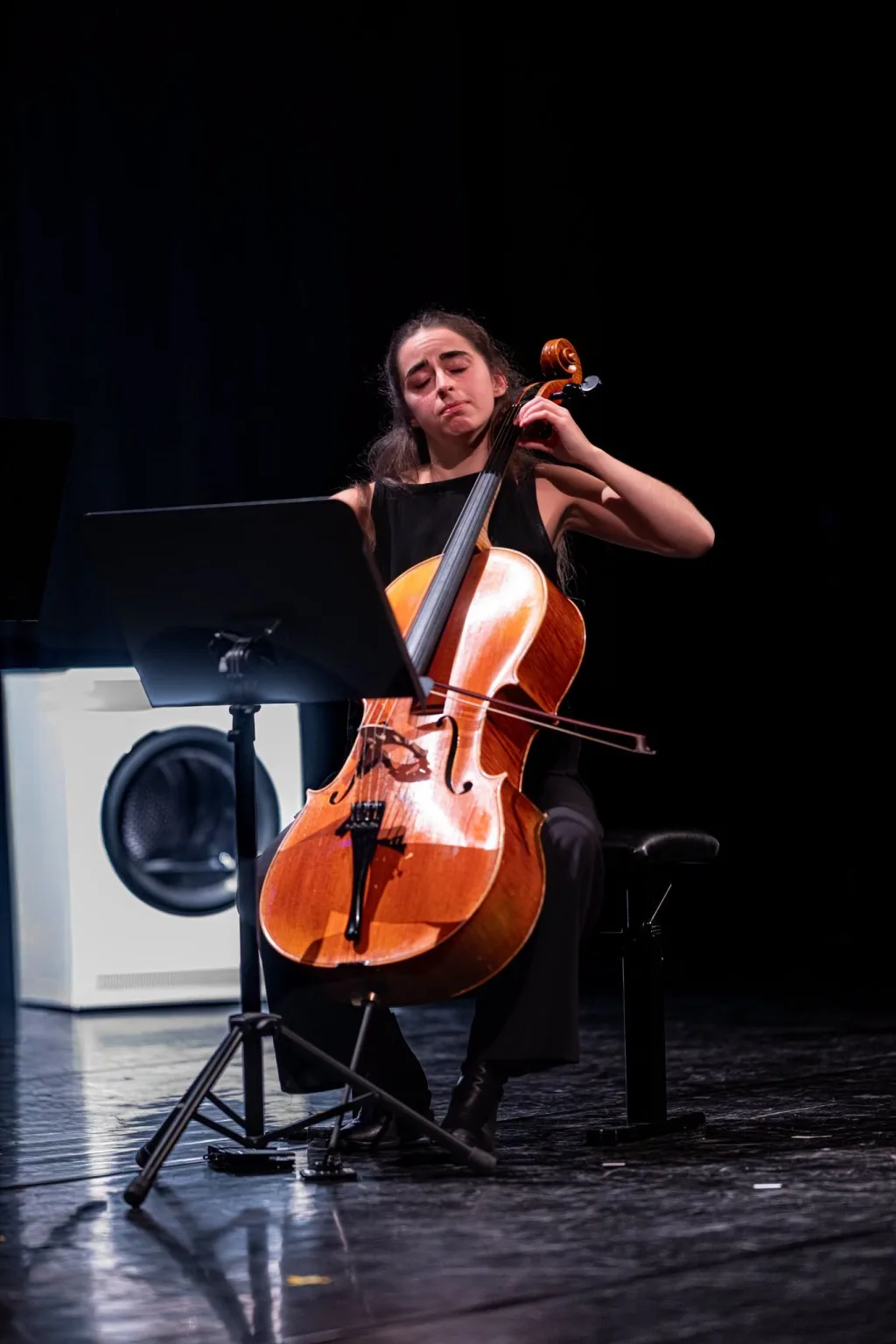
The String Quartet No. 13 'Rosamunde' (1827) is written on a theme from the second part of the incidental music for the play Rosamunde, Fürstin von Zypern (Rosamunde, Princess of Cyprus) by Helmina von Chézy, a drama whose original manuscript has been lost. The ensemble performed only the third movement from this composition, which the strings played with great feeling.
The concert concluded with the Trout Quintet (1819), which is innovative in harmony and tone colour and which is thought to have influenced Chopin and Liszt. It presents a theme with variations on the melodic line of the song with which the evening began.
On the whole, the ensemble was experienced as a fragile balance: the members only temporarily achieved unity, probably due to a lack of shared rehearsal. The strings have of course played together before, and the same goes for the winds. We listened spellbound to the fleetingly harmonious moments and encourage the young musicians to strive for stability and consistency in their playing: even timing and articulation, prepared transitions, a sense of the architectural musical structure. That will certainly come with more organic growth. The ensemble sounded well coordinated in the Octet (1824), inspired by Beethoven's Septet but with an additional violin: the members coordinated their dynamics, listened attentively to one another, and there was a sense of purpose.
Scenography and presentation
A word on scenography and stage presentation. The presence of a washing machine on stage is of questionable taste: a forced modernist aesthetic element that does not belong in a performance of Romantic repertoire. Such a performance must remain a whole, a complete show, a celebration for everyone, artists and audience alike, protected from the everyday, prosaic aspects of life, which must not degenerate into wasteland. Elements that clash with the poetic and contemplative atmosphere of the music and texts are therefore disruptive and are not well received. Schubert's creation, a world in itself, is demanding and requires full attention.
The presenter has theatrical talent, rhetoric and imagination and chose a different place and posture for each piece. Nevertheless, all aspects need to be taken into greater account: it is not advisable to hastily present the next moment immediately after the tenor's final note. A silence must be allowed, so that the song can have its aesthetic effect and be absorbed. Otherwise the presenter's intervention is experienced as an inappropriate disruption of the musical-artistic act, and his gesture is at the very least called into question.