


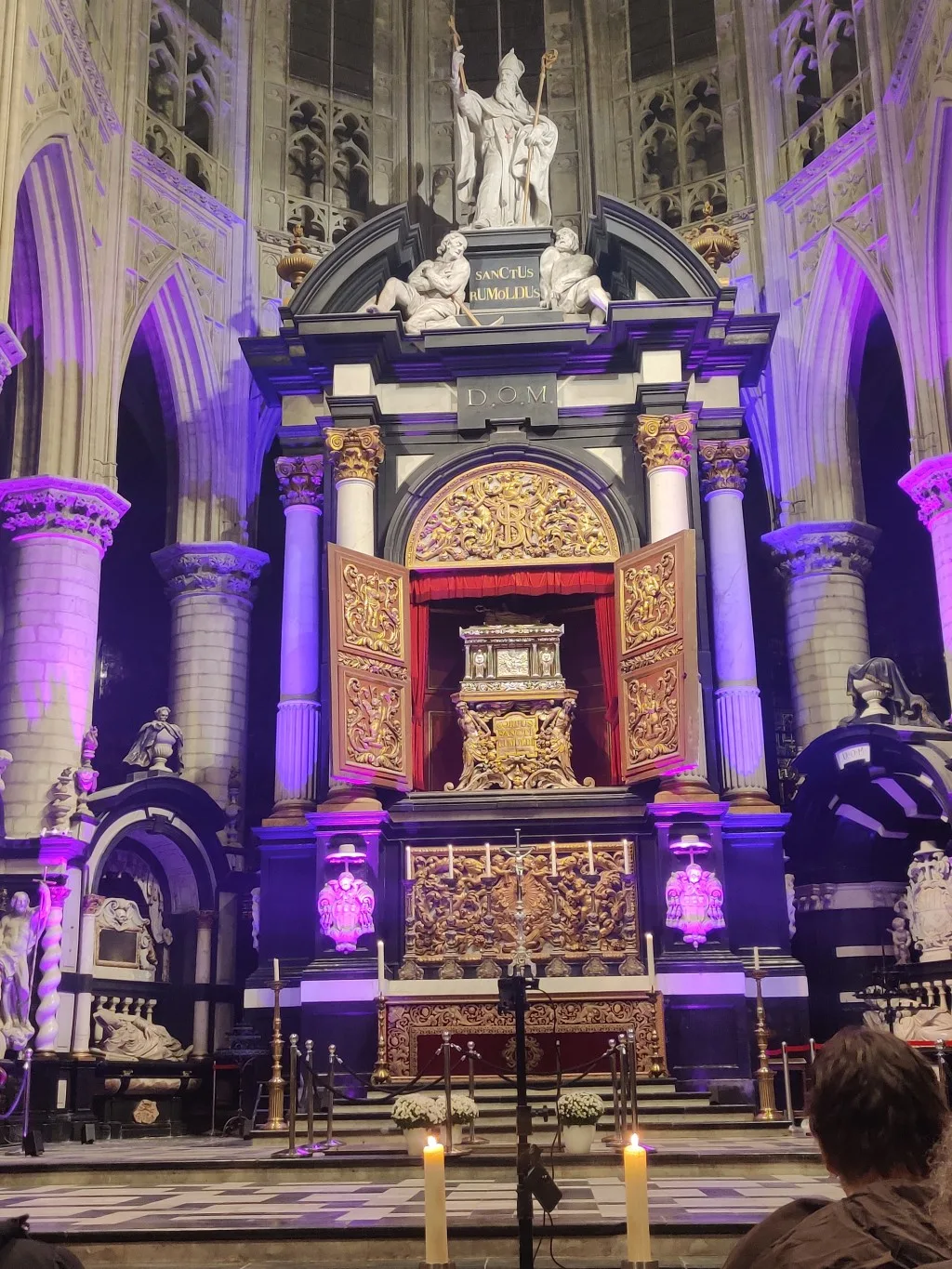
Ah yes, the temptation we must not give in to is not that of sacred music; it is the temptation of worldly pleasures. Although you do find in many works that adorn the churches, sculptures, frescoes (the few that still remain) and paintings here and there, not only chaste images and mocking humour. Proof that people were indeed captivated, and they were not always "Jan and his Lisa from around the corner," but clergy as well. In short, nothing human is foreign to us, and yes, sometimes the song lyrics of that less prudish yet oh so prudish era hid pitfalls beneath the green grass. The artists must have had something to laugh about, it could not be otherwise. But seriousness, of course, was there too, and that seriousness we got to hear in the concert for the feast of All Saints, under the watchful eye of Saint Rumoldus, whose reliquary stood open. The eye also wants something, while the ear soaks up the Renaissance sounds and commits them to memory.
"Tempus edax rerum," under that motto the young a cappella ensemble Vetus Carmina from Antwerp, led by the Spaniard Arturo Moscoso, filled an evening hour with chants by Flemish and Spanish polyphonists. The Flemings not only exerted great influence in those times on the music of Italy; it was throughout Europe, and certainly in Spain. This was thanks to Emperor Charles V, who not only had cartloads of beer shipped to his Spanish palace from Mechelen, where he grew up and was declared of age at 15 in the same cathedral (something that is no longer possible, truly), but also invited numerous artists, including composers, to perform at his court, among other places. Think only of the Capilla Flamenca (the court chapel of the Habsburg-Burgundian house), which provided the music at Charles's Spanish court. Thus the Flemish (and Brabantine, say "South Netherlandish," which is roughly today's Flanders with parts of Wallonia, the Netherlands and France) artists of that time, all over Europe, not only had a great deal of work; they led in all art forms, and certainly in music.
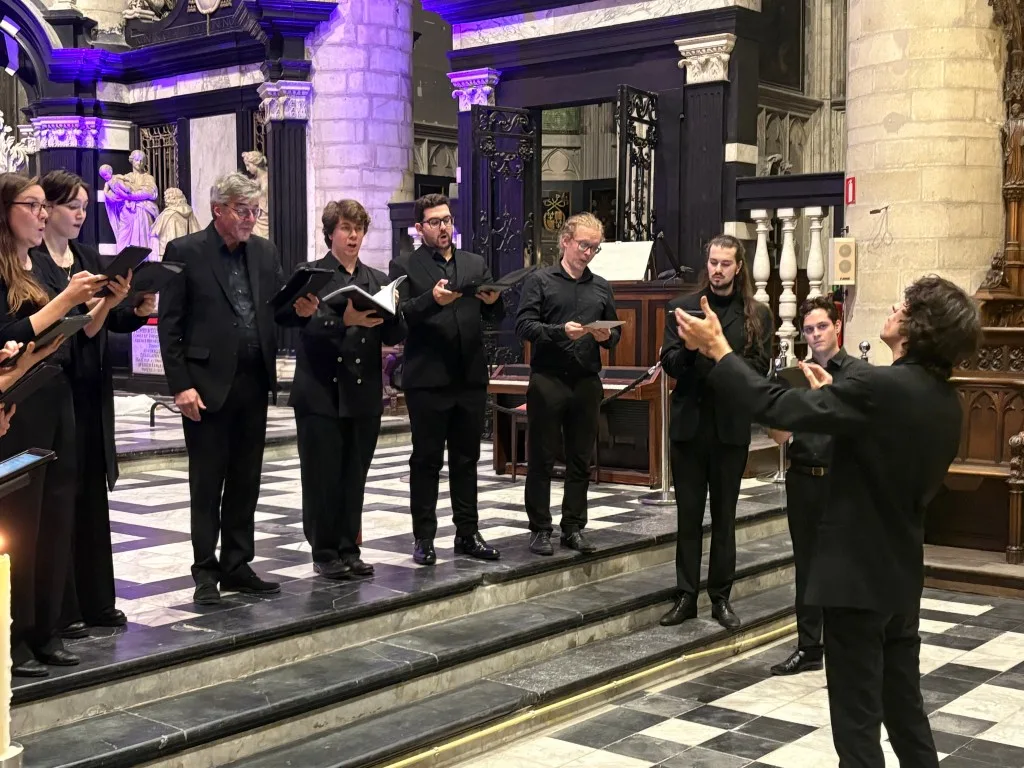
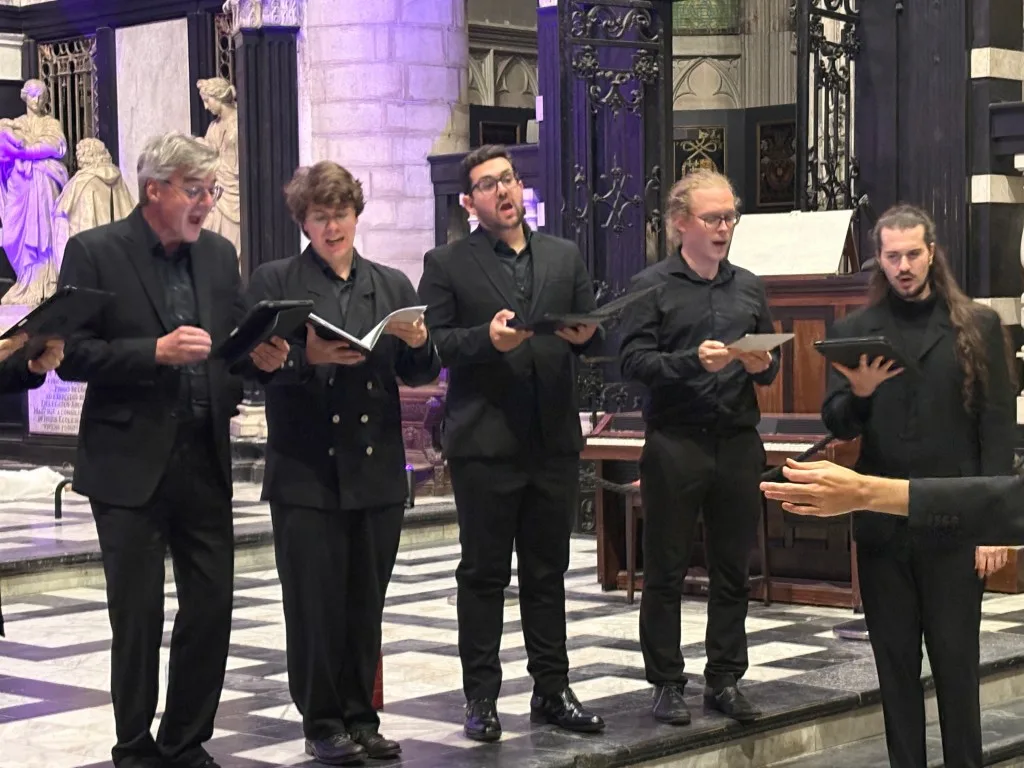
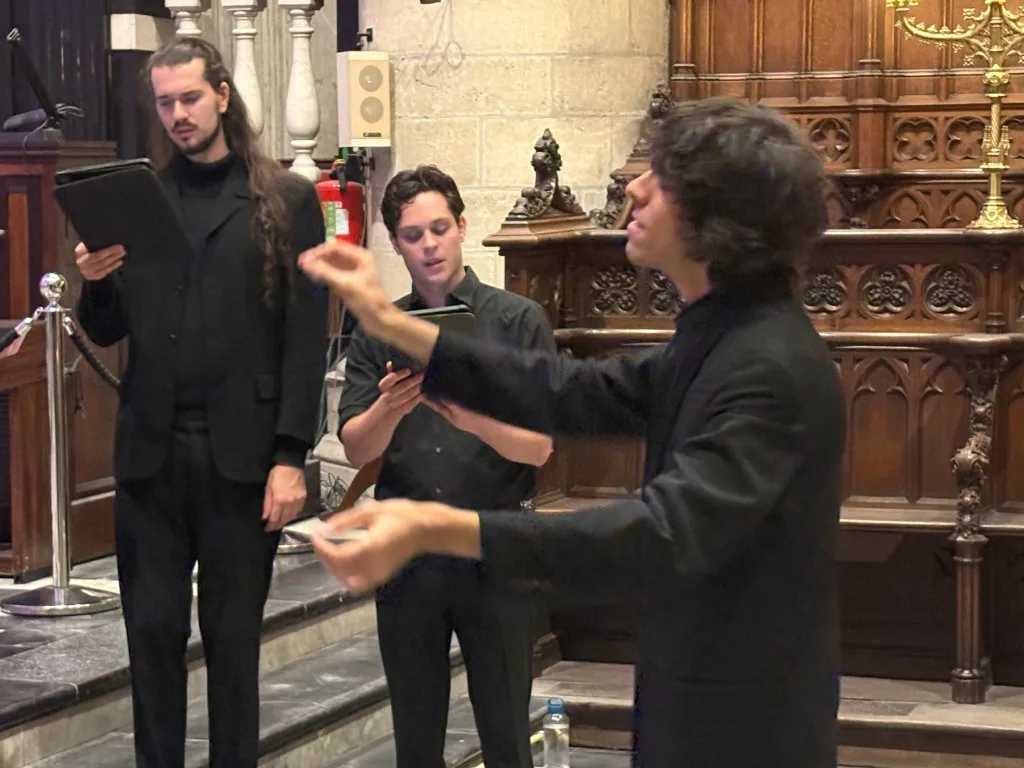
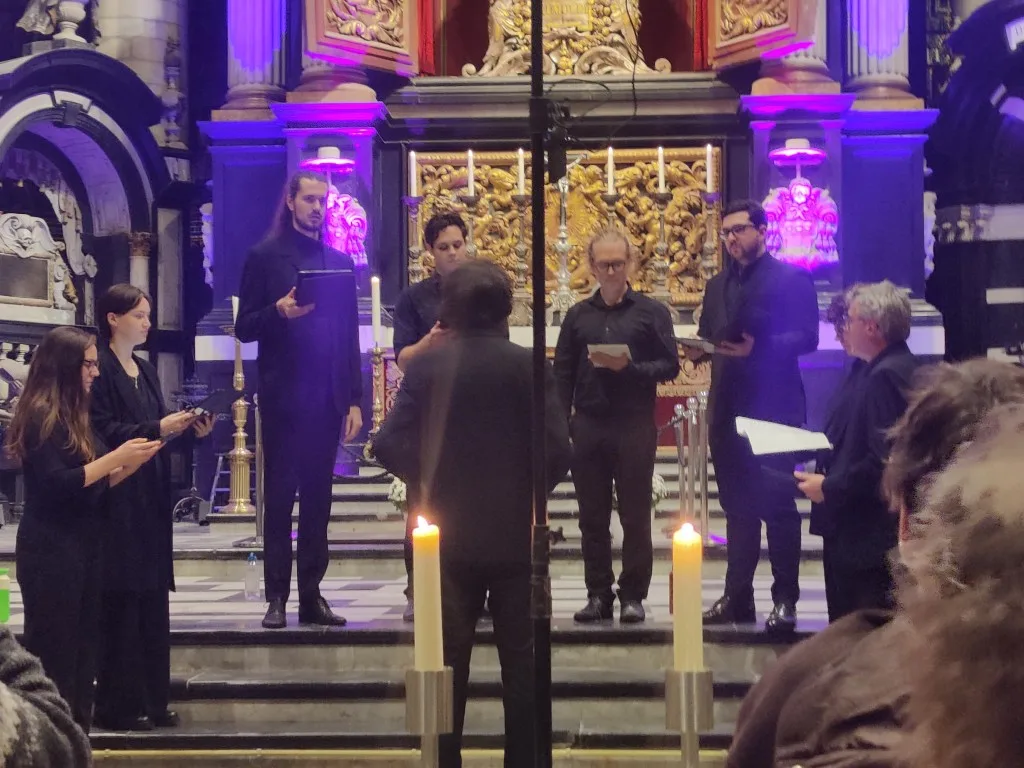
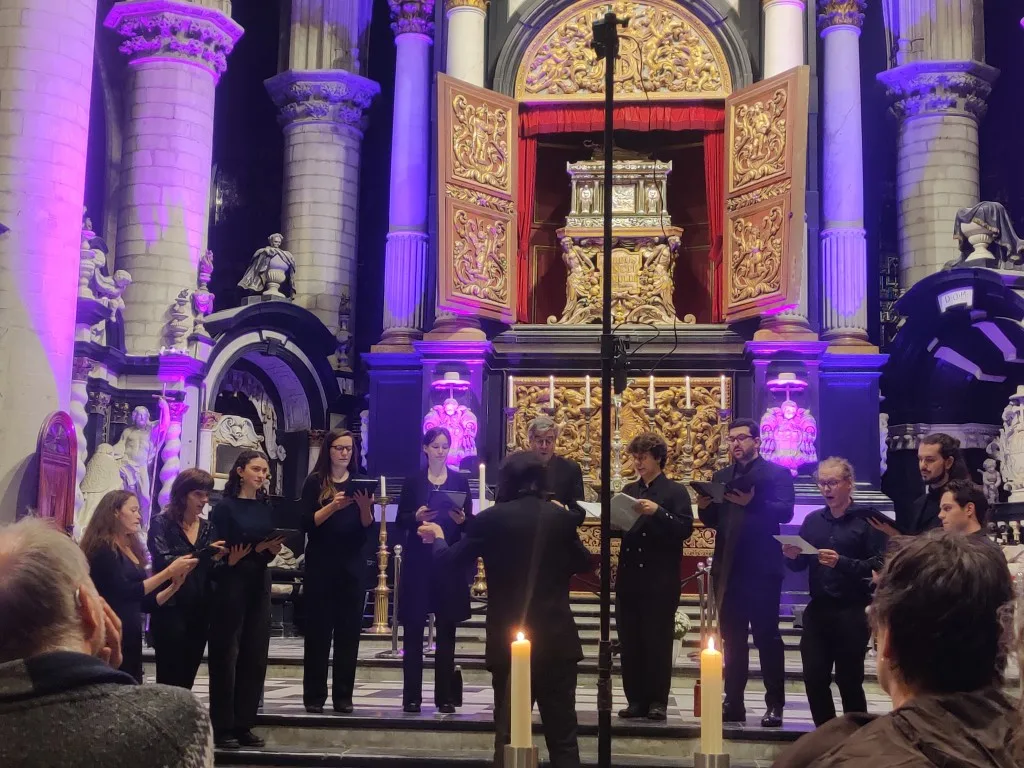
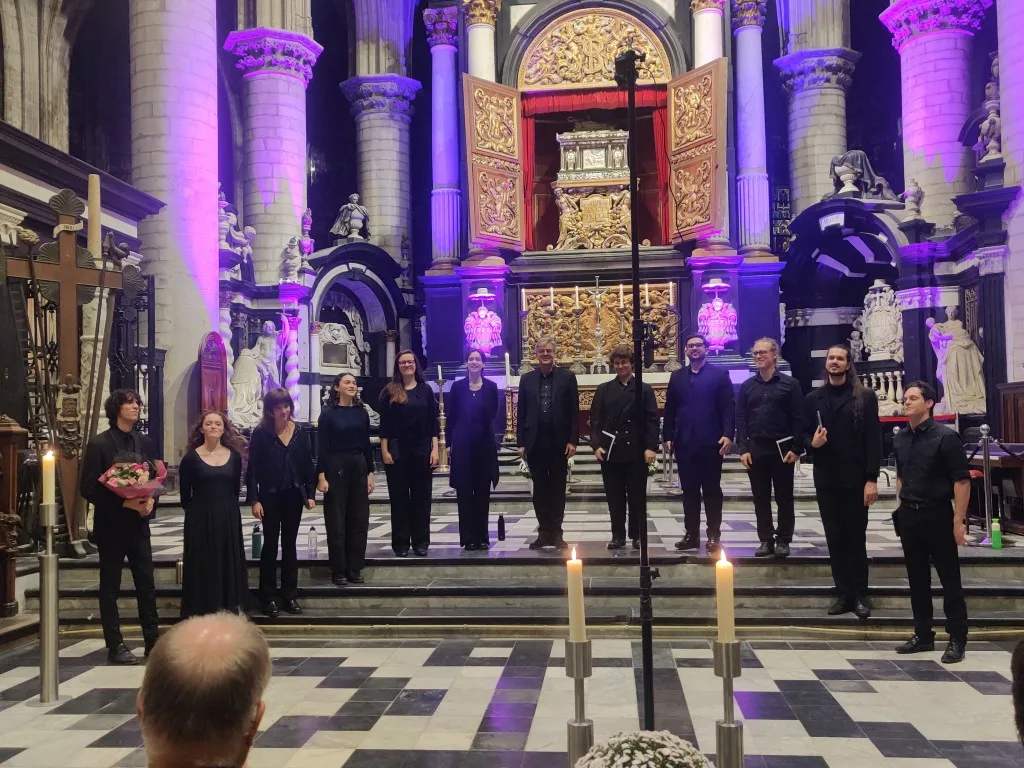
The concert opened with a Kyrie "Fors seulement," c. 1470, by Johannes Ockeghem (1410-1497). It did not sound forceful, but it was very harmonious: no one overpowered anyone, every tone and note was perfectly placed, yet somewhat "well-behaved" with (still) missing daring. You would notice that throughout the whole concert. Work has clearly gone into purity, correct intonation, a very good balance, and a historically informed interpretation as far as is possible, but there could be more power, a bit more boldness. Well, they are all in their twenties except one; the youngest is 20. We understand that considerable development is still to come, and we gladly support that, because this still relatively new ensemble is absolutely promising. It is good that a seasoned and very experienced singer lends his moral and active support, which gives courage. Thank you, Jan Van Elsacker!
The Gloria from L'homme armé (c. 1480) by Antoine Busnois (c. 1430-1492) displayed the same purity, the same finely meshed feeling, and the same harmony. More life, certainly, sounded in the Spanish "Antes que comáis a Dios" by Francisco Guerrero (1528-1599), after which we would also hear Todo cuanto pudo dar and La tierra s'está gozando: spicier chants from 1589, full of energy, "southern" as we would say in our well-behaved Flemish country. From Jacob Obrecht (1457/8-1505) they also sang Mille quingentis (1488), and from Tomás Luis de Victoria (c. 1548-1611) the Sanctus Ascendens Christus from a Mass (1592), to end with Nicolas Gombert's (c. 1495 – c. 1560) Tribulatio cordis mei, composed in 1539.