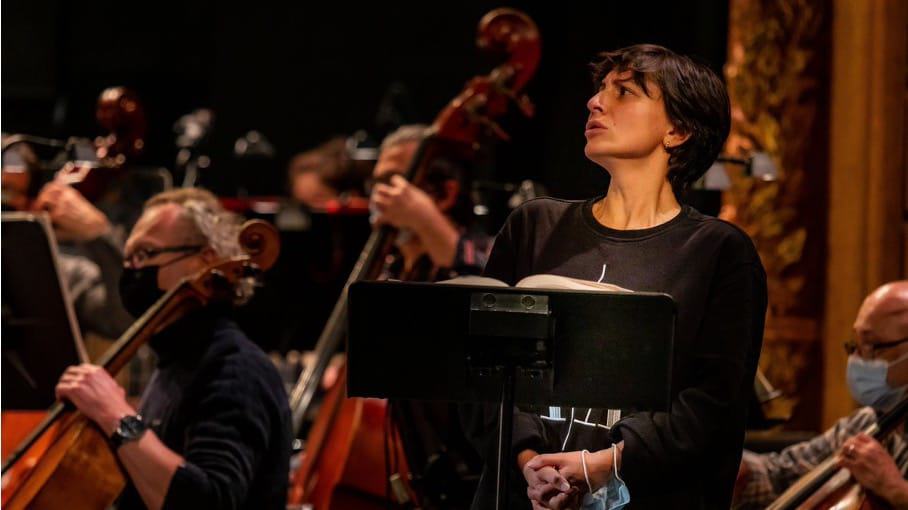
With Rossini's Elisabetta, regina d'Inghilterra (1815), De Munt reveals the first evening of the diptych The Queen and her Favourite/The King and his Favourite. With this, it casts the previously planned Donizetti project Bastarda in a new light. Under the direction of conductor Francesco Lanzillotta, the Brussels opera house presents an interesting production of Rossini excerpts full of intrigue, longing and beautiful Bel Canto passages.
Around 1815, Italian composer Gioachino Rossini was already an internationally renowned master. Tancredi (1813) proved to be one of his decisive successes. But when he arrived in Naples, it took a while before the Neapolitan people warmed up to the maestro and his compositions. The city, known for its own beloved opera traditions, struggled with the new wind. For the Teatro di San Carlo, Rossini ultimately wrote Elisabetta, regina d'Inghilterra, a 'dramma per musica' in two acts. It was with this opera that the composer managed to convince his Neapolitan audience.
Characteristic of a Rossini composition is a Bel Canto style upon which nineteenth-century romantic opera would later build its foundations: light and fleeting passages alternate with fast, technical coloratura sections. A reflective dramatic moment quickly unfolds into a hasty movement in which dynamics, tension and expressive vocal expressions find each other. Finales in Rossini are nothing less than a whirlwind of emotion, but that doesn't mean the other pieces have to take a back seat. Fast playful, yet technically complex vocal coloratura is one of Rossini's hallmarks on the Italian Bel Canto period of the nineteenth century.
Love and (im)potence
Whoever catches wings of Rossini's other famous opera Il barbiere di Siviglia (1816) at the beginning of Elisabetta's overture and opening aria is on the right track: the composer indeed took the cue from his own work. Nevertheless, the extremely strong similarity quickly gives way to a sound play typical of Rossini on the personal battlefield of Elisabeth I (soprano Salome Jicia). She discovers that her beloved favourite Leicester (tenor Sergey Romanovsky) is already secretly married to another woman, Mathilde (soprano Lenneke Ruiten). The antagonist Norfolk (tenor Enea Scala) manipulates the English princess out of jealousy for her preference, to the detriment of the unhappy couple. Ultimately, justice and love triumph over Norfolk's revenge. Elisabeth is left with the words "Fuggi amor da questo seno / non turbar più il viver mio." (Let love flee from my heart / and trouble my life no more). Gloriana – a nickname for Elisabeth I – triumphs, but the woman in her must give up her favourite.
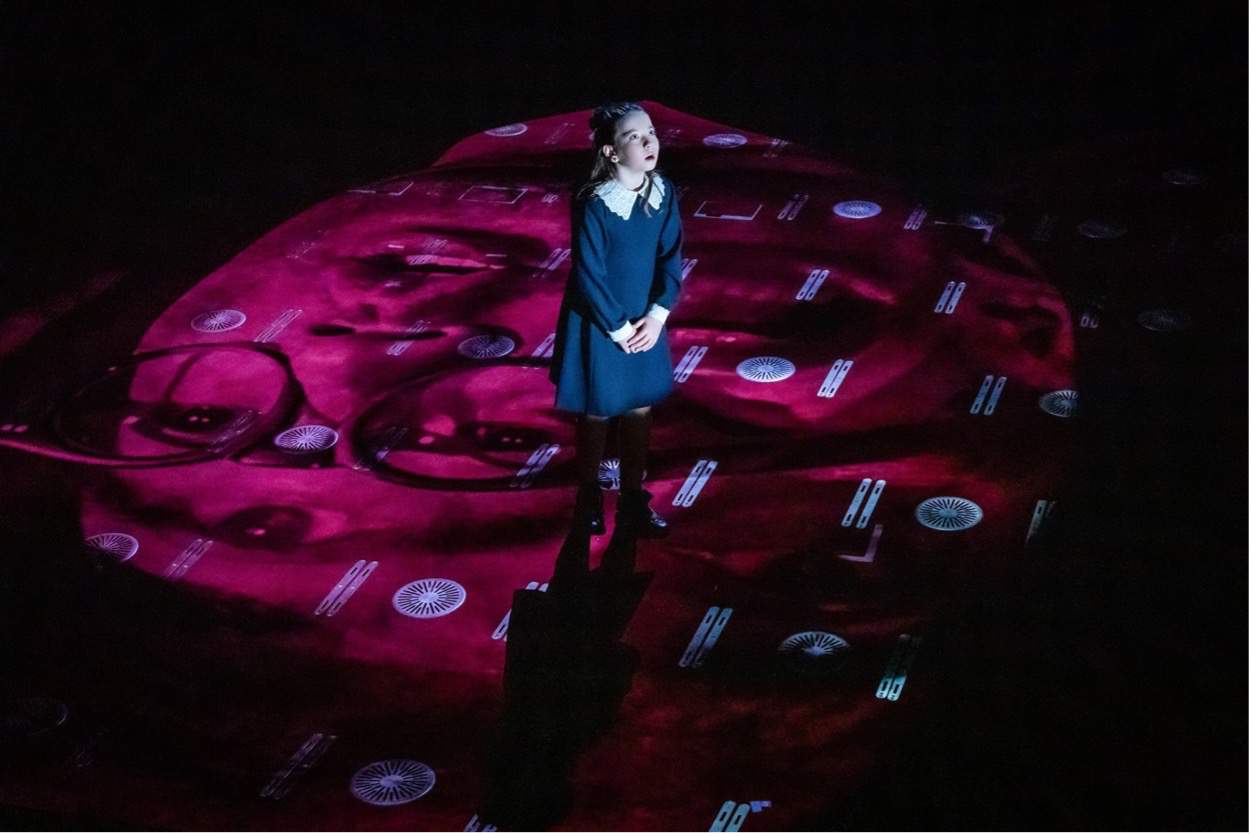
The staging has – in this bizarre time where audience and stage are sometimes far apart – taken the turn of a visual narrative. The leading actress, a young girl, is drawn into Elisabeth's story. As a spectator, she takes her place, immerses herself, and even conducts along. Ultimately, she plays an active, visual role in the opera, and in a kind of pantomime recreates what happens during the alternating opera excerpts. This gives the concert scenario an extra dimension. The vocal layer is reinforced by visual emotions and body language. In doing so, everyone is invited to the theatre – in the staging, the child is warmly welcomed and waved off by Elisabeth – even though reality is different.
Bel Canto elegance
Clearly audible are the rapidly successive high leaps and bright coloratura passages for which the opera is known. From the duet between Leicester and the antagonist Norfolk, it becomes apparent how both perform daring leaps that approach the bravura of a Verdi tenor, and this with the speed of a powerful coloratura passage à la Rossini. There is not a single moment in which technical power and endurance are not required in this production. All performers, from chorus to soloist, bring this music with a Bel Canto elegance that is captivating. Furthermore, it is clear that Elisabetta, regina d'Inghilterra in both story and music carries pure and captivating Italian charm. This evening was no less than that. The production of The Queen and her Favourite is an immersion in the world of Rossini's Bel Canto, and the love of the historical Virgin Queen for the man who would never be hers.
- WHAT: The Queen and her Favourite: Gioachino Rossini's Elisabetta, regina d'Inghilterra (1815)
- WHO: De Munt/La Monnaie
- WHEN: from March 11 (livestream available for one week after the premiere)
- PRODUCTION: Production De Munt/La Monnaie (co-production with Shelter Prod and Prospero MM Productions), seen March 11, 2021
- BROADCASTS: Klara on April 24, 2021, Musiq3 on April 24, 2021
- LINKS: preview conversation with explanation of Bel Canto and this production
- PHOTOS: © De Munt / La Monnaie