Gouden Label Opera & Muziektheater – The original version of Don Carlos, as Giuseppe Verdi truly intended it, was the choice of the Opéra de Wallonie. It lasts four hours and thirty minutes, which is not little and can be daunting. Already in Verdi's time, it was eagerly cut. As a result, a host of versions exist, because almost every opera house intervened in its own way.
About the opera house in Liège
The friendly atmosphere, the human warmth and the familial character already set the Walloon opera house apart from most others. Everything revolves around offering the audience as much Beauty as possible. And whether that succeeded with the complete version of Don Carlos!
Stefano Mazzonis di Pralafera is not only the director of the house, which you could almost call an extension of Italy, but also an artistic jack-of-all-trades who is driven and chooses, as uncompromisingly as possible, for pure opera: the story and the music as the composer and librettist once intended them. That has become a great rarity and is even viewed somewhat pityingly in the opera world. The audience, the artists and the entire team of staff, however, agree more than once with the vision of the management, and that is a strong draw. It makes working more pleasant for the musicians, set builders, the costume workshop and so on. It provides ample satisfaction and a sense of profound artistic commitment. Just talk to singers after yet another production that fits the music and the story like a square peg in a round hole, and talk to singers after such a 'fusty spectacle' in Liège...
Four hours and three quarters flew by
"We perform the opera in full," was the motto of Stefano Mazzonis, who took direction of the production upon himself right away. This drew extra attention, because it rarely happens that the complete opera is performed anywhere. Among other things, for that reason alone it is a good thing that this production is being filmed and broadcast on 14 February this year. In my view, it should be released on DVD (!).
With operas that run long, the attention of the viewer/listener can sometimes flag. Sometimes you even long for the end. Understandable. Equally understandable is that this was not the case at all here. The whole holds together so strongly on all fronts that you only realise the opera lasted so long when you notice on your watch: "Hey? Is it really that late already?"
What did the audience hear and see that provoked such enthusiasm?
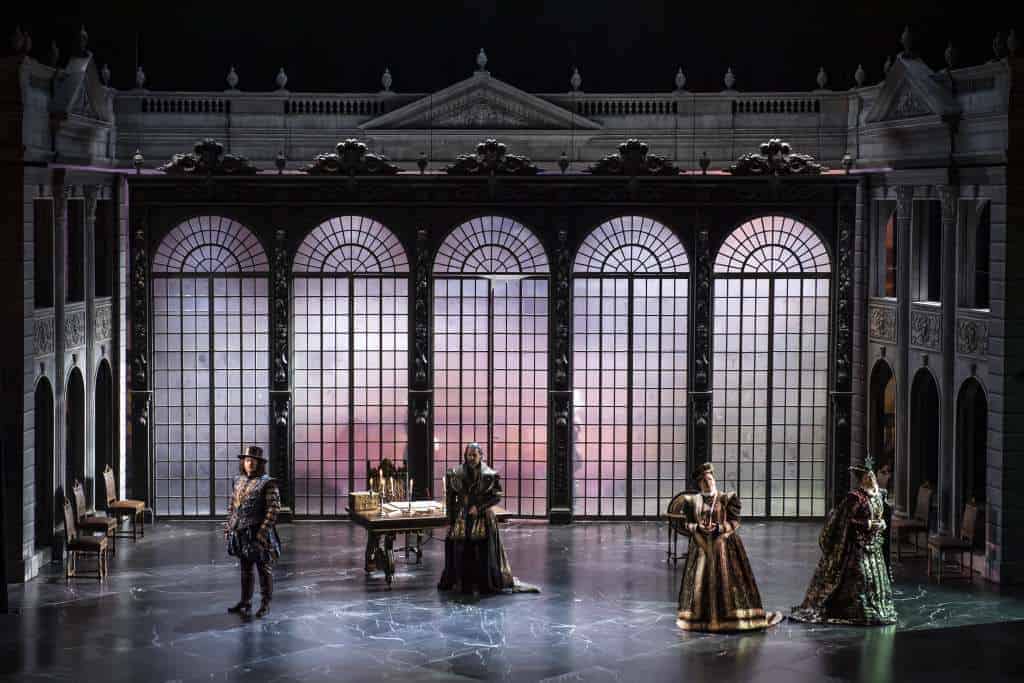
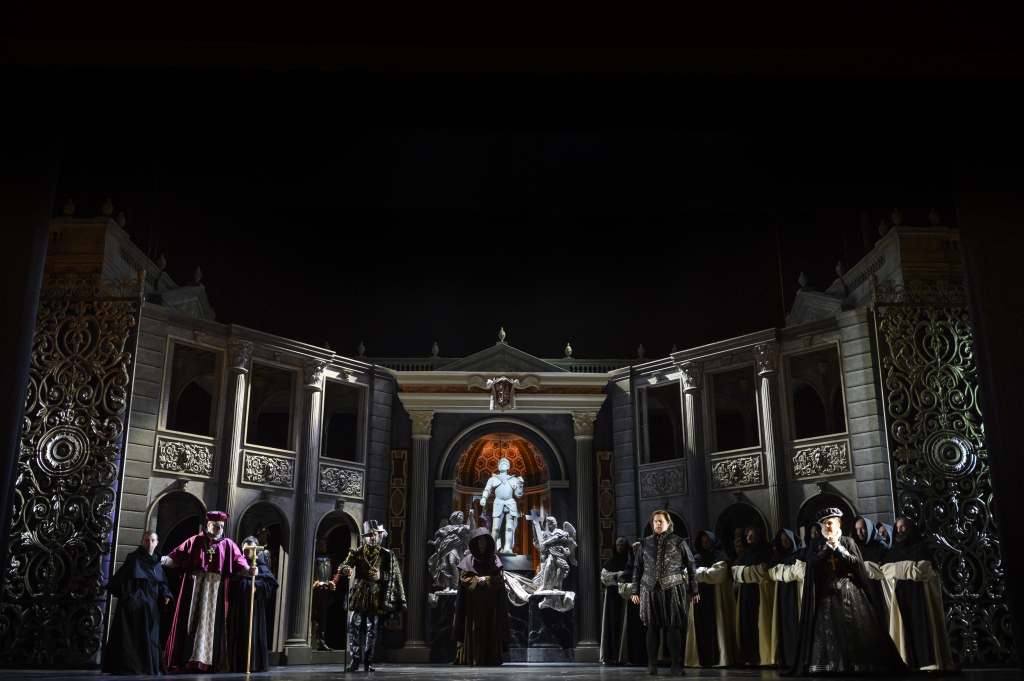
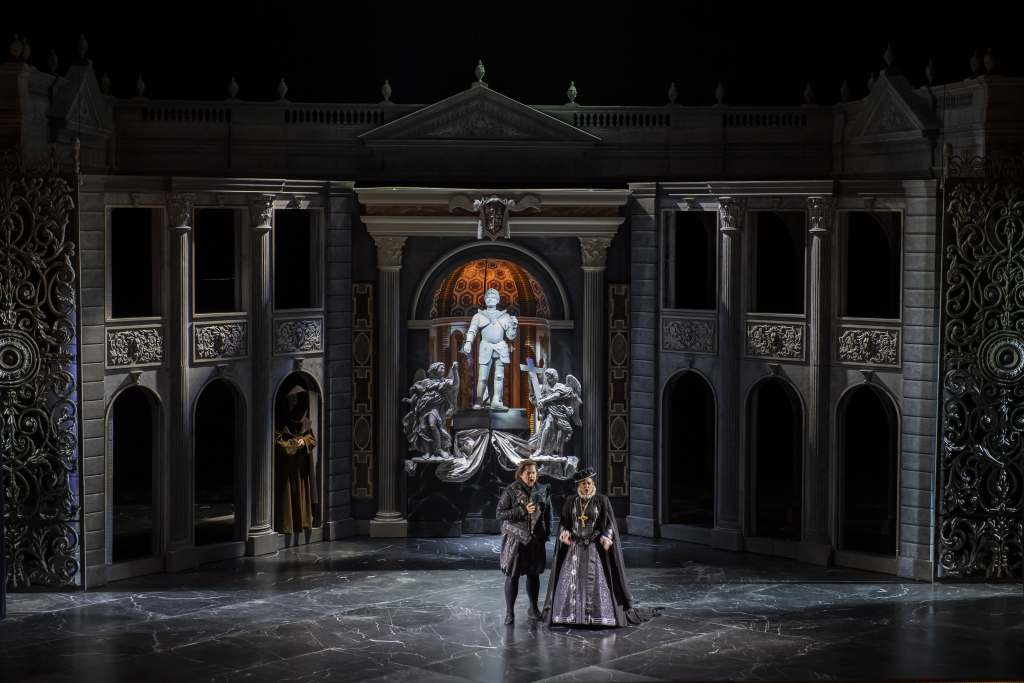
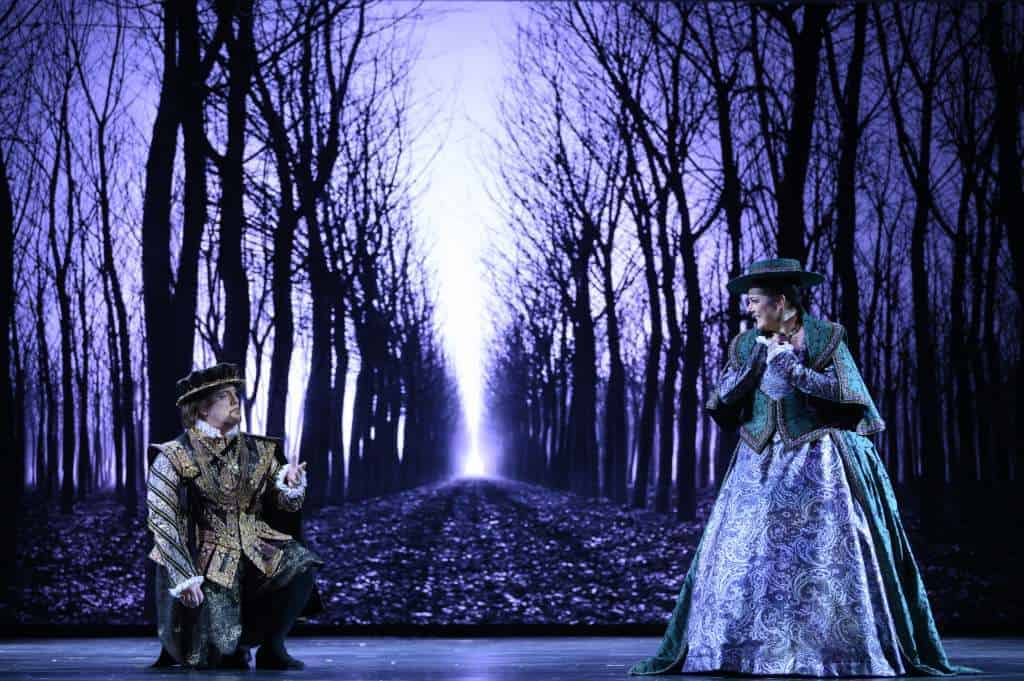
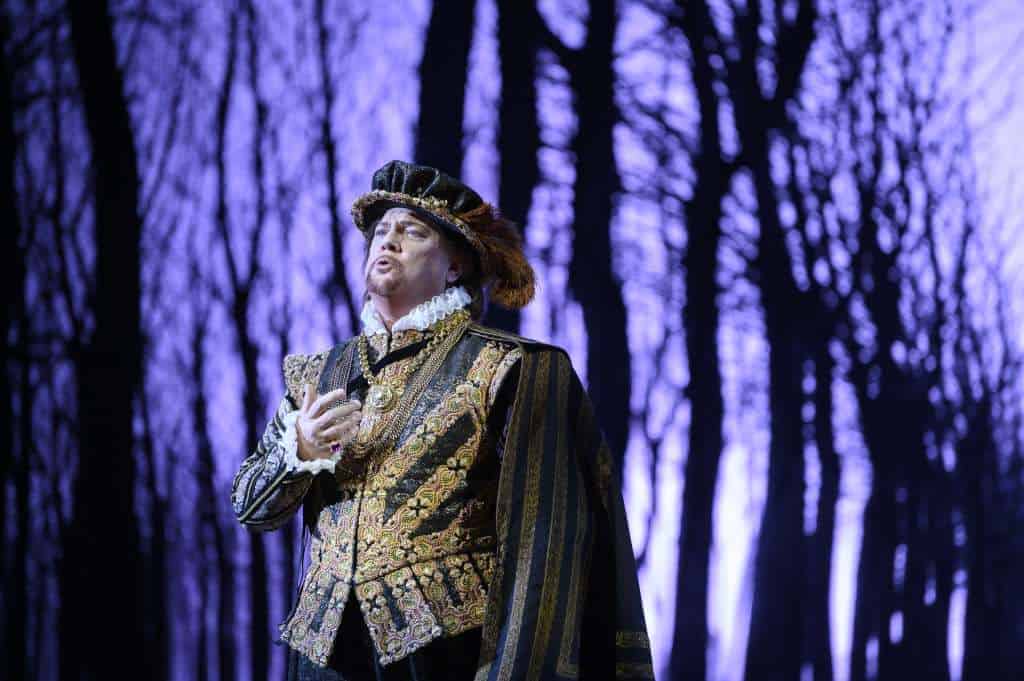
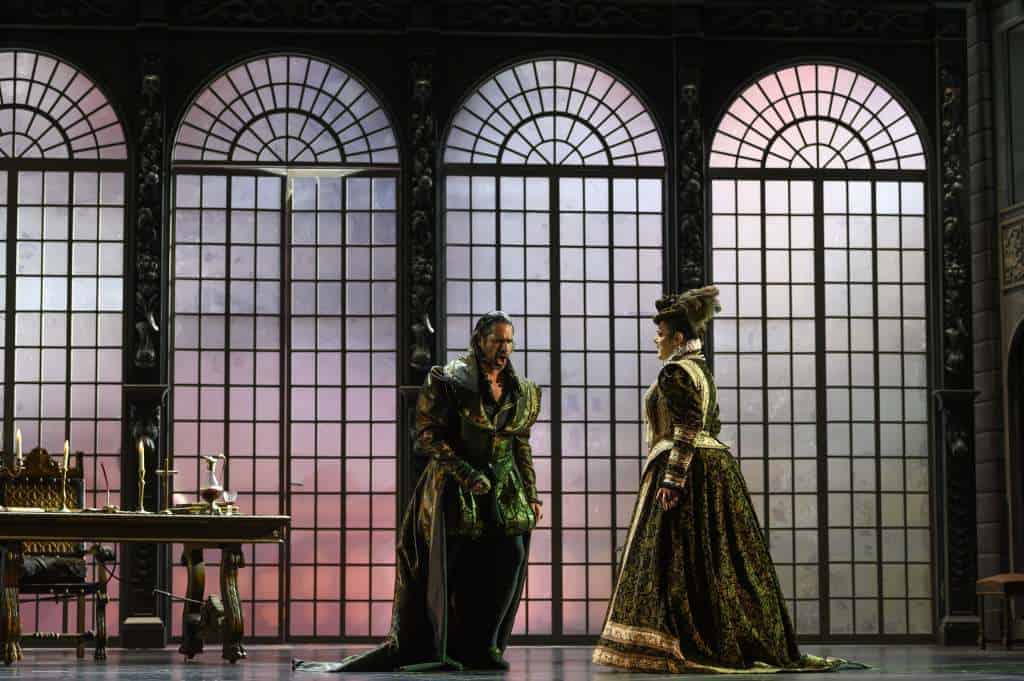
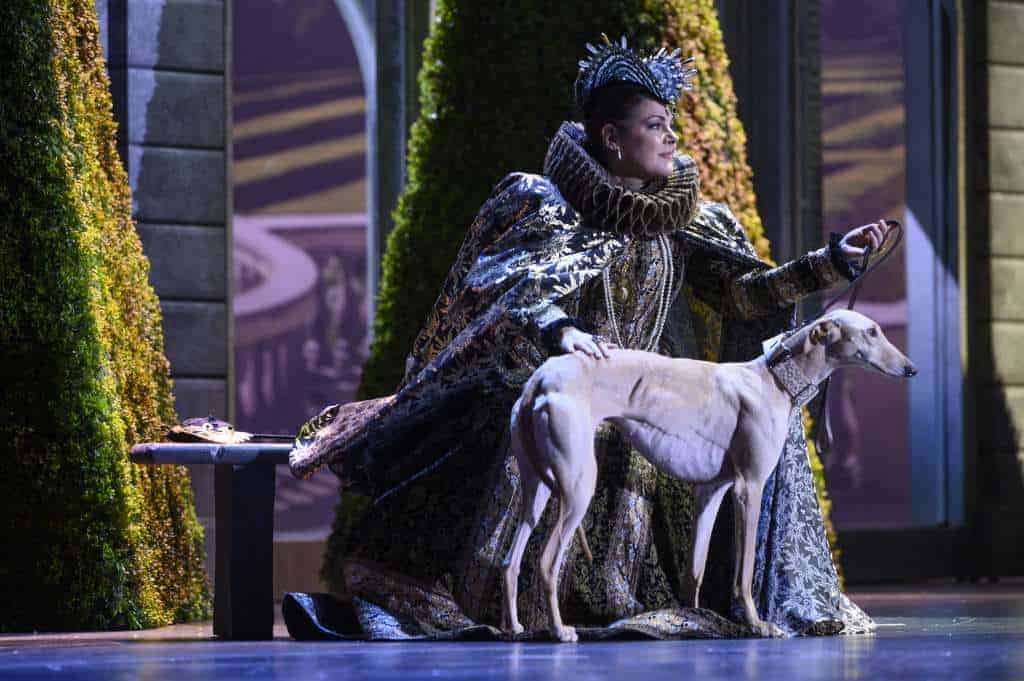
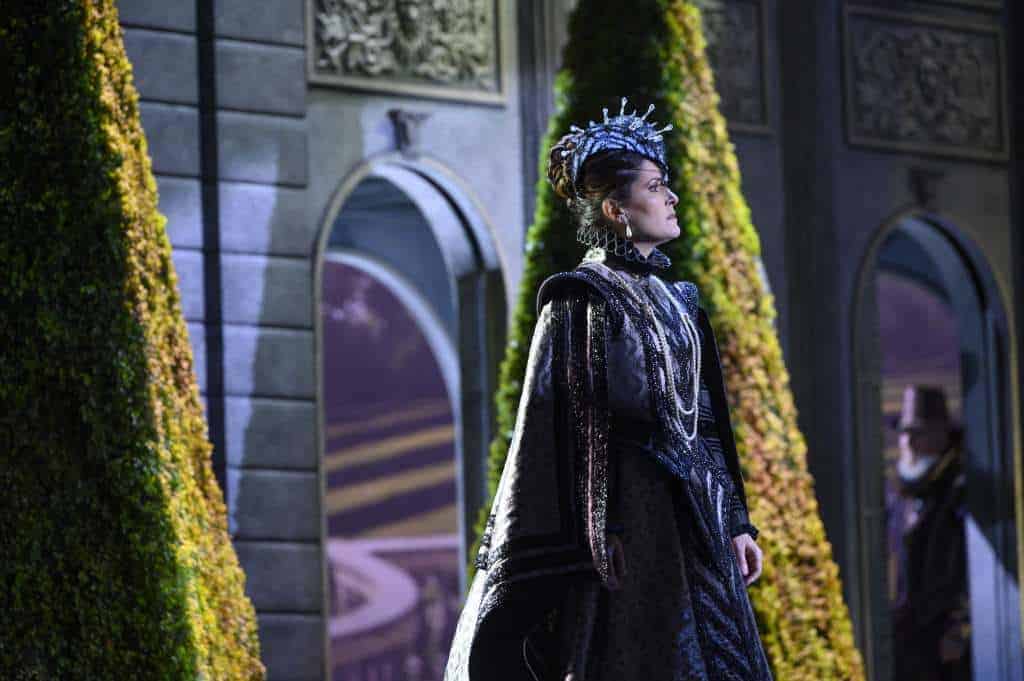
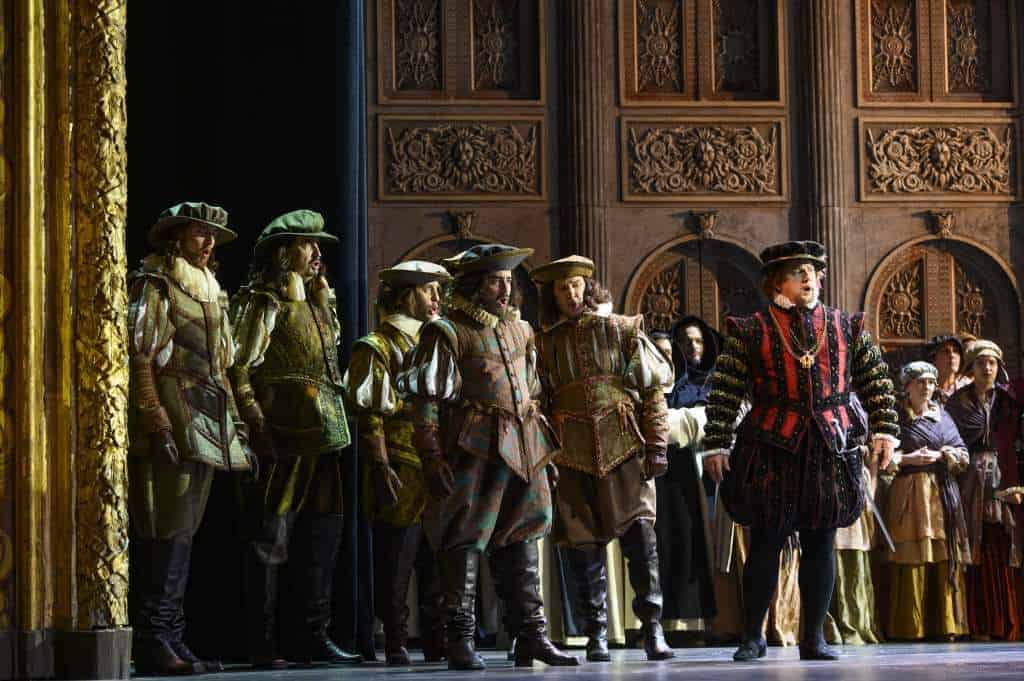
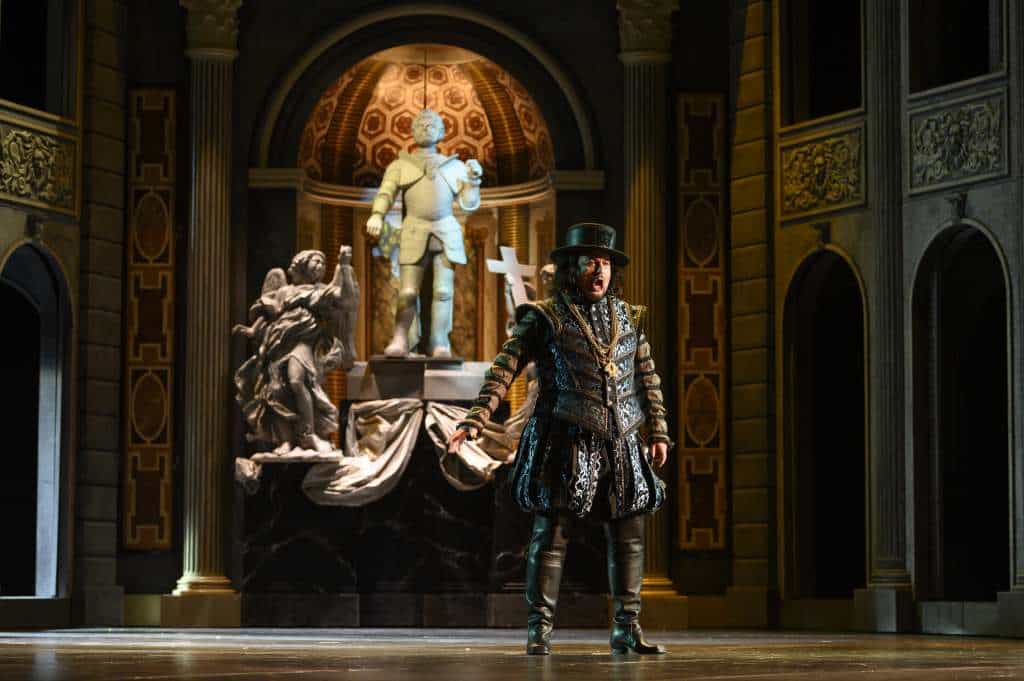
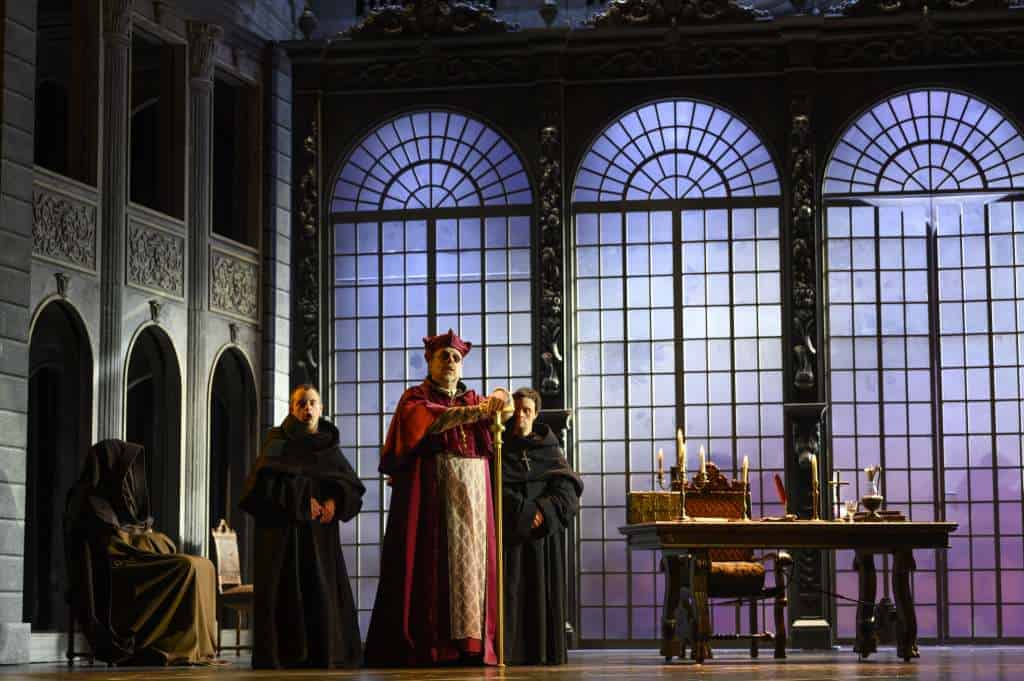
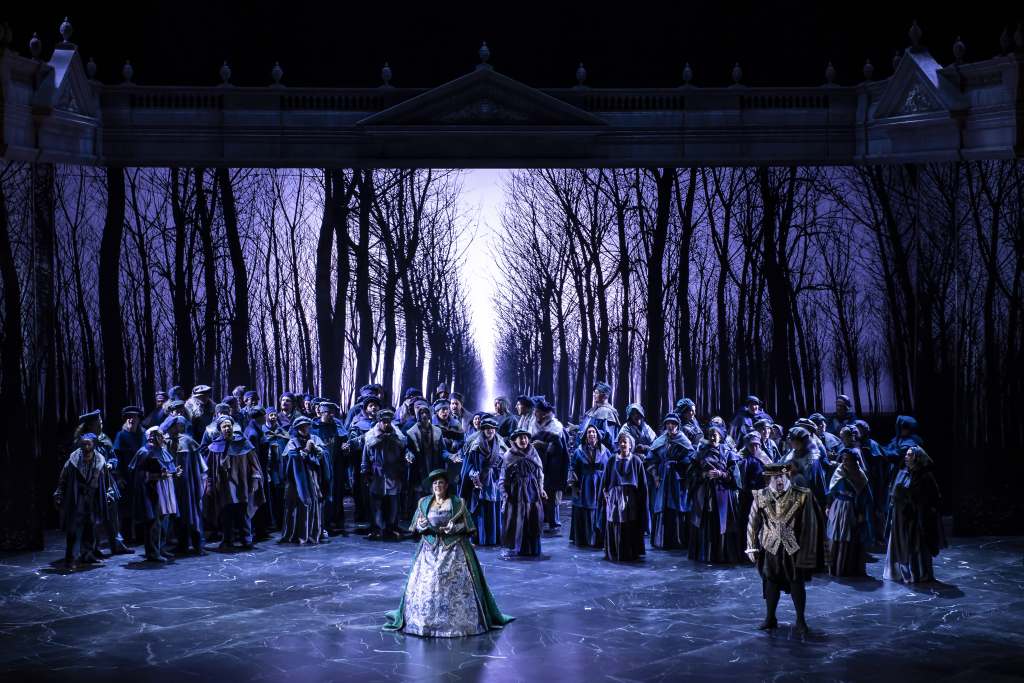
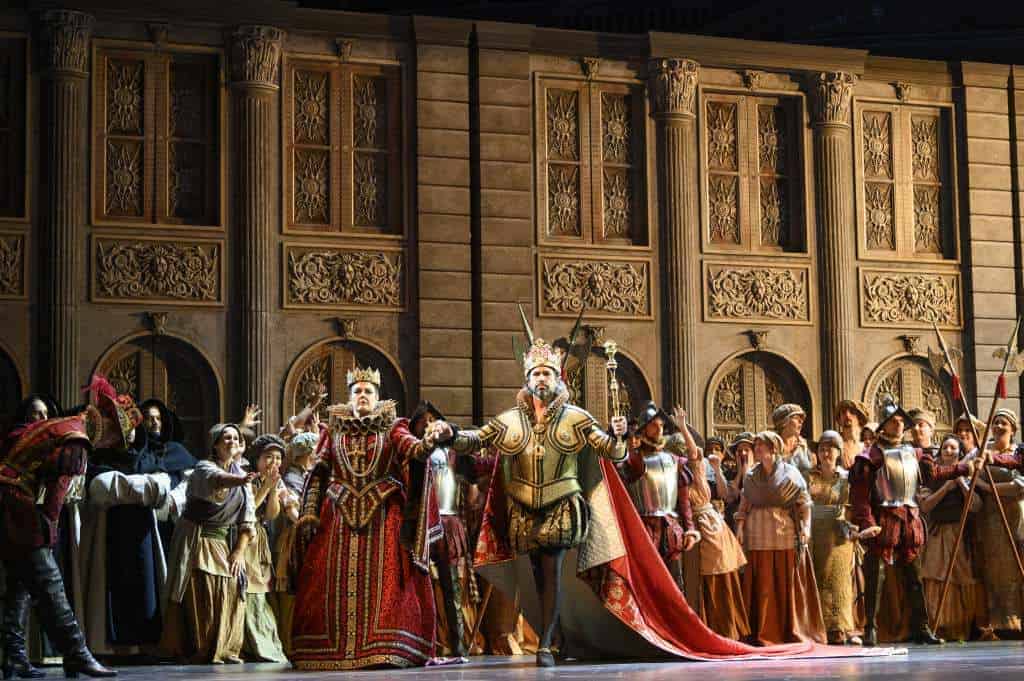
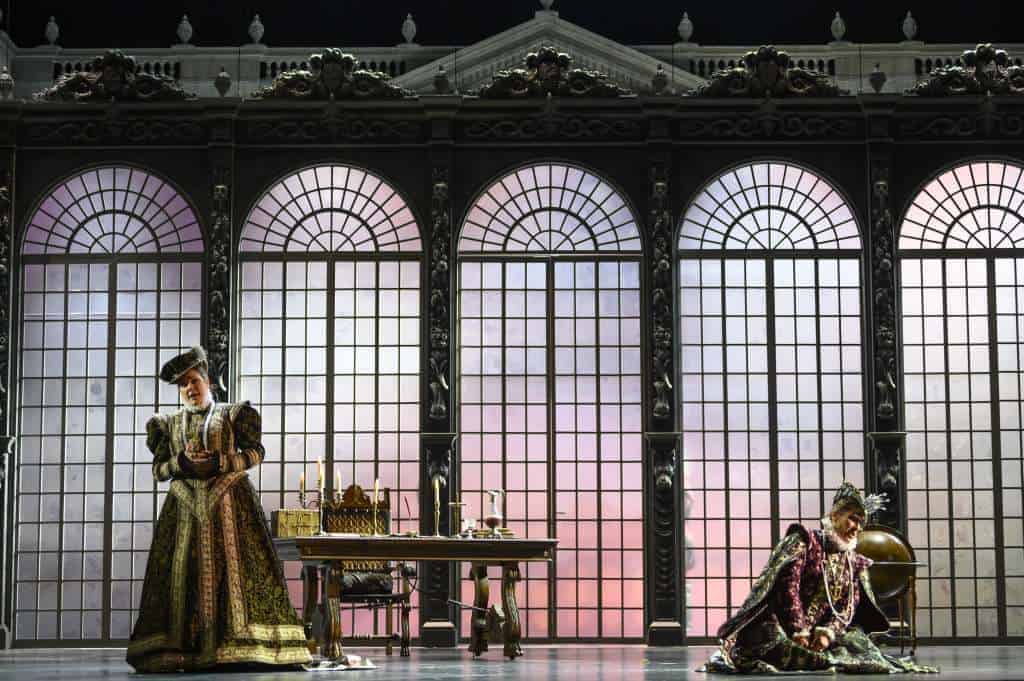
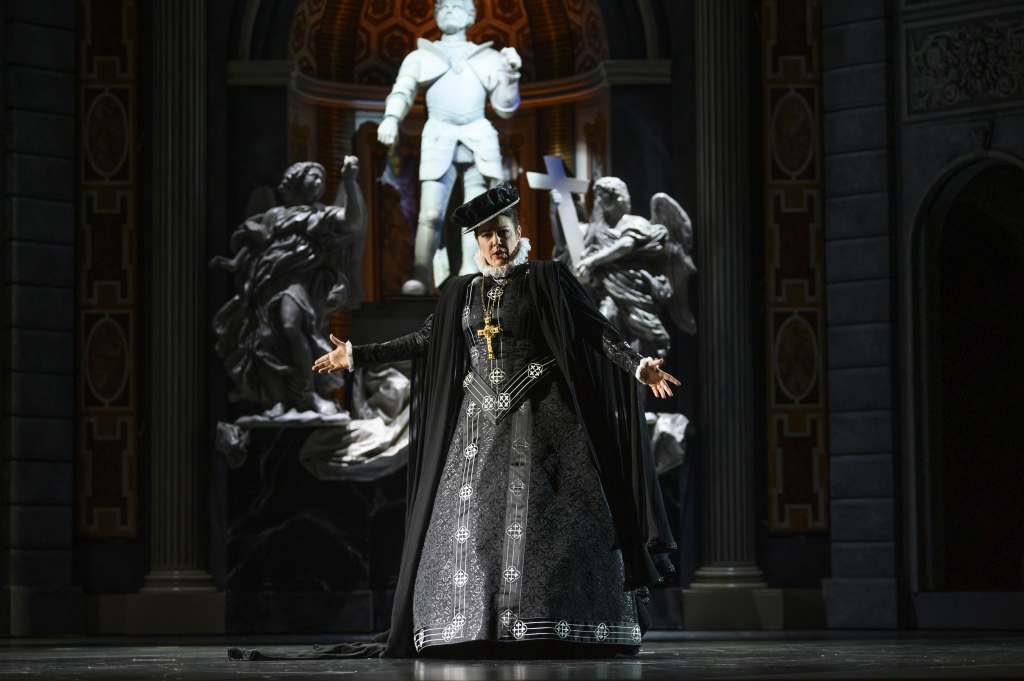
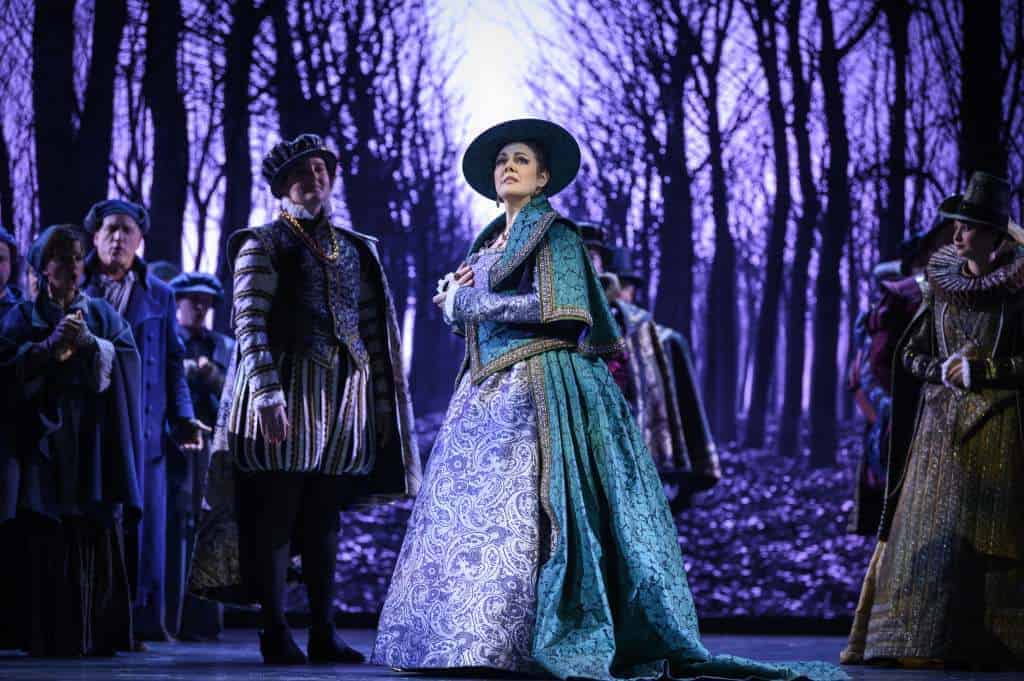
The eye was continually delighted by the beautifully detailed costumes of the great nobility of the 16th century, the time of the Spanish Habsburgs and Philip II. Renaissance throughout, and you see that in the sets as well, which look as if they were cut out of a Spanish palace of the time. The common people are dressed as they were, soberly. With a well-considered use of lighting, every scene, whether it takes place in the forest, the chapel or the palace garden, is given colour and accents. The theatrical element is amply present in this opera, and yes, of course, the splendour of noble life at the time provides inspiration. It comes back to life on stage.
Don Carlos, the son of Philip II, is betrothed to the daughter of the French king, with whom his father is at war. To secure peace, however, the French king does not give his daughter to Don Carlos despite the engagement, but to his father, who thereby greatly enlarges his realm and influence in Europe. Elisabeth de Valois will become his third wife. The young couple, who have just declared their longing for each other at length and in breadth and are fantasising about their future, must learn this in the forest of Fontainebleau. A cold shower. It would be one of the reasons why a great rivalry and hatred arose between father and son.
History teaches us that Don Carlos, heir to the throne, was not very sound of mind and that he died at the age of 23 in circumstances that remain unclear. That ambiguity is also strongly evoked in this opera, right at the end, where Don Carlos steps into the opening tomb monument of Emperor Charles V, his grandfather.
Verdi and his librettists Camille du Locle and Joseph Méry (inspired by the play Don Carlos, Infant von Spanien by Friedrich Schiller) shy away from nothing in depicting the dictatorial traits of Philip II. The Spanish Inquisition and the oppression of the Flemings and Brabanders, together with the love story between Don Carlos and Elisabeth on the one hand and the loyal bond of friendship between Carlos and Rodrigue, the Marquis of Posa, on the other, form the red thread running through the story. The latter makes clear to Carlos how the noble people of the Low Countries are being wronged, and does everything to persuade Carlos to come to Flanders to put an end to the oppression. History teaches us that Carlos may well have attempted this too, but Philip II sent the Duke of Alba, with all its consequences, and Carlos 'suddenly' found death somewhere. Anything but fair is the history of the possibly religiously and grandiosely deluded Philip II, who felt strengthened and encouraged in everything by the very harsh repression of the all-powerful Grand Inquisitor.
The persecution by the Inquisition comes to life on stage. You see how the heretics, dressed in a foolish habit, are driven in cages past the Escorial, the megalomaniac abbey palace of Philip II, while other heretics pull and push the carts as they are whipped by soldiers and the people spit at them. They are part of the coronation celebration, where banner-bearers color this gloomy feast. On the small stage of the Liège opera house you consider it impossible, but Mazzonis does it: you have the impression of experiencing a very large event from very close by. It makes the audience fall silent; you feel people thinking and undergoing emotions.
Singers / actors move
Such a strong story with this kind of direction requires not only an outstanding orchestra and chorus – and both excelled. I had never heard the orchestra, about which I had some remarks before, make music better. It could compete with all the other great opera houses. Top! Conductor Paolo Arrivabeni was in full swing and a single burst of inspiration. That, together with everything happening on stage, could not but have given the singers an extra charge of artistic adrenaline to perform even better.
Let's run through the list. Don Carlos was sung by the American tenor Gregory Kunde. What a voice, what a performance! He was simply the young, honest, loyal king's son and could move the audience, but other voices would also move. The Italian bass Ildebrando D'Arcangelo delivered an impressive, characterful Philip II. The resonant dark, commanding voice, his piercing gaze… And then there was the poor Elisabeth de Valois, the woman who was never allowed to know true love. Although the soprano Yolanda Auyanet was ill, she sang this loving role with great devotion. A performance that deserved extra applause! The treacherous and too late remorseful Princess Eboli, who will betray Don Carlos, Elisabeth and his friend out of jealousy, was perfectly portrayed by Kate Aldrich, who was a guest at the Opéra Royal de Wallonie / Liège for the first time.
Whoever portrayed a role that you can or must call world class without any reservation was Lionel Lhote as the Marquis of Posa. The duet in which he and Don Carlos swear the oath of friendship, and then his death scene, may in my opinion be placed among the greatest performances you have ever been privileged to experience. You quite literally tremble in your trousers when the bloodthirsty Grand Inquisitor, full of commanding demands, sings his deadly words. Roberto Scandiuzzi, bass, can hardly be seen in another role. The smaller roles are also all beautifully filled, whether somewhat more modest or not, but nonetheless entirely fitting as they should be.
This opera house deserves a special word of appreciation because in almost every production it involves people from the margins of our society and thus includes them in the whole and gives them dignity. It is a particularly beautiful gesture of humanity.
What came over me, I still don't know, but I could not and cannot shake the impression that this opera production was probably the most beautiful I have ever experienced. Our contributor Matthias De Bel was equally speechless and after the applause said to me: "Actually, I have never seen a better opera." That impression was also heard confirmed in the corridors. A nomination for the Gouden Label Opera & Muziektheater is therefore more than deserved.
- WHAT: Don Carlos, opera by Giuseppe Verdi to a libretto by Camille du Locle and Joseph Méry
- WHERE & WHEN: Opéra Royal de Wallonie, Liège, premiere 30 January 2020
- WHO: conductor: Paolo Arrivabeni - Orchestra and chorus of the Opéra Royal de Wallonie – direction: Stefano Mazzonis di Pralafera – sets: Gary Mc Cann – costumes: Fernand Ruiz – lighting: Franco Marri – chorus director: Pierre Iodice
- VOICES LEAD ROLES: Gregory Kunde, Ildebrando D'Arcangelo, Yolanda Auyanet, Kate Aldrich, Lionel Lhote, Roberto Scandiuzzi
- IMAGE MATERIAL: © Opéra de Wallonie
[embed]https://youtu.be/OWbsMcJmcxI[/embed]
[embed]https://www.youtube.com/watch?v=ou10iiL20Jk[/embed]
[embed]https://www.youtube.com/watch?v=vBf4mZhqTNo[/embed]