Liège, 22 August 2026 — With an almost full house, a drenched shirt and applause lasting minutes, the Opéra Royal de Wallonie-Liège launched the 2026-2027 season. Music Director Giampaolo Bisanti conducted the orchestra and choir through a programme that was more cleverly constructed than an ordinary anthology.
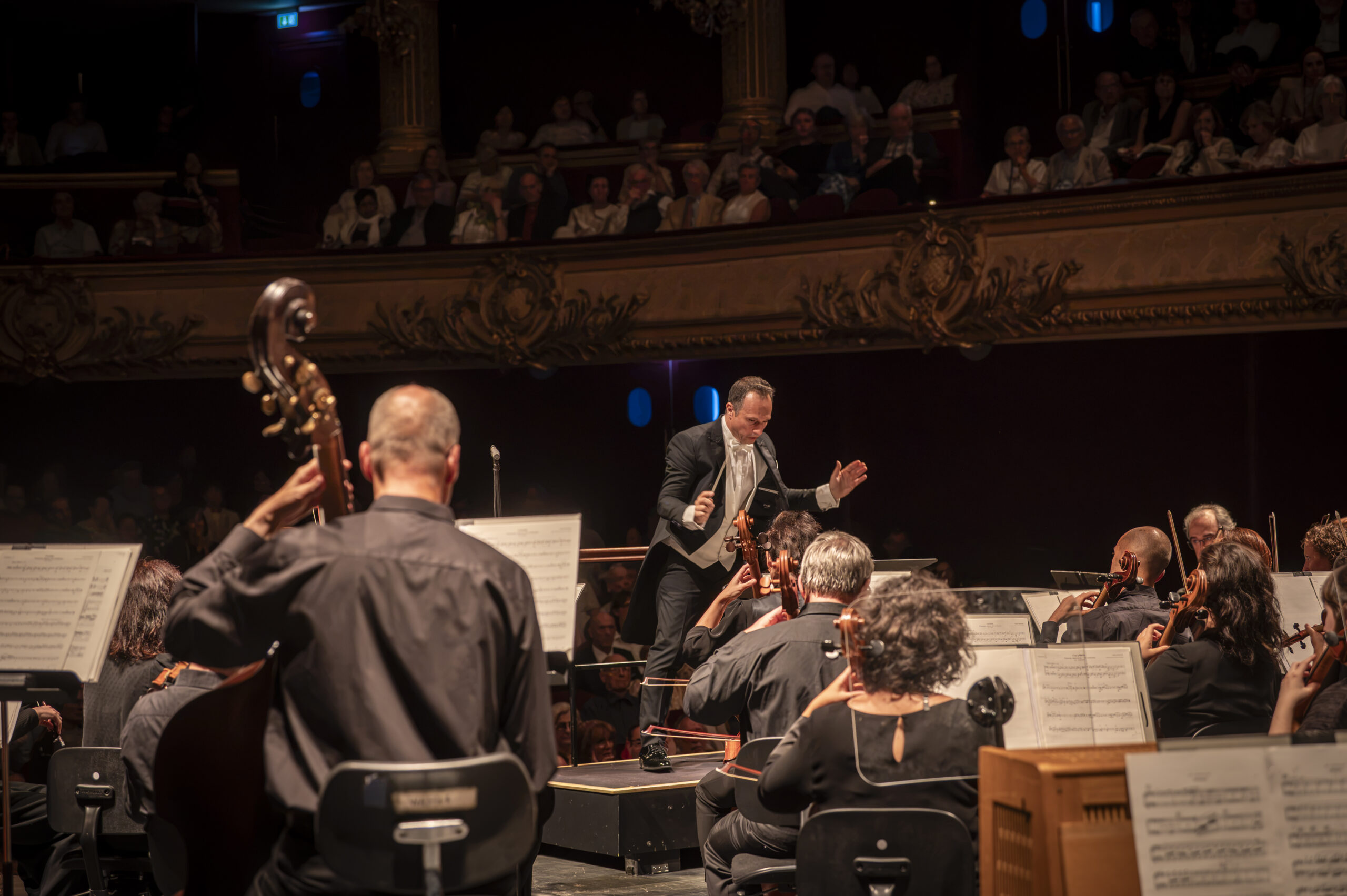
The same ritual every year, and every year it works. The opening concert of the Opéra Royal de Wallonie-Liège is not a performance, but a reunion: the orchestra returns to the stage, the audience returns to the hall, and the season takes its first breath. On 22 August, the Théâtre Royal was virtually sold out — here and there an empty seat, nothing more. An introductory address highlighted the new season, which bears the title Pouvoirs, Désirs: power and desire as a double thread running through ten operas.
Then came seventy-five minutes of music, without a break, in one continuous arc.
The idea behind the programme
Those who expected the house to simply serve up the highlights of the upcoming operas were disappointed. The concept was reversed: for each composer featured on the season's bill, a different work by that same hand was heard. A detour then, and it was precisely that detour that made the evening interesting.
The orchestra opened with the overture to Stiffelio, not with that to Macbeth — while it is precisely Macbeth that opens the opera season on 18 September. Stiffelio (1850) is one of Verdi's most heavily censored and least performed works: the story of a Protestant minister who discovers that his wife betrayed him. Verdi later reworked it into Aroldo, and the original opera virtually disappeared from the repertoire.
Immediately after came the choir directly from Macbeth: "Patria oppressa", the lament of Scottish exiles that opens the fourth act. Full and dark it sounded, with the weight that choir needs — and it made the season's power theme audible in one fell swoop.
Ravel was present with "Laideronnette, impératrice des pagodes" from Ma Mère l'Oye: pentatonic, glittering, almost gamelan-like in timbre. A foretaste of the double bill L'Heure espagnole / L'Enfant et les sortilèges at the end of October.
The living composer
The odd one out was Corybas – Fantastic Dances for Orchestra by Andrea Battistoni, house composer in Liège since 2025. The work, about twelve minutes long, premiered in Tokyo with the Tokyo Philharmonic under the composer's own direction. The title refers to the Corybantes, the armed dancers who worshipped the goddess Cybele with drumming and dance — and you hear that rhythmic, somewhat wild character.
To be honest: for a listener without deep background in contemporary repertoire, this is not easy music. It demands attention and does not reveal itself readily. That Liège dares to place it between Verdi and Smetana, on the evening when the most diverse audience of the year is in the hall, is a statement. Battistoni returns twice more this season: with the world premiere of his Zombie Opera in November, and with an entirely new, darker ending he composed to order for Turandot.
Among the rarities were also the overture to Massenet's Le Cid (1885) — alluding to Thaïs — and, even more remarkably, Wagner's overture Christoph Columbus (WWV 37). This is incidental music by a twenty-two-year-old Wagner for a play by his friend Theodor Apel, written years before he became the Wagner we know. It is almost never performed. The same applies to the Concert Overture in A minor by Richard Strauss, composed when he was nineteen: still full of Brahms and Mendelssohn, not a trace yet of Salome. Both pieces point to what comes later — Lohengrin in January, Capriccio as a Liège premiere.
The highlight of the evening came from Smetana. "Vltava" from Má vlast — the Moldau — is the best-known work on the programme and was received as such: the melody carries itself, the hall went along from the first flute figures. The orchestra played the river from spring to broad stream with visible pleasure. Those who dismiss it as a safe choice forget that the opera to which it alludes, Smetana's Hubička, is a Liège premiere this season and is scarcely heard outside the Czech Republic.
Puccini closed with "La tregenda" from Le Villi, the witches' sabbath from his very first opera of 1884 — a short, whirling instrumental scene, and the logical stepping stone to Turandot at the end of the season.
Bisanti
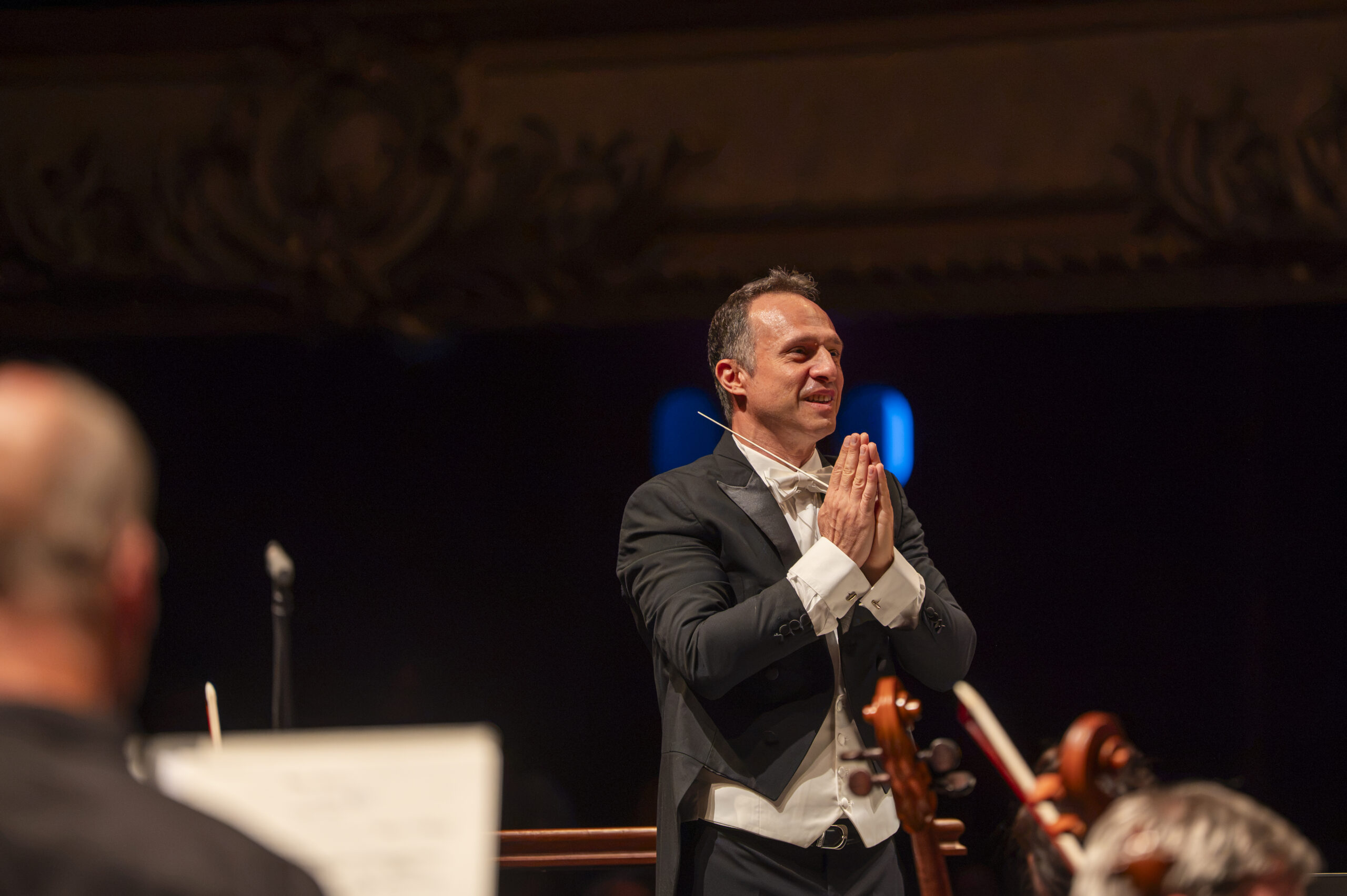
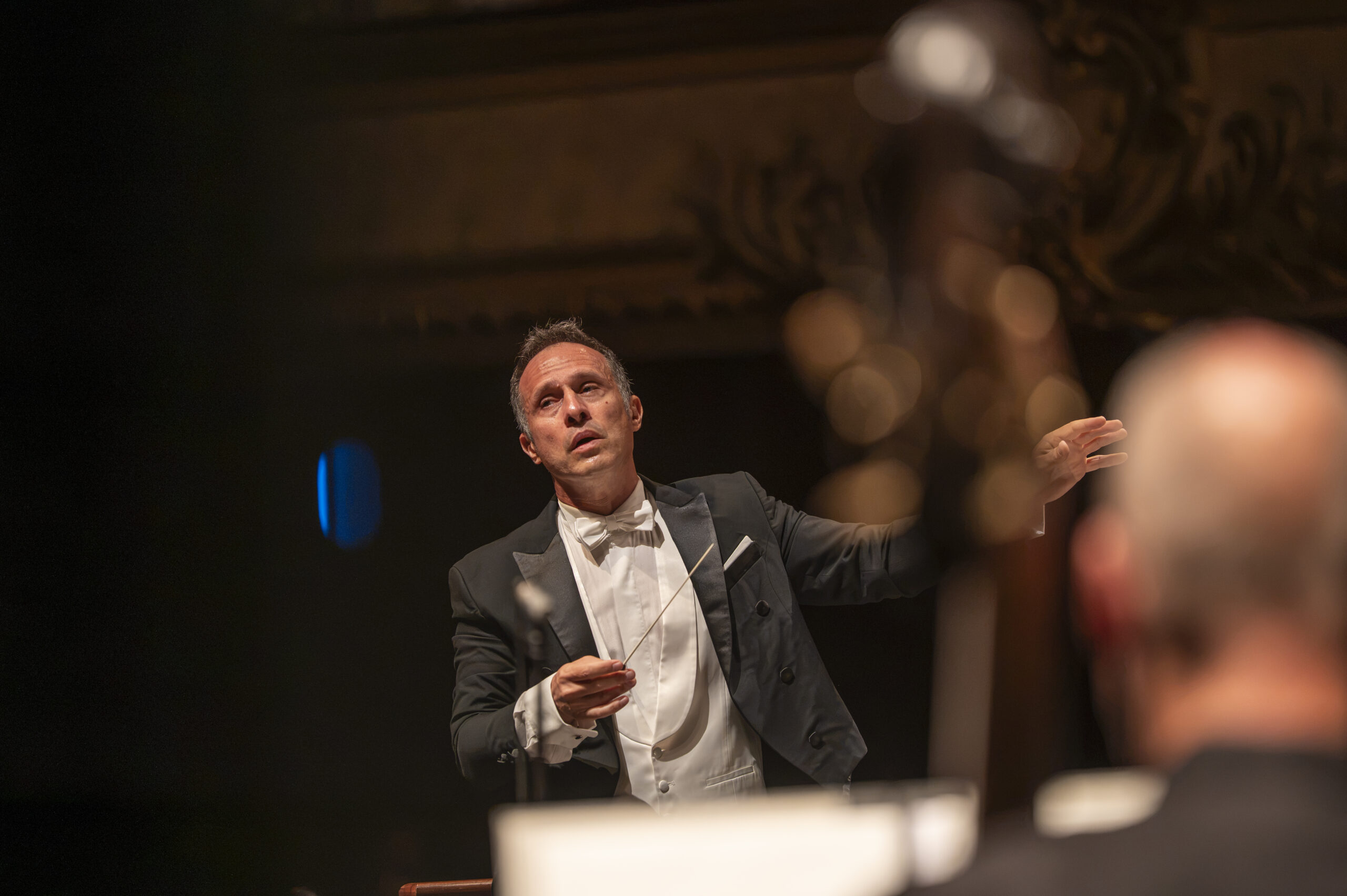
And then the conductor. Giampaolo Bisanti conducts with his whole body: large gesture, through the knees, down to little jumps, and constant eye contact with the groups before him. By the end his shirt was drenched. The audience rewarded him with applause that lasted for minutes, and he did what a good house conductor does: repeatedly put someone else in focus, group after group, soloist after soloist. The bond between this conductor and this house is both audible and visible.
One reservation remains. The choir had only one number, and that is a pity — precisely because "Patria oppressa" showed what this group has to offer. On an evening explicitly presented as a reunion of the whole house, half of that house deserved to have the floor more often.
Otherwise: the season is open. And it is one worth keeping an eye on.