

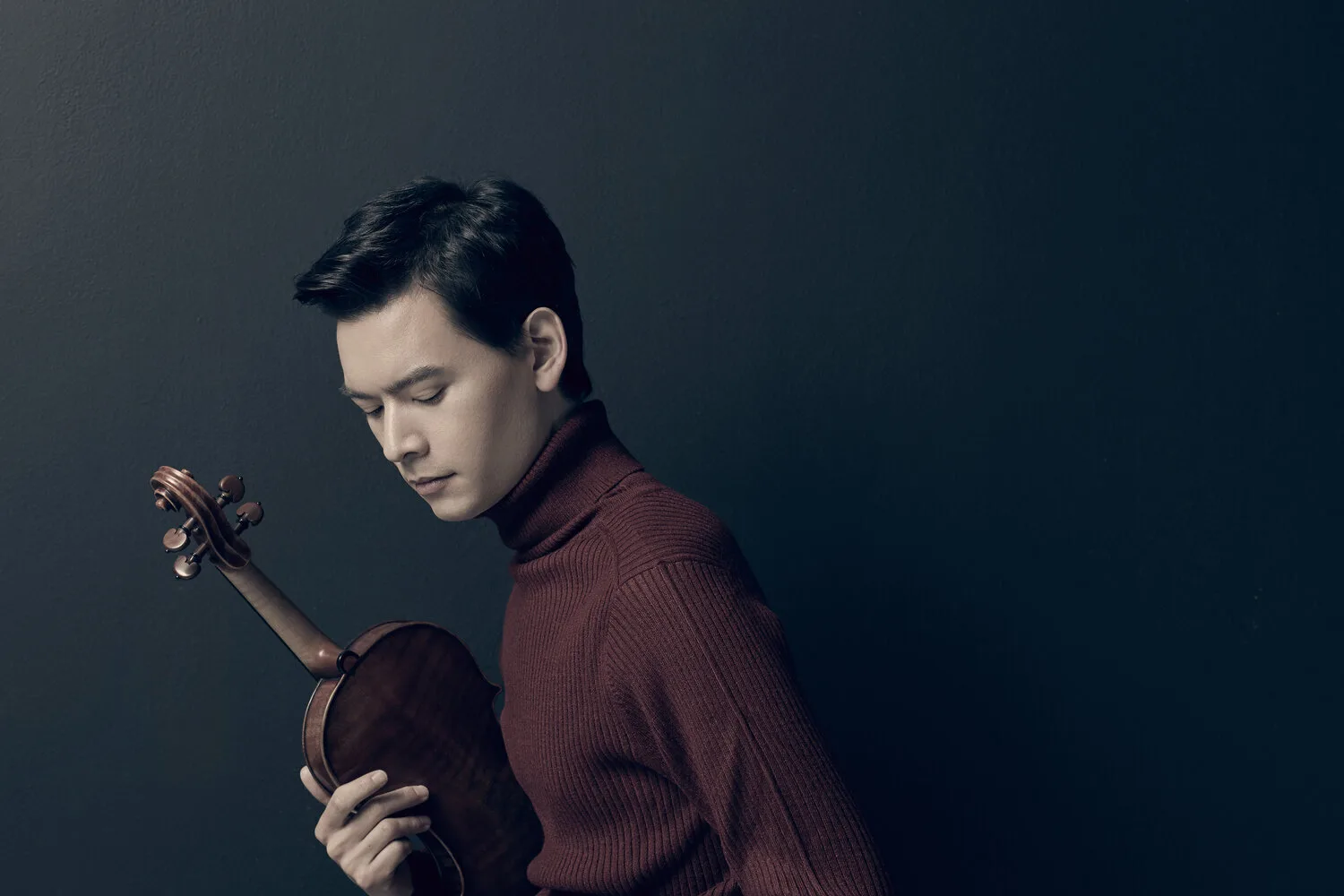
Violist Stefan Jackiw is this season artist in residence at the Residentie Orkest in The Hague. We had an extensive conversation with him about his musical formation, vulnerability on stage, his Montagnana violin, and why he is becoming less and less interested in proving himself.
A musician in motion
For those who don't yet know him: Jackiw first and foremost describes himself as someone who is still curious. Despite a long professional career, his relationship with the violin and the repertoire still doesn't feel "finished": "I'm constantly reconsidering how I want to sound, how I want a phrase to speak, and what I want to convey to an audience." Alongside the great violin repertoire, chamber music and teaching are equally important parts of his musical life. What interests him most in these is communication: between musicians, between performer and composer, and ultimately between stage and audience.
Jackiw started playing the violin at the age of four, more or less by chance. According to him, there was no single decisive moment when he decided to become a musician – it became gradually more serious as he became more emotionally involved with music and discovered the repertoire he loved. At some point he realised that the violin was not simply something he happened to be good at: it had become the way he expressed himself most naturally. Youth orchestras and summer camps, where he met peers with the same passion, were important steps in his development.
Notably, he stresses that music never defined his whole identity. School and people whose lives had nothing to do with music remained important to him, and that broader perspective has stayed with him: "Music is about human experience. If your entire experience consists of practising the violin, eventually there's a limit to what you can say through it."
That inquiring attitude also comes through in the way he approaches a piece. Jackiw grew up with two theoretical physicists as parents and studied at Harvard: "You weren't expected to accept something simply because an authority told you so." When studying music, he keeps asking why a harmony sounds the way it does, why a composer asks for a particular articulation, why one tempo makes a structure feel inevitable and another makes it feel episodic, and why a passage that seems technically correct sometimes fails to communicate. But analysis is never an end in itself: "Ideally, you do all that questioning in the practice room, so that on stage the music can be felt spontaneously and emotionally in the moment."
Outside music, he finds rest in running. "Music is full of judgement: you're constantly listening, adjusting, comparing, evaluating. With running I can simply move. There's something meditative about the repetition, and physically it helps me reset after so many hours spent on something as asymmetrical and precise as playing the violin." Time with loved ones, good food, travelling without concert obligations – these are things he says he values more now than when he was younger.
Room for vulnerability
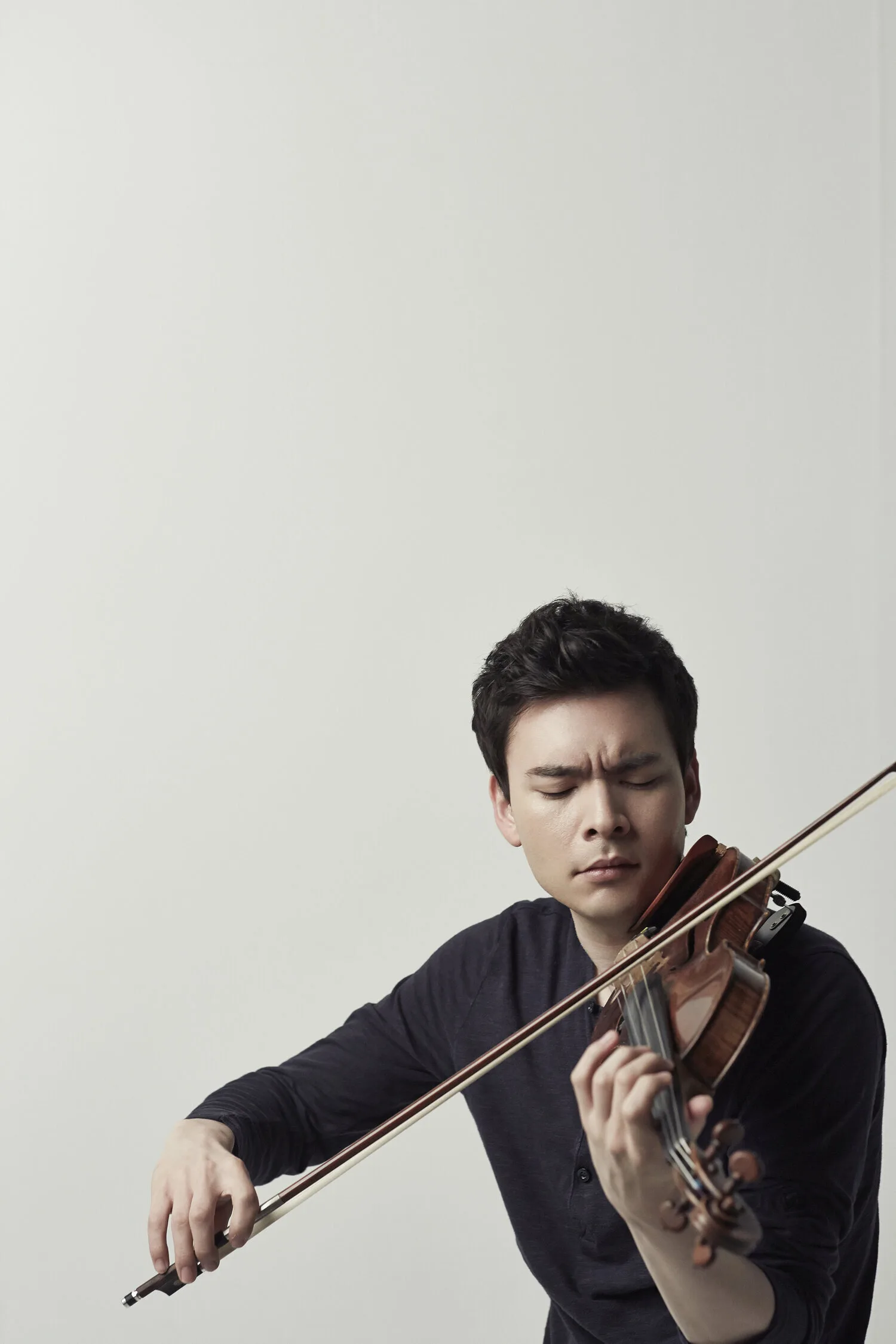 A turning point in his development was his study with Donald Weilerstein, who changed his view of what great violin playing can be. Before that, Jackiw associated musical excellence primarily with control: beautiful sound, technical mastery, consistency, virtuosity. Weilerstein taught him to listen more deeply, to trust his own musical responses, and not to hide behind polish: "The goal is not to show that you can play the violin extremely well. The goal is to say something that feels necessary."
In concrete terms, for Jackiw vulnerability means daring to let go of a degree of control: letting a phrase become extremely soft when playing louder would be safer, or allowing yourself freedom in tempo because the musical tension calls for it. It also means accepting that a performance doesn't have to sound the same every evening: "That shift was difficult for me, because perfectionism was rewarded for a long time. Learning that something could be imperfect and yet more meaningful was enormously liberating."
Perfectionism, he believes, remains valuable in preparation. It forces him to investigate details, solve problems, and accept nothing that could be better; that part of himself he would not want to lose: "The problem arises when that mentality goes on stage with you. At a certain point you have to stop improving the performance and actually give the performance." He has since become better at accepting that he can walk on stage without feeling that everything is perfect – in fact, he isn't sure he has ever had that feeling. The most important question is whether he understands what he wants to say, and whether he is sufficiently prepared to respond freely in the moment itself.
What changes when he returns to music he has known for many years, according to Jackiw, is mainly the person playing it. The notes obviously remain the same, but the relationship to them does not. Pieces he found mainly virtuosic when he was very young now interest him far more for their vulnerability or ambiguity. Passages that once demanded enormous effort now feel physically natural, which allows him to hear entirely different things in them: "That's one of the remarkable things about classical music. You can spend your whole life with the same masterpiece and never really arrive at a definitive interpretation. Ideally, the piece grows along with you while you grow."
Teaching and letting go
Teaching forces Jackiw to articulate precisely what he often does instinctively as a performer. A student who asks why something isn't working needs more than the answer "because it doesn't sound right" – you have to understand the physical or musical reason and communicate it in a way that makes sense to that particular person. That process often sends him back to his own playing with new insights. What he values most is seeing a student gradually become less dependent on the teacher: the goal is not to shape someone who plays the way he does, but to help them develop the ears, technique and confidence to make increasingly independent musical decisions.
A good teacher ultimately provides technique, discipline, listening skills and confidence, but above all teaches a student to teach themselves. Technique is essential – freedom is difficult without the physical means to realise what you hear – but technique is not an end in itself. A teacher must also help develop taste, curiosity and the courage to hold an opinion of one's own: "The teachers who meant the most to me didn't simply give me answers. They changed the questions I asked myself. That is probably the most valuable thing a teacher can pass on."
A longer musical conversation
His Montagnana immediately attracted him through the combination of depth and authority in its sound – a darkness and richness he finds convincing, combined with a strong core. "Living with an instrument like that changes the way you listen," he says, "because you gradually discover possibilities you didn't initially know were there." He has become increasingly interested in the balance between focus and resonance: enough core and projection for the sound to carry, but also enough freedom for it to bloom and acquire a soft glow around it. "A good instrument also never lets you become complacent. The more you learn to draw from it, the more you realise it still has more to give."
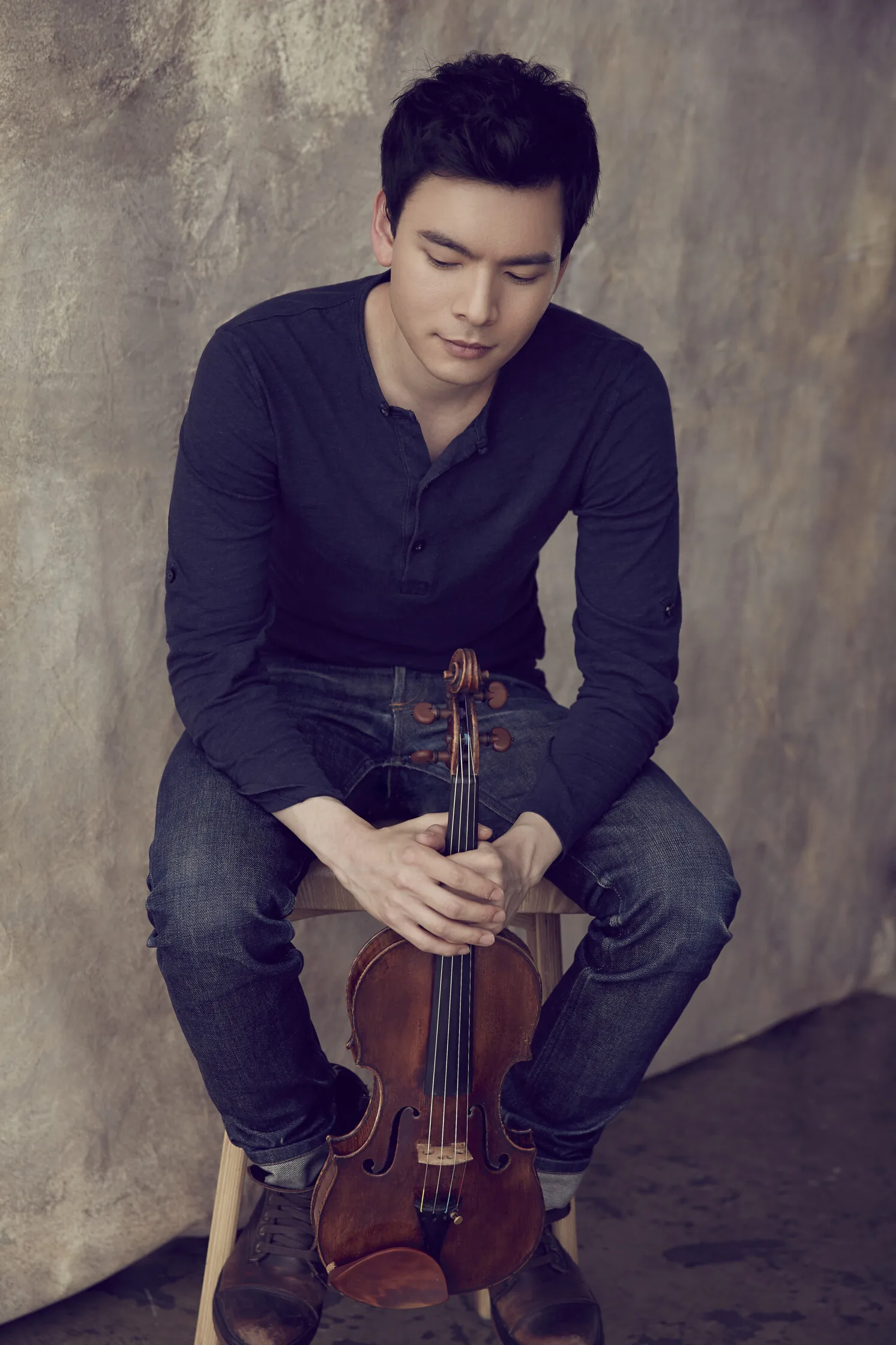 The sound he seeks today he describes as beautiful without becoming well-behaved. "There should be something slightly dangerous in it – something that can handle intimacy, but can also cut through an orchestra when needed."
That the residency with the Residentie Orkest felt right from the start, Jackiw partly explains by the existing bond with the orchestra and hall – musicians with whom he already enjoyed working. Where a soloist relationship is normally "extremely compressed" (a few rehearsals, one or two concerts, and then everyone goes their own way), a residency offers the possibility of a longer conversation: exploring very different repertoire together and hopefully learning from each other over the course of the season.
In his view, a genuine musical relationship with an orchestra arises when musicians begin listening beyond what is strictly necessary. In a good performance everyone can be responsive and professional, even at a first meeting, but over time you learn to recognise how certain musicians breathe, how an orchestra responds to particular gestures, how a conductor shapes time – less explanation is needed because a shared language emerges. That is why he is also so glad to work again with conductor Jun Märkl: "The most satisfying collaborations are those where interpretation seems to arise jointly, rather than being imposed by one person."
On intimacy in a large concert hall, Jackiw says it is not necessarily about physical distance, but about whether the audience feels that something is being communicated directly to them. Even in a very large hall, a pianissimo can make thousands of people lean forward at once; sometimes the quietest moments create the greatest sense of connection. Amare, he feels, has the capacity both to carry the scale and excitement of an orchestra and to let the subtler gestures register: "For me the ideal concert creates the strange feeling that something very personal is happening in a public space."
Three musical languages
Mozart, Tchaikovsky and Prokofiev demand, according to Jackiw, very different musical languages, but the fundamental requirements do not differ so greatly: clarity of intention, a sense of character, constant listening to what is happening around you. Mozart is extremely exposed – there is nowhere to hide, because the smallest changes in articulation, timing or colour matter enormously. Tchaikovsky asks for much greater physical and emotional expansion, but quickly becomes sentimental if you lose sight of the underlying structure. Prokofiev, in turn, requires a quite different kind of rhythmic precision and character with wit, violence, lyricism and a kind of emotional ambiguity that fascinates him.
Prokofiev's Second Violin Concerto is especially close to his heart because of precisely those contrasts: angular and almost brash at one moment, extraordinarily tender at the next. The second movement contains one of the most beautiful melodies in the violin repertoire, but Prokofiev never lets beauty stay comfortable for long: "I find that tension fascinating."
The freedom of letting go
Jackiw is increasingly interested in projects that blur the usual boundaries between soloist, chamber musician and music director: giving musical direction from the violin, shaping programmes rather than only delivering a concerto, and building longer-term relationships with ensembles. After years of travelling from orchestra to orchestra, the idea of continuity appeals to him more and more. He still enjoys playing concertos, but he is also interested in situations where you can gradually build a musical environment – through a residency, chamber music, teaching, or the festival work in Hawaii, where he is artistic director of the Hawaii Chamber Music Festival.
The most important thing Jackiw has learned about music and about himself is probably that music becomes more interesting as soon as you stop trying to prove something. When he was younger, much of his energy went into trying to be good enough: technically secure enough, prepared enough, impressive enough. Those worries never disappear entirely, and ambition can be useful, but he has come to realise that an audience does not come to hear proof that you belong on the stage. "They come because they want to experience something."
That is why his goal has become simpler over time: to listen deeply, to respond to the musicians around him, and to communicate something he genuinely feels about the music – "The strange thing is: the less I want to prove what I can do, the more freedom I seem to find in my playing."
Stefan Jackiw can be experienced with the Residentie Orkest at:
Tsjaikovski & Strauss - Residentie Orkest - RO