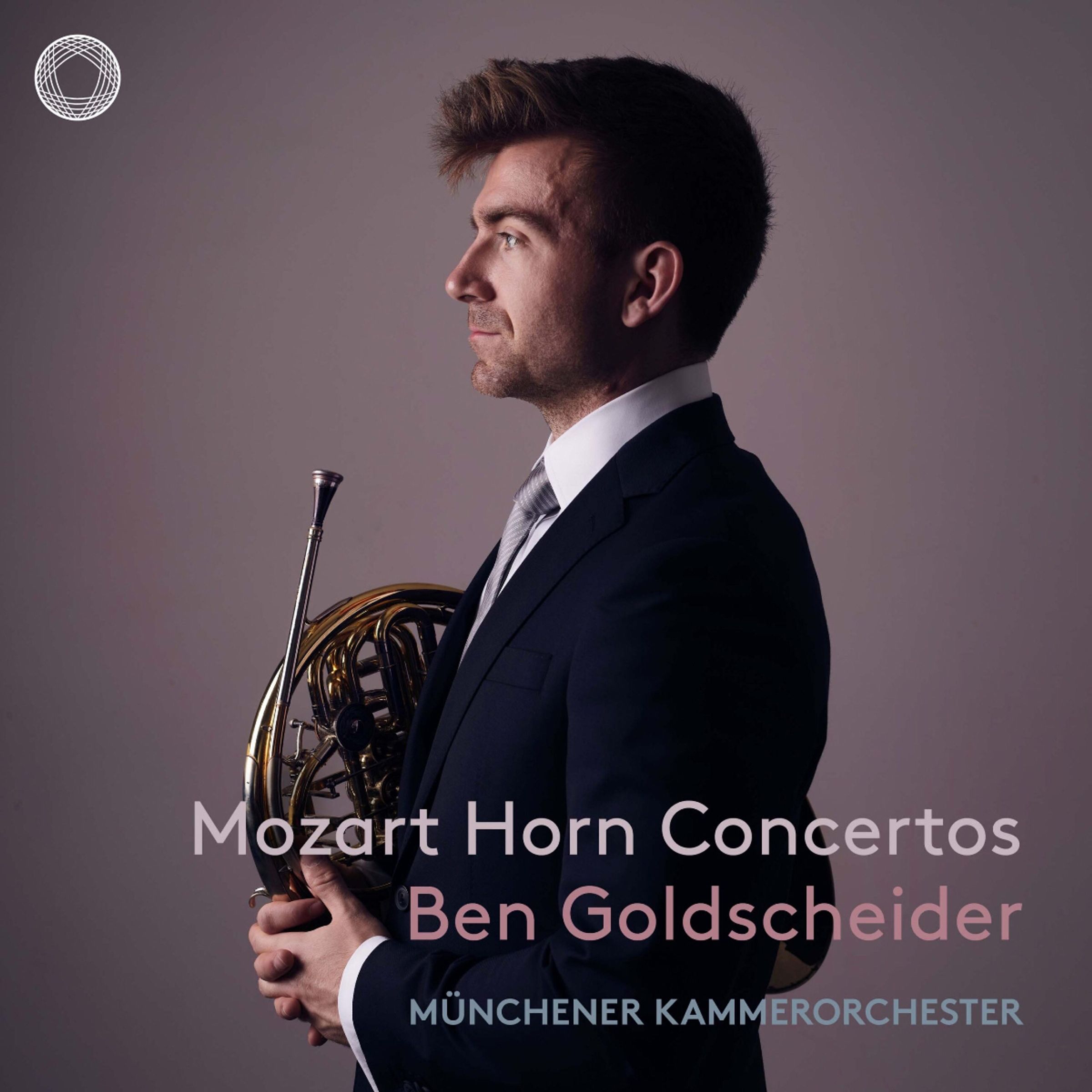
The four horn concertos by Wolfgang Amadeus Mozart (1756–1791) belong to the core repertoire of every horn player. They demand not only technical mastery, but also a feeling for the natural flow of Mozart's melodies and for the balance between virtuosity and lyricism. The British horn player Ben Goldscheider recorded them with the Münchener Kammerorchester. He chose a reversed order: the Fourth concerto opens the CD, the First closes it. That choice gives the recording a structure of its own.
Goldscheider has known this music since he was ten. In the CD booklet he describes how the concertos have accompanied him throughout his development as a musician. That personal bond forms an interesting backdrop to repertoire that is a fixed part of the musical training of many horn players. The cadenzas and Eingänge are by Andreas Staier. They give the soloist room to move within Mozart's musical language.
Virtuosity and lyricism
The Fourth Horn Concerto in E-flat major (K. 495) makes high technical demands, but Goldscheider does not turn the opening movement, Allegro maestoso, into a demonstration of virtuosity. The agile passages remain part of the musical line; even in the most lively moments he retains a distinct sense of elegance.
The Romance. Andante cantabile begins somewhat dreamily. The strings enter with a rich, broad sound, while the tempo maintains its calm progress. When the horn takes up the melody, it acquires a distinctly singing character. Goldscheider shapes the phrase with subtle nuances. The orchestra responds attentively, with a special role for the woodwinds. The slight delays give the melody extra space and reveal how familiar the horn player is with this music. The closing Rondo. Allegro vivace brings back the playfulness, with lively interplay between soloist and ensemble.
The Third Concerto in E-flat major (K. 447) calls for a different approach. The Romance. Larghetto in particular stands out for its supple interaction between horn and orchestra. Goldscheider's horn sounds relaxed and friendly, while the strings accompany the melody with a flowing line. The accents give the music relief without disturbing the atmosphere. The horn remains a constant anchor: the soloist does not draw attention to himself conspicuously, but lets the melody speak. In the opening movement it was also striking how well the horn relates to the orchestral sound. The different parts retain their own colour. The closing Allegro brings movement and lightness once more.
The Second Concerto in E-flat major (K. 417) has a distinct hunting character, especially in the Rondo. Più allegro. Here the agility of the solo part and the alertness of the orchestra come together. The middle movement, Andante, provides a counterweight to that liveliness. Goldscheider reveals a soft, warm horn tone here, in fine interplay with the strings. It is the simplicity that stands out: Mozart's melody needs nothing extra to charm. The soloist gives it all the space and trusts that the music will speak for itself.
An unusual ending
The First Horn Concerto in D major (K. 412 and K. 514) differs from the other three concertos. Mozart left the work unfinished. It consists of an Allegro and a Rondo. Allegro. In the common performing version of the Rondo, additions are incorporated that are generally attributed to Franz Xaver Süssmayr.
In Goldscheider's hands the Allegro sounds elegant, yet also has the necessary spirit. This combination of refinement and liveliness is typically Mozart. The horn part moves smoothly through the music and joins seamlessly with the brisk accompaniment. The Rondo. Allegro begins distinctly cheerful and high-spirited, with refined orchestral playing that supports the character of the music nicely. The First concerto thus forms a successful conclusion to the CD, and this shorter work too gains its own place alongside the other three concertos.
Ensemble playing over show
The strength of this recording lies in the way Goldscheider and the Münchener Kammerorchester interact. The horn sounds supple and warm, with a rounded tone that remains easy to follow even in the agile passages. The orchestra responds alertly to the soloist and is given enough room to make its own contribution to the musical flow audible. The balance between the two is excellent.
The recording quality also adds to the listening pleasure. The transparent sound picture makes the various orchestral parts clearly audible, without compromising the warm tone of the horn.
Goldscheider plays these concertos with the enjoyment of a musician who has been familiar with them for a large part of his life. His technical mastery serves the music. Together with the refined orchestral playing, this yields a recording in which each of the four concertos retains its own character.