An unpretentious comic production of Le Comte Ory, a rarely performed opera by Gioacchino Rossini: it results in a successful end-of-year production at the Opéra Royal de Wallonie. With as its greatest asset, ideal singers in the lead roles, thereby meeting an absolute Rossinian requirement.
Indeed, Rossini also wrote a kind of "rogue's tale". It is his penultimate opera and the first he composes originally in French. He has been living in Paris for some five years and wants to conform somewhat to French fashion. He will succeed primarily with his very last opera, the tragic Guillaume Tell, with which he makes a bid for Grand Opéra.
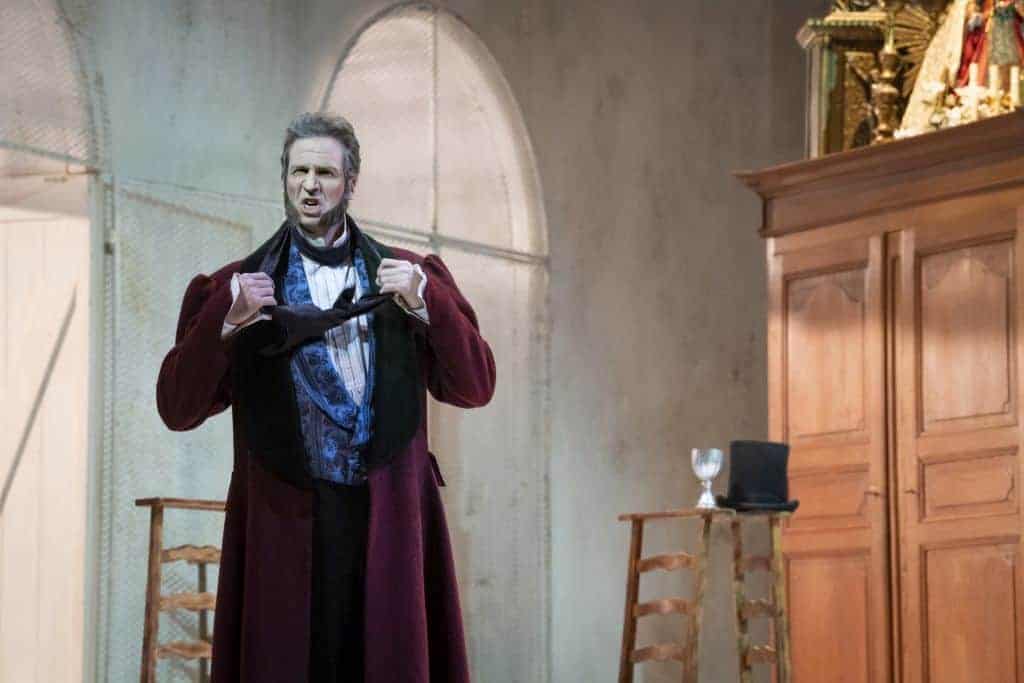
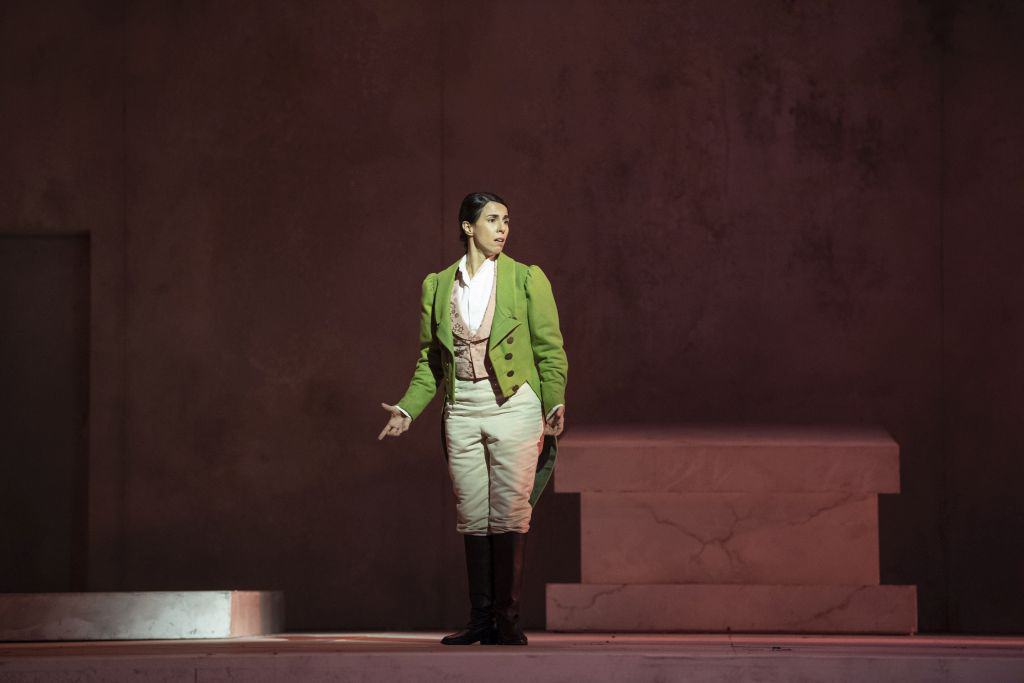
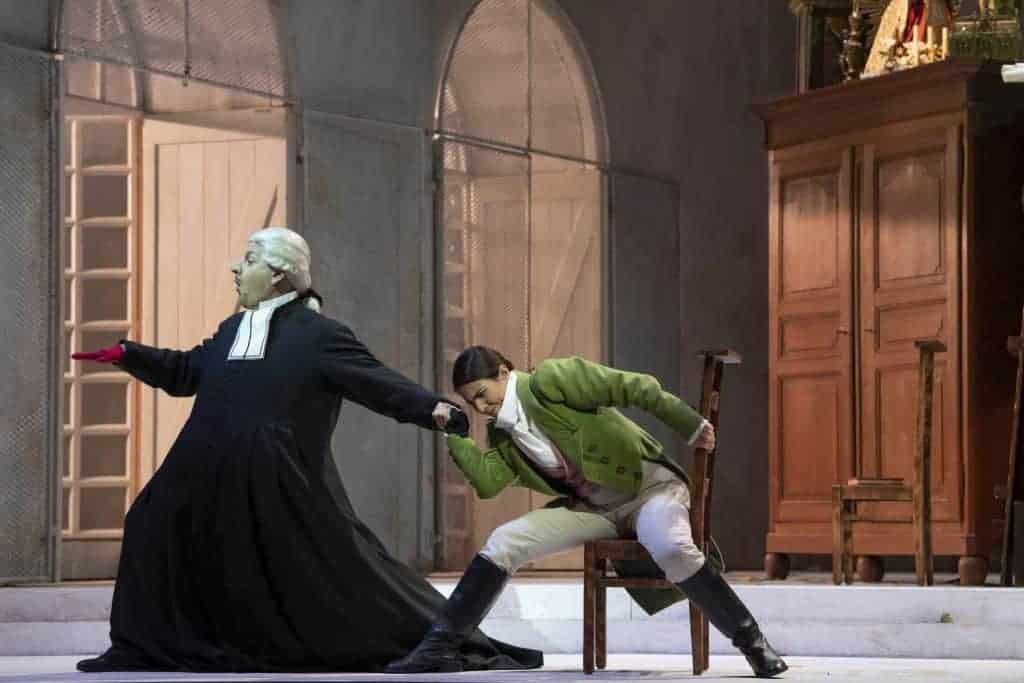
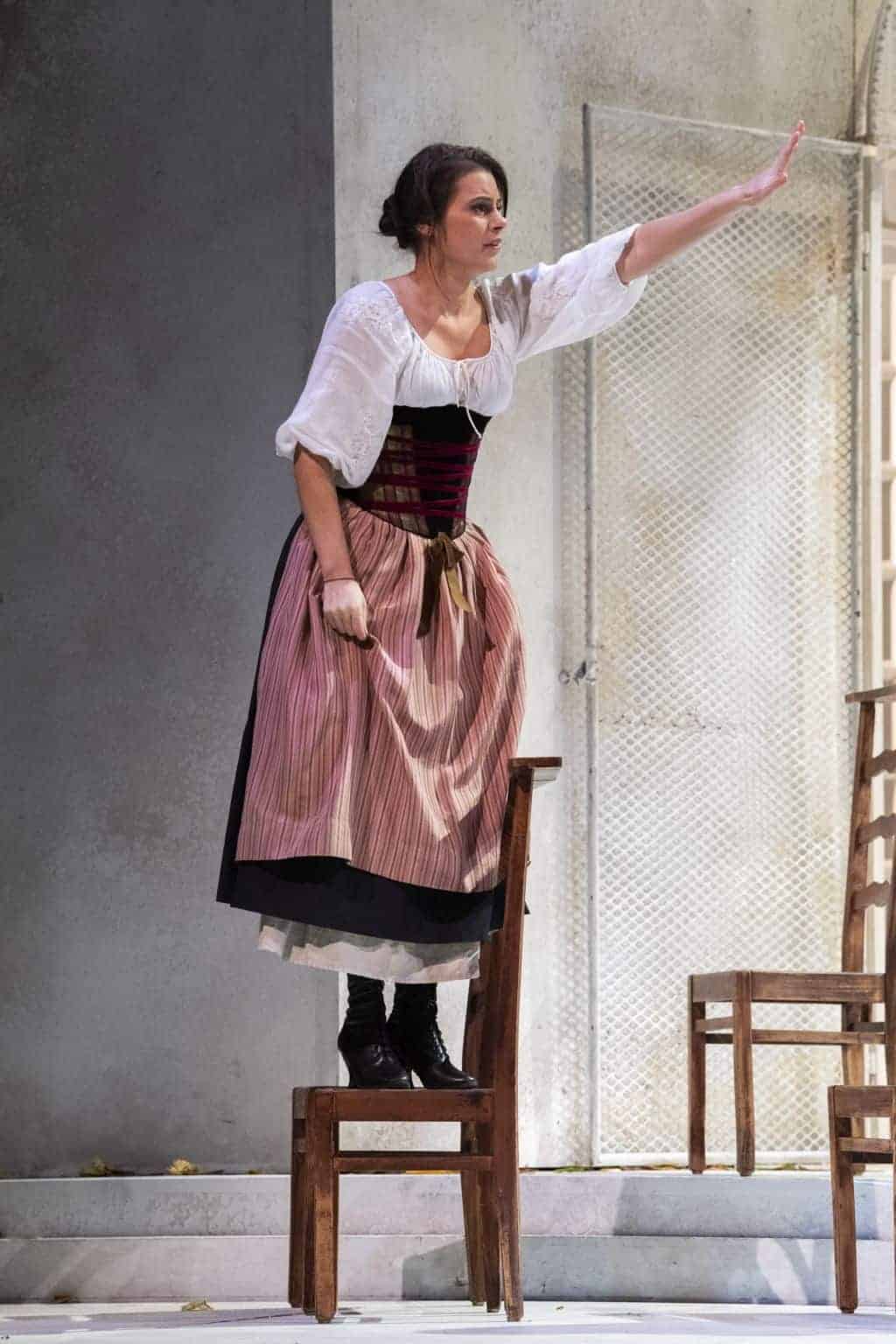
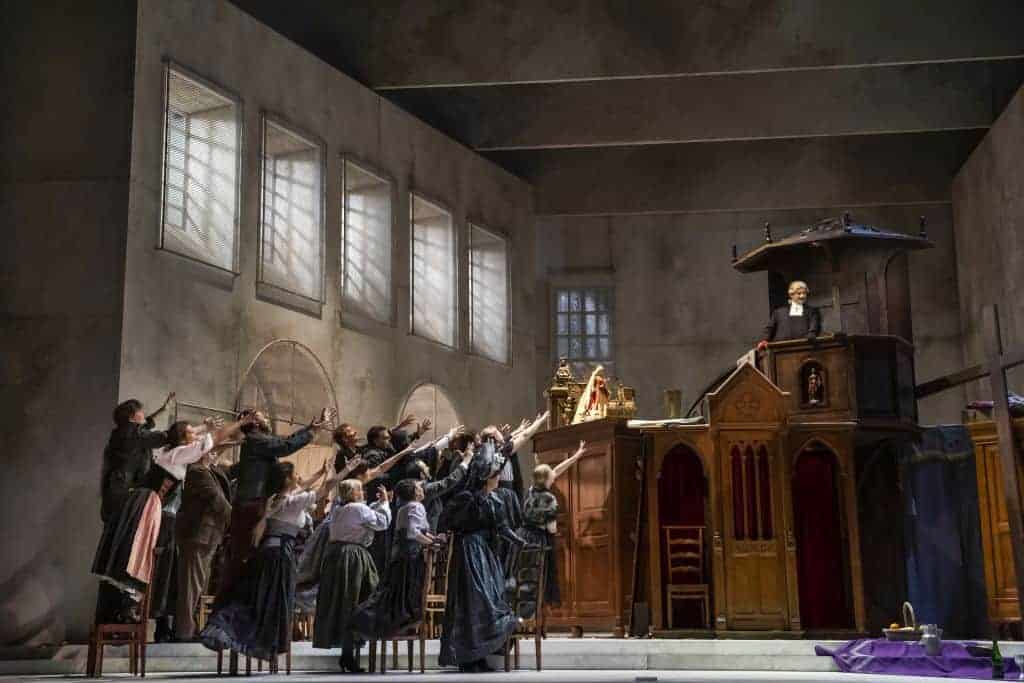
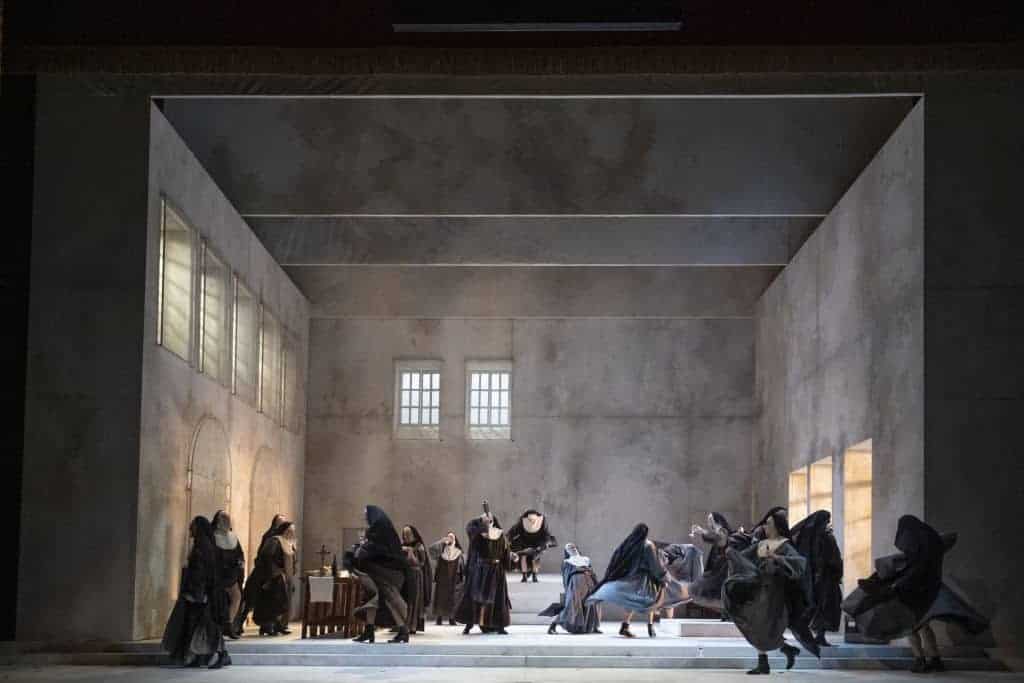
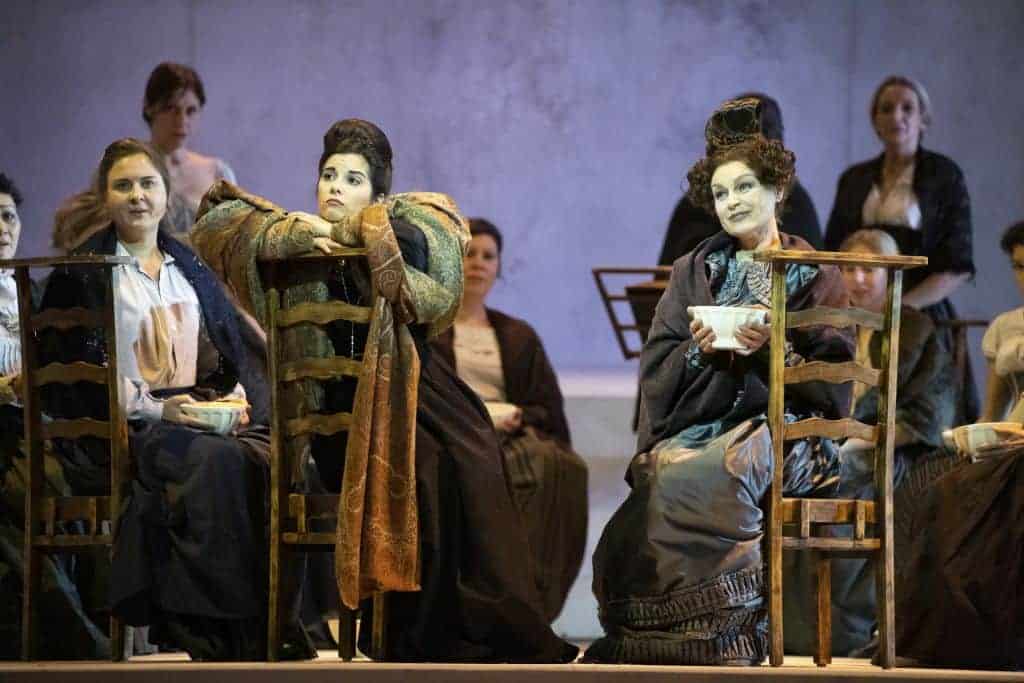
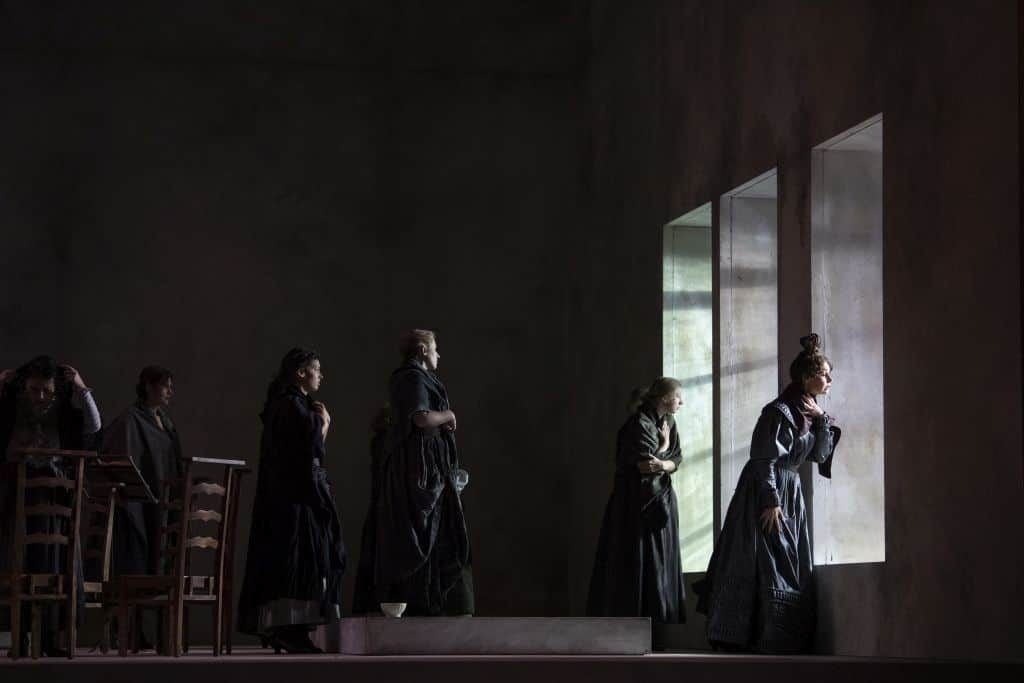
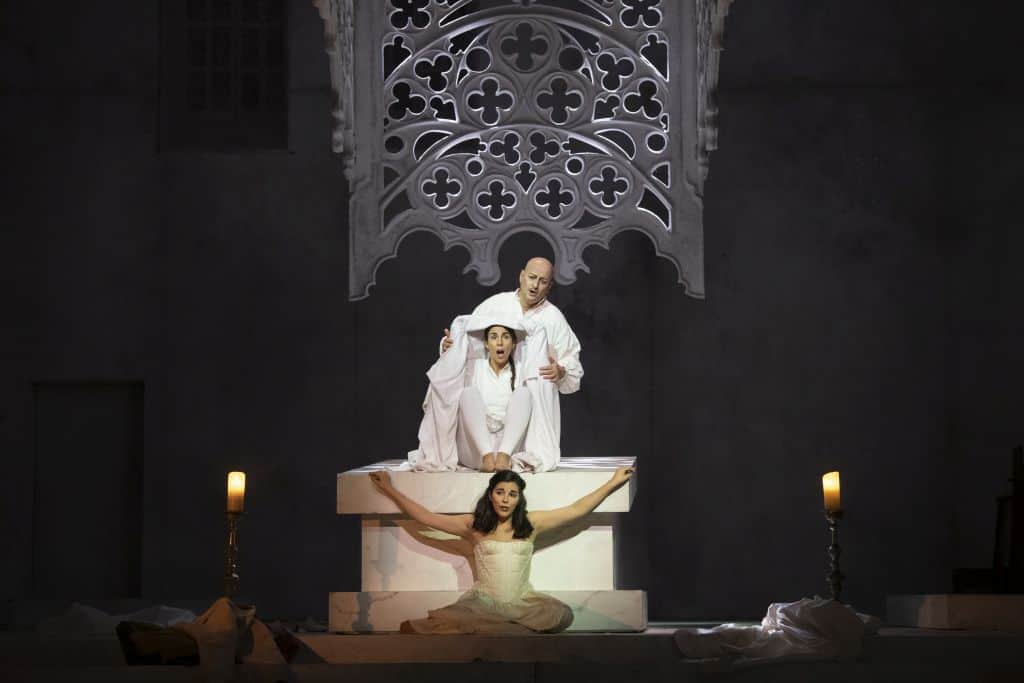
Le Comte Ory is thus simultaneously his last "buffo" work. It has more the allure of a comic fait-divers without great pretensions. The opera is also presented in this way at the ORW. Director Denis Podalydès recounts the vicissitudes of Count Ory, Countess Adèle de Formoutiers and their entourage in an amusing and straightforward manner in a sober set by Eric Ruf. The neutral grey walls of the stage form in the first act the framework in which a pulpit is centrally placed, which can also serve as a confessional. A piece of furniture that is cleverly used to "comfort" the ladies of the castle Formoutiers and their countess or otherwise entertain them during the absence of the knights, who are on crusade.
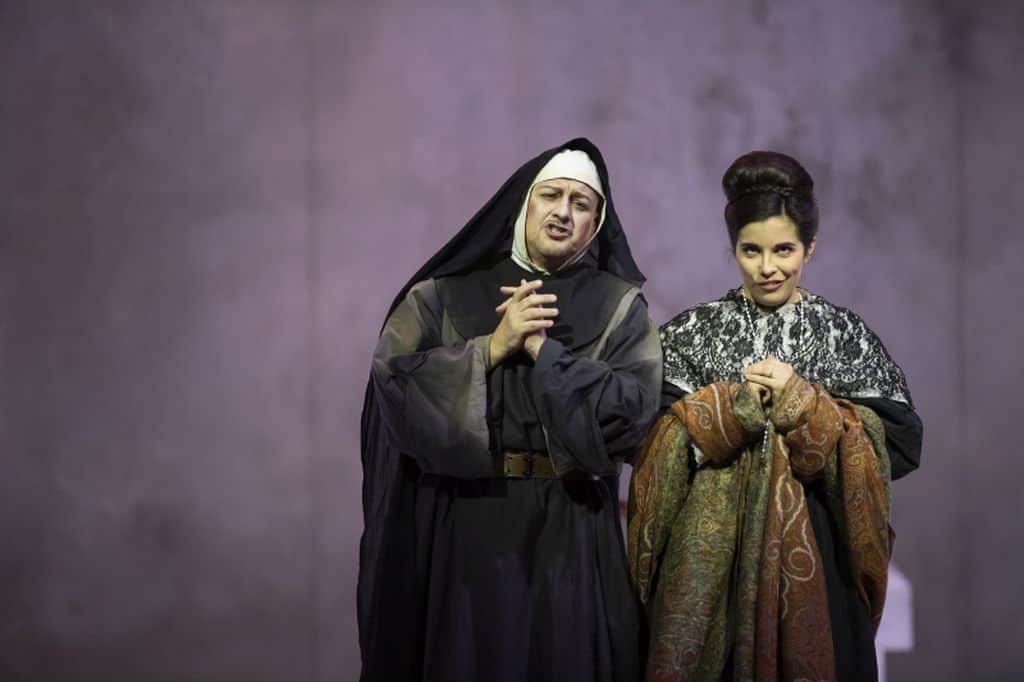
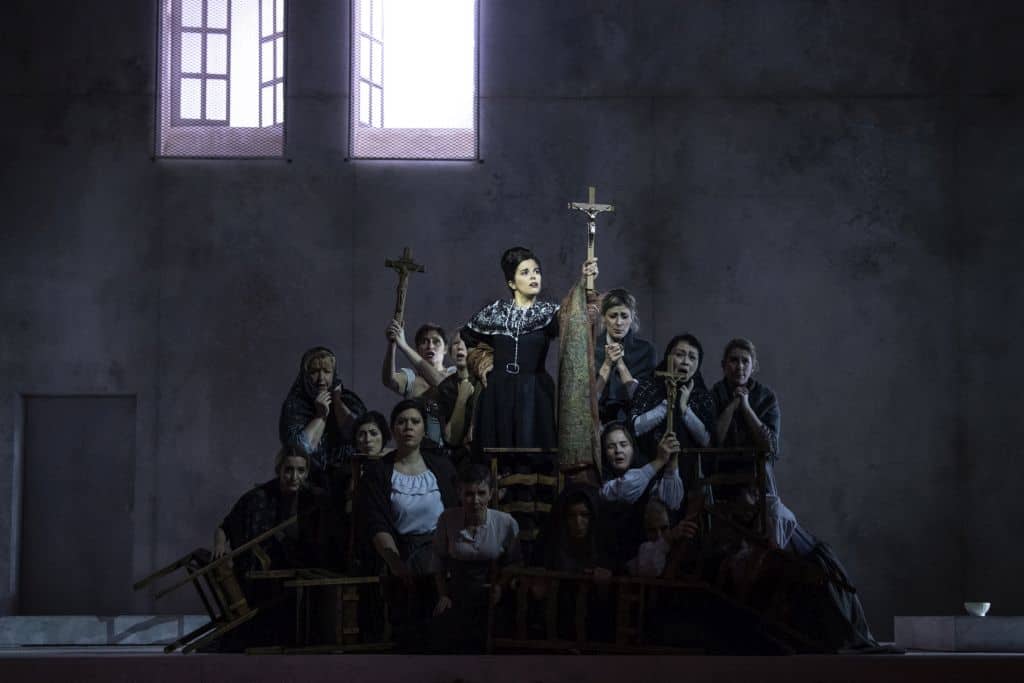
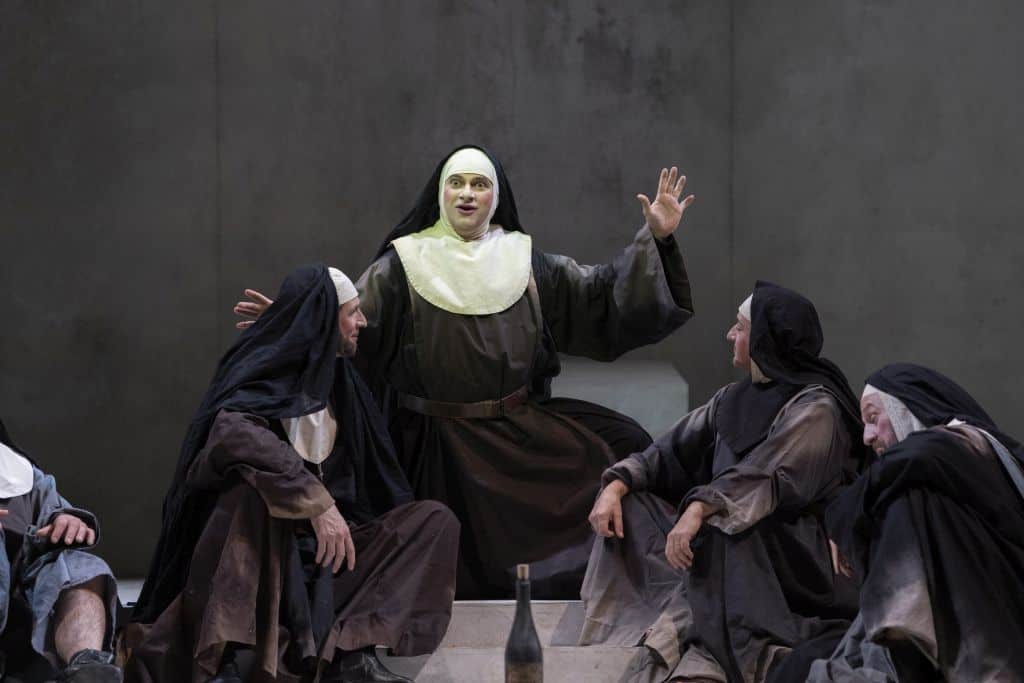
With their seduction tricks the ladies are cunningly misled by the so-called hermit – none other than the "genuine" bon-vivant Count Ory - and his friend Raimbaud. It leads to comic scenes, some of which are occasionally failed gags. Such as when the disguised Count Ory drapes his corpulent belly with his monk's habit over the pulpit. In the second act the "chevaliers" venture even more cunningly to seduce the ladies – especially the countess. Now they have disguised themselves as nuns and during a terrible storm they ask for shelter in the castle. A ruse in which they succeed grandly and which in the production is also amusingly depicted, with silly gestures and movements, which fit perfectly into the comic story. The drunken "nuns" - they have after all discovered the castle's wine cellar - act out their triumph with verve and visible pleasure!
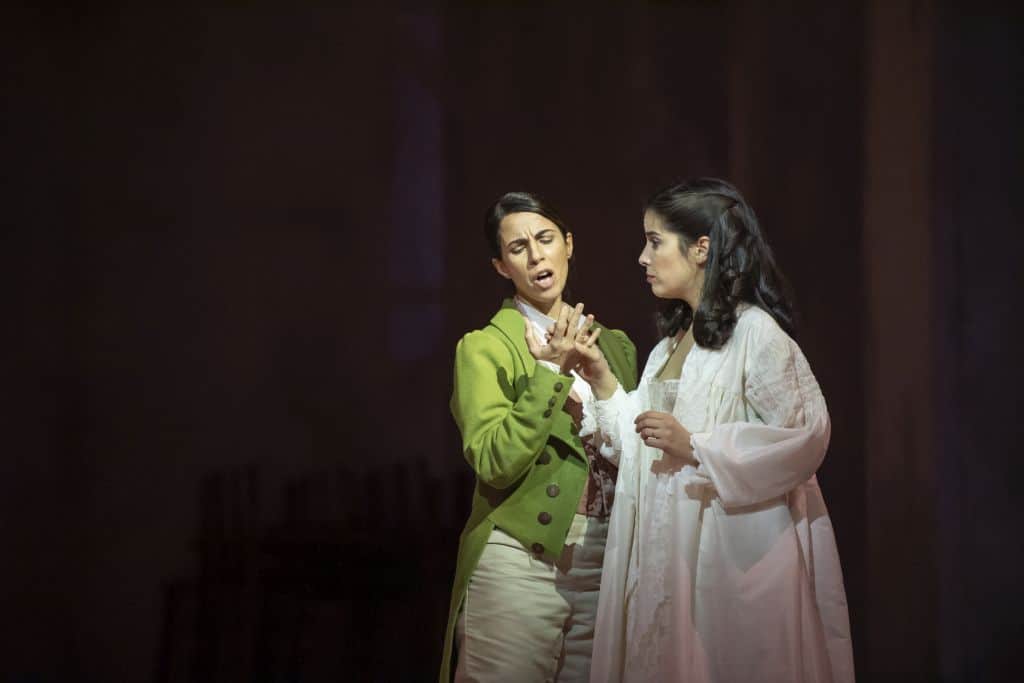
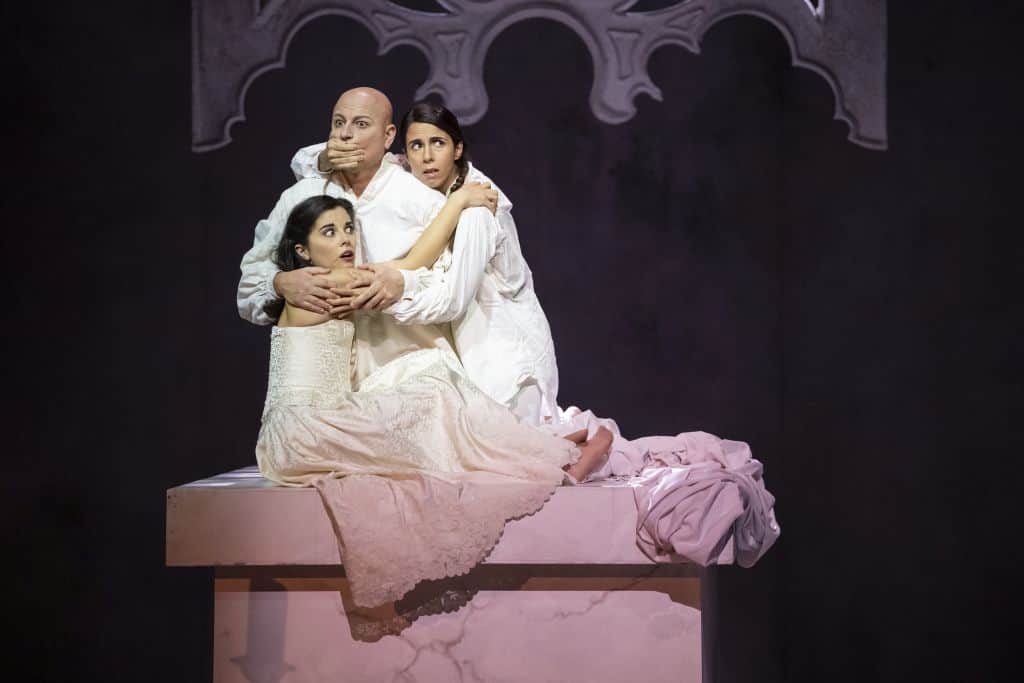
The act culminates in a fictitious tête-à-tête between the countess, Count Ory and Isolier, Count Ory's page, who is himself also in love with the countess and who was moreover the mastermind of the plan to disguise themselves as nuns. In the darkness of the countess's chamber, Count Ory holds his page Isolier before the countess and the entire courtship takes on a burlesque outcome. Especially since at that moment the return of the knights is announced and the "nuns" must hastily depart. The second act certainly comes across even more amusingly and wittily in the production than the first and the choir of the "nuns" clearly enjoys their foolish behaviour.
Rossinian panache
The young Spanish conductor Jordi Bernacèr feels right at home in this sparkling Rossini score full of liveliness and Rossinian playfulness, which the orchestra thus performs with verve and panache. The various passages that Rossini borrowed from his earlier composed cantata Il viaggio a Reims fit like a glove in the performance. Thus the repetitions of text passages do not stall the action, but instead create tension and the accumulation of funny situations is accentuated. He also pays attention to the function that specific instruments, such as the horns, woodwinds and trumpets have in Rossini's score.
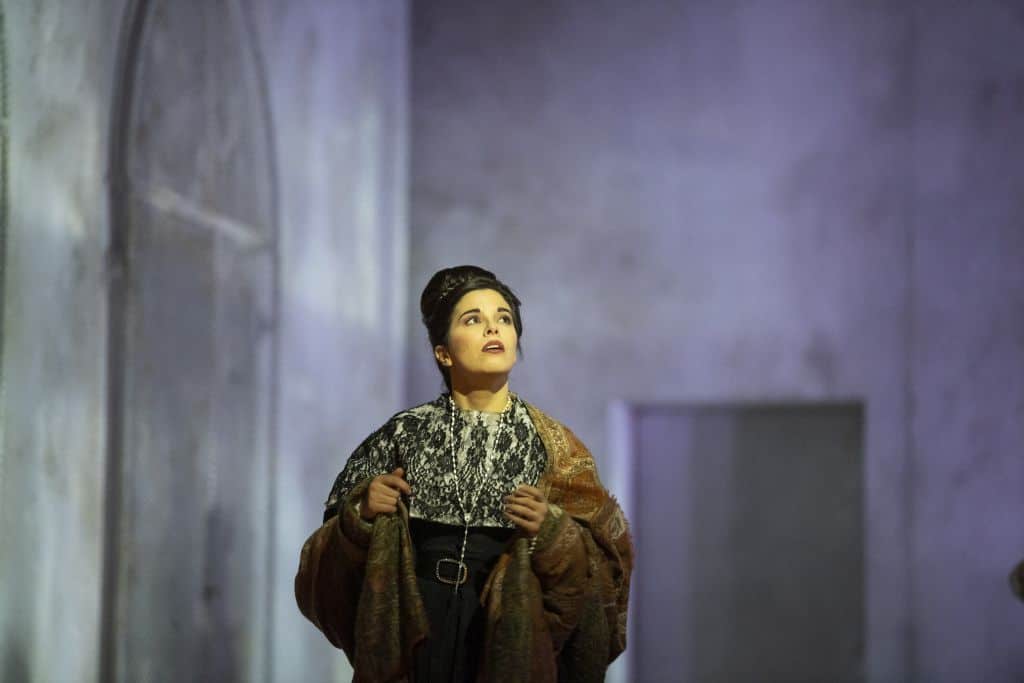
The singers also clearly feel supported by his direction, as they excel in the sparkling vocalises and "esprit" in the acting. The two lead roles at the forefront. Jodie Devos proves herself to be a splendid belcanto singer with radiant and pleasant voice. And she also looks beautiful as the distinguished countess. Antonino Siragusa not only confirms his reputation as a light typical belcanto tenor, but also reveals scenically what he discloses in the nice YouTube video (see below): that buffo is his genre! The parts of Isolier, Raimbaud, Dame Ragonde and the governor are also beautifully cast. Once again a production with which the ORW confirms that lesser-known operas are worth programming.
- WHAT: Gioacchino Rossini Le Comte Ory
- WHO: Direction: Denis Podalydès
- With: Antonino Siragusa, Jodie Devos, Josè Maria Lo Monaco, Enrico Marabelli, Laurent Kubla, Alexise Yerna, Julie Mossay - Orchestra and Choir Opéra Royal de Wallonie-Liège conducted by Jordi Bernacèr
- WHERE: Opéra Royal de Wallonie-Liège
- Seen performance: 23-12-2018 - Until 2 January 2019
https://www.rtc.be/le_comte_ory_a_l_opera_pour_les_fetes_de_fin_d_annee-1500442-999-325.htm
[embed]https://youtu.be/sCtBsLgmQC4[/embed]