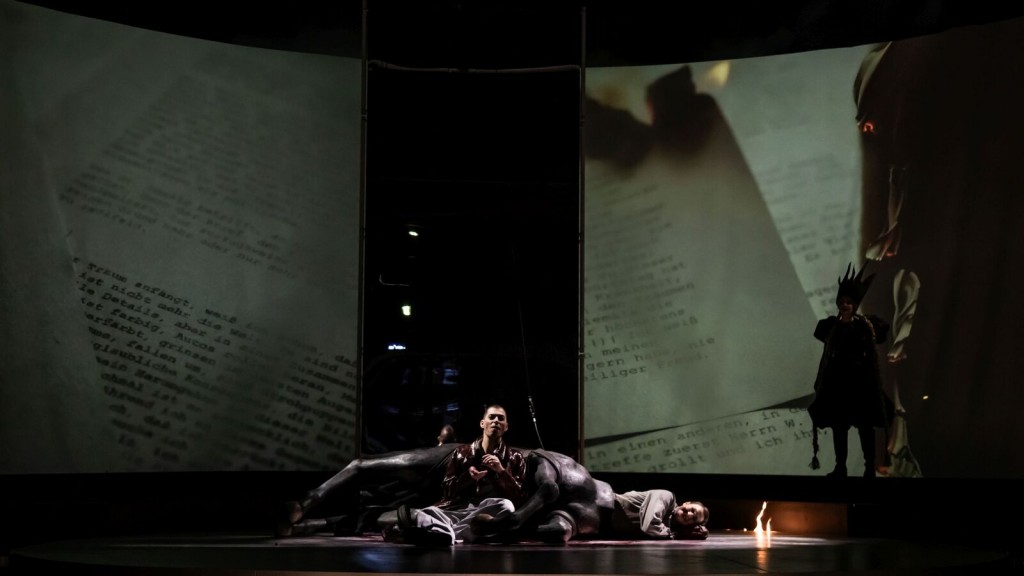
Karola Obermuller's and Peter Gilbert's Malina, based on Ingeborg Bachmann's 1971 novel,brings us a layered psychological maze. "Es war Mord," thus speaks Ich, the female protagonist, sublimely performed by soprano Larisa Akbari.
At first glance, the story is a tug-of-war between reason and desire, embodied in the characters Ivan (her lover) and Ich's rational, male alter ego Malina. Malina delves deeper into the psychological compulsion of a writer. A woman struggling between happiness and conformity, or freedom and artistic desire. Together with Theater Aachen, Obermuller and Gilbert present a deeply rooted psychological vocal drama. One with an infinite layer of questions and imaginings. We step out of reality and dive together with Ich into the psyche.
Was it murder or not? Ingeborg Bachmann's Malina
In the novel, all characters are intertwined with each other. Malina, originally part of the unfinished collection Todesarten, is Bachmann's only spiritual child about the search for a female voice and happiness, burdened by the influences of a post-war patriarchal world.
Malina is written as a stream of consciousness, where the protagonist continuously shares what she thinks, feels and struggles with. Every contact she experiences, whether with the mysterious Malina or with her unfriendly lover Ivan and his children, affects her inner world. This is expressed in the composition. The result is 85 minutes of uninterrupted psychological tension.
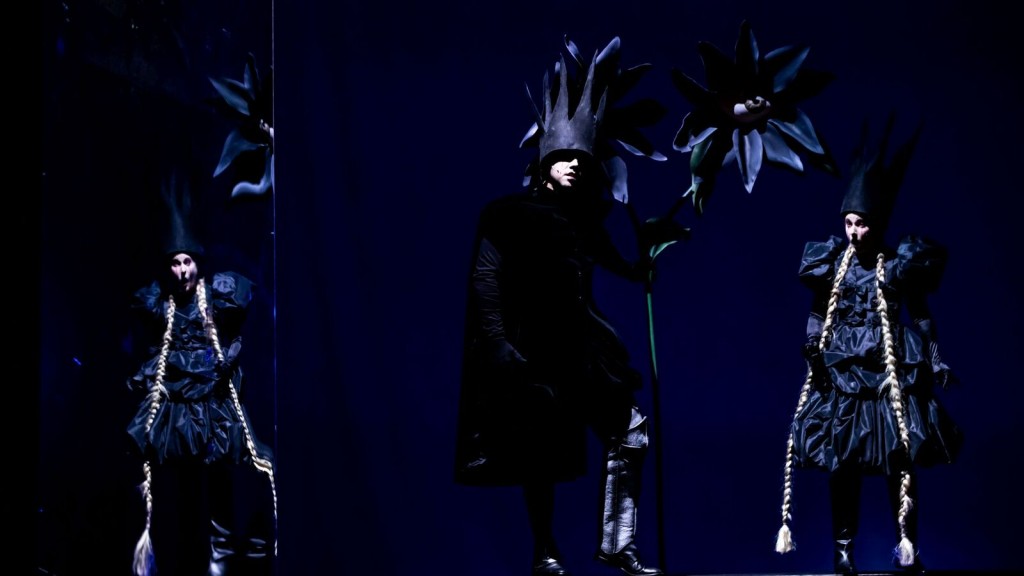
Malina is also a play within a play: the fairy tale Die Geheimnisse der Prinzessin von Kagran alternates reality with fantasy. Parallel to her so-called (un)happiness runs the story of a princess in a magical utopia who is imprisoned and eventually finds freedom – or emancipation. Here too, trauma, freedom and self-expression persist. The princess seems to triumph over the patriarchy – does the writer do the same? The novel ultimately opens with the question "Mord oder Selbstmord?" Both the novel and the opera end with her death.
The poetry of Bachmann as psychological sound art
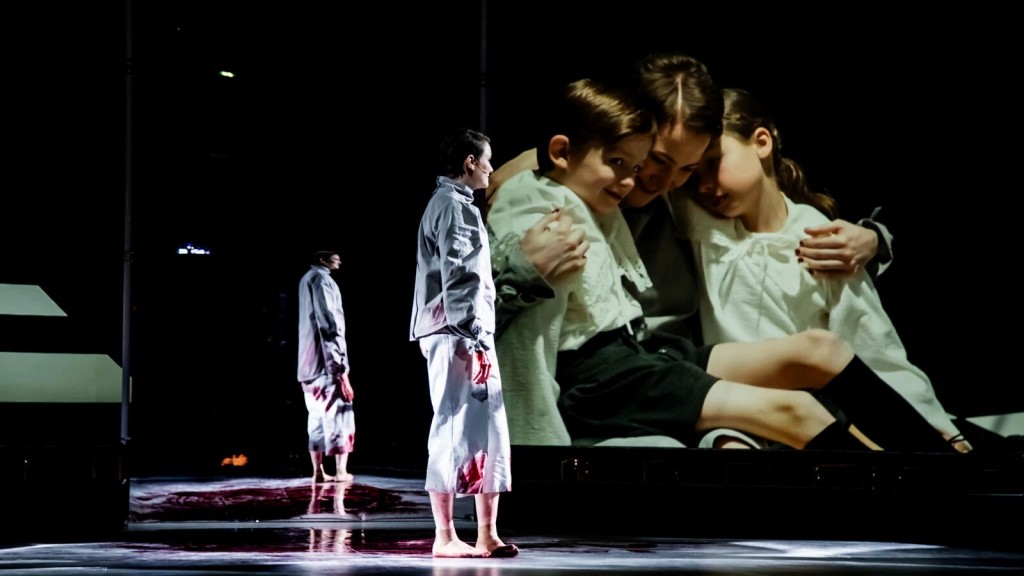
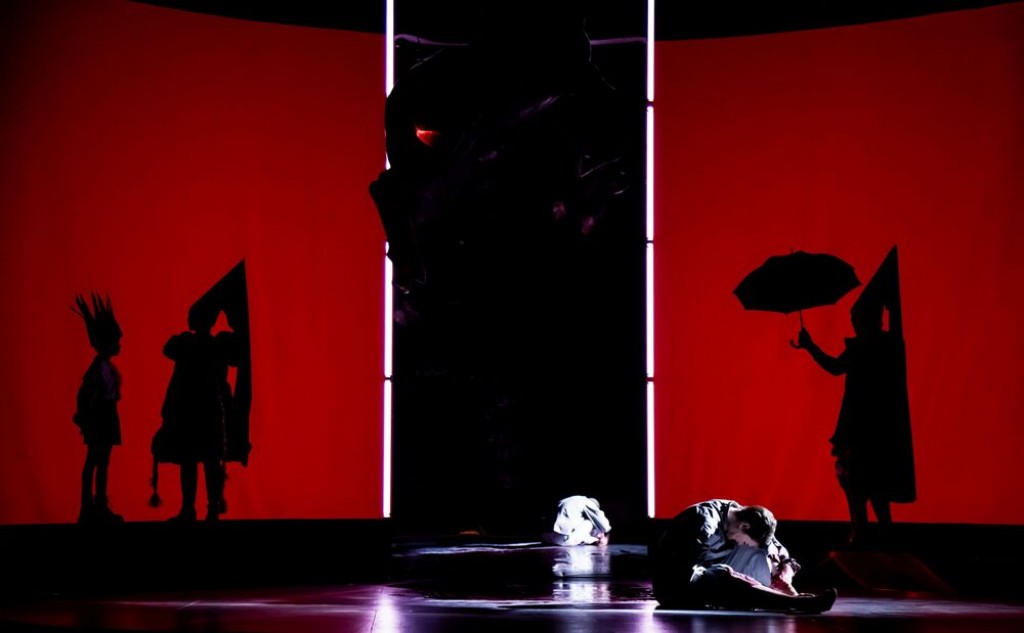
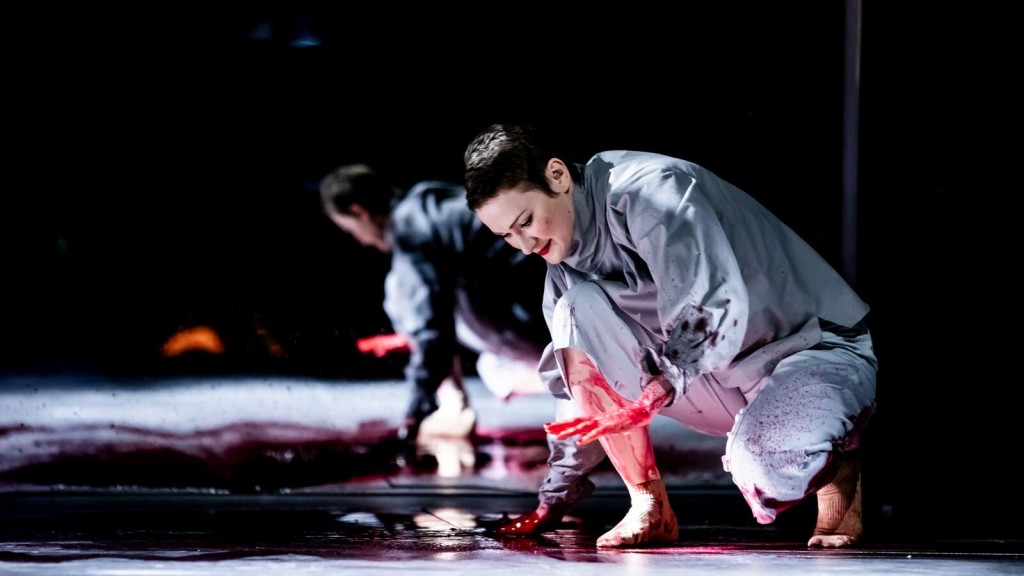
Franziska Angerer's direction is dark, menacing and melancholic. It combines shadow play with a German neo-expressionist acting style. Exaggerated movements and gestures enhance the sense of dislocation. The harsh lighting makes the singers appear flat, broken and even manic. While the singing continues, we see shadows in the background and snapshots of the characters on stage, as if they are showing their true inner world here. Throughout the opera, a feeling creeps in that you, as a spectator, almost voyeuristically witness the destruction of an individual. Everything breaks before your eyes, both vocally and visually. The sound narrative takes place in front of, behind and even alongside you; the direction plays with space and the hall.
Akbari as Ich brings vocally her downward spiral without any interruption with power and intensity. Singing is broken by spoken voice. In the composition, which is as disjointed as the story, there is no vocal cohesion to be found, but there doesn't need to be. Timbres change as emotions swing out of the pan or flatten out. This is Akbari's playground, who has the challenge of portraying her feelings towards both Ivan and Malina. It is difficult not to get lost vocally in hysteria and pain in a monotonous way, but Akbari finds her vulnerability in voice and role.
Countertenor Valer Sabadus' Malina's voice is unique. He moves between a male timbre and female sensitivity, which aligns with the ambiguity of the character. Baritone Micah Schroeder's Ivan stands in contrast, with his lyrical baritone voice. Meanwhile, the Prinz (tenor Ángel Macías) and the Prinzessin (coloratura soprano Jelena Rakić) dialogue on an invisible, secondary stage. Auprès de ma blonde, a traditional French chanson, seems to bring fantasy into reality. The threatening strings, the mysterious harp: everything suddenly breaks for the song. From beginning to end, the composition is unimaginable, menacing and elusive.
Malina brings a psychological tension and drama that feels almost Hitchcockian. The spiral of contradiction is palpable and does not end with a clear conclusion: even at the end there is no final sigh. Malina is an opera where you yourself must determine what the emotional climax is and what feelings you experience. The opera and the novel are woven together in a new composition by Obermuller and Gilbert that you absolutely must experience!
[embed]https://www.youtube.com/watch?v=ZyIy_eeawaI[/embed]