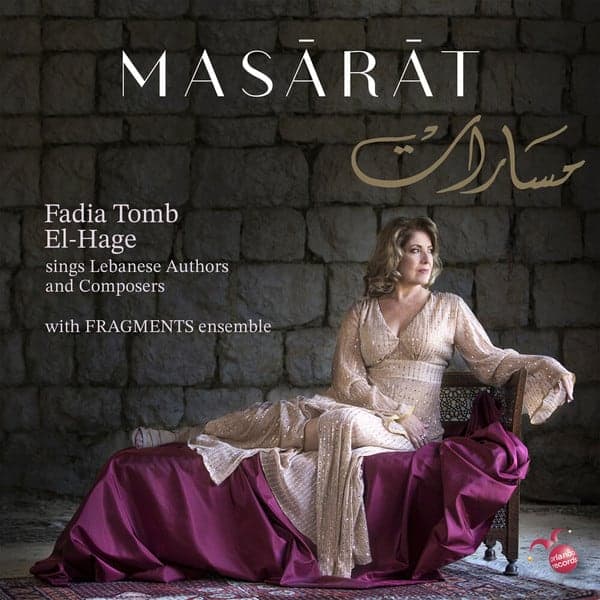
Lebanese contralto Fadia Tomb el-Hage brings an ode to Lebanese arts. 16 Lebanese composers have set 19 texts by (almost exclusively) Lebanese poets and writers to music. A range of musical styles come together on this cd just as the mosaic of traditions characterizes Lebanese society.
Fadia Tomb el-Hage
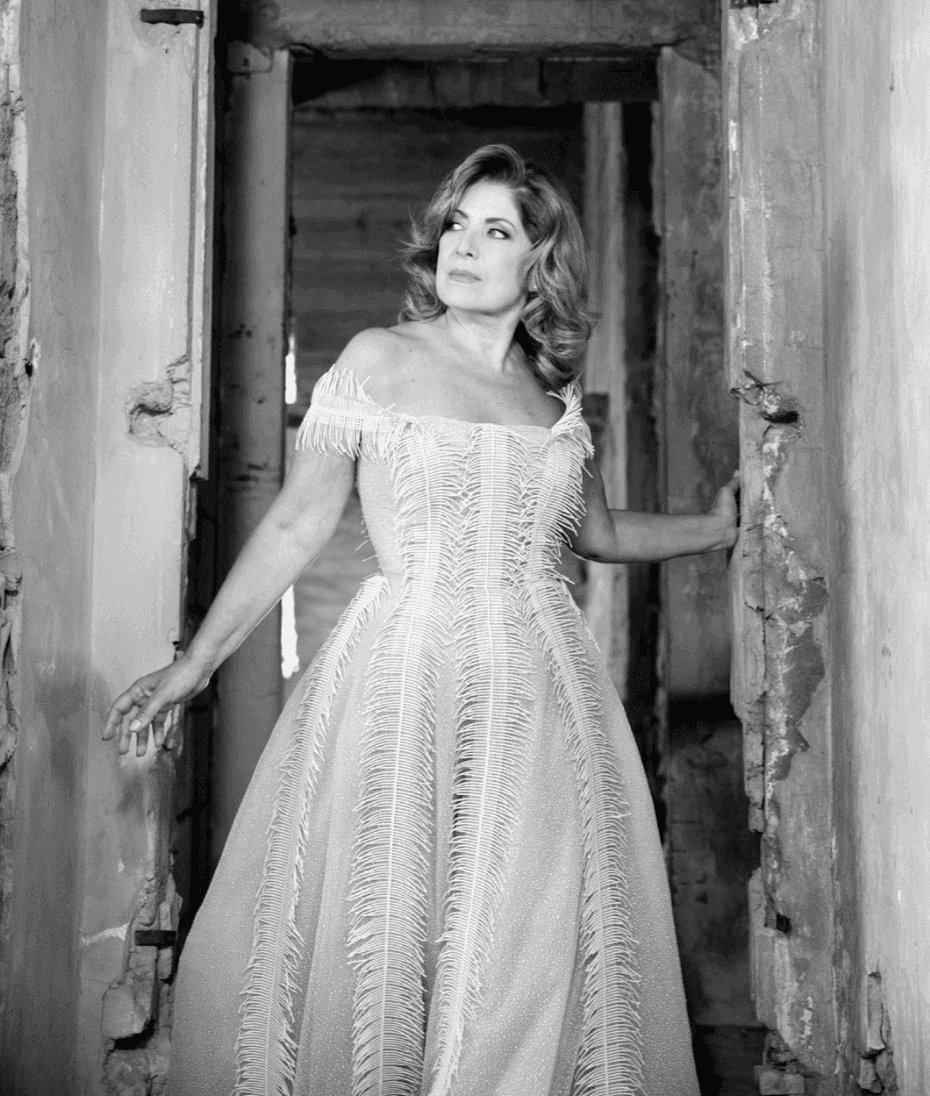
Fadia el-Hage (°1962, Beirut) began her musical career at age 14. She achieved breakthrough success in 1998 at the Festival of Baalbeck and grew into an internationally acclaimed singer. This contralto is known for her diverse repertoire (European classical, medieval, Middle Eastern and contemporary music). She is specialized in various singing techniques and knows how to combine them innovatively. The timbre of her voice is particularly expressive and el-Hage manages to convey passion and charisma with control.
Lebanese music
Lebanese music and literature possess extraordinary richness and diversity: sometimes it is Eastern and sometimes Western. The sung words are a selection of Arabic, French, German and English poems and texts. The musical styles are eclectic: some works are Arabic and others Western, some traditional and others contemporary, some tonal others modal or atonal,… This results in a rich exchange of colors, tones, modes, rhythms, harmonies and vocal techniques. On this latter aspect el-Hage writes in the accompanying booklet: "For me, this album was not an attempt to emphasize my artistic identity. It was intended to invite Lebanese composers, by setting to music texts written by Lebanese people, to express their own universes where my voice would be the guest."
A mosaic of musical styles
And what different worlds they are… Thus the avant-garde Das Lied der Seele (or. 2006 / German translation 2019) by Houtaf Khoury (°1967) contains a similar skepticism as Schnittke and Kantsjeli. Khoury's style is characterized by his conviction that music carries a message and his message is a plea for a more humane world. As the text by Jacques Aswad says, it is a song "that lives in the pearl of my heart" and "that spreads peace, that buries noise."
Alongside this contrasts the jazzy Vers le soleil blue (2018) by Joëlle Khoury (°1963). The pianist and composer is active in both jazz and classical music and this translates into this song as well. She chose a strophic French text by Nadia Tuéni. Saxophone, violin, cello, double bass, piano and percussion (with brushes) provide the accompaniment while el-Hage alternately sings the text in a light manner and recites it emotionally.
The bridge between the Middle East and the West comes to life in the oeuvre of Mona A. Ahdab (1966°). À la fin de cela (2016) is a fine example of her compositional style. A late-Romantic song aesthetic is blended with traditional timbres that echo in the notes of the piano quartet and thus give this work a "Lebanese tint".
Wafāʾal-ʿaşāfīr (2004 / 2020) by Charbel Rouhana (°1965) is the clearest example on the cd that draws inspiration from traditional music. In addition to Western instruments such as strings, traditional instruments such as oud (pear-shaped string instrument considered a precursor to the lute) and qanûn (or kakun, a type of dulcimer) are added. The Arabic text is by Ounsi El-Hage and celebrates the beauty of nature and the freedom of birds. The warm timbre of el-Hage shines beautifully in this song.
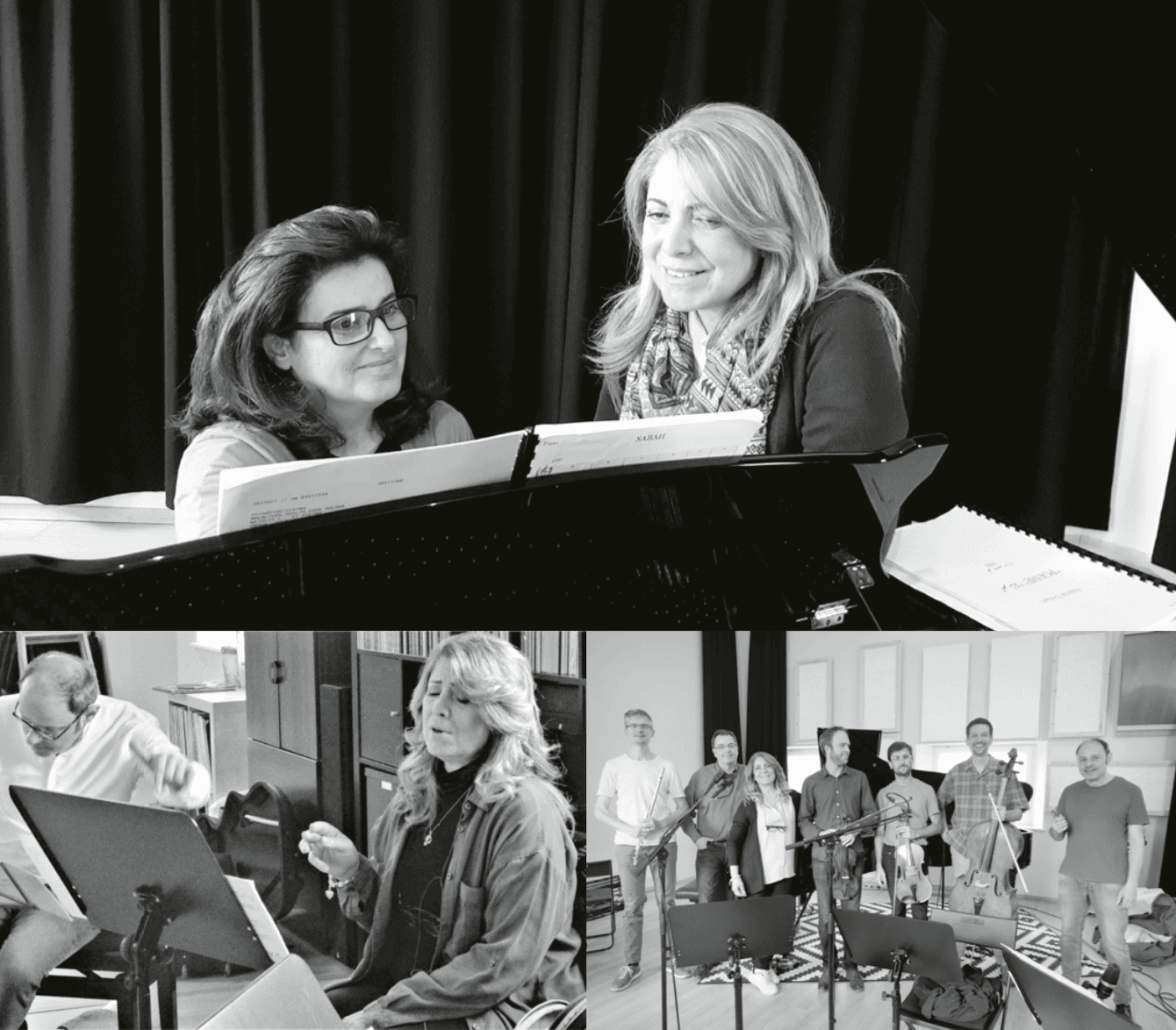
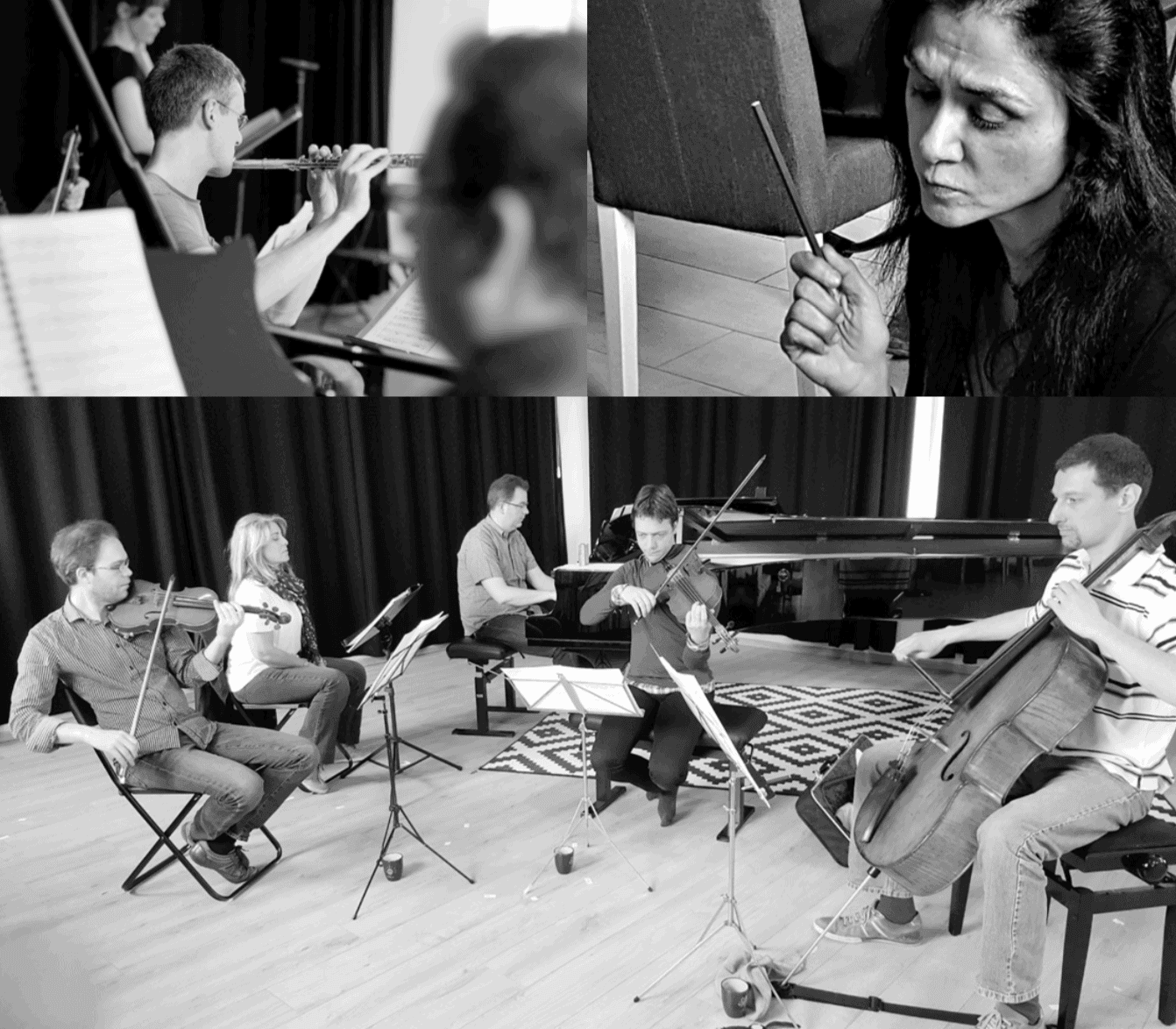
For this cd el-Hage collaborated with Belgian ensemble Fragments. They recorded, with the exception of a few pieces performed by the Beirut Oriental Ensemble, the instrumental accompaniment themselves. Like el-Hage, Fragments feels at home in different genres and they describe this fruitful collaboration as a "fantastic new experience; it taught us to vibrate with Arabic music and culture." The initiative for this cd was a collaboration between Fadia el-Hage, Centre du Patrimoine Musical Libanais (CPML), Baalbek International Festival and Quart de ton (an international non-profit organization based in Belgium). They asked various Lebanese composers to compose a song for alto and chamber music ensemble on texts by Lebanese writers. With this compilation of works, the musicians showcase the richness of coexisting musical styles that characterize the country.
The different styles are eclectic but arranged in such a way that similar styles are placed together to smooth transitions during listening. This mosaic ensures a pleasant journey through the Lebanese musical landscape.
- WHO: Fadia Tomb el-Hage [contralto], Fragment ensemble, Beirut Oriental Ensemble
- WHAT: Masārāt: Sings Lebanese Authors And Composers
- RELEASE: Orlando Records (catalogue nr: or 0042, EAN code: 9120040732431)
- PHOTOS: © Antonella Badaoui
- SPOTIFY: Masārāt
- ORDER: JPC