

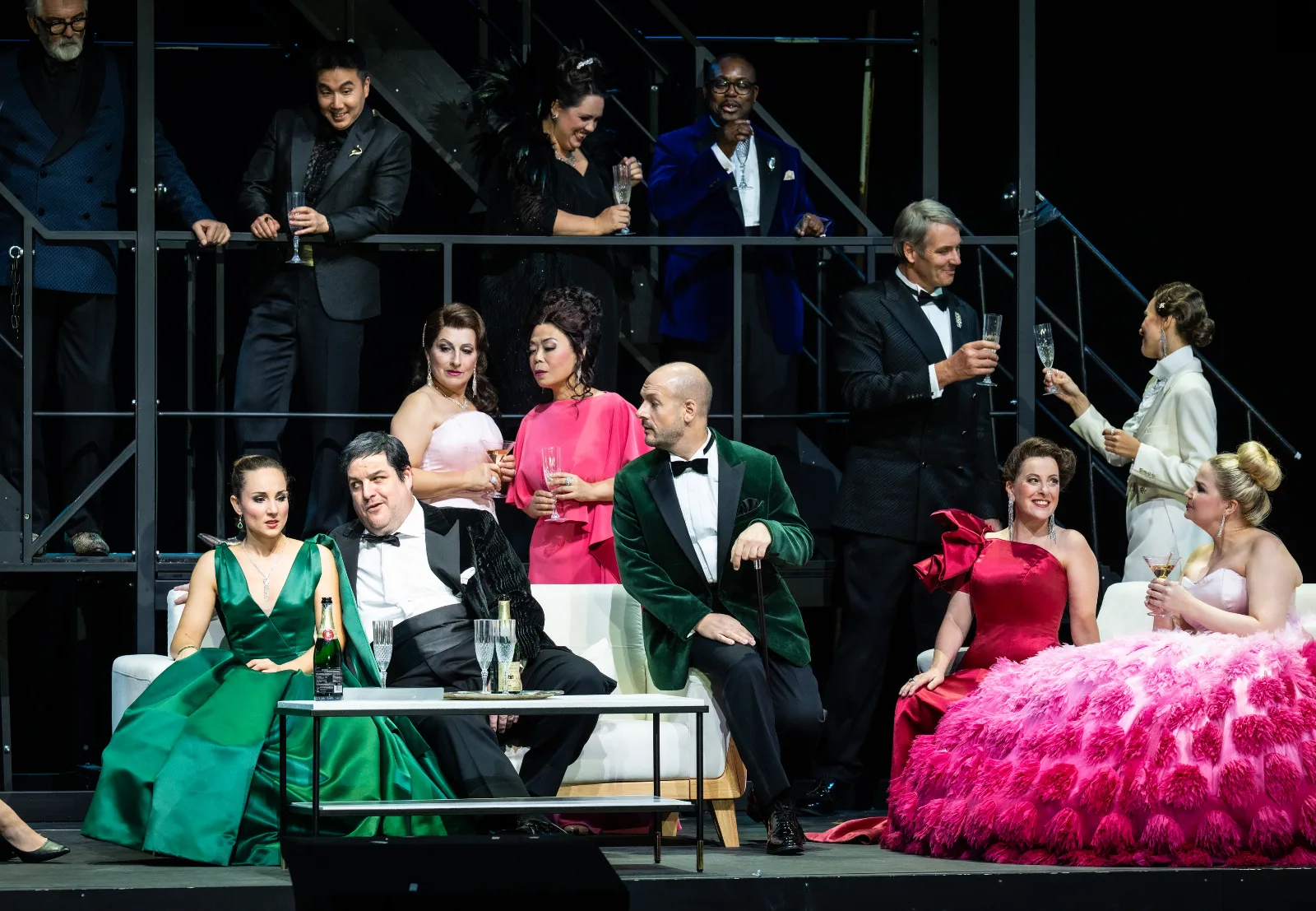
With a undisputed masterpiece from the opera repertoire, Oper Köln reopened its doors after far too many years of renovation: Richard Strauss Der Rosenkavalier. From the equally beautifully redeveloped opera square, the theatre once again shines in its soft yellow façade. Inside, the structure with the numerous "balcony boxes" has been preserved. The whole looks appealing with the very decorative yet discreet blue-grey upholstery, which lends the interior its lustre.
Delighted by the hall, we are curious what the new production of Der Rosenkavalier by Richard Strauss has in store for us. Although the opera is named after the "Rosenkavalier", the character who delivers the rose as a marriage proposal from Baron Ochs to the young noble lady Sophie, the Marschallin is undoubtedly the central character of the opera. She is the figure who determines the fate of the other characters. As Octavian's lover, she is Sophie's rival; she is an influential fellow citizen and equal in rank of Baron Ochs; and at the end she is the good-natured deus ex machina who brings the emotional and dramatic developments to a resolution. Complications over which Octavian (and not only he) lost control long ago. She is the one who not only sings at the end of the first act and realises: "Die Zeit, die ist ein sonderbar Ding", but who also undergoes this at the end of the opera, when she takes her leave of her lover Octavian.
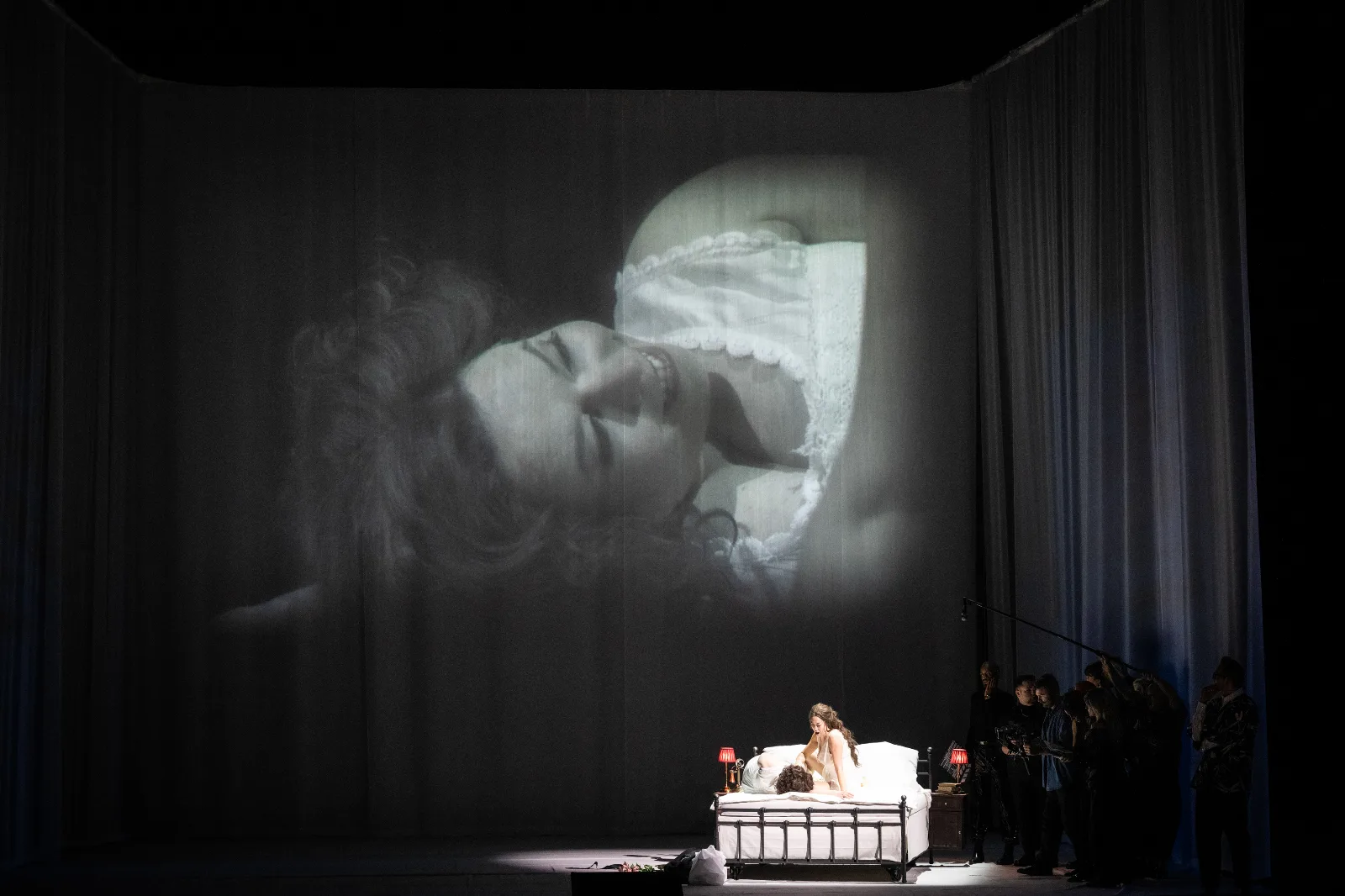
 The first act begins promisingly with the love scene between the Marschallin and the young Count Octavian. Magdalena Hinterdobler and Bianca Andres depict their intimate relationship with tenderness in a very beautiful, sensual manner. Focus on the couple in bed, hardly any distracting set or surroundings. Until suddenly a technician with a camera slides across the stage. From then on, the whole opera becomes, so to speak, the subject of a film recording. Unfortunately, because camera and director people play a role throughout the plot, which rather leads to disruptive interference and pointless interventions. A pity, because Rosenkavalier already has enough characters to cause confusion. Thus the introduction and "coup de foudre" between Octavian and Sophie in the second act unfortunately sinks into "cinematic" confusion. Every now and then the camera provides nice close-ups of the singer's facial expressions, but mostly those camera people simply get in the way. The concept of a film direction rather obstructs the ambiguity between dream and reality – essential in Strauss's opera – than contributing to it. The second act is even conceived as a veritable "film award ceremony", in which the Marschallin also serves as chair of the jury. The idea offers a nice set picture with projected roses as background, but that is about the most positive thing to be said about it. The third act, in the inn scene with the whole confusion scene in which Baron Ochs no longer knows what is what regarding the appearance of Octavian and the so-called Mariandl, is the best resolved in the directorial concept. His delusions are staged in a mainly amusing and not too silly manner.
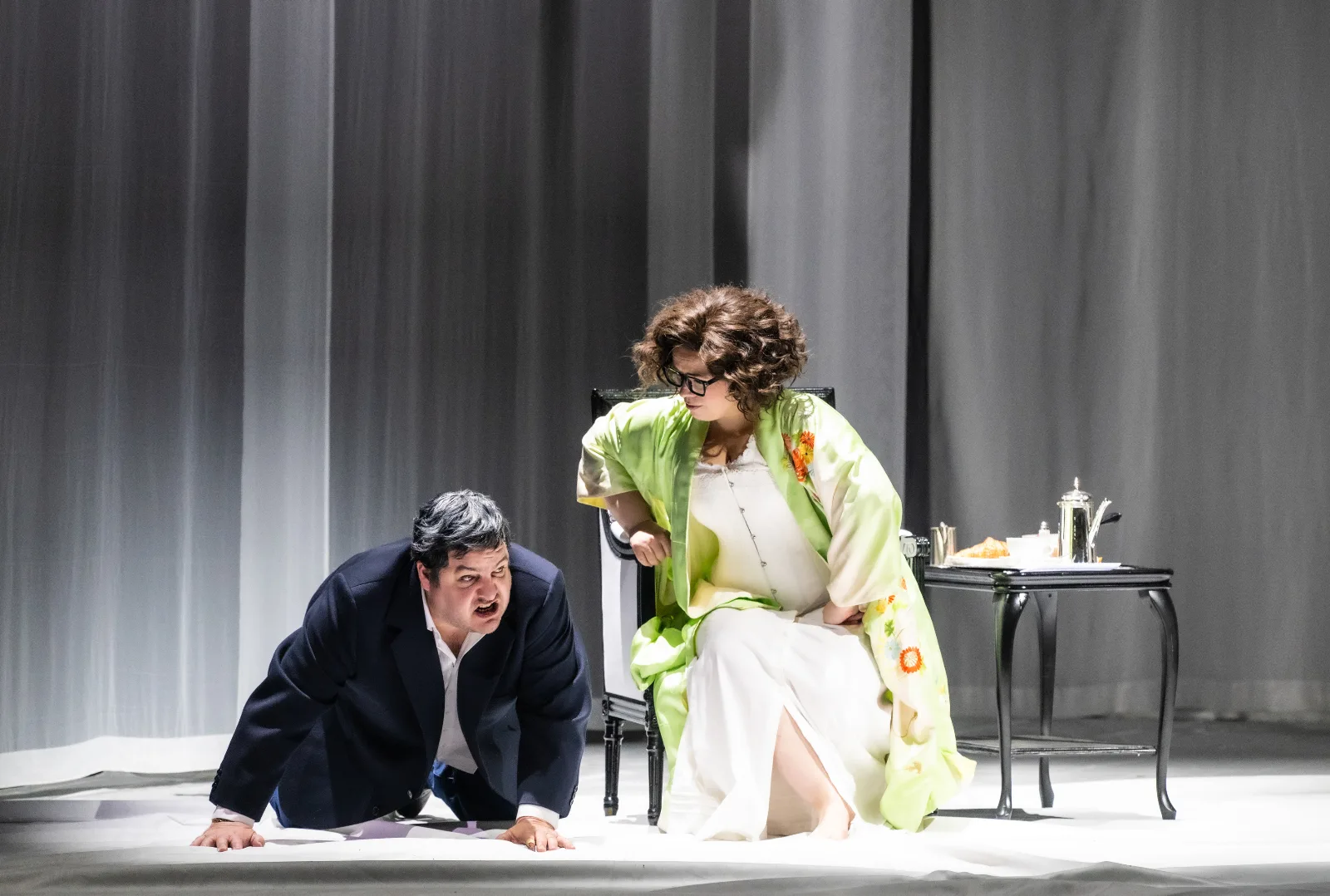
Komödie für Musik
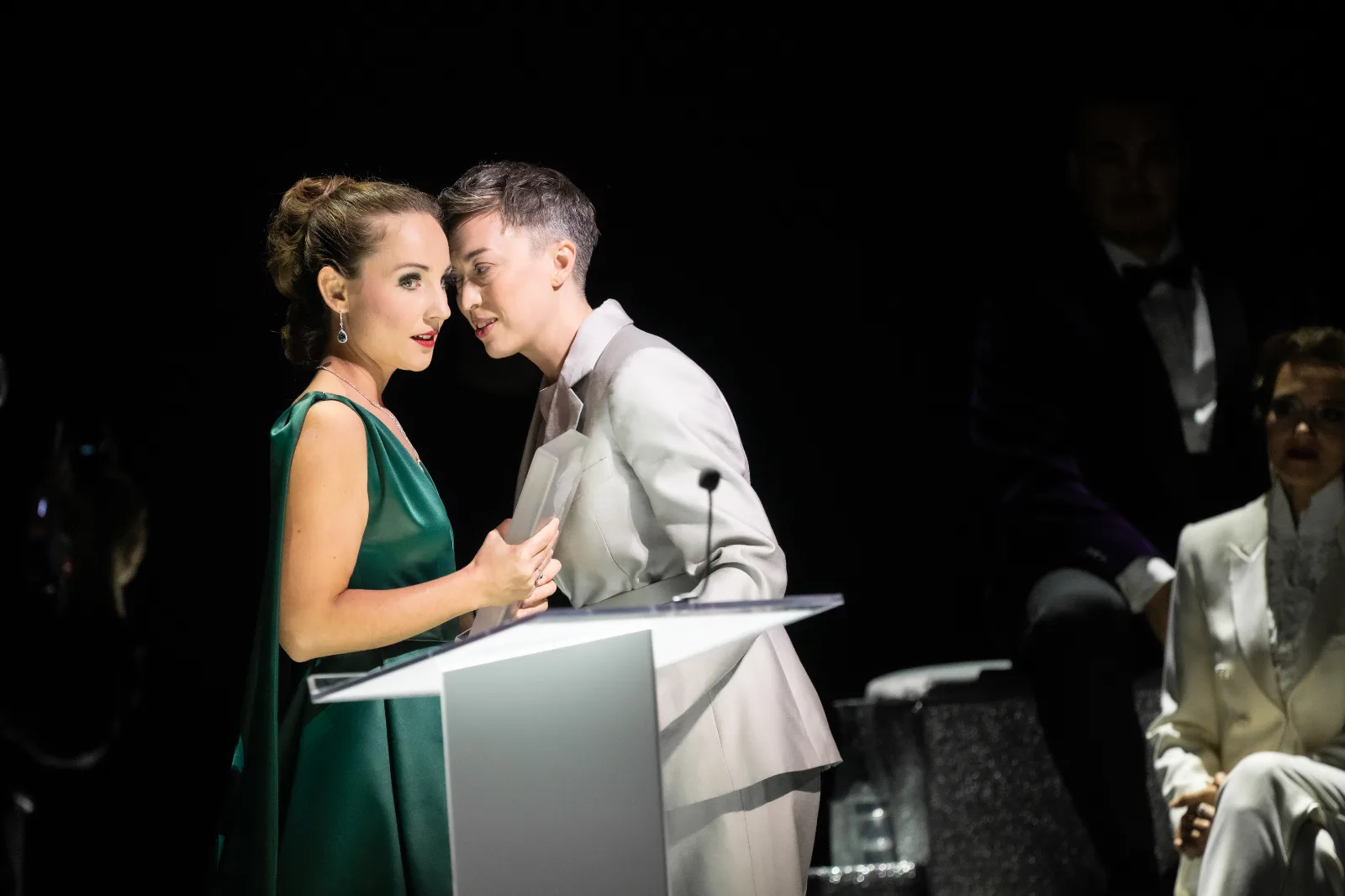 Although Marie-Ève Signeyrole's direction gives rise to fundamental reservations, musically it is a pleasure from beginning to end. Conductor Andrés Orozco-Estrada guides the Gürzenich Orchester Köln with schwung but also with very precise nuances throughout the opera. Both the folksy and iconic waltz melody and the aristocratic refinement are brought to life with gusto. Moreover, he keeps the soloists very closely in view, so that the symbiosis between orchestra and vocal line is perfect. Vocally too, the production is an absolute top performance. Magdalena Hinterdobler as the Marschallin and Bianca Andrew as Octavian shine in their portrayals, not only vocally but also as actors. Bianca Andrew certainly has the figure to play a Hosenrolle, and she seems completely at home in it. Elsa Benoit sings her role of Sophie with a clear and supple soprano, with conviction and even more assertiveness than one usually expects from Sophie. Impressive! Patrick Zielke plays the comic and burlesque character of Baron Ochs with the appropriate exaggeration.
Thanks to the musical performance, Strauss's Der Rosenkavalier from Oper Köln can still be called a hit. The audience that attended the concert performance on Sunday 4 October at Concertgebouw Brugge will gladly hear that.