

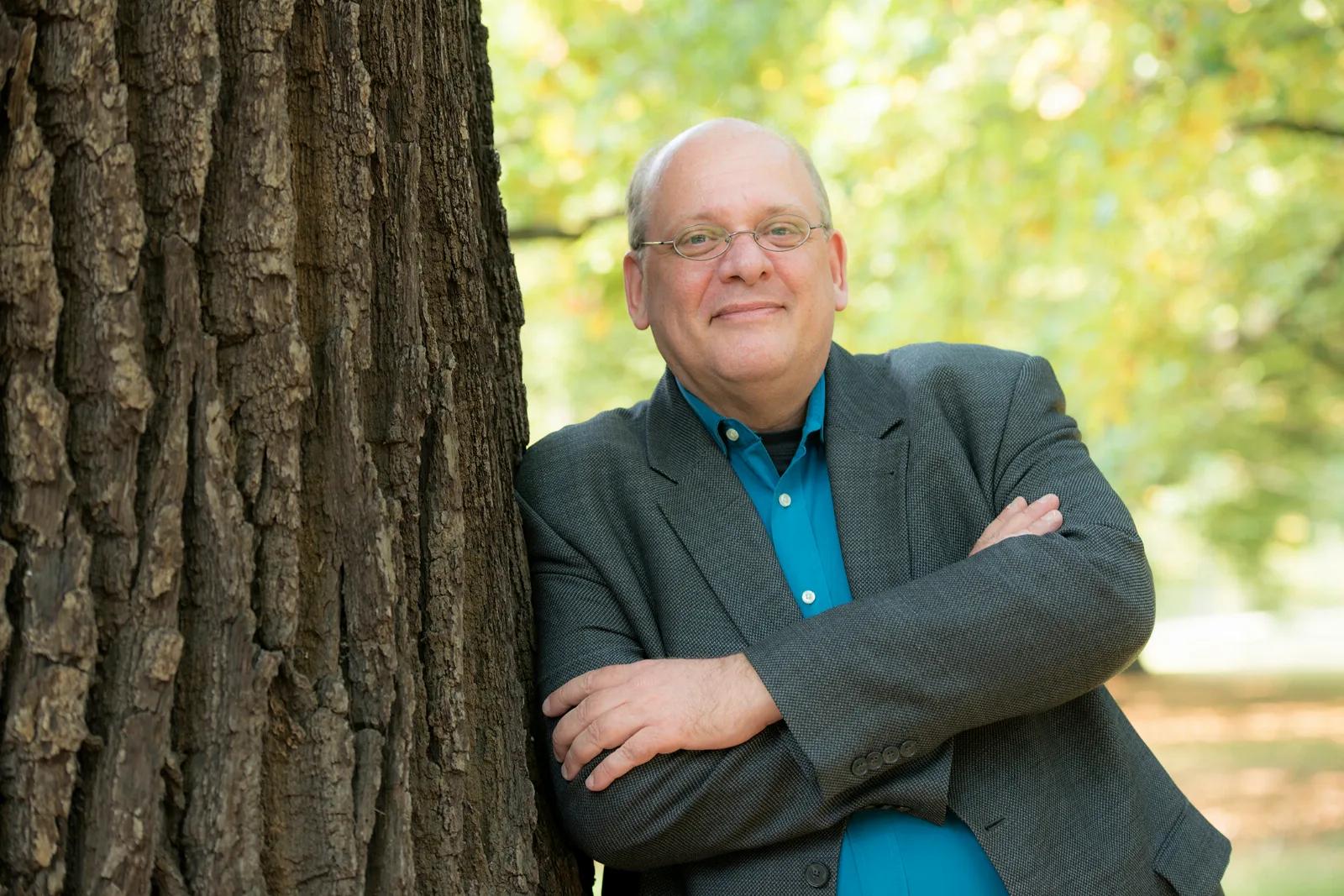
When the Mozarteumorchester Salzburg, the Dresdner Philharmonie and the Scottish Chamber Orchestra jointly commission a work, the outcome is bound to be remarkable. This time it concerns nothing less than the full orchestration of Das Jahr, the monumental piano cycle by Fanny Hensel (1805–1847) – a work that was only rediscovered in 1989, almost a century and a half after the composer's death. The commission went to Detlev Glanert, one of the most performed contemporary German composers and himself a sought-after opera composer. Klassiek Centraal spoke with him about Henze, Hensel and the art of orchestration.
Four years with Henze
Glanert studied for four years with Hans Werner Henze, and that apprenticeship continues to shape his work – though not in the way you might expect. He did not take over a style from his teacher, but above all Henze's dramaturgical thinking: "the variable experience of the time axis and its influence through musical processes." Henze's view of the orchestra as a social-artistic whole also fascinated him. Within the actual composition, it was mainly Henze's call for self-discipline that stayed with him; Glanert had his own conception of the orchestral sound "from the very beginning," and his teacher never interfered with it.
Glanert recognises the characterisation of him as a composer who unites tradition and contemporary expression, but finds it too limited. There is, he says, "a great abundance of other aspects" that define him as a composer – and in his view this holds for everyone who composes. What he finds most interesting is observing which possibilities are consciously excluded, which reductions are necessary to achieve a particular aim.
For Glanert, all music is essentially theatre. "The instruments are characters, the musical processes are actions of individuals or groups," he says. "There is no entirely abstract musical process; everything is connected with human experience." A layered work like Das Jahr offers, in his view, a magnificent basis for a colourful, imaginary scenic garb – even though it was originally intended for the domestic circle. The "intimacy" of chamber music, he notes, usually concerns mainly the circle of performers; many piano works from that period were already conceived instrumentally, as Schumann had remarked about the young Brahms.
Does music almost two hundred years old still have something to say? For Glanert this is self-evident: "Good pieces tell each generation something new. That is why we still play music today that is sometimes three hundred years old." What Fanny Hensel has to say, he ultimately leaves to the audience.
Orchestration itself he considers less a discipline in its own right than a way of thinking – "a technique of thinking in several instruments instead of just one." Everything depends on the extent to which you decide to intervene in the existing texture: if you consider that artistically justified, your own action comes close to active composing and thus to your own aesthetic. But even pure "colouring" presupposes a form of re-composition, although the composer's experience then serves mainly the inner understanding of the structure: "So not 'or', but 'and'." And when does Glanert know that a composition is truly finished? His answer leaves little room for doubt: "Never!"
Fanny Hensel and Das Jahr
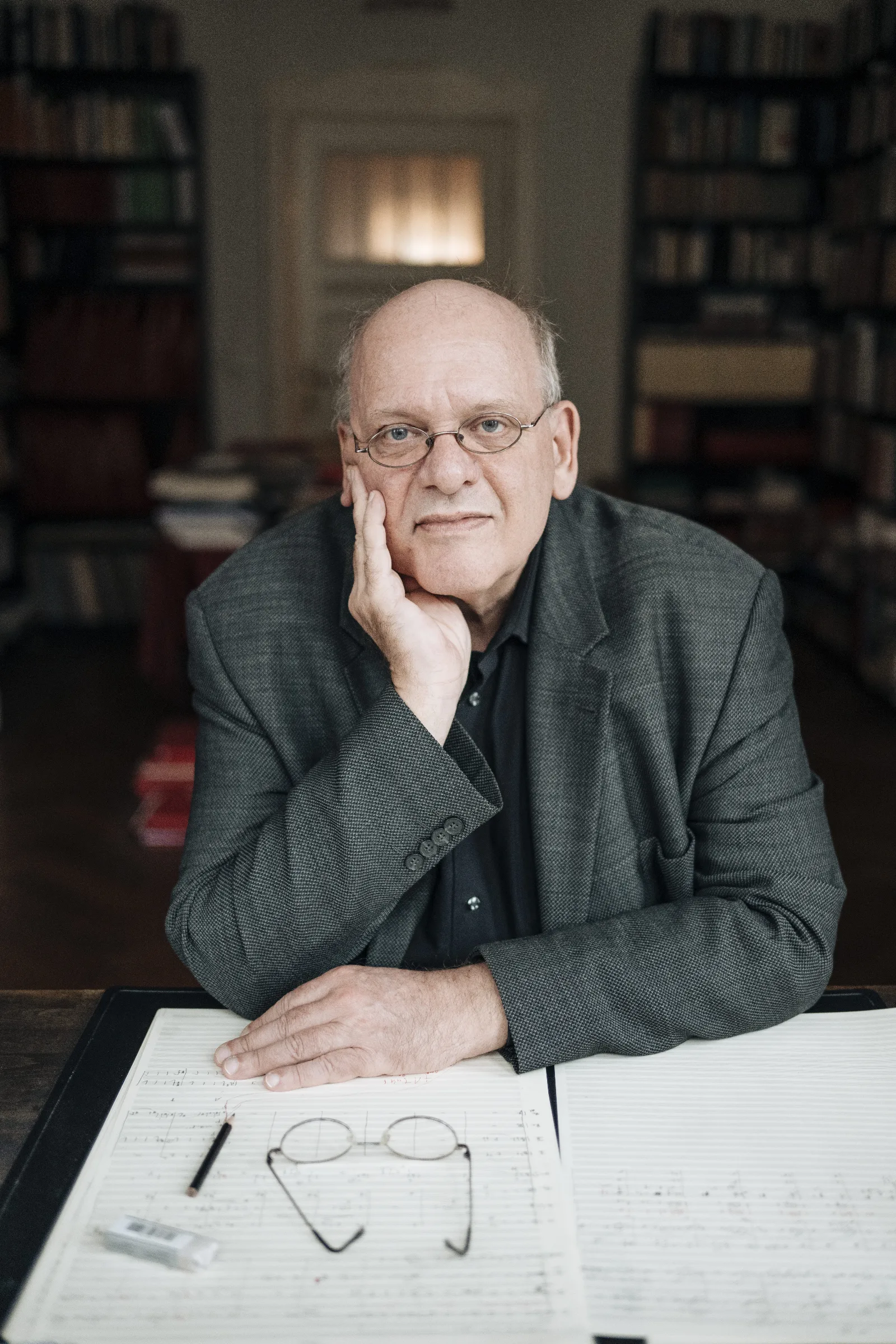 It was the request from Salzburg that led Glanert to immerse himself seriously in Fanny Hensel's music. He of course already knew her name – her principal publisher, Bote & Bock, was also his – but initially he had prejudices. He expected the countless salon pieces that were widespread in the nineteenth century. That picture changed immediately upon reading the score and getting to know her other work. Das Jahr stands out within her oeuvre, he feels, by its sheer scale alone.
What makes the work so special? Glanert finds that Hensel discovers a distinct form and a distinct expression for each month, and the programmatic depictions have, in his view, the freshness of something new, of a different perspective. Her cyclical, continuous train of thought also fascinates him – harmonically she was, to his taste, very experimental, "sometimes more than her brother." The often assumed autobiographical influences are, according to Glanert, always present in every composition, sometimes visible and sometimes hidden; in Das Jahr they make themselves felt mainly through "outward" events such as carnival, summer heat, hunting and snowfall. He also finds her rich quotations from the Protestant chorale repertoire particularly interesting – on the one hand a reference to Bach, on the other a reference to the season.
The intensive engagement with the score made Fanny Hensel, for Glanert, unmistakably a "mistress of composition" – together with the awareness of a tragedy: that she was never able to fully develop, through lack of opportunity, but above all because of her far too early death. While studying the score there were moments when he recognised a wholly independent musical personality, detached from any comparison with her brother Felix Mendelssohn – it was precisely this that convinced him to accept the commission. That individuality becomes most visible in her later development, not least because she, against her brother's wishes, nevertheless had works published under her own name. "What else would have come," Glanert sighs.
Deliberately, in orchestrating he let himself be guided solely by the score. The biographical context of Hensel's Italian journey or her growing self-awareness as a composer therefore played no part as a starting point for him: in his view, the music itself already says enough. Autobiographical details are, in his experience, overvalued, while general biographical influences are rather undervalued by musicology – "because they are less measurable."
The commission and the orchestration
What appealed to him most about the commission was that, when reading the music, he immediately heard an orchestra. A particular stimulus was the cyclical unity that Hensel herself already introduced – through attacca markings, through the ordering of the keys, but above all through recurring melodic turns that he has come to call "idées fixes": motifs that appear in nearly all the months and thus form a complex network of references. Some of those attacca markings Hensel possibly also omitted because the coherence was self-evident to her. Glanert chose to pursue that idea consistently and always to join three months together; in two cases this is her own doing, in the remaining cases Glanert's. Together with the recurring melodic seeds, he sees in this strong indications of a large, overarching line of thought running through the entire cycle.
For the instrumentation, Glanert first treated the original piano version as a good keyboard reduction from that time, carefully comparing the printed edition with the manuscript – Hensel composed variants both before and after the definitive version; for the month of December, Glanert placed both versions side by side, with a slight preference for the longer one. Because he knew well the common forms of expression – and clichés – of the period, he could start from an orchestral sound as it sounded around 1841.
Strongly pianistic figurations could, according to what he calls the "Berlioz principle," be transferred to the orchestra; where necessary he added octave doublings and altered passages when it was clear that two hands no longer sufficed. Some passages orchestrated almost by themselves, others posed a real challenge: wherever Hensel relies on pianistic figurations, Glanert had to devise an adequate orchestral gesture, whereas freely flowing melody and especially the dramatic, recitative-like passages came to him more easily. In some places, he recalls, he brooded for nearly a week – over three eighth notes in the month of February, for example. An existing orchestration of parts of the work, by the Danish composer Martin Torp, Glanert did not know; it therefore played no role for him.
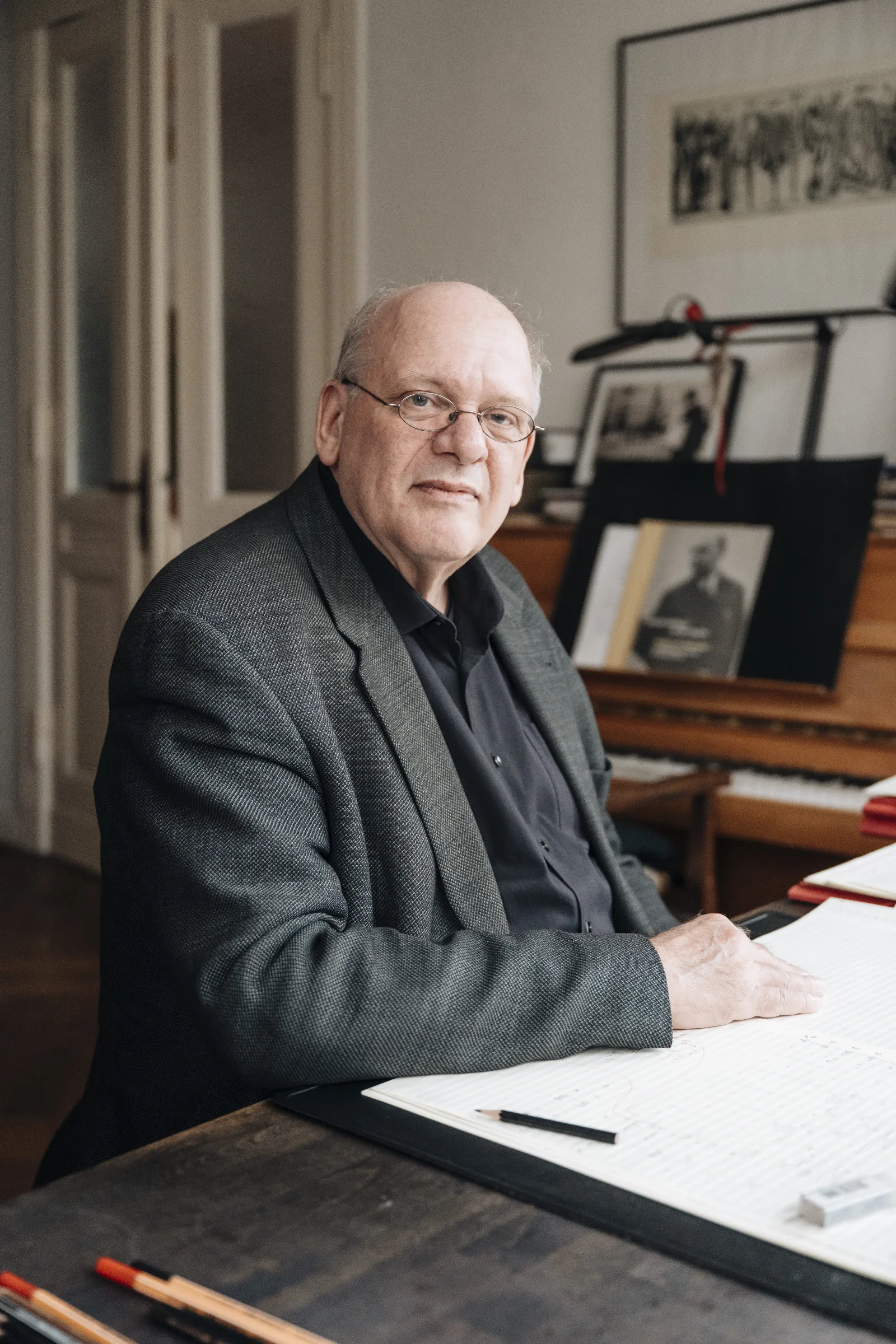 For the instrumentation, Glanert opted for an orchestra as was customary around 1841: 2 flutes, 2 oboes, 2 clarinets, 2 bassoons, 2 horns, 2 trumpets, 1 trombone, timpani, harp and strings. The additional trombone and the harp at the time formed the core of Italian theatre orchestras – think of Rossini – and Glanert suspects that precisely this colour would have charmed Fanny Hensel.
His many years of experience as an opera composer have certainly influenced his view of the dramaturgy of the score, says Glanert – in particular the awareness that boredom must be avoided. Lingering too long in one colour or expression leads to monotony; a tasteful, meaningful alternation between light and dark, sharp and soft, seemed to him appropriate to the composer's intention. Silence, breath and transparency, in his view, play an important role alongside orchestral colour.
On the question of whether he wished to remain visible as a composer himself, Glanert is emphatic: Hensel had herself already conceived important sections for orchestra, and Glanert wanted and needed, as a composer, to step into the background. It would have seemed improper to him to enter into a "dialogue" with a composer who for so long was silenced – her music must first be received undisturbed before one constructs an interlocutor. His wish: that the impression arises that Fanny Hensel herself orchestrated Das Jahr excellently.
The original manuscript, in which music, poems and the drawings of Wilhelm Hensel – Fanny's husband – appear together, however played no role whatsoever in Glanert's work: it concerns the music alone. He even suspects that the drawings came into being after the composition, and that the lines of poetry were probably added later – for no substantial connections between the structure of the poems and the music can be discovered. His suspicion: Wilhelm Hensel intended both as embellishment of the album, as a descriptive element. No poem or drawing, therefore, directly influenced his choice of tone colour or instrumentation.
Premiere and outlook
That Das Jahr was only rediscovered in 1989, almost a century and a half after Fanny Hensel's death, is, according to Glanert, a sign of how poorly we have sometimes treated the musical heritage of the nineteenth century. He compares it to the fate of manuscripts by Haydn (sold as wrapping paper) and Schubert (discarded as waste paper). To what extent family disputes were responsible for the late publication cannot be stated with certainty – although "September" was already published in 1846 by Bote & Bock in Berlin. What else of Fanny Hensel's has been lost remains speculation. Women were the greatest victims in the nineteenth century, since in most cases they could not or were not allowed to publish.
Does Glanert see his orchestration itself as a contribution to that rediscovery? "Not necessarily," he says, since the piano cycle doesn't really need this orchestration – the work has already been recorded several times and is increasingly heard in piano recitals. Yet the wider concert public should get to know this music despite its "heavenly length." For that, he wanted to find a beautiful and representative form: "a sounding invitation into a (still) unknown world."
At the time of this interview, the first rehearsal with conductor Roberto González-Monjas had not yet taken place – so Glanert can say nothing yet about the collaboration during the rehearsals. What is clear, however, is what he wants to give the audience after the premiere: knowledge of the existence of an outstanding composer – who, in his conviction, must also have been a fascinating conductor – who unfortunately remained in the shadow of her famous brother. An enrichment of the musical language of the first half of the nineteenth century. And above all, the realization of an intelligent, imaginative, witty, yet deeply sensitive musician, whose enormous vitality flows toward us in her music.
At the end of the interview, Glanert was asked which one question he would like to ask Fanny Hensel, if that were possible. His answer is as simple as it is telling: "What are you composing next, and when can we hear it?"
On 1 November I will attend this premiere in Dresden and report on it for Klassiek Centraal.